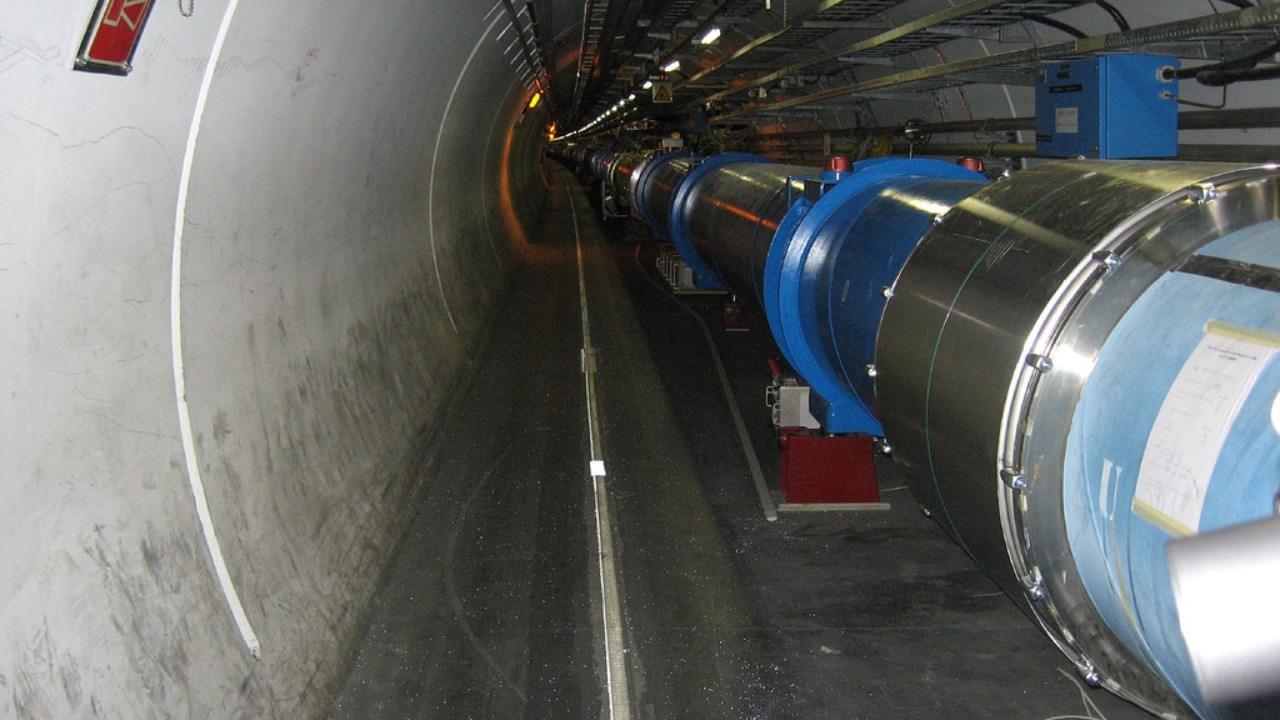

In a recent experiment, the Large Hadron Collider (LHC) at CERN produced particles believed to have only existed in the moments following the Big Bang. This remarkable achievement offers valuable insights into the origins and evolution of the universe.
Understanding the Large Hadron Collider

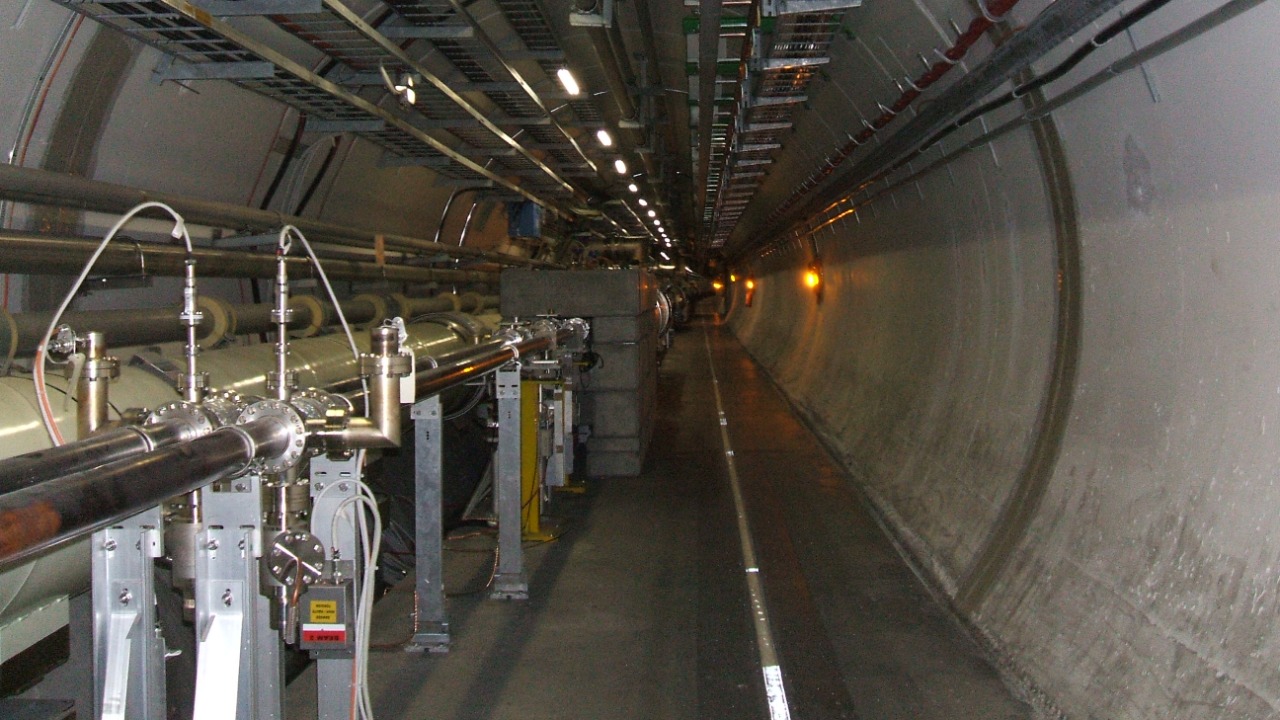
The Large Hadron Collider, situated at CERN, is the world’s most powerful particle accelerator. It propels beams of particles at nearly the speed of light within a 27-kilometre ring of superconducting magnets. The purpose of the LHC is to allow physicists to test the predictions of different theories of particle physics, including measuring the properties of the Higgs boson and searching for the large family of new particles predicted by supersymmetric theories. More facts and figures about the LHC are available on the CERN website.
Particle physics’ primary goal is to understand the universe’s fundamental structure. The experiments conducted at the LHC play a crucial role in this research. By smashing particles together at high speeds, scientists can recreate conditions that existed immediately after the Big Bang, allowing them to observe and study particles that are otherwise inaccessible.
The Big Bang Theory and Particle Physics
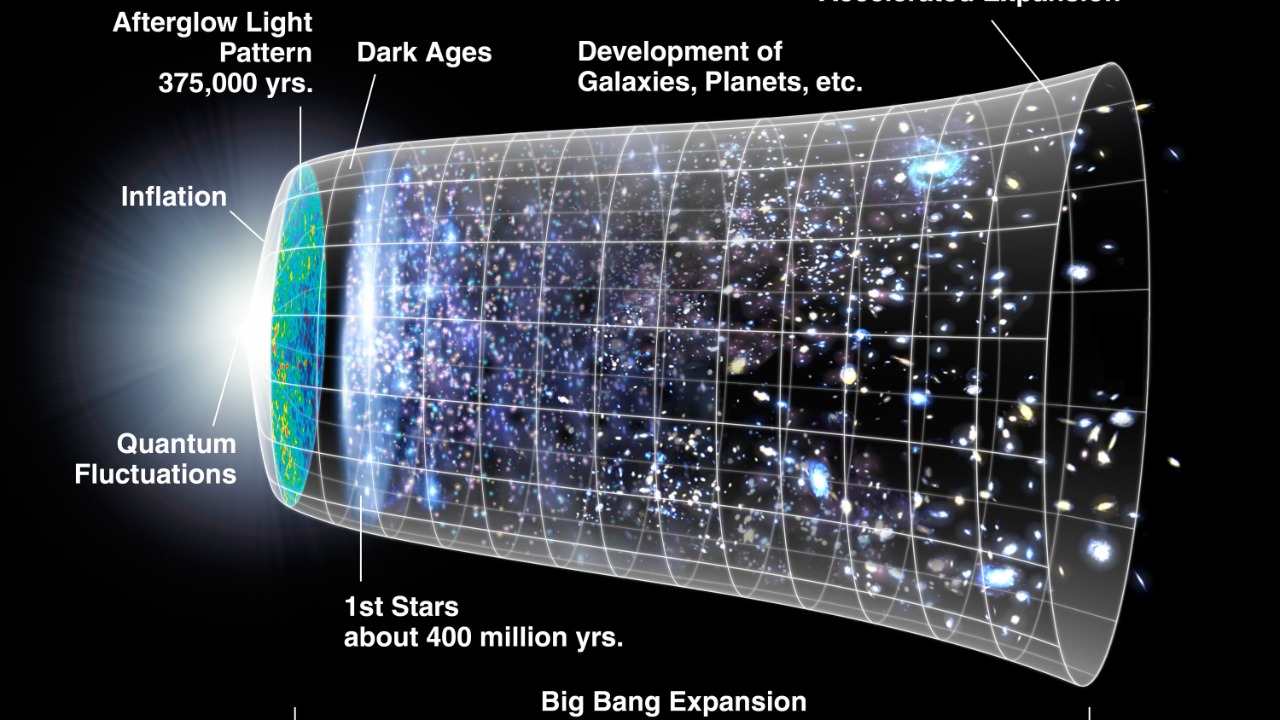
The Big Bang Theory is the prevailing cosmological model explaining the universe’s existence. It suggests that the universe began as a hot, dense point nearly 13.8 billion years ago. As the universe expanded, it cooled, leading to the creation of different types of particles. Some of these particles, such as quarks and leptons, are well understood, while others, such as dark matter particles, remain elusive.
By attempting to recreate the conditions just after the Big Bang, the LHC provides a unique opportunity to study these particles. For example, the LHC experiments have focused on producing and studying the Higgs boson, a particle predicted by the Standard Model of particle physics, in detail. The discovery of the Higgs boson at the LHC in 2012 was a significant milestone in our understanding of the universe’s fundamental structure.
The Groundbreaking CERN Experiment
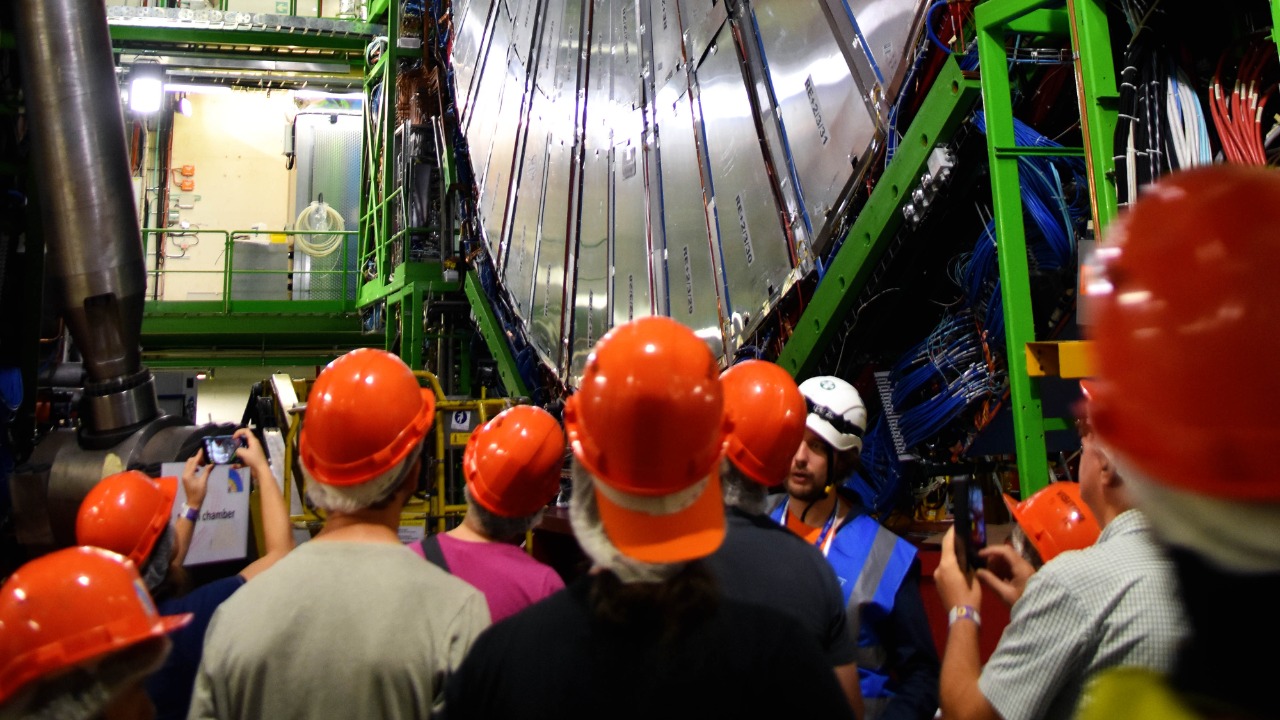
In the recent groundbreaking experiment at CERN, the LHC produced particles thought to exist only just after the Big Bang. These elusive particles, known as “strange quarks,” are typically only produced in high-energy environments, such as the early universe or the interiors of neutron stars. Nature has published an article detailing the experiment’s specifics and the significance of these particles in the study of the universe.
Conducting and monitoring this experiment presented several challenges. For one, the energy required to produce these particles is immense. Additionally, strange quarks are unstable and rapidly decay into other particles, making them difficult to detect. However, the LHC’s design and cutting-edge technology made it possible to overcome these challenges and successfully produce and detect these elusive particles.
Implications of the Experiment’s Results
The successful production of strange quarks in the LHC has significant implications on our understanding of the Big Bang and the early universe. It provides further evidence for the Big Bang Theory and helps refine our understanding of the conditions that existed immediately after the universe’s birth. This paper discusses some of the theoretical implications of these findings.
Aside from their theoretical importance, these findings could have practical applications in various scientific fields. For instance, understanding the behavior of strange quarks could help physicists refine models of neutron stars, which are thought to contain a significant amount of strange matter. Similarly, the techniques developed to detect these particles could have applications in other areas of particle physics and beyond.
Debate and Controversy Surrounding the Experiment

Like any significant scientific finding, the results of the CERN experiment have sparked debate within the scientific community. Some physicists question whether the particles produced in the LHC truly mirror those that existed just after the Big Bang. Others argue that the energy and resources dedicated to these experiments could be better used elsewhere. This article delves into some of these theoretical disputes.
In addition to these scientific debates, the LHC’s experiments have raised ethical and safety concerns. Some critics worry about the potential risks associated with creating such high-energy environments on Earth. However, CERN maintains that safety is the highest priority in all its experiments and that the LHC operates well within safe limits. This CERN news release details some of the safety measures in place.