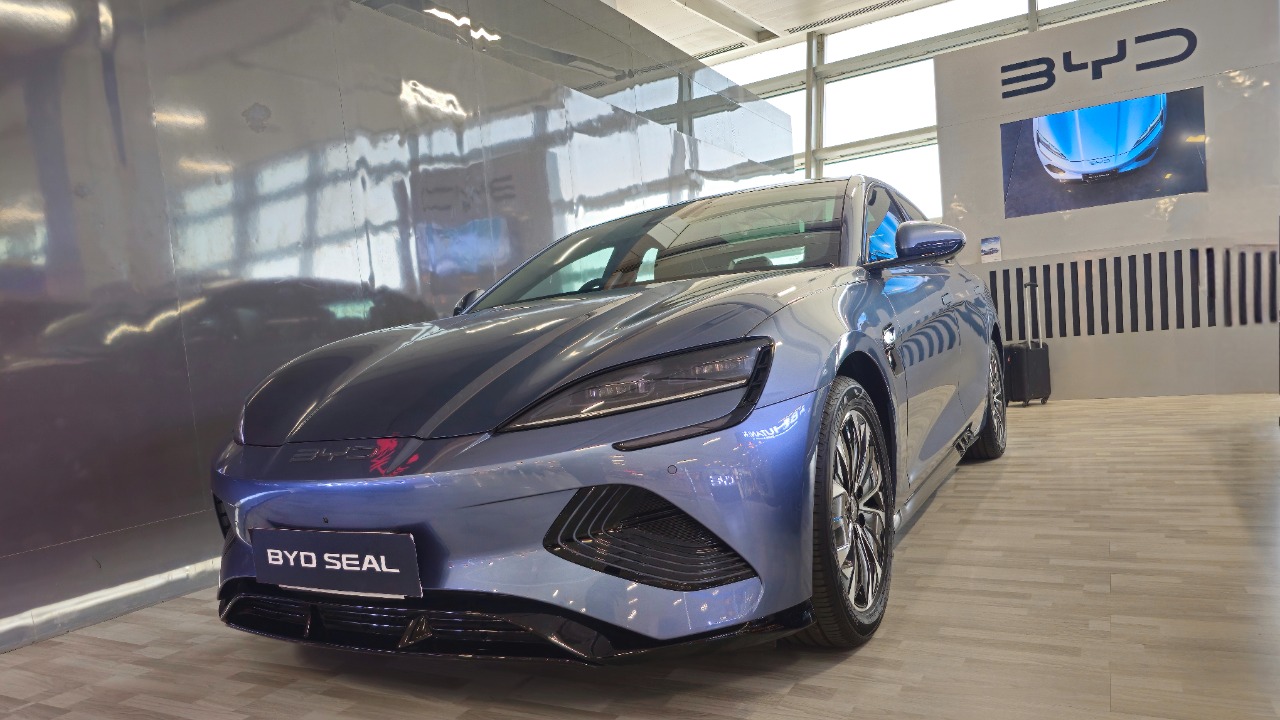

Canada is betting that opening its doors to Chinese electric vehicles will turn it into North America’s next big EV manufacturing hub, even if that means irritating Washington. By slashing tariffs and inviting China’s biggest EV makers to invest, Ottawa is positioning its auto heartlands as a launchpad into the United States market just as trade tensions over clean tech are hardening.
The strategy hinges on a delicate balance: attract Chinese capital and technology without triggering a political backlash at home or a protectionist response from the United States. How that balance holds will shape not only Canada’s industrial future, but also the competitive landscape for electric cars across the continent.
Tariff shock: from 100% wall to 6.1% welcome mat
Canada has executed a dramatic pivot on electric car tariffs, moving from a defensive posture to an open invitation. Earlier this year, Ottawa agreed with Beijing to cut its levy on imported Chinese EVs from a punitive 100% rate to just 6.1% on an annual quota of 49,000 vehicles, a shift that instantly makes Chinese models far more competitive in Canadian showrooms. The new quota, which allows 49,000 Chinese-made EVs to enter the market at the 6.1% rate, is designed as a controlled opening that still signals a clear break from the United States approach of keeping Chinese cars effectively locked out through triple-digit duties, and it underscores how Canada is willing to diverge from its closest ally on industrial policy.
Officials have framed the move as part of a broader reset with Beijing, with China and Canada agreeing to ease tariffs on both EVs and agricultural products after talks between President Xi Jinping and the Canadian Prime Minister. The agreement drops Canada’s levies on Chinese EVs from 100% to 6.1% for the first 49,000 vehicles imported each year, while Ottawa expects Beijing to reduce barriers on canola and other exports, a linkage that Canadian officials argue will spread the benefits beyond the auto sector. Legal analysts note that after several years of escalating trade tensions, After this deal marks the most significant thaw in bilateral economic relations in nearly a decade, and it is being closely watched by other sectors that rely on China trade.
Quota diplomacy and the 49,000-car question
The centrepiece of the new arrangement is a carefully calibrated quota that allows up to 49,000 Chinese EVs into Canada each year at the preferential 6.1% tariff, a figure that appears in multiple official descriptions of the pact. Canada and China announced that this ceiling would apply annually, giving Chinese manufacturers a predictable path into the Canadian market while giving Ottawa a lever to manage political blowback if imports surge. Analysts in Beijing and Ottawa say the cap is high enough to establish a serious presence for brands like BYD and Nio, but still small compared with the overall North American market, which helps Canada argue that it is not simply opening a back door into the United States.
Even with the quota, the shift is stark when set against the United States stance. One assessment described the move as Breaking with Washington, since Canada is slashing a 100% tariff on Chinese electric cars at the same time the United States is tightening its own barriers. Another analysis of the Beijing–Ottawa deal notes that the import volume will be capped, allowing 49,000 Chinese-made EVs into the Canadian market with a preferential tariff rate of 6.1, and warns that this reinforces China’s dominance in the global EV industry at the expense of U.S. manufacturers. For Chinese and Canadian policymakers, that is a feature rather than a bug: the quota is meant to be large enough to anchor new supply chains in Canadian provinces, which Ottawa hopes will eventually feed both domestic buyers and export markets.
From import gateway to manufacturing beachhead
Tariff cuts are only the opening act in Canada’s strategy to lure China’s EV titans to its doorstep. Ottawa has made clear that it does not just want to sell imported cars, it wants to be the first in North America to build EVs with Chinese knowledge and capital. One widely cited briefing notes that Canada aims to partner with China to build an electric vehicle manufacturing base, leveraging Chinese technology and production expertise to accelerate its own transition away from internal combustion engines. That ambition dovetails with a broader industrial plan in which Canada will also begin work on a long-term framework to incentivize domestic auto production and investment, a move that trade specialists say signals a desire to reduce reliance on foreign supply chains while still courting foreign capital.
Chinese automakers are already circling. Reports on the new trade agreement explain that Canada and China see the EV pact as a foundation for deeper cooperation on the entire EV supply chain, from batteries to final assembly. Another overview of the policy shift notes that at a Glance, Canada has finalized an initial pact with China to reduce tariffs on imported Chinese EVs while also setting the stage for investment in local battery and component plants. For Chinese companies squeezed by tariffs in the United States and Europe, a production base in Ontario or Quebec that can serve Canadian buyers and potentially export to the U.S. under existing trade rules is an attractive proposition.
Washington’s alarm and the “back door” fear
The United States government is not hiding its discomfort with Canada’s new EV opening. U.S. officials have warned that allowing 49,000 Chinese EVs into Canada at low tariffs risks creating a loophole in the North American market, and one detailed account of their reaction notes that Companies in China could use Canada as a staging ground to eventually reach U.S. consumers. A separate briefing on the same comments underscores that U.S. trade officials see Canada’s decision to allow imported Chinese EVs as “problematic,” and it highlights their concern that the 49,000 vehicle quota could expand over time if political pressure in Ottawa eases.
Those worries are amplified by the quality and price of the vehicles involved. Analysts of the North American market point out that What makes Chinese vehicles stand out is that they are high-quality, stylish and inexpensive, a combination that could undercut U.S. and Canadian brands if they gain a foothold. Another report on the tariff cut notes that Officials Push Back deal has already drawn sharp criticism from U.S. policymakers, who question whether Chinese vehicles entering Canada can be kept from eventually flowing south. Yet the same analysis concedes that for Canadian consumers, the tariff cut will nearly halve the price of some imported electric SUVs, illustrating the political trade off between affordability and industrial protection.
Domestic backlash and the politics of cheap EVs
Inside Canada, the decision to welcome Chinese EVs has exposed a rift between federal ambitions and provincial anxieties. Ontario Premier Doug Ford, whose province is home to much of the country’s auto industry, has emerged as one of the loudest critics, urging Canadians to boycott Chinese-made EVs even as Ottawa lowers tariffs. One detailed account notes that Doug Ford wants Canadians to boycott Chinese-made EVs when they arrive in showrooms, arguing that the deal risks local jobs and rewards a rival that has long restricted Canadian canola and some seafood products. Another report on the political fallout underscores that Ontario Premier Doug has framed the EV pact as a bad bargain that trades away leverage on agriculture for a flood of subsidized imports.
More from Morning Overview