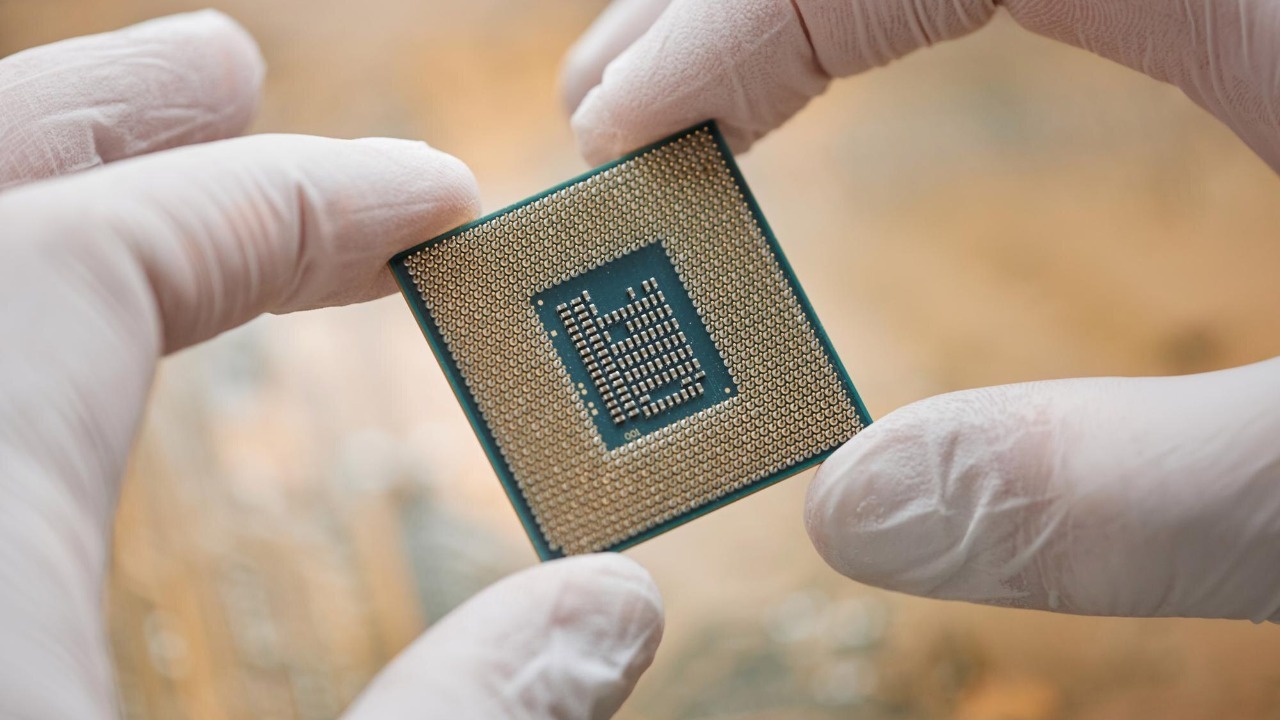

India is racing to turn its long‑standing strength in software and chip design into full‑scale manufacturing, pitching semiconductors as the backbone of its next phase of economic growth. The ambition is nothing less than building a domestic chip ecosystem that can supply everything from smartphones and cars to data centers and defence systems. Whether a country that still accounts for only a sliver of global electronics exports can pull off such a leap will depend on how quickly policy, capital and engineering talent converge on the factory floor.
The stakes are geopolitical as much as economic. As supply chains fragment and governments from Washington to Tokyo scramble to secure access to advanced processors, India is trying to move from being a market and design hub to a production base in its own right. The question is not just whether fabs can be built, but whether a genuinely homegrown industry can emerge rather than a patchwork of subsidised projects.
From design powerhouse to manufacturing novice
For years, India’s role in the chip world has been largely invisible to consumers, even as engineers in Bengaluru and Noida quietly designed circuits for global giants. That design strength is now the launchpad for a manufacturing push that aims to turn India into a full value‑chain player rather than a back‑office for foreign fabs. At Davos, officials framed semiconductors and artificial intelligence as twin engines of a broader economic transformation, arguing that the country’s digital public infrastructure and young workforce give it a rare chance to scale from design to production.
That narrative is reinforced by analysis that describes how India’s semiconductor and is being positioned as a pivot from services‑led growth to execution‑led capacity building. Yet the same assessments stress that moving from design contracts to wafer fabrication is a structural shift, not a linear upgrade. It demands mastery of process technology, supply chains for gases and chemicals, and a culture of precision manufacturing that the country is only beginning to develop.
Big bets, early milestones and the 2026 production target
New Delhi has responded with a wave of subsidies and project approvals that would have been unthinkable a decade ago. One flagship move is the decision to back at least ten semiconductor projects with an incentive package worth about 18 billion dollars, spanning wafer fabs, assembly and testing units and display plants. The government has also courted global memory specialist Micron, whose facility is among the major plants cited as anchors of the country’s first wave of commercial production.
Officials have now set a near‑term finish line. In public remarks, Union Minister Ashwini Vaishnaw has said India’s Chip Dream is on Track, with Commercial Production Set for 2026. A separate briefing from Davos reiterated that India is on to start commercial semiconductor manufacturing in 2026, again highlighting Micron as a key investor. In Veldhoven, the Union Electronics and Information Technology Minister Ashwini Vaishnaw went further, saying the first commercial semiconductor chip production will begin this year and projecting that direct and indirect jobs could reach 65,000 in just four years, a claim detailed in Veldhoven.
Policy firepower: ISM 2.0, budgets and the ecosystem bet
The financial muscle behind this push is being steadily reinforced. In the Union Budget, Finance Minister Nirmala Sitha framed semiconductors as central to India’s place in the global electronics value chain, signalling that the India semiconductor mission has crossed an initial phase and is now entering a scale‑up stage. Building on this, the government has announced that it will launch ISM 2.0 to produce equipment and materials, design full‑stack Indian IP and fortify supply chain resilience, a shift from simply attracting fabs to nurturing a broader industrial base.
Analysts who have unpacked the India Semiconductor Mission argue that the program’s ambition is matched only by its complexity. One detailed assessment, titled Navigating the Hurdles, lists Challenges and Roadblocks that range from the capital‑intensive nature of fabs to the need for deep technology partnerships. A separate commentary on the 2026 Budget notes that States are being pushed to compete for semiconductor clusters, but One recurring challenge has been semiconductor‑ready infrastructure, including reliable land, water and power. Without that, generous subsidies risk being stranded on paper.
Clusters, capacity and the long road from “first chip” to scale
On the ground, the government insists that the ecosystem is already taking shape. In a presentation that framed the effort as “Bharat is building complete Semiconductor Ecosystem”, officials said that by Jan the semiconductor program has progressed very well, with 10 plants in which construction is going on and three plants in pilot production, a status update shared in a Jan briefing. Another video message, titled Design Hub To, has Vaishnaw declaring that the Semiconductor Push Enters Production Phase In 2026, underscoring that semiconductors are now at the core of industrial policy rather than a niche technology topic.
Symbolically, India has already celebrated a breakthrough. At the India Mobile Congress, Modi and Vaishnaw hailed what was described as India’s first home‑grown chip as a milestone despite very modest specs, arguing that the achievement showed the industry is ready to fly. Yet independent analysts caution that without dense manufacturing clusters, India risks remaining a design powerhouse without the depth needed for full value‑chain leadership, a warning spelled out in an assessment of semiconductor clusters in the making.
The hard limits: infrastructure, exports and the superpower dream
For all the optimism, the structural gaps are stark. With just 1 per cent in the global value chains of electronics, India needs to scale exports and attract global electronics manufacturing if its chip fabs are to find stable customers. A separate budget analysis lists Key challenges that include logistics costs, gaps in skilled technicians and the need to integrate semiconductor policy with broader industrial and trade strategies rather than treating it as a standalone trophy project.
Even sympathetic observers stress that the journey will be long. One detailed critique notes that Since India is starting its fab journey from scratch, complications will unfold and that, Certainly, conjuring a thoroughgoing, competitive semiconductor superpower will be a long, arduous one. Another forward‑looking analysis of Silicon Sovereignty argues that India’s Semiconductor Revolution Hits Commercial Milestone in 2026 but that true autonomy will depend on ISM 2.0 and the ability to pull more advanced nodes into the Indian orbit by 2027. Put simply, India can build fabs with foreign help and heavy subsidies, but turning that into a resilient, homegrown industry will require staying the course long after the ribbon‑cuttings end.
More from Morning Overview