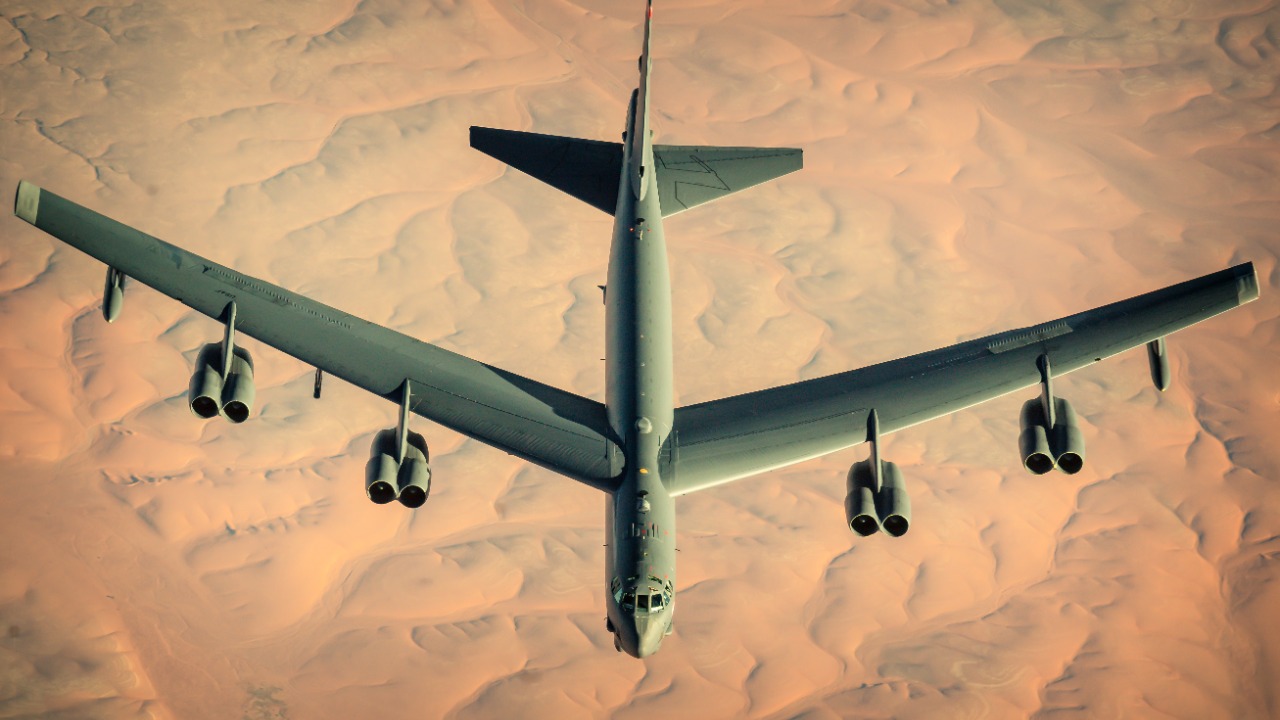

The United States is doubling down on one of its oldest yet most versatile combat aircraft, handing Boeing roughly $2 billion to overhaul the B-52 bomber fleet for decades of additional service. The award centers on a sweeping engine and systems upgrade that is meant to keep the long-range bomber relevant in an era of great-power competition and rapidly advancing air defenses.
By modernizing the B-52 rather than replacing it outright, the Pentagon is betting that new engines, avionics, and weapons integration can transform a Cold War workhorse into a 21st-century strike platform. The scale of the investment, and the ambition behind it, signal that the Stratofortress is expected to remain a central pillar of U.S. airpower well into the 2050s.
The new $2B task order and what it actually buys
The latest award gives Boeing a fresh infusion of roughly $2 billion to push the B-52 Commercial Engine Replacement Program into its next phase. In contracting documents, the Pentagon describes a task order worth $2.04 billion, a figure that captures the scale of the engineering, testing, and integration work required to refit a fleet of 52 bombers with new powerplants and supporting systems. The money flows through Boeing Defense Systems and is tied directly to the Commercial Engine Replacement Program, which is designed to replace aging engines with more efficient, reliable commercial-derivative models.
According to the Department of Defense, the task order covers design refinement, integration of the new engines on the B-52 airframe, and the ground and flight testing needed before the upgrades can be rolled out across the entire fleet. The Department of Defense frames the work as a crucial component of a broader modernization push that also includes new sensors, avionics, and weapons integration. In practical terms, this contract is the bridge between years of planning and the moment when upgraded B-52s begin to appear on flight lines in operational units.
Why the B-52 still matters in U.S. airpower
The Boeing B-52 Stratofortress has outlived several generations of aircraft that were once expected to replace it, and the new contract underscores why the Air Force is not ready to let it go. The bomber’s combination of long range, heavy payload, and flexibility has made it a fixture of U.S. power projection, from Cold War nuclear alert missions to conventional strikes in conflicts across the Middle East and beyond. As The Boeing B-52 Stratofortress enters yet another modernization cycle, the Air Force is effectively committing to a service life that could stretch to more than 100 years.
In an era when stealth bombers and hypersonic weapons dominate headlines, the decision to keep investing in the B-52 reflects a different kind of strategic logic. The aircraft’s large wing area and spacious internal volume make it an ideal testbed and operational platform for new weapons and sensor packages, from advanced cruise missiles to stand-off electronic warfare pods. Reporting on the latest award notes that the Air Force expects the upgraded aircraft to remain operational into the 2050s, a horizon that only makes sense if the Stratofortress continues to offer a mix of capacity and adaptability that newer, more exquisite platforms cannot easily match.
Inside the Commercial Engine Replacement Program
The Commercial Engine Replacement Program, often shortened to CERP, is the technical heart of the modernization effort. Under this initiative, Boeing is responsible for integrating new commercial-derivative engines that promise better fuel efficiency, greater reliability, and lower maintenance demands than the legacy powerplants that have been on the wings for decades. The Pentagon’s task order explicitly ties the Commercial Engine Replacement Program to keeping the bomber viable for long-range missions in contested environments, where endurance and sortie generation rates can be as important as stealth.
Engine replacement on a platform as old and heavily used as the B-52 is not a simple swap. Boeing must redesign pylons, update fuel and electrical systems, and ensure that the new engines integrate cleanly with the aircraft’s flight controls and onboard diagnostics. The engine upgrade work also includes extensive ground and flight testing, with milestones that stretch over several years and a target for key phases to be completed by May 31, 2033. Only after that validation can the Air Force move from prototype and test aircraft to a full fleet retrofit.
How new engines change the bomber’s performance and costs
New engines are expected to reshape both the performance envelope and the operating economics of the B-52. Modern commercial-derivative engines typically deliver better thrust-to-weight ratios and significantly improved fuel burn compared with the older turbojets and early turbofans they replace. For a long-range bomber, that translates into extended unrefueled range, more time on station, or the ability to carry heavier payloads without sacrificing endurance. The Air Force has signaled that the upgraded engines are central to keeping the aircraft competitive in missions that demand global reach and rapid response.
On the cost side, the logic is equally compelling. Legacy engines require intensive maintenance, with spare parts that are increasingly difficult and expensive to source. By shifting to engines based on current commercial designs, the Air Force expects to reduce maintenance hours per flight, cut fuel costs, and improve overall availability rates. The new contract explicitly covers continued work on these engines, including testing at facilities such as NASA Ste, which is focused on validating performance and reliability claims before the upgrades are fielded at scale.
Avionics, sensors, and weapons: more than just engines
Although engines are the headline item, the B-52 modernization effort reaches deep into the aircraft’s electronic nervous system. The Air Force plans to pair the new powerplants with upgraded avionics, digital displays, and mission systems that can handle the data demands of modern warfare. These changes are designed to support additional avionics, sensor suites, and weapons integration, allowing the bomber to carry and employ advanced munitions that require precise targeting data and real-time connectivity.
Weapons integration is particularly important as the United States fields new generations of long-range stand-off missiles and potentially hypersonic systems. The B-52’s large payload capacity makes it a natural carrier for such weapons, but only if its fire control and communication systems can support them. Reporting on the engine upgrade notes that these avionics and weapons changes are being planned in parallel, so that as the aircraft transitions to the new engines, it can also begin to take on expanded roles in both conventional and nuclear missions. The goal is a cohesive modernization package rather than a piecemeal series of upgrades that would leave the bomber’s capabilities uneven.
Timeline, testing, and the path to operational fleets
The path from contract award to operational squadrons flying upgraded B-52s is measured in years, not months. Early work focuses on detailed design, wind tunnel assessments, and ground testing of engine-airframe integration. The project timeline points to major milestones culminating around May 31, 2033, when key phases of the engine upgrade are expected to be completed. Between now and then, Boeing and the Air Force will move through a sequence of prototype installations, flight tests, and certification steps that are designed to uncover and fix issues before the modifications reach front-line units.
Testing is not limited to the aircraft themselves. The F130 engine, which is central to the upgrade, has undergone trials at facilities such as NASA Ste, where engineers can simulate a range of operating conditions and stress scenarios. These tests feed directly into the certification process and help refine maintenance procedures and digital monitoring tools that will be used once the engines are in service. Only after this extensive validation will the Air Force begin the broader fleet implementation, a phase that itself will take years as aircraft cycle through modification lines.
Strategic logic: why extend the B-52 into the 2050s
Keeping the B-52 in service into the 2050s is not simply an exercise in nostalgia, it is a strategic calculation about cost, capability, and risk. Developing an entirely new bomber to replace the Stratofortress would require tens of billions of dollars and years of design and testing, with no guarantee that the resulting aircraft could match the B-52’s payload and flexibility at an acceptable cost. By contrast, the current plan leverages an existing airframe that has already proven structurally durable, pairing it with modern engines and electronics to create a hybrid of old and new. The Air Force has been explicit that the goal is to keep the aircraft operational into the 2050s, effectively turning it into a century-long program of record.
There is also a deterrence logic at work. A visible, globally deployable bomber that can carry a wide range of conventional and nuclear weapons sends a clear signal to adversaries and allies alike. The B-52’s presence at locations such as Nellis AFB in Nev, where aircraft have been photographed during exercises, underscores its role in both training and operational planning. By investing in modernization rather than retirement, the United States is indicating that it sees value in maintaining a mix of bomber types, with the B-52 providing capacity and flexibility alongside more specialized stealth platforms.
What the contract means for Boeing and the defense-industrial base
For Boeing, the B-52 modernization contract arrives at a time when its defense business is under intense scrutiny and pressure. The roughly $2 billion task order gives the company a long-term, technically demanding program that plays to its strengths in large-aircraft integration and systems engineering. The award to Boeing Defense Systems also reinforces the company’s role as a key partner for the Air Force on legacy platforms, even as it competes for newer programs in areas such as trainers, tankers, and unmanned systems.
The broader defense-industrial base will feel the impact as well. Engine manufacturers, avionics suppliers, and maintenance providers all stand to benefit from a program that will run for years and touch every one of the Air Force’s 52 B-52s. The visibility of the contract, highlighted in coverage that shows a B-52H Stratofortress taking off against a cloudy sky, underscores how modernization work on legacy platforms can anchor jobs and technical expertise across multiple states and facilities. In that sense, the B-52 upgrade is as much an industrial policy decision as it is a military one.
Public perception and the symbolism of a 100-year bomber
The B-52 occupies a unique place in American culture, appearing in films, television, and even music as a symbol of Cold War power and enduring military might. As Stratofortress coverage notes, the aircraft has become a piece of pop culture in its own right, and the prospect of it serving for more than 100 years only deepens that mystique. The new modernization contract feeds into this narrative, presenting the bomber not as a relic but as a continually evolving platform that adapts to each new era of conflict.
At the same time, the decision to invest billions in an aging airframe invites debate about priorities and opportunity costs. Critics may question whether the money would be better spent on unmanned systems, cyber capabilities, or next-generation stealth platforms. Supporters counter that the B-52’s proven track record, combined with the relatively lower cost of modernization compared with clean-sheet designs, makes it a pragmatic choice. The latest award, framed in reports as Boeing awarded $2 billion to continue work on new engines, suggests that for now, policymakers have sided with continuity and incremental transformation over radical change.
More from MorningOverview