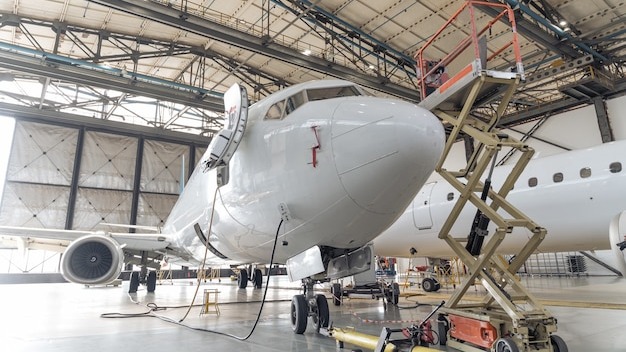

Boeing is betting that it can turn a bruising safety and certification period into a production comeback, setting a 500-jet delivery goal for its workhorse 737 family in 2026 while shutting down a so‑called “shadow factory” used to clear parked inventory. The target, which follows a sharp drop in output and a widening gap with Airbus, hinges on squeezing more capacity out of its existing lines rather than opening new ones. It is an ambitious reset that will test whether the company’s quality reforms can coexist with a faster build rate.
The plan centers on ramping monthly 737 production from the low 40s to the high 40s, even as regulators keep close watch and widebody programs like the 777X and 787 face their own constraints. I see the 500-jet goal as less a victory lap than a stress test of Boeing’s industrial system, supply chain and credibility with airlines that have already waited years for aircraft they ordered long before the pandemic.
Inside the 500-jet push and the ‘shadow factory’ shutdown
Boeing has told investors it is targeting deliveries of roughly a 500-jet total for the 737 program in 2026, a figure that would mark a significant step up from the prior year’s output. That goal is focused squarely on the narrowbody that remains Boeing’s main cash generator, the 737 M, and is meant to reassure airlines and investors that the company can finally move beyond the production instability that defined 2024. The company has framed the target as achievable through incremental rate increases rather than a radical expansion of its factory footprint.
At the same time, Boeing is closing a so‑called “shadow factory” that had been used to rework and deliver stored 737 aircraft built during earlier production and certification turmoil. Executives have indicated that as this facility winds down, more of the work on the 737 will shift back into the main assembly system in Renton, Washington, and other west coast sites, tightening the link between new production and deliveries. Reporting on the 737 M line in Renton shows rows of aircraft in various stages of completion, underscoring how central that site remains to the recovery effort even as the shadow operation is phased out in favor of a more normal flow through the primary factories.
From 42 to 47: how the production math has to work
To hit 500 deliveries in a single year, Boeing needs its monthly output to climb from roughly 42 aircraft to about 47, a shift executives have already begun to outline. Company leaders have said the Renton-built 737 MAX line is moving from 42 to 47 aircraft per month, a rate that, if sustained, would put the 500-jet target within reach when combined with deliveries from remaining stored inventory. The same figures appear in financial disclosures that describe 737 M production ending the year at 42 per month, with a planned ramp to support higher deliveries.
Chief executives have argued that the supply chain can support this next step up in output, saying they do not expect a major bottleneck in moving from 42 to 47 aircraft a month on the 737 and 787 programs. One executive was quoted saying “I actually don’t think supply chain is going to be a big challenge for us in the next rate ramp, from 42 to 47,” a statement that reflects confidence but will be tested as smaller suppliers try to keep pace.
Clearing the 2024 hangover and the Airbus gap
The 500-jet ambition comes after what one detailed recap called a “tough year” in 2024 for Boeing, when different incidents, leadership changes and order reshuffles kept the company on the front pages of newspapers and news websites for the wrong reasons. That same analysis of Boeing’s 2024 recap noted how the company’s troubles fed into a narrative of stumbles just as demand for air travel and new aircraft was rebounding, putting more pressure on management to show that 2026 will look very different from the recent past.
Production setbacks translated directly into weaker deliveries and a widening gap with Airbus. One breakdown of 2024 performance reported that Boeing handed over 348 airplanes for the year, with deliveries falling by about a third from 2023, while the gap with Airbus widened as both manufacturers worked through large backlogs. Against that backdrop, promising 500 737 deliveries in 2026 is as much about signaling a break with that slump as it is about the raw number.
Regulators, safety management and the 737 M line
Regulatory scrutiny remains a central constraint on how fast Boeing can move. Company leaders have described how, in the quarter before the 500-jet target was unveiled, Boeing and the completed a “safety management meeting,” with the regulator reporting observations on the company’s systems. That engagement is part of a broader certification “hangover” that still affects programs like the 777X, and it means any misstep on the 737 M line could quickly translate into new limits on production or deliveries.
Executives have acknowledged that the 737 M program is still under a microscope, even as they talk up higher rates. In one detailed account of the company’s certification challenges, Boeing executives said the manufacturer would increase production of its Renton-built 737 MAX from 42 to 47 planes per month while still working through issues on the smaller MAX 7 and the 777X. That balancing act, raising output on the core narrowbody while navigating certification on other variants, is one reason I see the 500-jet goal as a high-wire act rather than a simple arithmetic exercise.
Financial stakes and leadership’s credibility test
Financially, the 500-jet target is tied directly to Boeing’s effort to restore profitability in its commercial division. Recent results showed the company swinging to a quarterly profit at the group level even as commercial airplanes and defense units still posted losses, with management highlighting the importance of higher 737 M and 787 volumes to closing that gap. One earnings breakdown noted that Boeing ended the year with 737 M production of 42 airplanes per month and was in the process of raising the 787 rate to eight a month, underscoring how both programs are expected to carry the financial recovery.
Leadership has been explicit about tying its reputation to that recovery. In one interview, an executive identified as Ortber said “We haven’t fully turned the corner, but we’re making real progress and getting back to the Boeing everyone expects of us,” before outlining plans to increase production of the 737 and other variants. A separate account of the same message from Ortberg said plans call for higher output across several variants this year, reinforcing how closely leadership’s credibility is now tied to executing the 500-jet plan without fresh safety or quality lapses.
More from Morning Overview