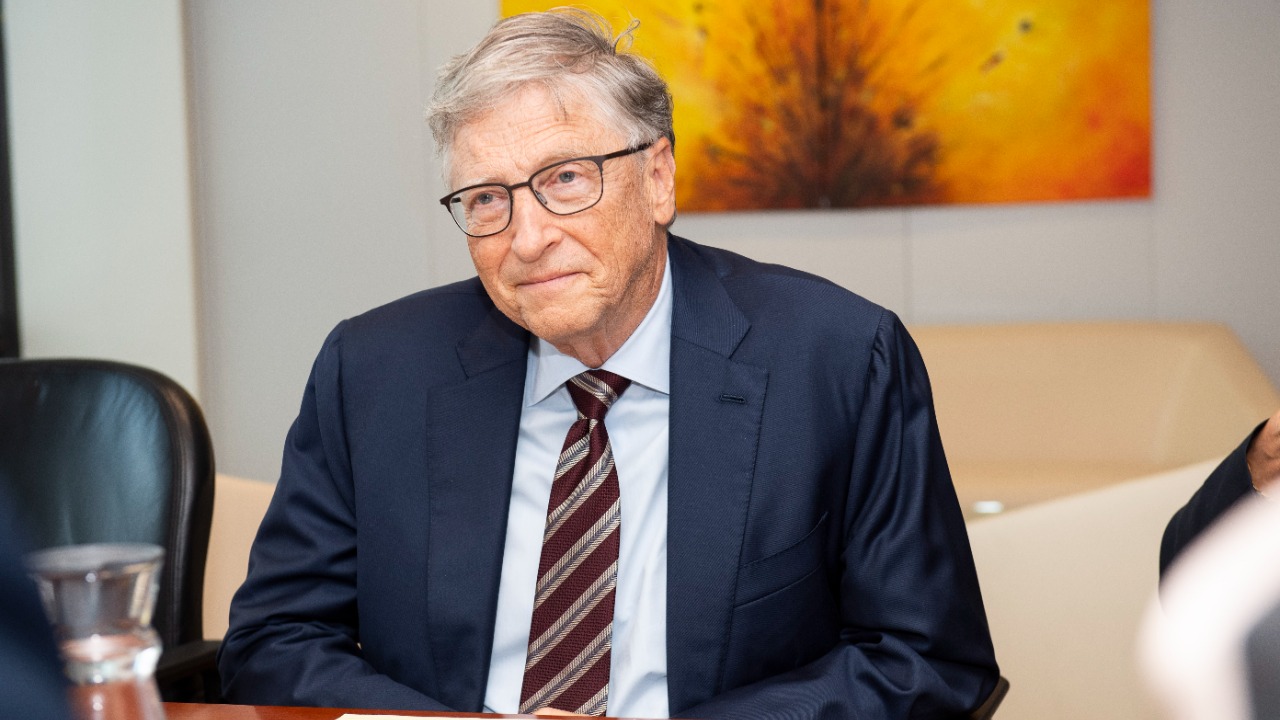

Billionaire philanthropist Bill Gates is sharpening his warnings about a global crisis he says the world keeps misdiagnosing. While public debate fixates on emissions targets and green tech, he argues that the real fault line is how climate change is quietly eroding basic human development, from child growth to food security. In his latest outlook, he links that neglected driver to a broader slide in global progress that he fears could push the world toward a new dark age if leaders fail to act.
At the center of his critique is a simple claim: climate is no longer just an environmental issue, it is a development emergency that is already reversing hard‑won gains in health, nutrition, and poverty reduction. Gates frames the next few years as a narrow window to redirect money and political will toward the people and systems most exposed to rising temperatures, especially in agriculture and low‑income countries.
Gates’s overlooked culprit: climate’s assault on human development
In his recent reflections on the year ahead, Gates casts climate change as a force that is hollowing out the foundations of progress rather than only threatening distant temperature thresholds. He argues that the world has been slow to recognize how rising heat, erratic rainfall, and extreme weather are already undermining gains in health, education, and income, particularly for the poorest households. That perspective runs through his personal outlook for 2026, where he sets out a short list of priorities he believes can still bend the trajectory of global development if governments and donors respond at scale, a vision he lays out in his own words on the year ahead.
That framing is consistent with how Bill Gates, co‑chair of the Bill & Melinda Gates Foundation, has evolved from software pioneer to one of the most prominent voices on global health and climate, a trajectory that is easy to trace through public profiles of Bill Gates. Rather than centering his argument on abstract emissions curves, he now talks about climate as a multiplier of existing inequalities, a lens that helps explain why he is increasingly impatient with what he sees as complacency in rich countries about the human stakes of a warming world.
‘Directly undermining human development’: food, farms, and the climate link
The sharpest version of Gates’s critique appears in his latest annual letter, where he zeroes in on the food system as the neglected engine of the climate crisis. Billionaire philanthropist Billionaire Bill Gates argues that one of the most overlooked drivers of rising global temperatures is the way we produce food, not a simple lack of clean energy projects. He warns that current agricultural practices, from fertilizer use to livestock emissions, are “directly undermining human development” by both accelerating climate change and leaving smallholder farmers more exposed to droughts, floods, and crop failures.
In that letter, Bill Gates calls out how this damage falls heaviest on low‑income communities, where climate‑driven shocks to harvests translate quickly into hunger, lost income, and children leaving school. He describes the impacts as especially visible in agriculture, where farmers who contributed least to global warming are now on the front line of its effects, a dynamic he presents as both a moral failure and a practical risk to global stability.
Data from the Goalkeepers report: climate and a world going ‘backwards’
Gates’s rhetoric is backed by a growing body of data from the Gates Foundation’s own monitoring of global progress. The latest Goalkeepers report tracks how climate change is colliding with health and nutrition, warning that without major adaptation, the world will see a surge in child malnutrition. The report’s topline numbers are stark: Goalkeepers data show how climate pressures are already slowing improvements in key development indicators.
One section, titled “The Race to Nourish a Warming World,” spells out the stakes in unusually blunt terms. Between 2024 and 2050, climate change will mean 40 m additional children will be stunted, and 28 million additional children will suffer from wasting, a projection the foundation highlights in its Between analysis of the growing burden of malnutrition. Those figures are not abstract; they translate into millions of children whose physical and cognitive development will be permanently impaired, exactly the kind of “undermining” of human potential Gates has been trying to push into the center of climate debates.
‘Backwards’ on child deaths and the risk of a new dark age
Gates’s concern is not limited to nutrition. He has been unusually blunt about how quickly the world’s broader development gains can unravel if funding and political focus drift. In a recent warning, he said “the thing I am most upset about is the fact that the world went backwards last year on a key metric of progress, the number of deaths of children under 5,” a reversal he links directly to cuts in foreign aid and stalled investment in basic health systems, a point he underscored in comments captured in Jan.
The numbers behind that warning are sobering. But in 2025, they went up for the first time this century, from 4.6 m in 2024 to 4.8 m in 2025, an increase driven by lapses in vaccination and access to lifesaving tools, according to data he cited in a detailed But analysis. He has repeated that message in multiple forums, warning that the world is at risk of entering a new “dark age” for global health if donors continue to pull back, a theme he returned to when he said the world went “backwards” after US foreign aid cuts in another Jan interview.
That sense of urgency also shaped his 2026 annual letter, which he previewed in a social media post noting that he had issued “some pretty big warnings” in recent years and was now focused on how the next five years could help the world get back on track, a message he shared when Bill Gates released his 2026 outlook. In a separate commentary, he framed the next half decade as a sprint to make progress irreversible, warning that without a course correction, the world could squander a historic opportunity to lock in gains in health and education, a concern echoed in an analysis that described his message as “five years before a dark age,” which also noted that With Oxfam counting 2,769 billionaires in 2025 and predicting the appearance of the first trillionaires within a decade, With Oxfam and Gates are both highlighting how extreme wealth concentration contrasts with stalled development.
Balancing climate alarm with pragmatic optimism
For all the alarm in his recent warnings, Gates is careful to distance himself from what he calls “doomsday” climate narratives. In a memo discussed in a detailed profile, he wrote that “Although climate change will have serious consequences, particularly for people in the poorest countries, it will not lead to human extinction,” arguing that panic can be paralyzing and that the focus should instead be on accelerating practical solutions for the most vulnerable, a stance he elaborated in a Nov interview that emphasized targeted investments over apocalyptic rhetoric.
In the same vein, he has stressed that climate change is a “very important problem” that “needs to be solved,” but that the real measure of success will be how well the world reduces the suffering it causes, especially for those with the fewest resources. In the memo described in another profile, he framed his climate work as part of a broader push to keep humanity on a path of progress rather than avert a cinematic catastrophe, a nuance captured in coverage that noted how In the memo, Gates focused on concrete steps to cut emissions and adapt food systems.
More from Morning Overview