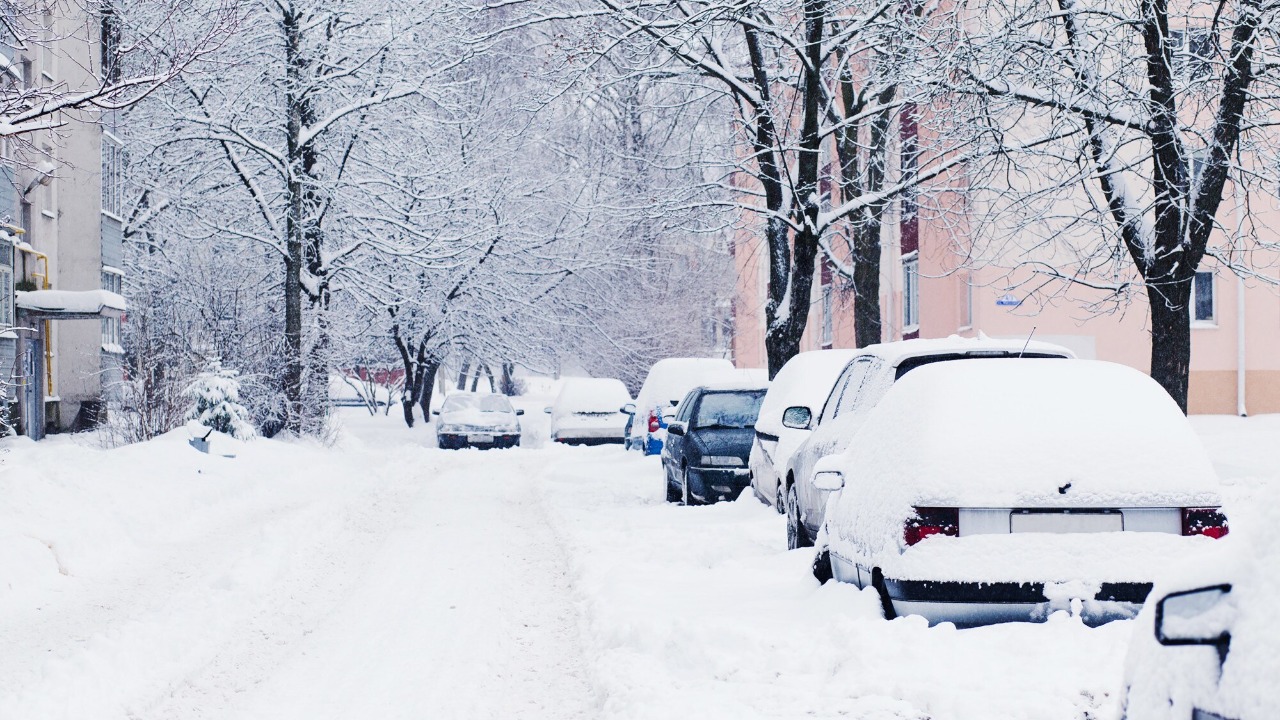

A brutal Arctic cold snap has pushed parts of Russia’s regional power grid past the breaking point, plunging northern cities into darkness and exposing how fragile Soviet-era infrastructure has become under modern loads. What began as a weather emergency has quickly turned into a systemic stress test, with cascading failures, emergency repairs and mounting questions about how long the network can keep absorbing shocks.
As temperatures dropped and winds intensified, transmission lines buckled, substations failed and entire districts lost heat and light at the very moment residents needed them most. The resulting outages have not only disrupted daily life but also highlighted how local crises in Russia intersect with wider regional vulnerabilities, from neighboring Ukraine’s battered grid to knock-on effects in Moldova and beyond.
Arctic blackout in Murmansk exposes Soviet-era limits
The most dramatic symbol of the crisis has been the blackout in the far north, where the Murmansk region has struggled to keep the lights on in polar night conditions. As an Arctic storm tore through the Kola Peninsula, power lines iced over and snapped, leaving residential blocks, industrial sites and transport hubs without electricity while temperatures stayed far below freezing. Images from the city showed entire neighborhoods dark, with only the glow of car headlights and emergency lighting cutting through the snow and wind, a stark reminder that even a major northern port can be reduced to a fragile island of diesel generators when the grid fails.
Regional authorities responded by declaring an emergency and acknowledging that the backbone of the system still rests on a Soviet-era network that was never designed for today’s combination of extreme weather and heavier consumption. The collapse of key lines in the Arctic winter forced grid operator crews to work around the clock, clearing ice, restringing conductors and improvising temporary supports just to restore partial service. Photographs from the blackout captured residents queueing for water, shops lit by candles and families huddling in stairwells where residual heat lingered, a visual record of how quickly a modern city can slide toward survival mode when its electrical lifeline is cut.
The crisis has also rippled into nearby military and industrial hubs, including the closed city of Severomorsk, where naval facilities and defense plants depend on stable power for operations and safety systems. While officials have been tight-lipped about specific disruptions, any prolonged instability in the regional grid inevitably complicates the energy-intensive work of ship maintenance, weapons storage and radar operation along the Barents Sea. The blackout has therefore raised not only humanitarian concerns but also strategic ones, underscoring how civilian infrastructure weaknesses can bleed into national security risks in the high north.
What is striking about the current cold wave is not just the severity of the temperatures but the way it has turned localized faults into full-blown regional collapses. As ice loads and wind gusts damaged transmission corridors, protective systems tripped, transformers overloaded and entire segments of the network went offline in quick succession. Reporting on the big freeze describes how regional power systems in Russia have not just been strained but, in some cases, have effectively collapsed, forcing grid operator Rosseti to erect temporary pylons and reroute power flows to prevent even wider outages.
These failures are not isolated accidents but symptoms of deeper structural problems that have been building for years. Analysts tracking Systemic Utility Failures in Early 2026 point to a pattern of underinvestment, aging equipment and patchwork repairs that leave the housing and utilities sector vulnerable to any spike in demand or stress. Over the last month in Russia, a series of breakdowns in heating networks, water systems and electrical grids has forced local authorities to juggle emergency budgets and public anger, even before the latest Arctic blast pushed the system into crisis mode.
Human cost of a frozen, failing grid
Behind the technical language of line trips and transformer overloads lies a very immediate human toll. In the Murmansk Left in the Dark images, residents navigate unlit streets, parents carry children up stairwells in high-rise blocks without working elevators and small businesses scramble to save perishable goods as refrigerators and freezers fall silent. For pensioners in panel buildings, the loss of central heating is not an inconvenience but a direct threat to health, especially when windows are sealed against the cold and backup heaters are either unavailable or too expensive to run on limited incomes.
Emergency services have been stretched as they try to respond to fires sparked by improvised heating, traffic accidents at darkened intersections and medical calls from people whose home medical equipment depends on stable electricity. Local officials have urged residents to conserve power where it is still available and to use caution with generators and gas stoves, but those appeals collide with the reality that many households have few safe alternatives. The images from the blackout show a population adapting in real time, using car batteries to charge phones, gathering in the few public buildings with backup power and, in some cases, leaving the region altogether until the grid stabilizes.
Ukraine and Moldova reveal shared regional fragility
The Russian freeze is unfolding against a wider backdrop of grid instability across Eastern Europe, where war damage and extreme weather have combined to create a precarious energy landscape. Earlier this year, a technical malfunction in Ukraine triggered a chain reaction that cut power to large parts of the country and spilled over into neighboring Moldova. Officials described how Ukraine and Moldova experienced mass power outages on Saturday after a “technical malfunction” caused elements of the grid to shut down, only weeks after intense Russian bombardment had already weakened critical energy infrastructure.
The knock-on effects in Moldova were immediate, with a nationwide blackout that left traffic lights dark, public transport halted and households suddenly without heat or light. Repair crews worked through the night and by the next day Repair work was under way to restore power in regions affected by the blackout, as authorities urged drivers to slow down and follow road signs in the absence of functioning signals. Moldov officials stressed that the outage was not caused by a direct attack on their own infrastructure but by the automatic protection systems that disconnected their grid when Ukrainian lines went down, a reminder of how tightly coupled these networks are.
Ukrainian energy experts have warned that the system has become so fragile that even non-hostile errors can have outsized consequences. One analysis noted that Russia does not need to hit Ukraine’s power grid anymore, as after its 256 assaults on energy, a single error results in the complete shutdown of large sections of the network. Ukrainian grid operators explained that “Due to the loss of power lines on the territory of Ukraine, the automatic protection system was triggered, which disconnected the lines and led to outages in multiple towns amid the extreme weather.” That description could just as easily apply to parts of Russia’s own grid, where automatic protections are now repeatedly cutting power to prevent equipment damage, at the cost of leaving entire communities in the dark.
What the big freeze tells us about Russia’s energy future
For Russia, the convergence of Arctic storms, Soviet-era hardware and rising demand is a warning that the old model of reactive repairs and incremental upgrades is no longer enough. The emergency in Russia‘s Murmansk region, the broader pattern of Over the last month in Russia utility failures and the way the big freeze has caused regional power systems to collapse all point to the same conclusion. Without a sustained program of modernization, including replacing aging lines, hardening substations against ice and wind and upgrading automation, each new cold wave will carry a higher risk of cascading outages that are harder and more expensive to fix.
More from Morning Overview