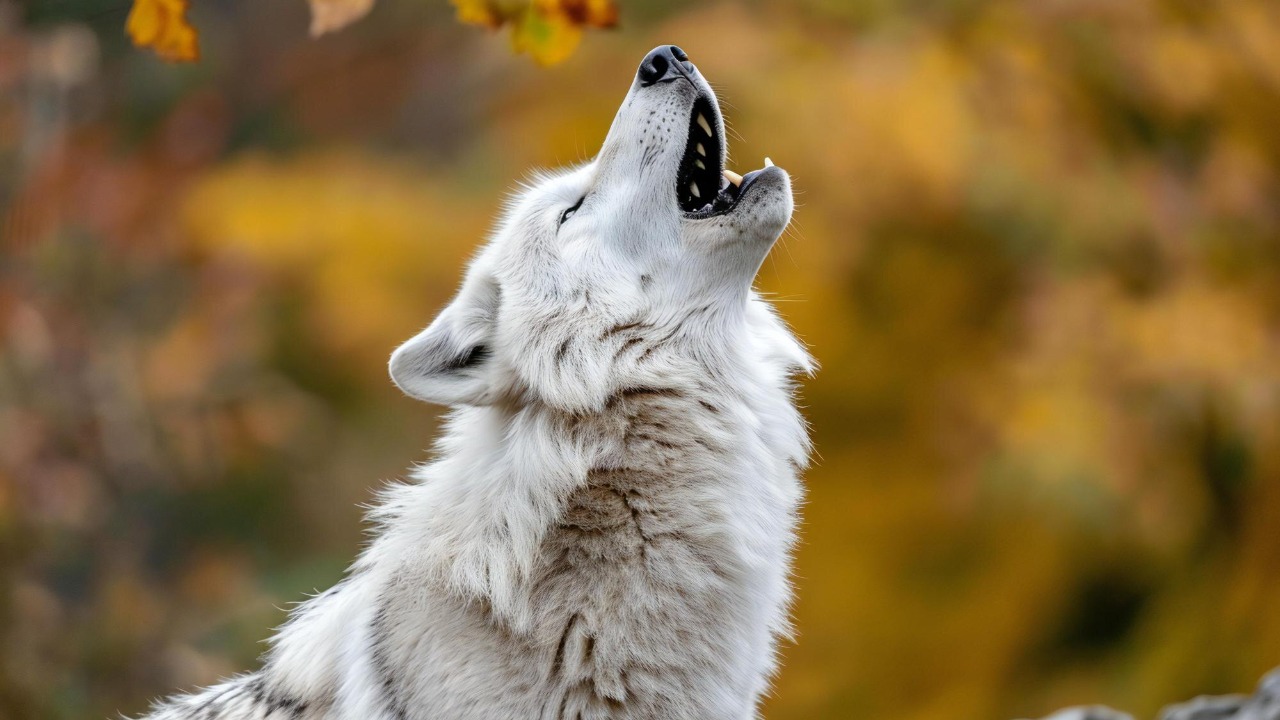

On a fenced U.S. preserve, a pair of heavy‑boned canids now stalk and play that, until recently, existed only in tar pits and textbooks. Colossal Biosciences says these living pups carry the signature traits of the dire wolf, a predator that vanished roughly 12,000 years ago, and that their survival in semi‑wild conditions marks a turning point for de‑extinction science. The company is already positioning the animals as proof of concept for a broader push to rescue threatened species before they follow Aenocyon dirus into oblivion.
The claim is as bold as it sounds: dire wolf pups born roughly 12,500 years after their species disappeared, created through targeted gene editing and advanced reproductive technology. Whether these animals truly count as resurrected dire wolves or as engineered look‑alikes is now at the center of a fierce scientific and ethical debate that will shape how far, and how fast, this new field moves.
From La Brea fossils to living pups
The dire wolf, formally known as Aenocyon dirus, dominated Pleistocene North America before vanishing at the end of the last ice age, its bones famously preserved in asphalt seeps like La Brea. Genetic work over the past decade has shown that Aenocyon sat on a separate branch from modern gray wolves, its DNA long gone from the living gene pool. Colossal’s scientists say they first had to reconstruct that lost genome from ancient remains, then identify the key differences that gave dire wolves their massive heads, crushing jaws and stocky frames. Only after that could they begin rewriting the genome of a surrogate species to approximate the extinct predator.
According to Colossal’s own description of its dire wolf program, the company treats the species as a flagship for a new kind of conservation that blends paleogenomics with wildlife management. In a separate technical overview, it frames the achievement as “Colossal Dire Wolves Return: A Landmark in De‑Extinction and Conservation Science,” arguing that bringing back an apex predator after roughly 12,000 years of extinction can inform both species revival and modern ecosystem repair.
How Colossal built a “dire wolf”
In practical terms, the animals now drawing headlines began life not as cloned fossils but as edited embryos inside modern canids. Reporting on the project describes how researchers made 15 key edits to gray wolf genomes so that specific regions more closely matched the reconstructed dire wolf sequence. The nuclei from these edited cells were then transferred into donor eggs, implanted into surrogate mothers and carried to term. Two male pups, Romulus and Remus, were born on October 1, 2024, and Colossal later told reporters that a third pup followed, all part of a cohort designed to express extinct traits rather than to recreate an exact genetic copy of Aenocyon dirus.
The company has showcased the project aggressively, from a polished social video in which it introduces itself as “Colossal Biosciences, the de‑extinction company responsible for bringing back the first animals from extinction,” to a narrated explainer that walks viewers through the Dallas‑based lab work behind the pups’ birth. In that video, the Colossal Biosciences team presents the work as a “scientific marvel,” emphasizing both the technical difficulty of editing multiple loci and the broader ambition to apply similar methods to other lost or collapsing species.
Life on the preserve and the 12,500‑year claim
What makes the latest announcement different is not just that the pups are alive, but that they are now being managed in a semi‑wild setting rather than a lab kennel. Colossal has said the animals are living on a U.S. preserve, where they can roam, hunt prepared carcasses and interact with each other under close monitoring. An update on the project notes that the Dire wolf pups have already marked a one‑year milestone there, a sign that the animals can survive beyond infancy and adapt to more naturalistic conditions. The company frames that birthday as evidence that its approach can support long‑term animal welfare, not just headline‑grabbing births.
Colossal and local coverage have leaned heavily on the timescale involved, describing “Dire wolf pups born 12,500 years after extinction, company says.” That figure reflects the estimated time since dire wolves disappeared from the fossil record, and it has become central to Colossal’s narrative that the pups represent a literal return from deep time. The company’s own project page, which sits within a broader In the News hub, reinforces that framing by describing the dire wolf as extinct for over 10,000 years and now physically present again as living animals.
Are they really dire wolves?
Not everyone accepts that framing at face value. Paleontologists and evolutionary biologists have pointed out that editing a handful of genomic regions in a modern wolf does not recreate the full complexity of an extinct species. One detailed critique, posted in a discussion of the work, argues that in terms of the “Theseus” analogy, the number of loci edited is tiny compared with the total genome, and that All species share some amount of the same DNA sequences anyway. From that perspective, the pups are better described as heavily modified gray wolves with selected dire wolf traits than as true Aenocyon dirus. That distinction matters for how the public understands de‑extinction, and for how regulators might eventually classify such animals.
Other reporting has echoed that skepticism, noting that the private company Colossal Biosciences “presents what it calls ‘dire wolves’,” while emphasizing that the original species went extinct over 10,000 years ago. A separate analysis asks bluntly whether this is “really a dire wolf,” pointing out that Yet earlier coverage, including a white‑wolf cover illustration, may have encouraged the impression that a North American ice‑age predator had simply stepped back onto the landscape. That piece stresses that the North American dire wolf played a distinct ecological role that cannot be fully recreated by tweaking a modern relative.
Conservation stakes beyond the headline
For Colossal, the dire wolf is not just a spectacle but a test bed for tools it wants to deploy on species that are still barely hanging on. The company has repeatedly linked the project to a “Leap Forward for,” arguing that the same reproductive and genetic techniques used to birth dire‑trait pups can be applied to critically endangered red wolves. The company says that research has already been paralleled to the birth of healthy red wolf pups and that the goal is to help boost that wild population to more than 120 wolves. In that sense, the dire wolf serves as a high‑profile ambassador for a suite of interventions that could decide whether some living carnivores survive the century.
The company is also scaling up its infrastructure around genetic preservation. On its Dire Wolf page, under an “In the News” banner, Colossal highlights a new initiative titled “Colossal Biosciences Expands Global Biovault Initiative to Preserve DNA from 10,000 Animal Species.” Separate coverage describes this as a kind of modern‑day ark, with the company that brought back dire wolves planning a “Noah’s Ark” style repository and quoting Mike Snider of USA TODAY on the effort to bank genetic diversity before it disappears. That story notes that the piece was Updated Feb and includes Corrections and clarifications, underscoring how quickly the narrative around Colossal’s work is evolving.
More from Morning Overview