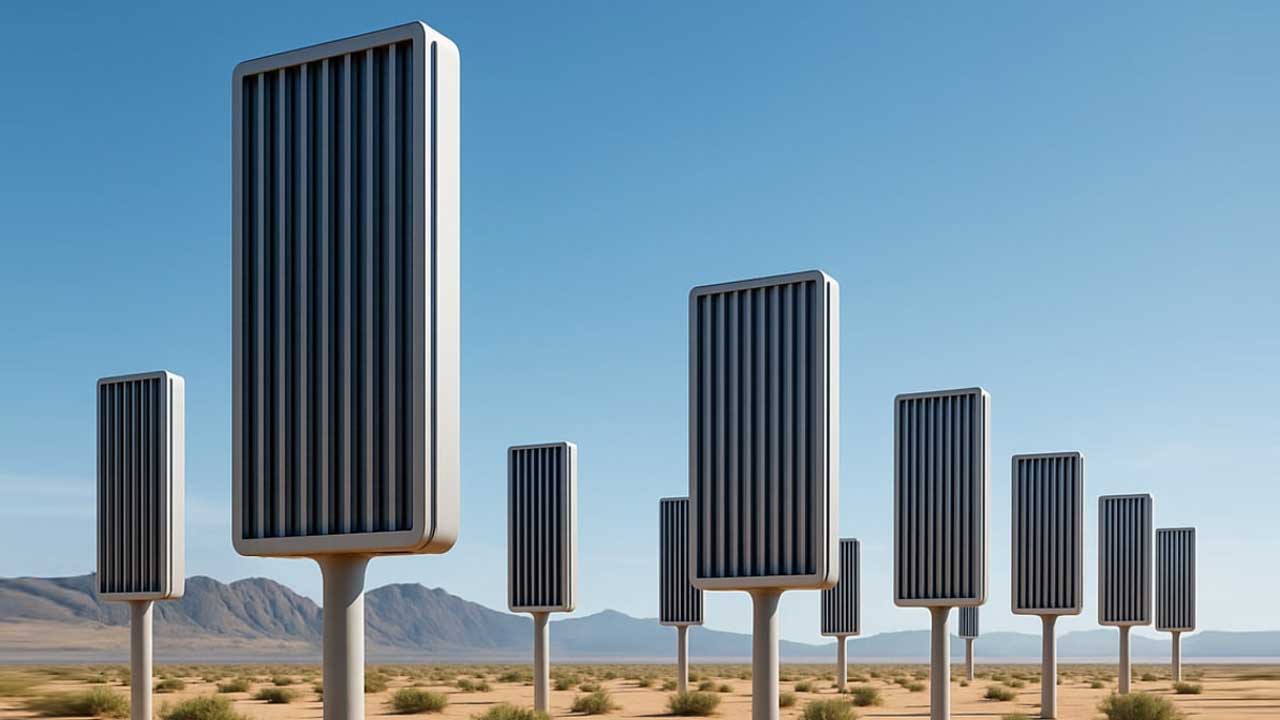

Engineered “trees” are moving from lab sketches to steel and sorbent in the ground, promising to pull carbon dioxide directly from the air at industrial scale. Instead of leaves and bark, these machines use chemistry and clever design to strip CO₂ from the atmosphere and either store it or reuse it, turning a core driver of climate change into a controllable variable. As natural forests struggle to keep pace with rising emissions, these artificial counterparts are being pitched as a new front line in the fight to stabilize the climate.
They are not a silver bullet, and they will not replace the need to cut fossil fuel use, but they are starting to look less like science fiction and more like infrastructure. From university prototypes to early commercial “mechanical forests,” the technology is advancing fast enough that policymakers and investors are beginning to treat it as a serious tool for climate risk management.
From conference curiosity to climate necessity
The modern push for artificial trees gained momentum when physicist Klaus Lackner began arguing that humanity would need dedicated machines to clean up its own emissions, not just rely on natural ecosystems. At the Comer Abrupt Climate Change Conference, Lackner laid out how rising concentrations of carbon dioxide trap heat in the atmosphere and why simply slowing emissions would not be enough to reverse that trend, a case that By Janice Cantieri reported as part of a broader look at how CO₂ holds heat. His argument was blunt: if we keep adding greenhouse gases faster than natural systems can absorb them, we will need engineered systems that can run in reverse.
Lackner’s early designs replaced leaves with specialized materials that bind CO₂ when exposed to air and release it when treated with water or heat, allowing the captured gas to be compressed and stored. By Janice Cantieri described how Klaus Lackner’s devices, presented at the Comer Abrupt Climate Change Conference, were conceived as modular units that could be deployed wherever land and energy were available, effectively creating a distributed network of carbon scrubbers. That framing, treating carbon removal as infrastructure rather than a niche experiment, helped shift artificial trees from curiosity to a potential pillar of long term climate strategy.
How artificial trees work, and why they are so fast
At the core of these systems is a simple idea: instead of waiting for photosynthesis, use chemistry to grab CO₂ directly from the air. Whereas natural trees rely on sunlight, water, and biological growth to slowly lock away carbon, engineered devices use sorbent materials and controlled reactions to pull carbon dioxide from the atmosphere and then concentrate it for storage or reuse. One project framed the contrast starkly, noting that whereas trees rely on photosynthesis to remove CO₂ and produce oxygen, their invention pulls carbon dioxide from the air specifically to tackle air pollution and climate change.
Advances in materials science are pushing the speed of these reactions far beyond what biology can manage. Scientists at Columbia University have developed an artificial tree that removes carbon dioxide from the air much faster than a real tree, using engineered surfaces to capture and then release CO₂ as a pure, concentrated gas stream. Reporting on this work highlighted how Columbia University scientists designed their system to improve air quality and reduce carbon footprints by cycling sorbent materials through capture and regeneration phases, a process that allows the artificial tree to operate continuously and at high throughput Scientists.
Mechanical forests and the leap to industrial scale
The United States has already begun shifting from benchtop experiments to early industrialization of what some developers call Mechanical Trees. In one widely shared update, observers noted that The United States has transitioned from laboratory experiments to the early industrialization of “Mechanical Trees,” signaling that this technology is now being treated as part of a broader push toward net zero emissions rather than a distant concept. That same report linked the rollout of Mechanical Trees to a wider ecosystem of climate tech companies, including efforts by firms such as HeirloomCarbon, underlining how these devices are being woven into national sustainability and energy innovation plans.
Commercial direct air capture projects are starting to look like infrastructure in their own right. One example is Project Bison, located in Wyoming, which has been highlighted as a leading direct air capture carbon credit project because it combines large scale CO₂ removal with robust carbon storage infrastructure. Analysts describing Project Bison have used it to illustrate the broader science and business case for direct air capture, arguing that the ability to pull CO₂ from ambient air and lock it away underground or in durable products can underpin credible carbon credit markets and help hard to abate sectors manage their emissions Project Bison.
1,000 times faster than nature
Speed is the headline claim that keeps resurfacing as artificial tree designs mature. In one assessment of synthetic tree technology, researchers involved in the work stated, “We believe the synthetic trees we are building are about 1,000 times as efficient as pulling CO₂ out of the air than a normal tree,” a figure that captures both the ambition and the disruptive potential of the approach. That same report emphasized that this efficiency advantage could allow relatively compact installations to match the carbon removal of vast natural forests, giving engineers and planners a new tool where land is scarce or ecosystems are already under stress 1,000.
Columbia University’s latest prototype has pushed that narrative even further. In a recent overview of the project, observers described how Columbia University Builds an Artificial Tree That Captures CO₂ 1,000× Faster Than Nature Researchers at Columbia University, underscoring that the device is designed to clean the air 1,000 times faster than natural processes without using farmland or water. By compressing that capability into a compact footprint, the Columbia University team is effectively turning carbon removal into a modular technology that can be slotted into urban landscapes, industrial sites, or dedicated “mechanical forests” where traditional reforestation is not practical 1,000x.
Competing designs, from artificial leaves to sorbent forests
Not all artificial trees look like towers or columns. Some researchers are pursuing artificial leaves that mimic photosynthesis with engineered materials, using sunlight to drive chemical reactions that split carbon dioxide into useful products. One such artificial leaf system was described as activating when sunlight hits its surface, triggering reactions that break CO₂ into oxygen gas and solid carbon compounds, with the oxygen released back into the air and the carbon stored in stable forms. Advocates for this approach have argued that one artificial tree using this kind of technology can match the work of many natural trees by continuously converting CO₂ into oxygen gas and solid carbon compounds as long as light is available When.
Other designs focus less on mimicking biology and more on optimizing industrial chemistry. Analysts exploring whether artificial trees are the future of climate action have described systems where air is drawn over sorbent materials that selectively bind CO₂, which is then released as a pure, concentrated gas when the material is heated or otherwise regenerated. At the heart of this approach is the ability to cycle sorbents repeatedly, capturing CO₂ from ambient air and then delivering it as a pure, concentrated gas stream suitable for storage or use in products such as synthetic fuels or building materials At the heart.
More from Morning Overview