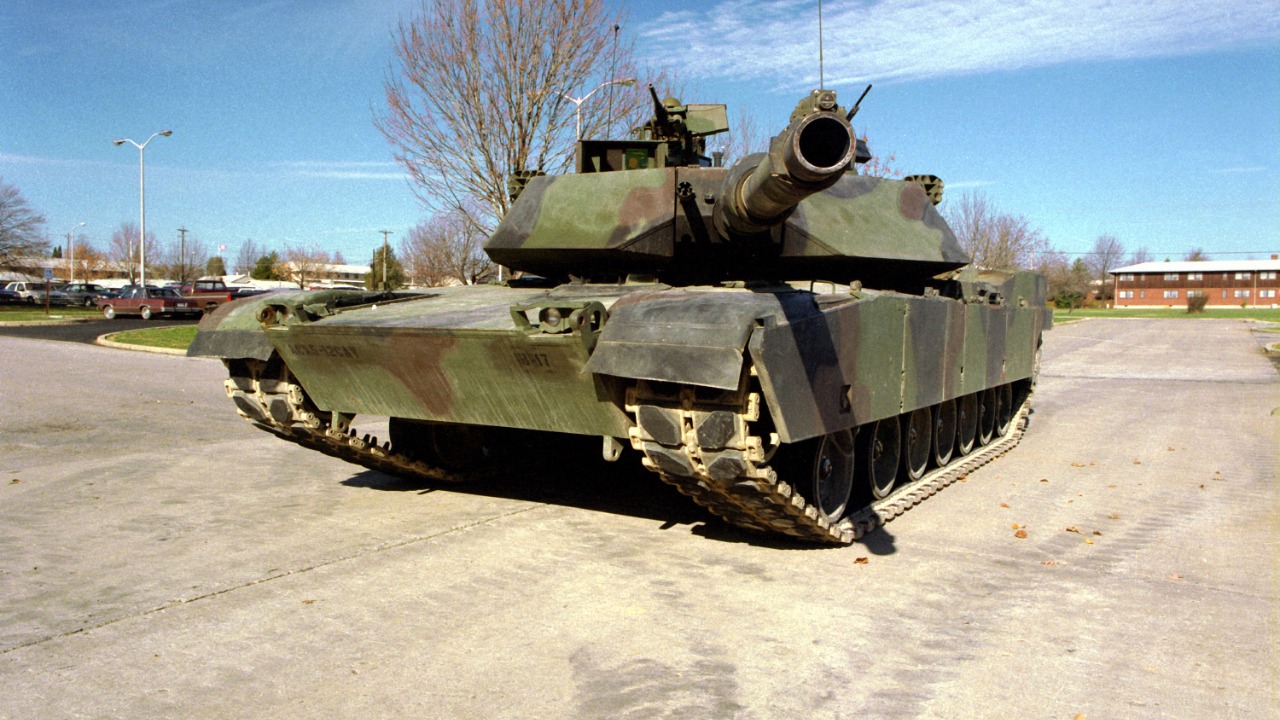

The U.S. Army has rolled its next-generation Abrams into one of the most civilian venues imaginable, parking a prototype main battle tank amid electric SUVs and concept cars at the Detroit Auto Show. The debut signals not just a new vehicle, but a deliberate effort to fuse battlefield requirements with Detroit’s design culture and Formula One style engineering.
By bringing the M1E3 into the same spotlight as the latest consumer models, the service is betting that weight savings, digital controls, and a radically reworked crew compartment can matter as much to the public as horsepower and range. I see that choice as a statement of intent: the Army wants this tank to feel less like a Cold War relic and more like a platform that belongs in the same conversation as cutting edge automotive technology.
The Mone Ethree Abrams takes center stage in Detroit
On the show floor, the Army is describing the vehicle as the M1E3, but one official presentation at the event refers to it as the Mone Ethree Abrams, a next generation evolution of America’s main battle tank. The prototype is based on the existing Abrams family, yet it is being framed as a clean break in how the Army thinks about survivability, crew workload, and long term upgrades. At the Detroit Auto Show, the military is emphasizing that this is an early configuration, subject to change before final production decisions are made, but the core architecture is already visible.
Service officials have treated the reveal as a marquee moment for the North American International Auto Show, positioning the tank as one of the event’s biggest draws for visitors who might otherwise come only for new trucks and crossovers. In one account of the rollout, the Army invited observers to get close to the New Tank and study its lines, treating it almost like a concept car that hints at where the brand is headed. That framing matters, because it underscores how the M1E3 is being sold not just as a weapon, but as a technology showcase that must compete for attention in a crowded innovation marketplace.
Lighter armor, smarter architecture
Underneath the familiar silhouette, the most consequential change is weight. The Army is highlighting that the new configuration is a 60-ton design, compared with earlier Abrams variants that topped 73 tons. That reduction is not cosmetic. Shedding more than ten tons opens up options for bridges, transport aircraft, and muddy roads that have long constrained heavy armor. It also reflects a shift away from simply piling on more steel and composite in favor of a more nuanced balance between protection, mobility, and the ability to add new systems later.
Army engineers are pairing that weight loss with a government owned open systems architecture that is meant to make future upgrades less painful. Official material on the prototype stresses that the vehicle’s digital backbone is designed for easier integration of sensors, weapons, and defensive suites, a point underscored in an Army description of the early Abrams configuration. By streamlining sustainment needs and standardizing interfaces, the service is trying to avoid the kind of bespoke wiring and software that has made past upgrades slow and expensive.
A Formula One style cockpit and video game controls
Inside, the M1E3 looks less like a traditional tank and more like a race car crossed with a gaming rig. The Army has repeatedly described the crew compartment as a Formula 1 style cockpit, a comparison that is not just rhetorical. Reporting from Detroit notes that a Formula 1 team helped design the seating and control layout, borrowing from the ergonomics and safety practices of elite motorsport. That influence is visible in the wraparound displays and the way controls are clustered around the crew, reducing the need to reach for analog switches scattered across the hull.
The control scheme itself leans heavily on familiarity from consumer tech. The Army is openly touting video game style controls, with one Detroit station emphasizing that the tank on display can be driven using a controller that would not look out of place on a living room console. According to local coverage of the Detroit Auto Show, that choice is deliberate, meant to shorten the learning curve for younger soldiers who grew up on first person shooters. It also hints at a future in which remote or semi autonomous operation becomes more common, since digital controls are easier to abstract away from the physical vehicle.
Detroit know how meets Army requirements
Placing the M1E3 in Detroit is more than a publicity stunt. The Army has been explicit that it wants to tap into local automotive expertise, including the design language and manufacturing discipline that underpin modern cars and trucks. One detailed account of the rollout notes that the Lighter and Faster design philosophy was shaped in part by conversations with industry about how to cut mass without sacrificing structural integrity. That same reporting describes how the Army is using the show to solicit feedback from engineers and suppliers who normally work on pickups and performance cars.
Officials are also framing the tank’s development cycle in language that would sound familiar to any Detroit product planner. One program leader compared the rollout to a new model year ramp, saying that, Like a car company, the Army expects to refine the design by the time it enters production. That analogy, captured in comments from Denomy, underscores how closely the program is trying to mirror commercial development practices, from iterative prototyping to user centered tweaks based on early impressions.
From secret reveal to public prototype
The Detroit debut did not come out of nowhere. Earlier coverage described a more controlled unveiling of the M1E3, framed as Inside the Secret new platform, where select observers were walked through the design’s emphasis on countering modern anti tank threats. That private briefing focused on how the Army is rethinking armor packages, active protection, and sensor fusion to keep crews alive in an era of cheap drones and top attack munitions. By the time the tank rolled into the auto show, much of that narrative had been distilled into talking points about being lighter, faster, and more adaptable.
Institutionally, the program has been tracked as a prototype effort, with The Army using early test articles to validate research methods that prioritize crew survivability and mission effectiveness. A Washington Report style summary of the effort notes that The Army is treating the M1E3 as a laboratory for new protection schemes and digital integration, rather than a simple incremental upgrade to the Abrams line. That framing helps explain why the service is comfortable showing an unfinished vehicle in Detroit, complete with caveats about how some details may change before fielding.
More from Morning Overview