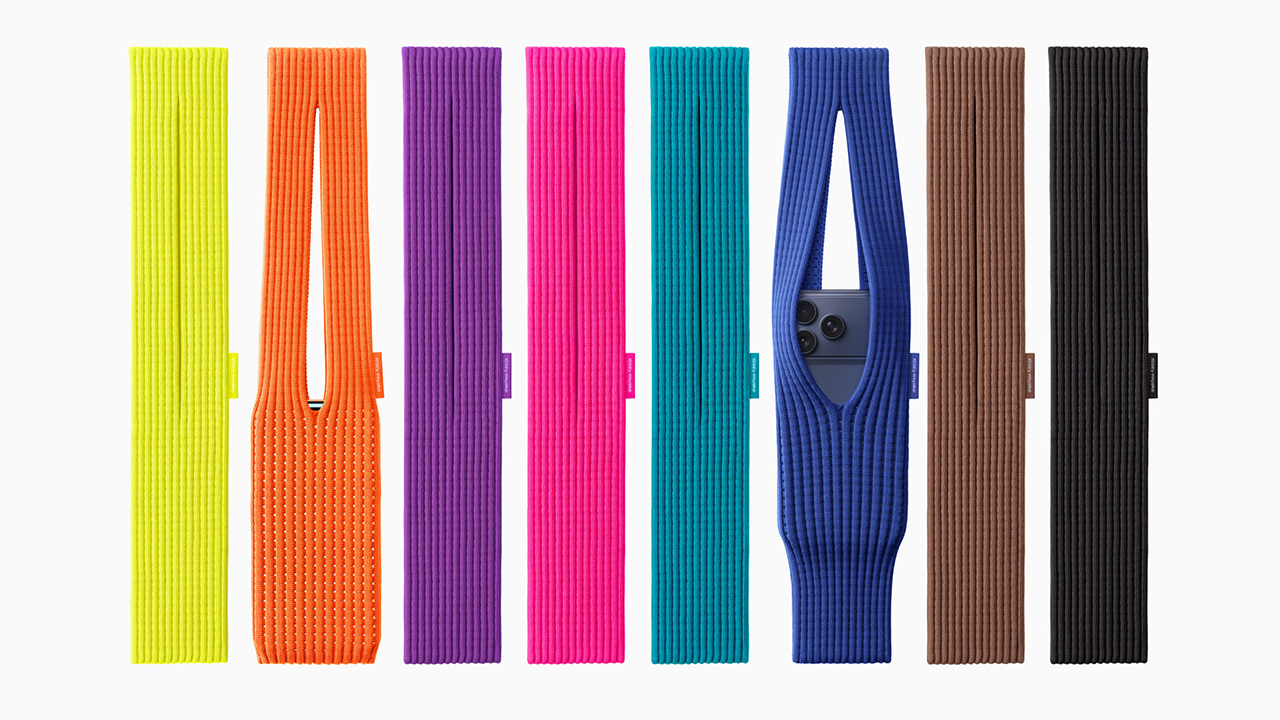

Apple’s latest accessory, a $230 fabric “iPhone Pocket” that looks uncannily like a luxury sock, has already vanished from official shelves after a burst of demand and ridicule. The limited run sold through so quickly that shoppers are now left with waitlists, resale markups, and a growing cottage industry of knockoffs trying to cash in on the hype. As I sift through the reaction, it is clear this is not just a quirky product story but a revealing snapshot of how Apple’s brand power collides with internet culture and consumer skepticism.
The iPhone Pocket has become a Rorschach test for what people think Apple stands for in 2025: design-led innovation, out-of-touch luxury, or a bit of both. Its rapid sellout, despite a price that rivals midrange earbuds or a budget Android phone, shows how far some fans will go to stay inside the company’s aesthetic universe. At the same time, the backlash and memes highlight a widening gap between Apple’s premium ambitions and what many people consider reasonable value for a simple piece of fabric.
What exactly is the iPhone Pocket sock?
Apple describes the iPhone Pocket as a way to “wear and carry” an iPhone, positioning it less as a case and more as a fashion accessory that integrates the device into clothing. In official materials, the company presents it as a carefully engineered textile sleeve that can be attached to garments or bags, with cutouts and stitching tailored to modern iPhone dimensions and camera bumps. The product is framed as part of a broader push into wearable-style accessories, with Apple emphasizing the craftsmanship and materials in its own iPhone Pocket announcement.
In practice, the accessory is a narrow, elongated pocket made from premium fabric that cradles the phone and leaves the top edge accessible, functioning more like a designer sleeve than a protective case. It is marketed as compatible with current iPhone models and is shown in promotional images stitched onto jackets and trousers, turning the phone into a visible style element rather than something hidden in a standard pocket. The $230 price tag reflects Apple’s positioning of the item as a fashion object, not a utilitarian add-on, which is exactly what has made it so polarizing.
How a $230 fabric sleeve sold out almost instantly
Despite the skepticism, the iPhone Pocket sold through its initial stock almost as soon as it appeared on Apple’s online store, with shipping estimates slipping and then flipping to unavailable in short order. Early coverage noted that the accessory, which many people online immediately dubbed an “iPhone sock,” was listed at $230 and still managed to disappear from inventory in what one report described as nearly immediate sellouts across color options. That rapid run on supply was highlighted in detailed coverage of how the costly iPhone Pocket sells out, underscoring that the price did not deter early adopters.
Retail trackers and shopping outlets followed up by confirming that the product was fully unavailable through official channels, with buyers encountering “sold out” notices instead of add-to-bag buttons. Lifestyle and shopping reporters described how the $230 cut of fabric had become impossible to buy directly, noting that Apple’s own listings were cleared out and that customers were being pushed toward waitlists or alternative options. One widely shared shopping piece flatly stated that Apple’s iPhone Pocket sock is fully sold out, capturing the mix of disbelief and inevitability that tends to follow limited Apple accessories.
Internet mockery, memes, and the “$230 sock” punchline
As soon as images of the iPhone Pocket circulated, social media users seized on the resemblance to a high-end sock and turned the accessory into a running joke. Commenters fixated on the idea that Apple was charging $230 for what looked like a simple fabric tube, with many posts comparing it to novelty socks, DIY sewing projects, or the original iPod Socks from the mid-2000s. Coverage of the reaction emphasized how customers were “mocking” the product’s price and design, with one report detailing how Apple’s $230 iPhone Pocket sock was mocked by customers who saw it as emblematic of tech luxury gone too far.
News outlets chronicled the wave of memes, from people posting photos of regular socks taped to their jeans to others joking that they would knit their own “Apple-certified” pockets for a fraction of the cost. One widely cited piece described the accessory as a “$230 cut sock,” capturing the sense that Apple had simply sliced a premium stocking and added a logo. That phrase appeared in coverage explaining how the $230 cut sock became Apple’s iPhone Pocket, reinforcing the narrative that the product’s perceived simplicity clashed with its luxury pricing.
Why people still bought it: brand power, scarcity, and fashion
For all the mockery, the fact that the iPhone Pocket sold out so quickly points to the enduring pull of Apple’s brand and the appeal of limited, design-forward accessories. Some buyers clearly saw it as a collectible, akin to special-edition watch bands or collaboration sneakers, where scarcity and association with a powerful brand matter as much as function. Reports on the sellout noted that the accessory’s high price did not prevent it from vanishing from Apple’s store, with one analysis emphasizing that the YouTube, captured the mix of curiosity and skepticism that has defined much of the conversation, with the creator acknowledging the product’s build quality while questioning its value.
Shopping-focused outlets, meanwhile, leaned into service journalism, explaining where the accessory could still be found and what alternatives exist. One lifestyle site framed the story around the fact that the official announcement, makes clear that this is not meant to be a mass-market protective case. Instead, it is a niche, high-margin product aimed at customers who see their phone as part of their outfit and are willing to pay luxury prices to keep that aesthetic consistent.
At the same time, the backlash shows the limits of that strategy when the perceived gap between cost and complexity becomes too wide. Many people are comfortable paying a premium for a flagship iPhone or a well-made leather case, but a $230 fabric sleeve that resembles a sock tests how far that willingness extends. The fact that the accessory sold out while being widely mocked suggests that Apple can still count on a core audience that will buy into its most experimental ideas, even as a larger public watches from the sidelines and turns those ideas into punchlines.
More from MorningOverview