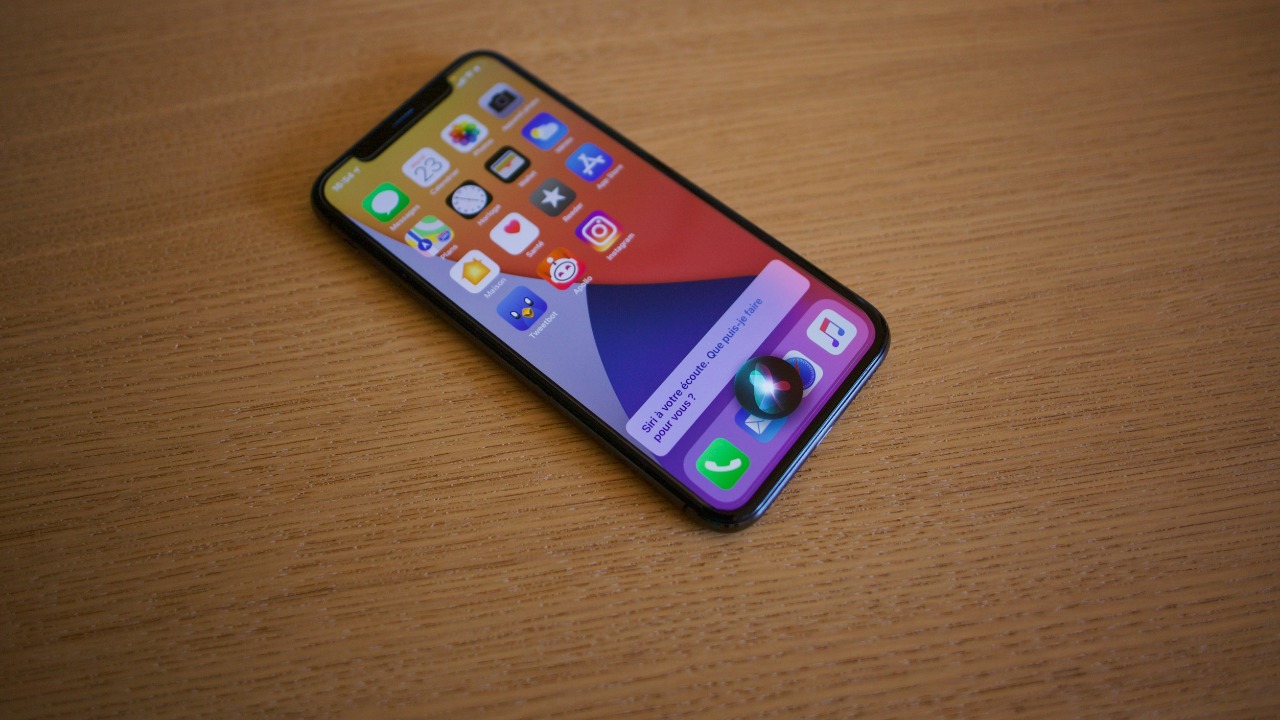

Apple is turning its long-delayed Siri reboot into a make-or-break moment for its next decade of growth, tying the assistant’s future to a broader push into artificial intelligence services that can be sold across its massive hardware base. The company is betting that a smarter, more conversational Siri will not only catch up to rivals but also unlock new subscription revenue that keeps iPhone owners spending long after hardware upgrades slow.
At the center of that bet is a decision that would have been unthinkable a few years ago: Apple is leaning on Google’s AI to power key parts of the overhaul, even as it tries to preserve its own brand of privacy, integration, and control. The result is a high-stakes partnership that could reshape both companies’ roles in the AI race and determine whether Apple can turn its assistant from a punchline into a profit engine.
The delayed reboot that raised the stakes
Apple has been promising a smarter Siri for years, but its own timeline has repeatedly slipped, turning what might have been a routine upgrade into a strategic stress test. Earlier in its AI push, Apple’s internal plans hit turbulence, with its Roadmap Hits Roadblock as the company acknowledged that its Siri Revamp Pushed to 2026 would have an Impact on the Big Tech AI race. That delay effectively gave competitors like OpenAI and Google more time to define consumer expectations for what an AI assistant should be, while Apple’s own product looked increasingly dated.
Inside the company, the Siri overhaul has required a deep rebuild of the underlying software frameworks that sit across iOS, macOS, and other platforms. Reporting has detailed how Craig Federighi, Apple’s senior vice president of software engineering, has overseen an initial AI framework rebuild that forced Apple to push the Siri overhaul to 2026, with the work touching iOS, macOS, and other Apple platforms According to accounts that also cite The Wall Street Journal, Tom, and Guide. That kind of foundational change is slow and risky, but it is also the only way to move from a rules-based assistant to one that can reason with large language models at the scale users now expect.
What the new Siri is supposed to do
Apple’s vision for the new Siri is not just incremental; it is a shift from a command-driven helper to a conversational interface that can understand context, follow up on questions, and act more like a real-time AI agent. The company is reportedly working on a more conversational version of Siri that is powered by advanced large language models, with the goal of making the assistant feel less like a rigid menu system and more like a fluid dialogue partner for tasks that range from messaging to productivity to entertainment Siri. That shift mirrors the broader industry move toward chat-style interfaces, but Apple’s challenge is to embed it deeply into the operating system rather than keep it as a standalone chatbot.
The company also wants Siri to become a true gateway to the internet, not just a front end for a handful of pre-programmed queries. The internal vision is to turn Siri from a limited voice assistant into a tool that can pull useful answers from across the internet, in a way that competes with systems like ChatGPT or Google’s AI Overviews, while still feeling native to the iPhone and Mac experience Siri. Earlier reporting has suggested that Apple’s big Siri overhaul is tracking toward a spring 2026 window, with expectations that it will handle more complex multi-step tasks, better app integration, and richer on-device understanding of user context, all of which are meant to make the assistant feel less like a novelty and more like a daily driver Apple and Siri.
Why Apple is turning to Google’s AI
The most striking element of Apple’s plan is its decision to bring Google into the heart of its AI stack, a move that underscores both the urgency of catching up and the complexity of building frontier models from scratch. Apple has picked Google to power AI for its long-delayed Siri overhaul, a choice that ties the assistant’s future to Google’s model roadmap and cements the search giant as a core technology supplier alongside existing deals around default search Thomas Barrabi. That reporting notes that the arrangement involves AAPL and GOOG and even cites the figure 56, underscoring how closely the market is watching the financial implications of the partnership.
On a strategic level, Apple’s choice reflects a calculus that buying access to best-in-class models is cheaper and faster than trying to match them immediately with in-house efforts. Analysis of the deal has emphasized that this approach allows Apple to maintain robust free cash flow, which in turn supports share buybacks and a stable dividend, while also positioning Apple as one of Google’s most valuable and discerning clients in AI Jan. In parallel, both companies have confirmed a multiyear deal for AI technology around Siri, with commentary crediting Mark German for breaking the story earlier and describing how Google will work closely with Apple on the model integration, a sign that this is not a superficial licensing arrangement but a deep technical collaboration Mark German.
Gemini, Apple Intelligence, and the services play
Google’s Gemini models are central to this new alignment, and they also highlight how Apple is threading the needle between outsourcing and owning its AI destiny. Apple has teamed up with Google Gemini for an AI-powered Siri, at a moment when Alphabet’s AI surge has made it the 4th-ever company to crack a 4 trillion dollar market cap, with that valuation milestone arriving after a rapid expansion in market cap in about seven years Alphabet. For Apple, tapping Gemini is a way to give Siri state-of-the-art reasoning and search capabilities without abandoning its own branding or user experience, while for Google it is a chance to put its models in front of hundreds of millions of high-spending users who may never visit a Google website directly.
At the same time, Apple is not ceding the entire AI layer to its partner. Apple CEO Tim Cook has framed the company’s Apple Intelligence initiative as the backbone of its next wave of products, with Apple Intelligence-enhanced Siri on track for a 2026 debut and Cook saying that the long awaited Apple Intelligence boost means the company’s AI ambitions are back on track Apple Intelligence. In practice, that likely means a hybrid model in which Apple Intelligence handles on-device personalization and privacy-sensitive tasks, while Gemini or other cloud models tackle open-ended reasoning and web-scale search, all wrapped in services that can be monetized through iCloud tiers, productivity bundles, or new AI-specific subscriptions.
Investor pressure and the risk of missing the AI moment
Behind the product decisions sits a more basic question: can Apple convince investors that it is still the growth story of the AI era, not a laggard riding on others’ breakthroughs. The market’s patience has already been tested, with Warren Buffett’s Berkshire Hathaway reducing its Apple stake by 74% over two years, even though Apple still accounts for 22% of the portfolio, while Alphabet has emerged as a key alternative holding in that same narrative Quick Read. That shift does not mean Wall Street has written Apple off, but it does signal that some of the most closely watched investors are rebalancing toward companies perceived to be more directly leveraged to AI infrastructure and cloud growth.
More from Morning Overview