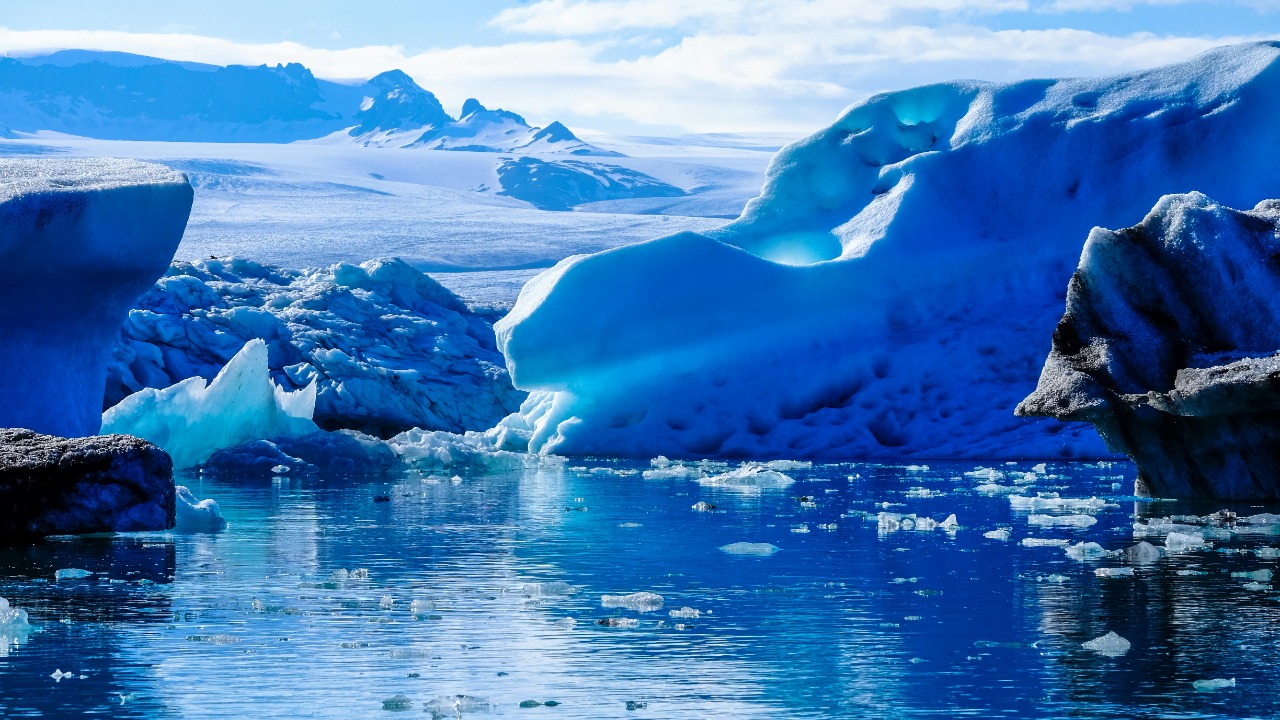

Antarctica is shedding ice, heat, and stability in ways that are no longer confined to obscure scientific journals or distant satellite feeds. The continent’s frozen edge is now revealing fresh pathways of weakness, from thinning shelves to shifting ocean gateways, that are quietly rewriting expectations about how fast seas can rise and how far climate change has already progressed. I want to trace how this new unraveling is being detected, interpreted, and, in some corners of the internet, distorted.
Antarctica’s new warning signs at the edge of the ice
The most immediate signs that Antarctica is changing are not buried deep in the interior but etched along its fringes, where floating ice shelves meet a warming ocean. Researchers have been documenting how these shelves, which act like buttresses holding back inland glaciers, are thinning and cracking in patterns that point to accelerating stress rather than a gentle, linear decline. The emerging picture is of a continent whose outer defenses are weakening in multiple places at once, creating new routes for ice to flow more quickly into the sea.
Some of the most widely shared images of this transformation circulate far from academic platforms, in social posts that show fractured ice plains and unexpected meltwater ponds as evidence that the frozen south is not behaving as people once assumed. One widely shared photograph frames the change as “not what people expected,” a phrase that captures how the visual record of Antarctica’s edge has outpaced older assumptions about its stability, even if the post itself offers little scientific context for the scene it presents, as in this image. The scientific concern is not any single dramatic picture but the cumulative pattern: more open water where there used to be solid ice, more fractures where there used to be smooth shelves, and more evidence that the continent’s perimeter is becoming a patchwork of vulnerabilities.
How warm water is carving hidden pathways under the ice
Behind the visible cracks and calving fronts lies a quieter but more consequential process, in which relatively warm ocean water slips beneath floating ice and eats it away from below. Oceanographers have been tracking how currents that once stayed offshore are now pushing closer to the continent, finding weak spots in the underbelly of ice shelves and carving channels that are invisible from the surface. This under-ice erosion can thin shelves by several meters without leaving obvious scars on top, setting the stage for sudden breakups years later.
Video explainers and animations have tried to make this hidden process legible to a broader audience, showing how warm water can funnel through submarine canyons and undercut the grounding lines that anchor ice to the seafloor. One such explainer walks viewers through the mechanics of under-ice melting, using simplified diagrams to show how a small change in ocean circulation can open a much larger pathway for heat into the ice sheet, as seen in this ocean-ice overview. Another clip focuses on the feedbacks that follow, illustrating how thinning shelves lose contact with the seabed and allow inland ice to accelerate, a chain reaction that turns a subtle shift in water temperature into a long‑term commitment to higher sea levels, as in this detailed breakdown. Together, these accounts underscore that the newest “pathways” of Antarctic change are not just surface cracks but deep, underwater corridors of heat.
Ice shelves as gatekeepers, and what happens when they fail
Ice shelves matter because they regulate how quickly the vast glaciers behind them can slide into the ocean. When a shelf is thick and firmly grounded, it acts like a brake, spreading the glacier’s weight over a wide area and slowing its flow. As shelves thin and retreat, that braking effect weakens, and the glaciers feeding them can speed up, delivering more ice to the sea each year and locking in higher future sea levels even if emissions were to fall sharply.
Short social clips often capture the drama of this process in a single calving event, showing a towering wall of ice collapsing into the ocean in a matter of seconds. One widely shared reel, for example, focuses on the spectacle of a massive ice front disintegrating, framing it as a kind of cinematic disaster sequence rather than a symptom of long‑running structural decline, as in this viral footage. The scientific record, however, treats such moments as endpoints of a longer story: years of basal melting, widening crevasses, and shifting stress patterns that eventually leave a shelf too fragile to hold together. When that happens, the glaciers behind it often respond within months, accelerating in ways that are measurable from space and effectively irreversible on human timescales.
From remote frontier to viral backdrop: Antarctica in the public imagination
As Antarctica’s physical reality changes, so does its place in the public imagination. What was once a remote, almost mythical frontier is now a recurring backdrop in social feeds, where clips of collapsing cliffs, surreal blue melt ponds, and cruise‑ship flyovers compete for attention with celebrity news and political memes. This shift has made the continent more visible than ever, but it has also blurred the line between documentation and spectacle, with some posts using Antarctic imagery as a generic symbol of crisis without explaining what is actually happening on the ground.
One widely shared photograph, for example, juxtaposes a serene ice landscape with a caption that hints at hidden danger, inviting viewers to project their own fears or skepticism onto the scene, as in this stylized shot. The result is a kind of ambient anxiety about the poles, where people sense that something is going wrong but are left without clear metrics or mechanisms to grasp the scale of the change. For climate communication, that gap matters: without concrete explanations of how ice loss translates into coastal flooding, ocean circulation shifts, or ecosystem disruption, the unraveling of Antarctica risks becoming just another background image in a crowded attention economy.
Why language and framing shape how we understand a melting continent
The way we talk about Antarctic change is not a cosmetic choice; it shapes what people think is happening and what they believe can be done. Terms like “collapse,” “doomsday glacier,” or even “unraveling” can capture urgency but also risk implying that the outcome is fixed, that the only story left to tell is how bad it will get. Scientists, by contrast, tend to speak in probabilities, ranges, and conditional futures, emphasizing that the rate and extent of ice loss still depend heavily on emissions and policy decisions made far from the ice itself.
The tension between dramatic storytelling and precise description shows up even in the tools used to analyze climate language. Large text datasets, for instance, reveal which words and metaphors cluster around topics like Antarctica, highlighting how certain phrases become dominant frames. One technical vocabulary file used to train language models includes a dense list of tokens that encode how climate and polar science are discussed across millions of documents, as in this model vocabulary. Another curated word list, originally assembled to study how ideas replicate online, shows how certain terms spread and become “sticky,” shaping public narratives about risk and responsibility, as reflected in this replicated words collection. When those dominant frames lean heavily on catastrophe without nuance, they can leave people feeling that the story of Antarctic ice is already written, even though the science is clear that choices made now still matter.
Separating spectacle from science in Antarctic storytelling
One of the challenges in covering Antarctica today is separating what is visually arresting from what is scientifically pivotal. A single iceberg the size of a city can make for a gripping headline, yet the slow, steady thinning of an ice shelf by a few centimeters a year may matter more for long‑term sea level. The most consequential developments often lack cinematic footage: subtle shifts in snowfall patterns, changes in the speed of ice streams, or the quiet advance of warm water beneath a shelf that still looks intact from above.
Short videos and social posts tend to favor the spectacular, which can skew public perception toward sudden, dramatic events and away from the incremental processes that actually drive most of the risk. When a clip shows a glacier front collapsing in a roar of ice and spray, it rarely notes how many years of basal melting and structural weakening preceded that moment, or how the glacier’s flow speed changed afterward. The task for journalists and communicators is to use those compelling visuals as entry points, then connect them to the slower, less visible dynamics that determine how much and how fast Antarctica will contribute to rising seas. Without that bridge, the continent’s unraveling is reduced to a series of disconnected shocks rather than a coherent, measurable trend.
What Antarctica’s shifting ice means for coasts far from the pole
The stakes of Antarctic change are not confined to the Southern Ocean. As ice shelves thin and glaciers accelerate, the additional water they add to the ocean raises sea levels around the world, with uneven impacts depending on local geography and land subsidence. Low‑lying cities such as Miami, Lagos, and Jakarta, along with delta regions from the Mekong to the Nile, are particularly exposed to even modest increases in baseline sea level, which amplify storm surges and high tides.
Scientists have repeatedly stressed that the pace of Antarctic ice loss is one of the biggest uncertainties in projections of future sea level, especially beyond the next few decades. If warm water continues to find new pathways under key ice shelves, the contribution from Antarctica could shift from a slow drip to a more rapid flow, compressing centuries of expected change into a much shorter window. That possibility is what makes the continent’s newly revealed vulnerabilities so consequential: they are not just curiosities at the end of the Earth but early signals of how much coastal infrastructure, from subway tunnels to sewage systems, will need to be redesigned or relocated within the lifetimes of people alive today.
The limits of what we know, and the urgency of what we do
Despite the growing body of satellite data, field measurements, and model simulations, large parts of Antarctica remain poorly observed, especially in winter and beneath thick ice shelves. Researchers are still working to pin down how quickly key thresholds might be crossed, such as the point at which a retreating grounding line triggers a self‑sustaining loss of ice. That uncertainty cuts both ways: it means the worst‑case scenarios are not guaranteed, but it also means there is less time than many assume to avoid locking them in.
What is clear from the converging lines of evidence is that Antarctica is not a static white backdrop but a dynamic system already responding to the heat humans have added to the planet. The new pathways of melt and motion being mapped today will shape coastlines for centuries, long after the social media posts and viral videos have faded. The question that remains open is how much more of the continent’s stability we are willing to trade away before we treat its unraveling not as a distant spectacle, but as a present‑tense consequence of choices still within our control.
More from MorningOverview