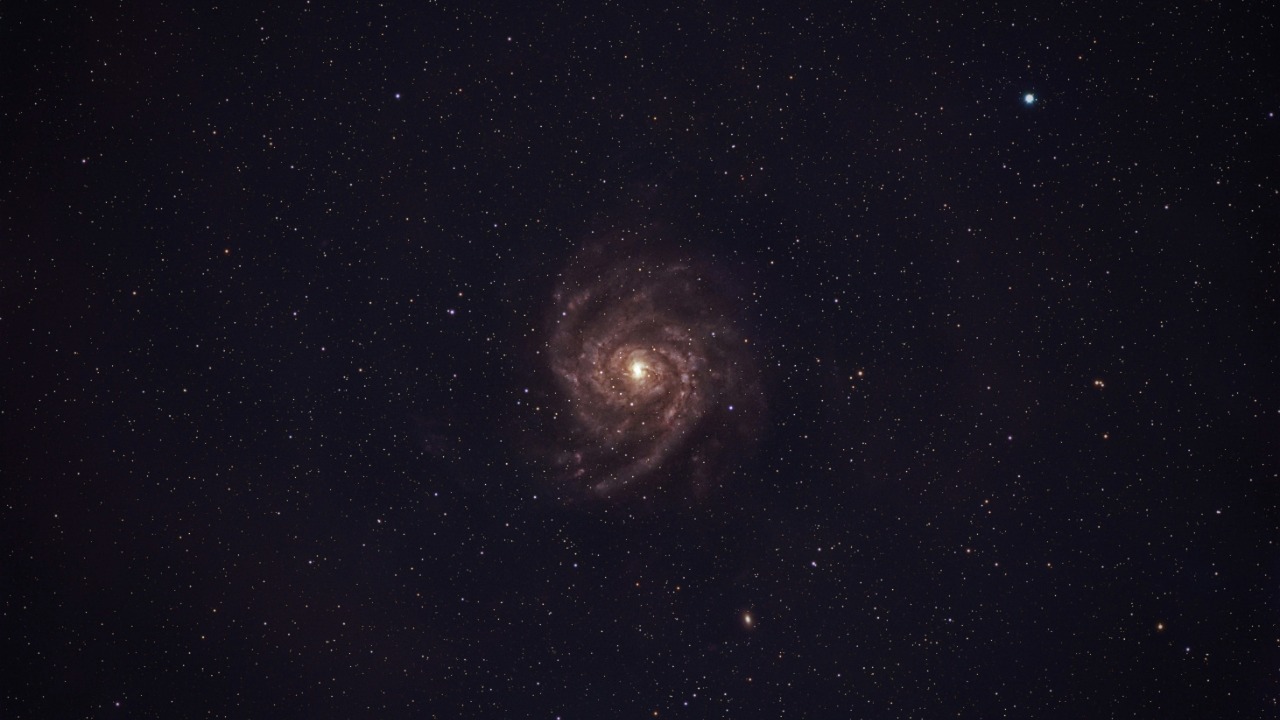

Earth sits in a harsh galaxy filled with high-energy particles that can strip atmospheres, scramble DNA, and sterilize worlds, yet life here has persisted for billions of years. New research suggests one surprising reason: ancient encounters with massive stars may have sculpted a cocoon of gas around the Sun that helps blunt some of that cosmic punishment. Instead of being passive victims of the Milky Way’s violence, our planet and its star may be beneficiaries of stellar blasts that reshaped the space just beyond the solar system.
In this view, the same kind of explosive power that can erase planets from habitability may also carve out temporary safe zones where life has a better chance to take hold. I see this as a story about cosmic luck layered on top of planetary defenses, where the Sun’s neighborhood, Earth’s magnetic field, and the physics of radiation all intersect to decide how much of the galaxy’s fury actually reaches the ground.
How violent stars reshaped the Sun’s neighborhood
Astronomers now argue that the Sun’s surroundings are not a quiet void but a dynamic landscape sculpted by passing giants and stellar explosions. Massive stars that once swept near our system, along with supernova blasts, appear to have pushed and compressed interstellar gas into a series of clouds that the Sun is currently moving through. In this picture, the local environment is the product of repeated encounters with hot, short-lived stars that live fast, die young, and leave behind intricate structures in the gas between stars.
Researchers describe how these passing stars and exploding giants helped shape the early solar system and its broader neighborhood, showing that the galaxy is anything but calm. Instead of drifting through a uniform medium, the Sun has plowed through shock fronts, bubbles, and filaments left behind by these energetic events. That history matters today because the same structures that record those encounters also influence how much cosmic radiation can reach the solar system.
The close brush with two hot B-stars
One of the most striking pieces of this story involves a near miss with two massive, hot stars that once passed close to the solar system. These objects, classified as B-stars, are known for their intense radiation and short lifespans, yet in this case they did not simply blaze by and vanish from relevance. Astronomers have traced how their passage left a physical imprint in the gas just beyond the Sun’s protective bubble, effectively reshaping the local interstellar medium.
Today, these B-stars sit more than 400 light-years from Earth, but their earlier flyby appears to have compressed and disturbed the gas around the heliosphere. The reporting notes that these stars, which today sit more than 400 light-years from Earth, are B-stars that tend to live fast and hard, and that one of them is identified as Epsi. That distant encounter, millions of years in the past, may still be shaping how the Sun interacts with the surrounding medium and how radiation from the wider galaxy filters into our planetary system.
A temporary shelter carved from interstellar clouds
As a result of those ancient encounters, the Sun now appears to sit inside a patchwork of interstellar clouds that act as a kind of buffer. Astronomers describe this region as a Temporary Shelter, a zone where the density and composition of the gas around the heliosphere help soften the worst of the incoming high-energy particles. Instead of drifting in a bare cavity, the solar system is wrapped in a layered environment that modulates what gets through.
In recent coverage, scientists emphasize that this Temporary Shelter in the Galaxy For now provides a measure of protection, although it will not last forever as the Sun continues its orbit around the Milky Way. The idea is that the surrounding clouds, shaped in part by past stellar blasts, help reduce the intensity of ionizing radiation that would otherwise bombard the heliosphere. That makes our current location a kind of cosmic sweet spot, at least for the moment.
Clouds that blunt ionizing radiation
The protective role of these clouds hinges on how they interact with ionizing radiation, the kind of high-energy light and particles that can strip electrons from atoms. When such radiation passes through denser gas, it can lose energy, scatter, or be absorbed, which changes how much ultimately reaches the inner solar system. The Sun’s current position inside a set of local clouds appears to be especially important for this filtering effect.
One team notes that “the fact that the Sun is inside this set of clouds that can shield us from that ionizing radiation may be an important” factor in how much exposure Earth actually receives, tying that idea directly to the fingerprint on the local clouds left by earlier stellar encounters. In other words, the same structures that record the passage of massive stars also act as a partial shield, reducing the flux of dangerous particles that can penetrate the heliosphere and reach planetary atmospheres.
What cosmic radiation actually does to matter and life
To understand why this shielding matters, it helps to look at what cosmic radiation does when it hits matter. High-energy particles and photons can knock electrons off atoms and molecules, a process known as Ionization, which changes their electrical charge and can break chemical bonds. In biological tissue, that damage can disrupt DNA, trigger mutations, and increase the risk of cancer, especially when exposure is sustained or intense.
Technical references define Ionization as the Formation of electrically charged particles that Can be produced by high-energy radiation such as light or UV rays. In space, that process unfolds on a grand scale, as cosmic rays slam into planetary atmospheres and magnetospheres, generating cascades of secondary particles. The more of that radiation is blocked or softened before it reaches Earth, the less biological and technological damage it can cause.
Earth’s built-in defenses: atmosphere and magnetosphere
Even without help from interstellar clouds, Earth is not defenseless. The planet’s thick atmosphere absorbs and scatters much of the incoming radiation, turning potentially lethal energy into harmless heat and light before it can reach the surface. That is one reason commercial airliners like the Boeing 787 or Airbus A350, which cruise at high altitudes, still operate safely, even though passengers and crew receive slightly higher doses of cosmic radiation than people at sea level.
Here on Earth, we have a natural defense system against cosmic radiation that safeguards life on the planet, with HereThe Earth described as being surrounded by this protective region that shields life from radiation and moderates space weather.
How stellar blasts and planetary shields work together
When I put these pieces together, the picture that emerges is not one of a single shield but of layered defenses operating at different scales. On the largest scale, ancient blasts from massive stars and the passage of B-stars like Epsi have sculpted the interstellar medium into clouds that reduce the raw intensity of ionizing radiation reaching the heliosphere. On the intermediate scale, the heliosphere itself, inflated by the solar wind, acts as a buffer that slows and deflects some incoming cosmic rays before they can reach the planets.
Closer in, Earth’s own systems take over, with the magnetosphere and atmosphere absorbing and redirecting what remains of that radiation storm. The result is a kind of nested protection, where the Sun’s position inside local clouds, the structure of the heliosphere, and the planet’s magnetic and atmospheric shields all combine to keep surface conditions within a range that complex life can tolerate. Without any one of these layers, from the Temporary Shelter in the Galaxy For now to the magnetic bubble around the planet, the balance between cosmic violence and biological resilience would look very different.
The limits and risks of our cosmic cocoon
None of these protections are absolute, and that is where the stakes become clear. The Sun will not remain inside the same set of interstellar clouds forever, and as it moves through the Milky Way, the density and composition of the surrounding gas will change. If the Sun eventually drifts into a region with thinner or more turbulent material, the buffering effect against ionizing radiation could weaken, exposing the heliosphere and Earth to a higher flux of cosmic rays.
At the same time, the planet’s internal defenses are not guaranteed to stay constant. Changes in the strength or configuration of Earth’s magnetic field, shifts in atmospheric composition, or human-driven depletion of protective layers like the ozone could all alter how much radiation reaches the surface. In that sense, the ancient star blasts that helped carve our current shelter are only part of the story, and the long-term habitability of Earth depends on how these cosmic and planetary factors evolve together over millions of years.
Why this matters for future exploration and survival
For space agencies and private companies planning missions beyond low Earth orbit, the details of this cosmic shielding are not abstract. Astronauts traveling to Mars in spacecraft like SpaceX’s Starship or NASA’s Orion capsule will leave much of Earth’s atmospheric and magnetic protection behind, relying instead on engineered shielding and careful timing to avoid the worst solar storms. Understanding how interstellar clouds and the heliosphere modulate cosmic radiation helps mission planners estimate the baseline risk that crews will face in deep space.
On a longer horizon, if humanity ever builds permanent habitats on the Moon, Mars, or free-floating stations, designers will need to account for both the planetary environment and the broader galactic context. The same ancient events that shaped the Sun’s neighborhood and created a Temporary Shelter may influence how much shielding future settlers must build into regolith-covered lunar bases or underground Martian cities. In that way, the story of two hot B-stars, the Sun’s path through sculpted clouds, and the physics of Ionization is not just a curiosity about the distant past but a guide to how we might survive in the wider galaxy.
More from MorningOverview