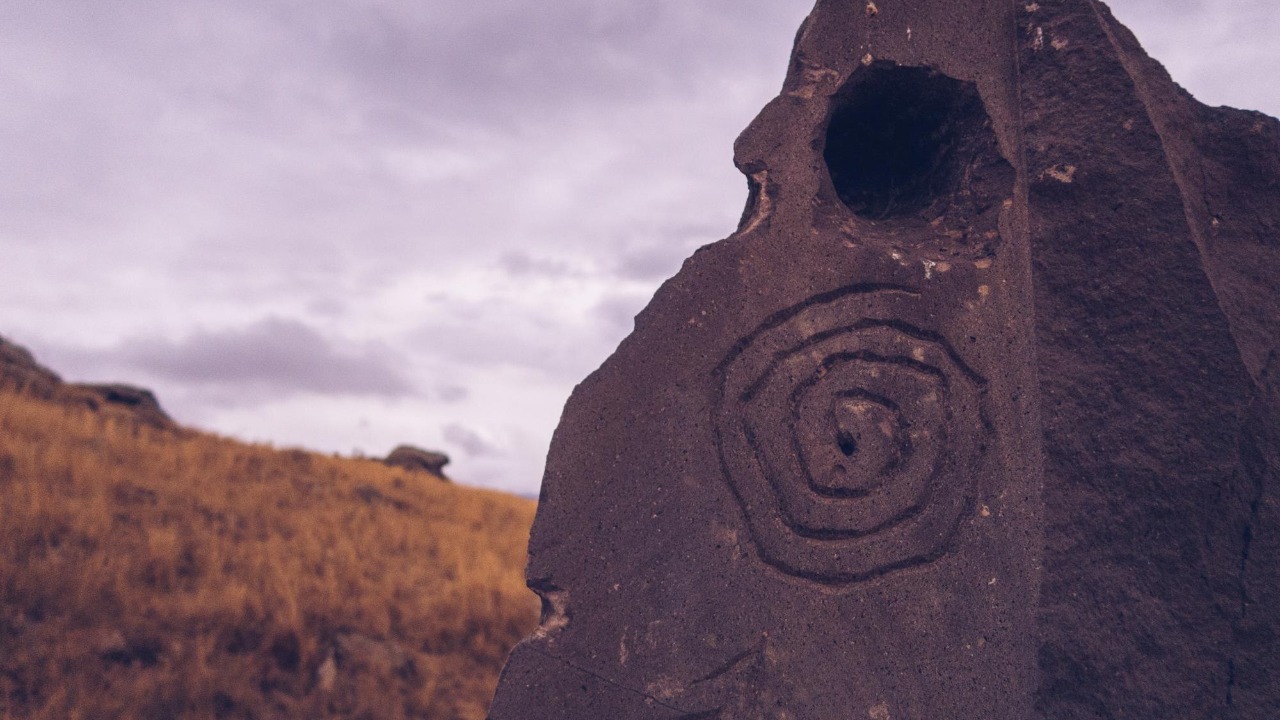

On a sandstone cliff at a remote Pueblo site in the Southwest, a cluster of spirals and animal figures is forcing archaeologists to rethink how ancient communities tracked the sky. The newly documented carvings appear to function as a kind of solar and seasonal “calendar,” using light and shadow to mark key moments in the year. I see in these petroglyphs not just art, but a precise instrument that tied ritual, farming, and architecture to the movements of the sun.
The discovery, centered on a spiral motif at an Ancestral Pueblo settlement, builds on decades of work across the Mesa Verde region and beyond. It suggests that what might look like simple rock art was in fact part of a sophisticated system of timekeeping that connected people, crops, and cosmos across the high desert plateaus of Colorado and Utah.
The cliffside “calendar” at Castle Rock Pueblo
Archaeologists working at a site known as Castle Rock Pueblo have documented a panel of carvings that appears to track the sun’s annual journey. The settlement sits on the Mesa Verde plateau, straddling the border of Colorado and Utah, where sheer cliffs and alcoves create natural stages for light and shadow. On one of these walls, a spiral petroglyph is positioned so that shafts of sunlight and bands of shade move across its grooves in a predictable pattern over the course of the year, lining up with solstices and other key dates in the agricultural cycle.
The imagery is not limited to the spiral. Nearby carvings include animal figures and other geometric forms that seem to interact with the same play of light, suggesting a broader program of observation rather than a single isolated marker. Researchers have argued that the arrangement allowed Ancestral Pueblo observers to read the changing seasons directly off the rock face, effectively turning the cliff into a living calendar. The idea that these carvings served as a timekeeping device has been strengthened by comparative work at other Ancestral Pueblo sites across the Southwest, where similar spiral motifs have been tied to solar events in detailed field studies.
Polish researchers and the Mesa Verde connection
The latest work at Castle Rock Pueblo is part of a broader campaign led by a team from Poland that has been documenting rock art and architecture across the Mesa Verde region. A group based at Jagiellonian University in Kraków has focused on sites inside and around Mesa Verde National, where 13th century Pueblan communities built dense villages of stone towers, kivas, and multiroom dwellings. Their findings show that the same people who engineered these complex settlements also invested heavily in carving spirals and other motifs that respond to the sun’s changing position on the horizon.
According to reports on the project, the team from Poland has linked the Castle Rock panel to a wider network of astronomical markers in the region. A Polish archaeological expedition, led by Professor Rados and Palonka of Jagiellonian University in Krak, has emphasized how these carvings reveal the community’s connection to the stars and the sun. Their work suggests that the “calendar” petroglyphs were not an isolated curiosity but part of a long tradition of sky watching that shaped how Pueblan people organized daily life, ritual gatherings, and seasonal migrations across the plateau.
Spiral petroglyphs and the science of light
Spiral imagery is central to this story because it behaves so predictably under changing light. In the Castle Rock panel, the spiral’s grooves catch the sun at different angles as it rises and sets along the horizon, creating moving bands of brightness and shadow that can be tracked over days. Earlier research on spiral petroglyphs in the Southwest has shown that such carvings can mark the winter and summer solstices, when the sun reaches its southernmost and northernmost points, as well as the equinoxes and other transitional days. Detailed observations of similar spirals have documented how these interactions can be seen in the days around the winter and summer solstices, when the sun reaches its southernmost and northernmost positions, confirming that the carvings function as precise solar markers.
At Castle Rock Pueblo, the spiral is part of a larger composition that includes animal figures and other symbols, which may have encoded stories or instructions about how to interpret the light patterns. The Pueblo people created rock carvings in the Mesa Verde region of the Southwest United States about 800 years ago to mark the points in the year when it was time to plant and harvest. The spiral calendar at Castle Rock appears to fit squarely within that tradition, translating the abstract motion of the sun into a visual cue that farmers and ritual specialists could read at a glance.
Archeoastronomy across the Pueblo world
The Castle Rock discovery resonates with a broader pattern of archeoastronomy across the Ancestral Pueblo world. In Chaco Canyon, in northwestern New Mexico, the National Park Service estimates that there are about 4,000 archaeological sites in the park, including more than a dozen immense great houses whose walls and windows are aligned toward the solstice sun and lunar standstills. These alignments show that attention to the sky was built into the very architecture of major centers, not just carved into isolated cliff faces. The same concern with celestial cycles appears in the careful siting of great houses and kivas documented by the Chaco Culture park.
Across the region, the Ancestral Pueblo people carved petroglyphs and painted pictographs to follow the cycle of the sun and moon, to track the seasons, and to document extraordinary celestial events. National Park Service interpreters have described this tradition as a kind of “Archeoastronomy in Stone,” a phrase that captures how rock art functioned as both scientific record and sacred text. The carvings at Castle Rock Pueblo fit this pattern, and the broader practice has been highlighted in official discussions of Archeoastronomy in Stone that emphasize how The Ancestral Pueblo used rock surfaces as enduring observatories.
From cliff calendars to regional networks
What makes the Castle Rock panel particularly striking is how it ties into a much larger cultural landscape. The site lies within a corridor of canyons and mesas that includes protected areas such as Canyons of the in Colorado, where thousands of archaeological sites preserve towers, kivas, and rock art panels. These landscapes show that Ancestral Pueblo communities were part of a network that stretched across what is now Colorado, Utah, New Mexico, and Arizona, with shared architectural styles and symbolic systems. The spiral calendar at Castle Rock is one node in that network, a local expression of a regional way of reading the sky.
Researchers have also documented astronomical petroglyphs in other parts of Colorado, including carvings that may date back to the 3rd century. Reports on these finds describe how Polish archaeologists uncovered rock art that had been used in the area for nearly 3,000 years, underscoring the deep time depth of sky watching in the region. One account notes that Polish archaeologists uncovered astronomical petroglyphs dating back to the 3rd century in Colorado, with a team from Jagie documenting how people thrived in the area for nearly 3,000 years. These findings suggest that the Castle Rock calendar is part of a continuum of observation and inscription that long predates the 13th century Pueblan florescence.
More from Morning Overview