
Across the world, archaeologists keep stumbling on structures so old, so large and so technically sophisticated that they seem to have no right to exist in the eras that produced them. From submerged stone walls on continental shelves to coral-built cities in remote lagoons, these mega-works force researchers to rethink what small, scattered communities were capable of building long before written history.
At the heart of the current debate is a claimed 25,000-year-old pyramid in Indonesia and a newly mapped Stone Age wall on the floor of the Baltic Sea. Both sit alongside enigmatic sites like Nan Madol and Göbekli Tepe, forming a pattern of ancient engineering that modern science can describe in exquisite detail but still struggles to fully explain.
The Baltic Sea wall that should not be there
When geologists surveying the seafloor in the Baltic Sea picked up a strange linear feature, they were not expecting to find what may be one of Europe’s oldest human-made mega-structures. Subsequent dives and mapping revealed a low, continuous line of stones now known as The Blinkerwall, running for about half a mile along the Bay of Mecklenburg, in water that was once dry land at the end of the last Ice Age. The structure’s regularity and placement suggest deliberate construction by hunter-gatherers who lived in the region roughly 10,000 to 11,000 years ago, a period when conventional narratives still cast such groups as mobile bands with little capacity for large-scale building.
Researchers argue that the Blinkerwall was likely a sophisticated hunting installation, a kind of aquatic “funnel” used to steer migrating animals into kill zones, similar in concept to the desert “Wall” formations that University of Haifa researchers say were used for hunting in the Middle East. In work published in PNAS, Geersen and colleagues describe how the wall’s geometry and position match expectations for a communal hunting trap used by people who lived 10,000 to 11,000 years ago, while separate analysis of The Blinkerwall emphasizes its half-mile length along the Bay of Mecklenburg. A parallel report on a Stone Age megastructure submerged in the Baltic Sea, identified as not being a natural formation, reinforces the view that these wall-like features were deliberate constructions by Stone Age communities, not random glacial debris.
Gunung Padang and the age of impossible pyramids
No ancient site has stirred more recent controversy than Gunung Padang in Indonesia, a hilltop complex of terraces and stone arrangements that some researchers have reinterpreted as a buried pyramid. A recent study claimed the site is a 25,000-year-old pyramid, potentially older than any known monumental architecture in Egypt or Mexico, and argued that deep underground layers were human-made rather than natural. That claim, if accepted, would push organized construction back into an era usually associated with small bands of foragers, not with the kind of labor coordination needed to shape a mountain into a stepped monument.
The boldness of that proposal has split the field. One detailed report on Gunung Padang in Indonesia describes how the 25,000-year-old label challenges established timelines for early human civilisations, while another analysis framed the site as a claimed 25,000-year-old pyramid that some commentators even suggested was not built by humans at all. Social media discussions amplified the dispute, with one widely shared post insisting there was “No evidence of being man-made” at the 25,000-year-old pyramid in Indonesia and suggesting the rocks may have naturally oriented themselves, while another thread spoke of a supposed 27,000-year-old pyramid in Indonesia and highlighted how The Pyramid of Gunung Padang has triggered intense debate in the archaeological world. Archaeologists who reviewed the original paper have been sharply critical, with one detailed assessment noting that Archaeologists say the study’s most contentious conclusion is the claim that Gunung Padang may be “the oldest pyramid in the world,” and warning that such assertions risk feeding fringe theories that challenge academic orthodoxy.
The scientific pushback has had real consequences. In March, the publisher of Archaeological Prospection, Wiley, and the journal’s editors retracted the key paper on Gunung Padang, stating that the radiocarbon data and site interpretation did not support the sweeping age claims and that some figures did not match photographs of the actual site. A separate, more general feature on megalithic enigmas framed the controversy in broader terms, asking, “If not humans, then who?” and pointing out that megalithic structures like Stonehenge and the pyramids in Egypt and Mexico already raise difficult questions about how early humans built them. Another report on a 27,000-year-old “human pyramid” described how a bold new study has sparked controversy among scientists by suggesting that hunter-gatherers, not later pyramid builders, may have arranged human remains in a complex pattern, underscoring how sensitive claims about deep prehistory can be. Together, these debates show how a single hillside in Indonesia has become a test case for how far back we are willing to push the story of complex construction.
Nan Madol, the “floating” city on coral
Thousands of kilometres away, in the Pacific, another mega-structure raises different but equally stubborn questions. Off the island of Pohnpei in Micronesia, explorers have documented Nan Madol, an ancient ceremonial city built atop a coral reef that consists of a network of tidal canals and massive stone platforms. One overview describes Nan Madol, Micronesia, as an ancient city off Pohnpei made of 92 man-made islets, each crafted from enormous basalt stones that weigh several tons, with its construction methods and original purpose still unresolved. Local lore, recorded by researchers, attributes the city’s creation to magic, and while archaeologists do not accept that explanation, they also concede that no written historical accounts or definitive evidence yet explain the exact techniques employed by the civilization that raised these walls on coral.
Modern surveys have only deepened the mystery. Comprehensive, precision-laser surveys conducted via aircraft over the tiny Pacific island of Temwen have revealed just how advanced the layout of this “ghost city” really is, mapping hidden structures beneath dense vegetation and showing the full extent of the engineered canals and platforms. A detailed historical feature notes that as boats move through Nan Madol’s channels, the waterways become narrower and shallower, yet the city’s outer walls remain strong and continuous, a testament to the enormous effort that was put into this construction. Another account recalls how Nan Madol was Labelled the “Venice of the Pacific” by US aviators during the Second World War, and describes it as one of the most enigmatic ancient sites in the Micronesian region. Popular science programming has amplified that aura, with one segment titled Experts Discovered An Ancient Floating City That Shouldn, Exist presenting Nan Madol as Hidden in the Pacific and asking what its existence means for what we think we know about history, while a social media post from a science channel invites viewers to Imagine an ancient city made of 92 m islets rising from the reef around the 8th or 9th century AD.
Stone circles, monoliths and the limits of ancient engineering
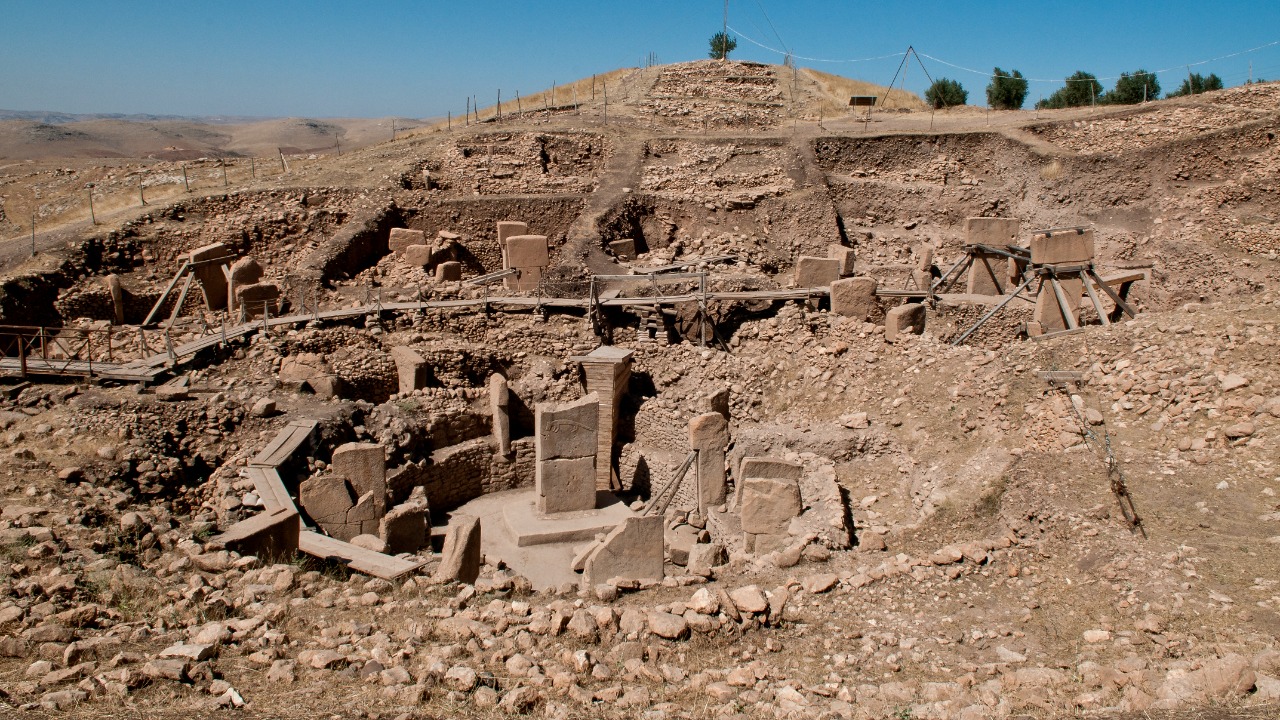
Nan Madol and Gunung Padang are not isolated anomalies. Across the Near East, Europe and India, there are megalithic sites whose scale and precision still unsettle engineers. One lecture on the Mystery of Ancient Megalith Göbekli Tepe points out that Stonehenge, one of the earliest known structures of the ancient world, was built 6,500 years ago, yet Göbekli Tepe, discovered in the 1990s, is significantly older and is now known as a major early temple complex. A separate documentary-style account refers to Golete’s massive stone pillars arranged in circles and adorned with intricate carvings, highlighting how such work emerged long before metal tools or large urban centres. Video essays on megalithic enigmas stress that these megalithic structures, some carved with impossible precision and others arranged in patterns that defy logic, appear to have been built by civilisations that left no written record, hinting at a forgotten past that predates recorded history.
More from Morning Overview