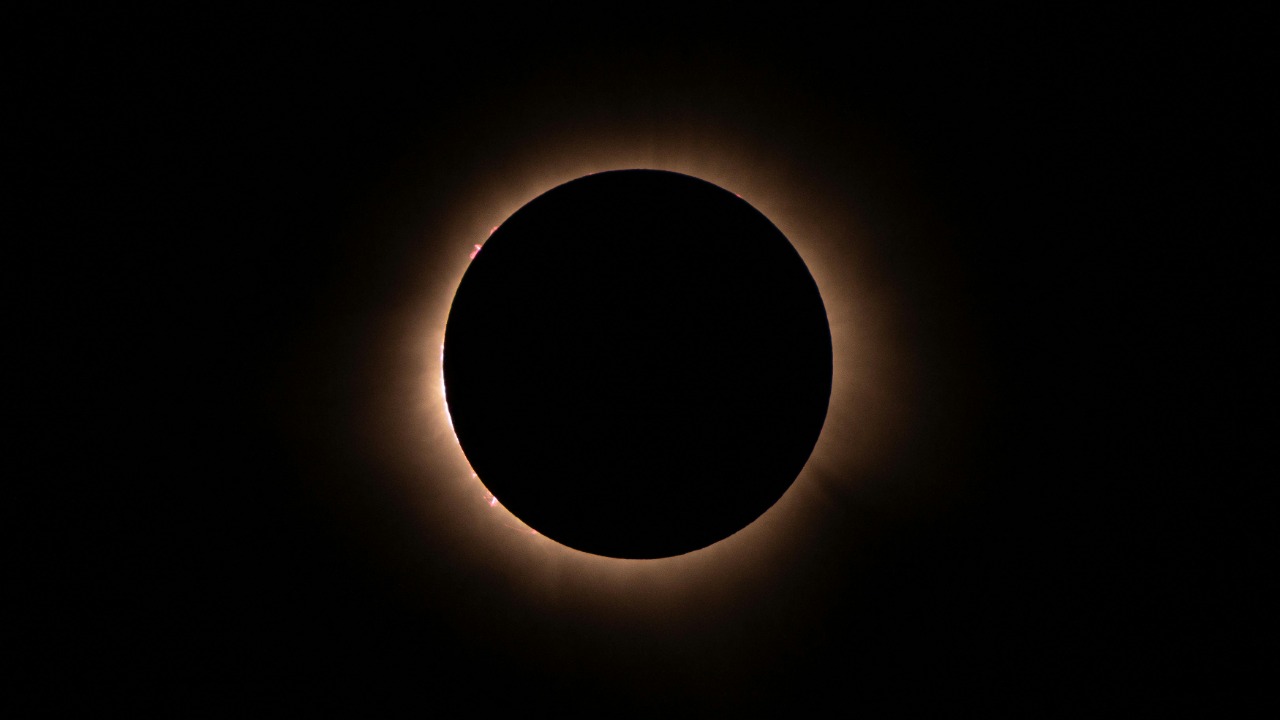

The first solar eclipse of 2026 is about to put on a show, and it will not be a subtle one. An annular “ring of fire” event will briefly turn the Sun into a blazing halo as the Moon passes in front of it, creating one of the most striking sights in skywatching. Even if you are far from the narrow path where the full ring appears, the partial phases will reshape daylight, shadows, and the feel of the sky in ways that are worth planning for now.
I want to walk through what makes this annular eclipse special, where it will be visible, what details to watch for in the sky, and how to protect your eyes so the memory is dazzling but your vision is not damaged. With the right expectations and gear, this month’s event can be a safe, vivid lesson in how the Solar System moves.
What an annular “ring of fire” eclipse actually is
At its core, an annular eclipse is a geometry problem. The Solar eclipse on Tuesday, Febr. 17, 2026 happens when the Moon crosses directly between Earth and the Sun but is slightly farther away in its orbit than during a total eclipse. Because the Moon appears a bit smaller on the sky, it does not cover the Sun completely, leaving a thin, intensely bright ring of sunlight around the dark lunar disk. That is why this type is called annular, from the Latin for “ring.”
During this event, the Sun and Moon will line up with unusual precision, yet the balance of sizes will keep the Sun’s outer edge exposed. As one detailed description of the coming Annular eclipse notes, the effect is a sharp, fiery circle rather than the deep twilight of totality. Social media posts have already framed it as a rare Ring of Fire moment when the Sun and Moon appear perfectly stacked in the sky.
Where and when this month’s eclipse will be visible
The path of annularity for this event is remote, which makes planning even more important. On February 17, 2026, the central track where the full ring is visible will sweep across On February 17 in Antarctica, with the ring centered over the icy continent and the surrounding Southern Ocean. A detailed overview of the Solar eclipse confirms that the annular phase itself will be visible over Antarctica only, which means most people will experience this event as a partial eclipse instead.
Even outside that narrow corridor, the spectacle will reach a wide swath of the globe. Skywatching guides highlight that this Annular Solar Eclipse will be seen as a partial event from parts of the southern tip of South America, the southern Atlantic, the coast of the Southern Ocean, and regions of Africa and most of Antarctica. Another overview of the annular solar eclipse underscores that observers far from the central path will still notice the Sun taking on a crescent shape as the Moon takes a bite out of its disk.
What to watch for in the sky, from first bite to last light
Even if you are not chasing the full ring, the partial phases of an annular eclipse are rich with detail. As the Moon begins to slide across the Sun, the sky might darken a little, and if it is a clear day, you can see evidence of the partial eclipse by looking at shadows on the ground, which can look like little crescents with a little chunk taken out of them, as one guide to eclipse viewing explains. That same effect will play out during this month’s event, with pinhole projections through tree leaves or homemade viewers turning sidewalks into canvases of tiny crescent Suns.
For those in or near the path of annularity, the main act is the moment the Sun becomes a perfect ring. As one description of what to expect during an Annular Solar Eclipse notes, observers should be on the lookout for sunspots, Baily’s beads (the last points of sunlight shining through lunar valleys), and the stunning ring of fire itself. Another vivid account puts it this way: instead, the Sun becomes a brilliant ring of fire, glowing fiercely around the edges while the Moon sits as a dark circle in the middle.
Why this “ring of fire” matters in a busy February sky
This annular eclipse is not just a one-off curiosity, it is part of a packed month for skywatchers. A detailed preview of the coming Ring of Fire notes that it coincides with a rare planetary parade, turning February into a kind of celestial festival. Another overview of the same Ring of Fire emphasizes that the event requires eye protection to view, which is a reminder that even amid the excitement, safety has to stay front and center.
Public enthusiasm is already building, particularly among communities that follow eclipse travel and astronomy closely. One widely shared post about the coming On February event describes it as a rare annular solar eclipse that will sweep across the far south, highlighting how the Sun and Moon will align in a way that many people will only see once in a lifetime. Another post framed the same February 17 alignment as a Why This Eclipse moment, underscoring how the Moon will be just small enough that the world will not see a total blackout, only the ring itself.
How to watch safely without damaging your eyes
The most important part of any solar eclipse plan is eye safety. Official guidance on Eclipse Eye Safety is blunt: partial or annular solar eclipses are never safe to view with the naked eye, because the Sun’s bright surface is never completely blocked by the Moon and can cause serious eye injury. That is why experts stress that, except during the brief total phase of a total solar eclipse when the Moon completely blocks the Sun’s bright face, you must use proper solar filters or indirect viewing methods. A broader overview of Eclipse Eye Safety reinforces that point, urging people to avoid improvised filters and to follow tested standards instead.
Specialists in vision protection for eclipses put it even more plainly. One advisory on Eye Safety During an annular eclipse notes that the Sun is never completely blocked by the Moon during an annular solar eclipse, therefore, during an annular eclipse, you must always use eye protection designed for solar viewing. Consumer-focused guides echo that message, advising people to use approved safety glasses and to be wary of purchasing unsafe or misleading products when preparing for Oct style events that share the same risks. For those who prefer not to look directly at the Sun at all, pinhole projectors and other indirect methods described in eclipse viewing resources on Sun safety can deliver the experience without any direct exposure.
More from Morning Overview