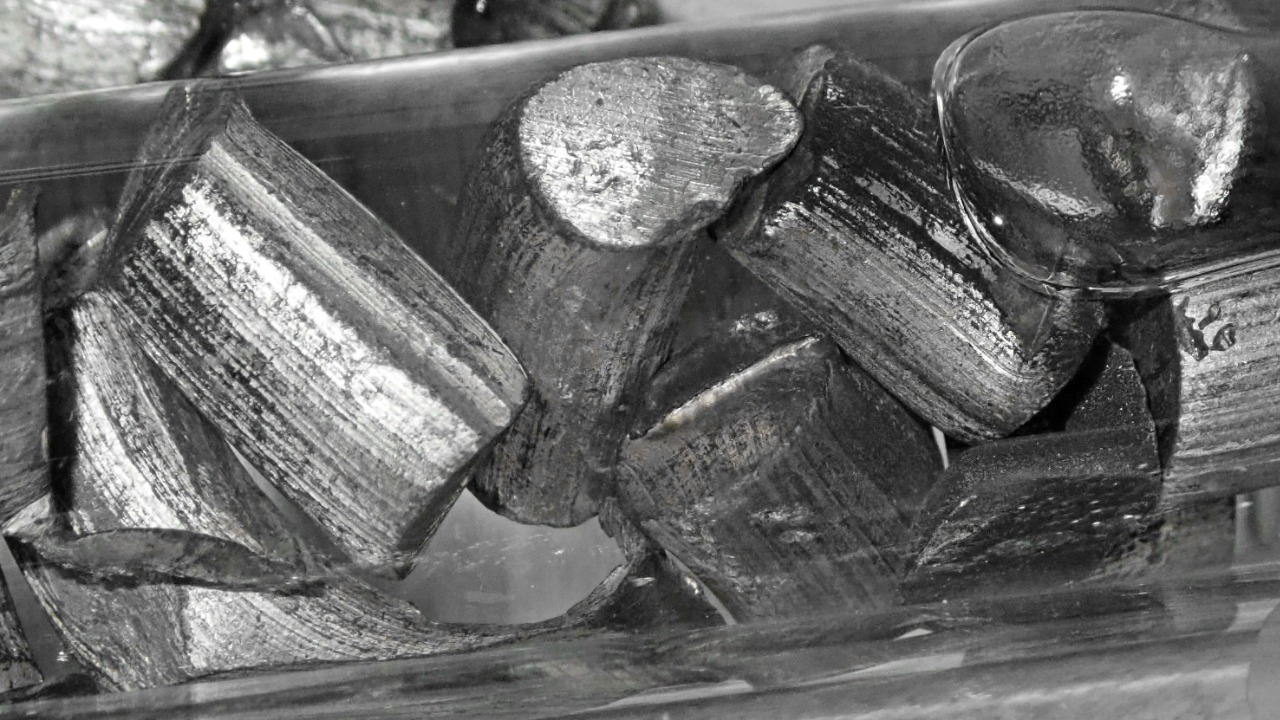

Deep beneath the high desert along the Nevada and Oregon border, the United States is sitting on what researchers describe as a $1.5 trillion cache of lithium, the light metal that powers everything from smartphones to electric pickups. The discovery has triggered a modern mineral rush, with companies, regulators, tribes, and climate hawks all converging on a remote volcanic basin that could reshape both the global battery market and America’s energy politics. The headline talk of a multi‑trillion dollar “jackpot” is really about this single, extraordinarily rich deposit, repeatedly valued at $1.5 trillion in the scientific and industry assessments now driving policy.
What is unfolding in this corner of the West is not a speculative crypto boom or a fleeting meme trade. It is a hard‑rock contest over who controls the raw material at the heart of the energy transition, and whether the United States can turn geological luck into durable industrial power without repeating the environmental and social mistakes of past mining waves.
The supervolcano hiding $1.5 trillion in lithium
At the center of the story is the McDermitt Caldera, an ancient volcanic crater that stretches roughly 21 miles by 27 miles across the Nevada and Oregon line. Earlier research into the Caldera focused on its violent eruption roughly 19 million years ago, but geologists now argue that the real story is what happened after the blast. As the crater cooled and collapsed, it created a basin that trapped mineral‑rich fluids and ash, setting the stage for an unusually concentrated lithium deposit.
Researchers describe this trove as the World’s largest lithium deposit, buried beneath an ancient volcanic structure often described simply as a Supervolcano. Multiple analyses put the value of the lithium locked in this basin at $1.5 trillion, a figure that has quickly become shorthand for the scale of the opportunity and the stakes of any decision to mine it.
How a dead volcano became a battery metal factory
The McDermitt basin’s unusual geology helps explain why this deposit is so large and so attractive to industry. After the eruption, the crater gradually filled with a long‑lasting lake that collected volcanic ash and sediment, a process described in detail by researchers who note how the basin’s waters concentrated lithium over time. Those lakebed materials slowly transformed into clay‑rich rocks, which later hydrothermal fluids further enriched with lithium, creating what scientists now see as one of the most promising Scientists’ targets for large‑scale extraction.
Accounts of the basin’s evolution describe how, Over millennia, mineral‑rich volcanic material repeatedly washed into the wet lake sediments, then reacted chemically to upgrade the lithium content in specific layers. That is why companies are now zeroing in on particular clay horizons that appear especially rich, rather than treating the entire basin as uniform ore. The result is a geological oddity: a dead volcano that has quietly functioned as a battery metal factory for millions of years.
From quiet basin to contested mining frontier
What had been a sparsely populated stretch of ranchland is now a contested industrial frontier. Beneath remote desert hills along the Nevada and Oregon border, exploration rigs and protest camps now sit within sight of each other. Geologists argue that they have uncovered what may be the largest lithium deposit on the planet, with Geologists pointing to the basin’s scale and grade as evidence that it could anchor decades of production.
Federal regulators have already accelerated work on one flagship project, The Thacker Pass Lithium in Humboldt County, about 25 miles from the Nevada, Oregon border. State documents describe how the mine would sit atop an extinct supervolcano, the McDermitt Caldera, and cover a large footprint of public and private land. That project has become a test case for how quickly the United States is willing to move when a strategic mineral discovery collides with local opposition.
Thacker Pass and the scale of industrial ambition
The industrial ambition around Thacker Pass is enormous. Plans for the site envision a project area that would cover 18,000 acres, or about 7,300 hectares, with less than 6,000 acres, or 2,400 hectares, directly mined. That footprint would make it one of the largest lithium operations in North America, with processing facilities, waste storage, and new roads transforming a landscape that today is dominated by sagebrush and grazing.
Regulators in Nevada describe how the proposed mine would tap clay deposits linked to the same extinct supervolcano that created the broader basin, with the Humboldt County project framed as a cornerstone of domestic battery supply. Supporters argue that the mine could feed U.S. gigafactories producing packs for vehicles like the Ford F‑150 Lightning and Tesla Model Y, while critics warn that the scale of disturbance risks replicating the worst of past open‑pit mining in the West.
Oregon’s side of the rush
On the Oregon side of the line, the rush is moving from concept to drill pads. A Lithium exploration project near the Oregon, Nevada border has cleared key regulatory hurdles, with reporting by Amanda Rhoades detailing how state officials see the work as a way to plug Oregon into the battery supply chain that feeds phones, hybrid cars, and more. The exploration is still at an early stage, but it signals that the basin’s potential is not confined to Nevada’s permitting decisions.
Scientists and engineers describe the broader McDermitt area as a Caldera brimming with a metal vital to renewable energy, but they also stress that the U.S. still has to decide how to proceed. That choice will determine whether Oregon becomes a full partner in a cross‑border mining district or a more cautious neighbor watching Nevada shoulder most of the environmental and political risk.
More from Morning Overview