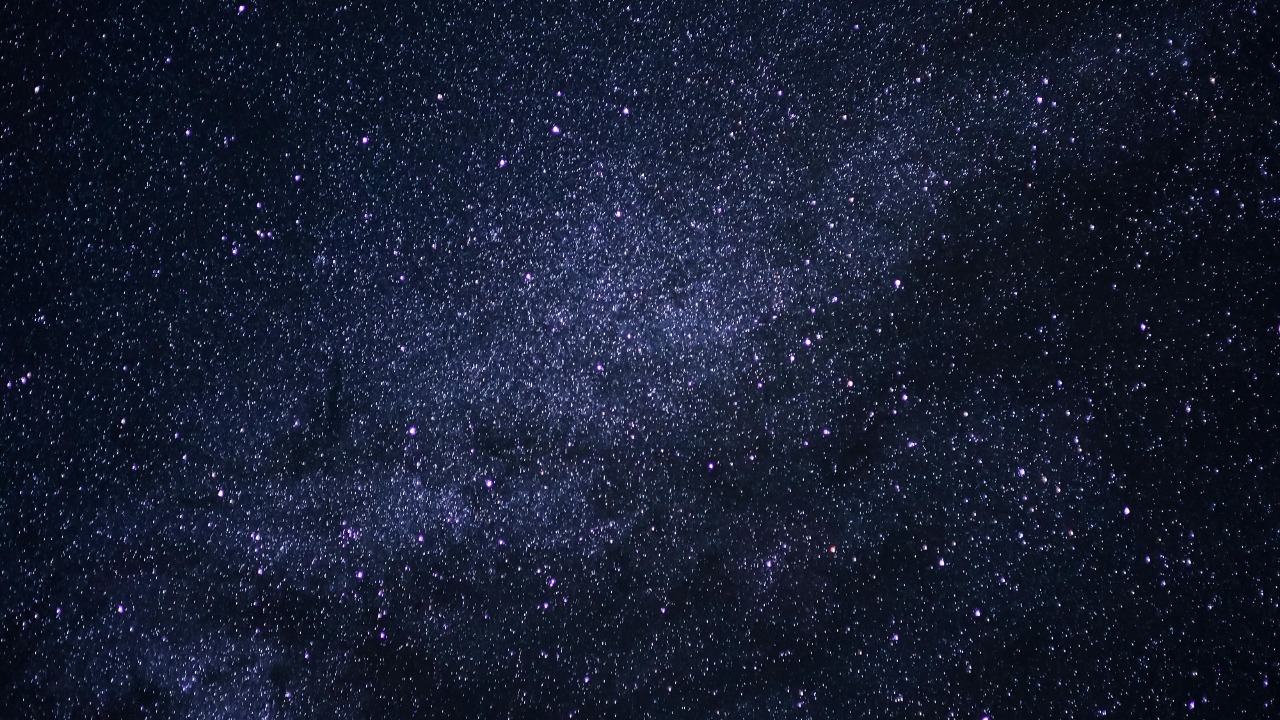

By mid century, the familiar constellations that guided sailors and storytellers could be drowned in a permanent artificial twilight. The change will not come from a single cataclysmic event but from millions of small decisions on the ground and in orbit that, together, are rewriting what the night even looks like. A dramatic shift in our sky is already under way, and by 2050 it will be impossible to ignore.
I see two futures competing overhead. One is a world where the Milky Way survives only in memory and long exposure photographs. The other is a planet that chooses to dim unnecessary lights, rein in satellites and still enjoy rare celestial alignments that will cross the heavens in the coming decades.
Light pollution is racing ahead of our eyes
The most immediate driver of change is not out in deep space, it is the glow from our own cities. Researchers tracking how much of Earth is lit at night have found that artificial brightness is expanding and intensifying at an exponential pace. One analysis reported that the illuminated area grew by about 9 per cent in only four years, and that if current trends continue, overall Light pollution could roughly double by 2050. Those projections are grounded in satellite measurements and a poll based approach that combines orbital data with reports from people on the ground who describe what they can still see.
For many, the loss is not theoretical. One campaign bluntly titled Night Sky Is notes that 80% of the world’s population can no longer see the Milky Way from where they live. A detailed feature on how stars could be within about twenty years in some regions describes skies that are no longer black but dark grey, with only a handful of stars punching through. In a podcast on the vanishing night sky, scientists describe using a global poll of sky brightness to show how quickly that grey dome is spreading, and how much of the loss has happened within a single human lifetime.
Satellites are turning constellations into traffic
Even where ground lighting is controlled, the sky is getting busier. Low orbit is filling with reflective spacecraft, many of them part of the Starlink megaconstellation that already dominates the count of bright satellites. Astronomers tracking these objects report that the number of visible points of light moving across the sky is rising every week, and that their combined glow is starting to add a diffuse haze even in places that once prided themselves on pristine darkness. A technical bulletin on steadily increasing satellite brightness warns that this trend is not leveling off.
From the ground, that change is already visible. A report urging readers to Look up describes how Constellations of satellites are now a routine part of twilight, marching in lines that cut through familiar star patterns. Space based observatories are feeling the impact as well. One analysis of Light pollution from these megaconstellations warns that streaks from passing spacecraft can spoil images from instruments as sensitive as NASA’s Hubble Space Telescope. A separate modeling effort on how satellite constellations could obscure most space telescope observations by the late 2030s has drawn debate, with Not everyone agreeing on the exact scale of the threat, but even critics accept that streaked images will become more common.
2050’s sky will still host rare celestial alignments
Against that brightening backdrop, the cosmos is quietly keeping its own schedule. Astronomers have already mapped out a long list of alignments, eclipses and meteor showers that will unfold between now and 2050. A catalog of future events notes that at 12:45 UTC, Venus will occult Jupiter, briefly hiding the giant planet from view. That encounter will be difficult to see from Earth because the elongation of Venus and Jupiter will keep them close to the Sun, but it is a reminder that planetary choreography continues regardless of what we do. A separate list of Date Event entries stretches further out, highlighting how transits such as the Transit of Mercury and a Triple conjunction of Mars and Uranus will continue to punctuate the centuries.
Closer to 2050, more accessible spectacles are on the calendar. A dedicated forecast of the π Puppid meteor shower notes that it will peak on a Sun day in late Apr 2050 that is currently listed as 8,883 days away, in a note edited by Dominic Ford, Editor, Meteor Showers feed. A separate almanac for 2050 lists fine grained alignments such as 0.3 degrees separation between Spica and the Moon, the Ascending Node crossing of the lunar orbit, and Mercury at Inferior Conjunction just before the FIRST quarter Moon. Guides to upcoming eclipses explain Why some years feel packed with totalities while others are quiet, and note that Through 2050 Some regions will see multiple total solar eclipses if the weather and local lighting cooperate.
Space industry growth could flood orbit by mid century
The number of satellites streaking through those events is set to grow sharply. A detailed assessment of the In the environmental sustainability of future space activities modeled what would happen if all currently proposed megaconstellations were launched. In its first scenario, the study finds that by 2050 there could be roughly 112,000 operational satellites in orbit, almost all of them from large constellations. That would represent an unprecedented surge in the brightness and density of moving objects overhead, with implications not only for astronomy but also for collision risk and debris.
Concerns about this crowded future are not limited to ground based observers. Analysts warning that Dec era megaconstellations could create an Obstructed view for space telescopes rely on a mix of simulations and a poll of astronomers who are already seeing streaks in their data. Another investigation into how Rafael Guzm and the ARRAKIHS consortium view the problem, reported in Science, underscores that even optimistic scenarios require careful coordination between satellite operators and the scientific community.
We still have agency over how much of the sky survives
For all the grim projections, the night is not lost yet. Advocates point out that light pollution is one of the few global environmental problems that can be reversed almost instantly if policies change. A long form reflection on the glory of the notes that the current shift in our view of the heavens is driven less by cosmic forces than by the way artificial light obscures our vision of the stars dramatically. A recent essay on the International Dark Sky explains how that group protects and certifies dark sky preserves, advocates for responsible lighting, and shows that intentional lighting policies can restore star filled skies. Photographer Babak Tafreshi urges readers that You can join the global members of the same organization to support its work and receive reliable information on how to help.
Local choices matter as well. A guide to aurora tourism stresses that Limiting light pollution and supporting conservation efforts are essential to maintain the beauty of aurora viewing regions, and it explicitly points readers to the International Dark Sky Association as a partner. Urban planners looking back on orange skies over Los Angeles, when millions were locked down under smoke filled air, argue that better environmental management can prevent the worst outcomes. Sky watchers compiling lists of Bottom Line Scientists predictions for upcoming meteors and lunar events emphasize that people still have time to act so that those shows remain visible. Even coverage of the asteroid Apophis, which notes that Until its close pass in 2029 the impact risk is considered unlikely, frames the encounter as a reminder that clear skies are not guaranteed. In video essays such as A Great Change and the earlier Feb discussion of fading stars, creators lean on poll driven research to argue that if we choose to dim the lights and manage orbit responsibly, the sky of 2050 can still feel like a shared, living map rather than a lost archive.
More from Morning Overview