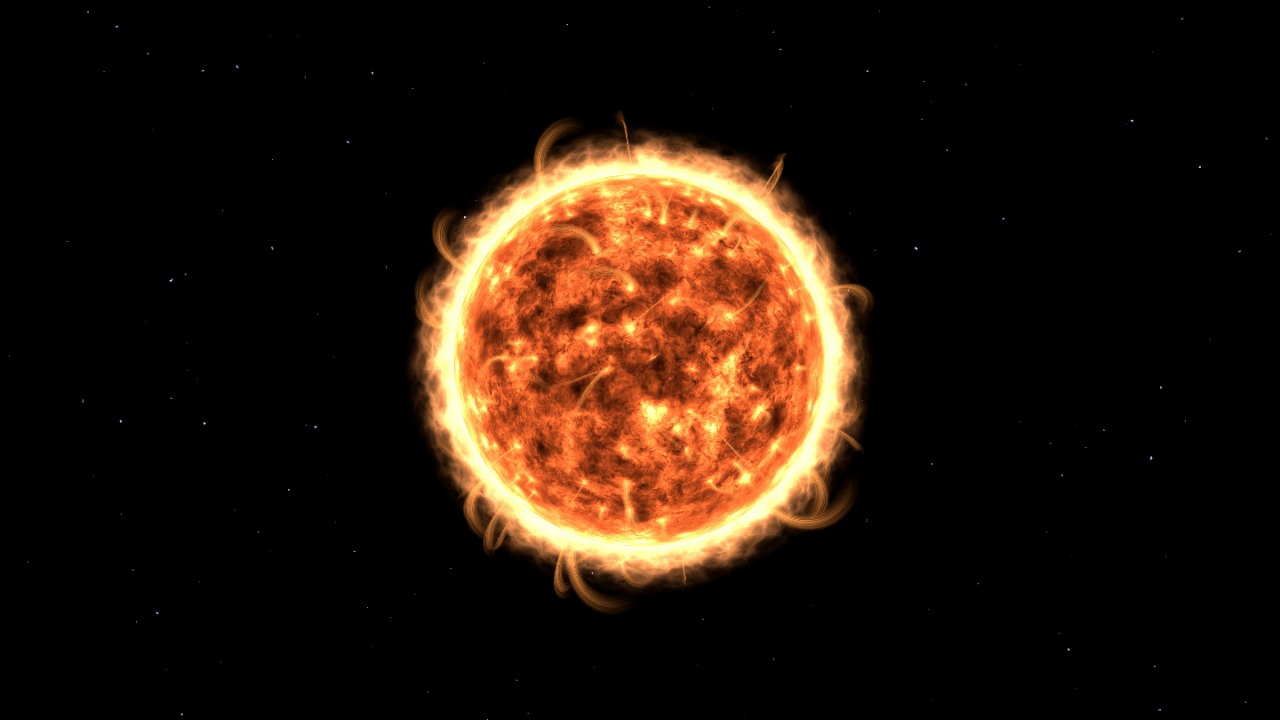

Solar scientists are tracking a surge in activity on the sun that could unleash powerful storms toward Earth, with the potential to disrupt electricity, communications and navigation on a global scale. The concern is not science fiction but a growing consensus that our hyperconnected infrastructure is more exposed than ever to a severe space weather event that could trigger cascading blackouts across continents.
I see a widening gap between what experts now understand about extreme solar storms and how prepared power grids, satellite operators and governments actually are for a worst case scenario. As the sun approaches the peak of its current cycle, the risk of a major geomagnetic storm is rising, and the latest flares and radio blackouts are being treated as both a warning shot and a live fire drill for a world that runs on vulnerable electronics.
Why scientists are sounding the alarm now
Solar activity follows an approximately 11 year cycle, and as the current one ramps toward its maximum, researchers are watching a growing number of large sunspots and eruptions that can fling energy and charged particles toward Earth. I have seen space weather forecasters describe recent bursts of activity as a sign that the sun is entering a more volatile phase, with multiple strong flares and geomagnetic storms clustered over a short period rather than spaced out over years.
That pattern matters because each major eruption increases the odds that one will be aimed squarely at our planet, and recent events have already produced measurable impacts on radio communications and navigation systems. Reports of a massive solar storm causing communications blackouts underscore that this is not a distant theoretical risk but an active hazard that is already testing the resilience of aviation, maritime and emergency networks.
How a solar storm can knock out power and communications
When a powerful solar flare or coronal mass ejection erupts from the sun, it can hurl a cloud of magnetized plasma toward Earth that slams into our magnetic field and atmosphere. I think of it as a kind of invisible shock wave that induces strong electrical currents in long conductors on the ground, including high voltage transmission lines and undersea cables, while also bombarding satellites and high altitude aircraft with energetic particles.
Those induced currents can overload transformers, trip protective relays and destabilize entire power grids, while the disturbance in the upper atmosphere can absorb or scatter radio signals that aircraft, ships and emergency services rely on. Earlier coverage of a severe geomagnetic storm that prompted the world to brace for chaos to technologies highlighted how quickly GPS accuracy, satellite communications and even power quality can deteriorate when the sun delivers a direct hit.
Recent flares show what a global blackout could look like
Recent solar storms have offered a preview of how a more extreme event might unfold, with localized outages and disruptions rippling across multiple sectors at once. I have watched as space weather alerts translated into real world impacts, from degraded high frequency radio links used by transoceanic flights to temporary loss of satellite based services that underpin everything from ride hailing apps to financial transactions.
One particularly intense flare earlier this year was linked to blackouts worldwide, a reminder that even a single eruption can trigger power cuts across different countries when grids are already stressed. Coverage of that event emphasized that more such storms are expected as solar activity climbs, and that the combination of simultaneous power, communications and navigation failures would feel less like a brief outage and more like a rolling global blackout.
NASA’s warnings and what they actually mean
Space agencies are not in the business of casual alarm, so when NASA scientists publicly warn about the potential for a powerful solar storm to trigger blackouts, I read that as a sign that the risk has moved from abstract to actionable. Their message is not that catastrophe is guaranteed, but that the probability of a severe event during the current solar maximum is high enough that grid operators and governments should be treating it as a planning scenario, not a remote outlier.
Reporting on a recent advisory described how NASA warns of a massive solar storm that could trigger blackouts, stressing that the agency is tracking active regions on the sun capable of producing strong flares and coronal mass ejections. In parallel, a widely shared social media post noted that NASA has issued a clear warning about a powerful blackout that could hit Earth, a framing that may oversimplify the science but reflects the growing urgency with which space weather experts are trying to reach the public and policymakers.
The “internet apocalypse” scenario and why it worries experts
Beyond the immediate risk to power grids, researchers are increasingly focused on how a severe geomagnetic storm could damage the backbone of the global internet. I have seen network engineers warn that long distance undersea cables, which rely on repeaters and power feeds stretching thousands of kilometers, are particularly vulnerable to geomagnetically induced currents that could knock out key links between continents.
One detailed analysis of this so called internet apocalypse scenario explained that while local fiber networks inside cities might survive, the loss of transoceanic routes would fragment the global web into isolated regional islands. In practice, that could mean cloud services failing, international banking transactions stalling and platforms like Netflix, WhatsApp and Microsoft Teams becoming unreachable across large parts of the world, even if smartphones and laptops themselves remain powered on.
From radio blackouts to aviation and emergency services
Shortwave and high frequency radio signals travel by bouncing off the ionosphere, so when a solar storm energizes and disturbs that layer of the atmosphere, those signals can suddenly fade or vanish. I have followed reports of pilots and ship captains losing key radio channels during strong flares, forcing them to switch to backup frequencies or reroute flights to stay within more reliable coverage.
Coverage of a recent radio blackout linked to a solar flare described how communications were disrupted over wide oceanic regions, complicating coordination for long haul flights and maritime traffic. In a more severe storm, that kind of outage could extend to emergency services on the ground, with police, firefighters and ambulance crews struggling to reach dispatchers or each other at the very moment when power failures and infrastructure damage are generating a surge in calls for help.
How forecasters track storms and issue alerts
Space weather forecasting has improved dramatically over the past decade, giving operators more lead time to prepare for incoming storms, but it still relies on a mix of satellite observations, models and educated judgment. I have watched forecasters explain how they monitor sunspots, measure the speed and direction of coronal mass ejections and then estimate when and how strongly those eruptions will hit Earth, often revising their predictions as new data arrives.
Television segments have shown how space forecasters warn of severe solar storms that could hit Earth and trigger blackouts, walking viewers through the color coded alerts that power companies and airlines use to decide when to take protective actions. A widely shared explainer video on how solar storms affect Earth has helped demystify the process, showing how satellites positioned between the sun and Earth can give operators tens of minutes of final warning before the most intense part of a storm arrives.
Why our modern infrastructure is so vulnerable
What makes the prospect of a severe solar storm so unsettling is not just the raw power of the sun, but how tightly coupled and electrically delicate our infrastructure has become. I see a world where everything from water treatment plants and hospital ventilators to smartphone base stations and Bitcoin mining farms depends on stable, high quality electricity and precise timing signals from satellites, with very little slack built into the system.
Analyses of recent storms have highlighted how even moderate events can expose weak points, from transformers running near capacity to satellites operating with minimal shielding. One report on experts warning that worldwide blackouts could follow a major solar storm stressed that the worst may be yet to come, because digitalization and electrification are racing ahead faster than utilities can harden their networks. In that context, a storm on the scale of the historic Carrington Event would not just blow out a few telegraph lines, it could simultaneously hit power grids, satellites, data centers and transportation systems that never existed in the 19th century.
What governments and grid operators can still do
Despite the stark warnings, a severe solar storm does not have to end in a prolonged global blackout if governments and utilities act on the information they already have. I have heard grid experts argue that relatively modest investments in transformer protection, better grounding, surge arresters and more flexible operating procedures could significantly reduce the risk of catastrophic damage, especially if combined with clear protocols for temporarily reducing load or reconfiguring networks when a major storm is inbound.
Some of those measures are already being tested in response to recent alerts that urged the world to brace for a severe geomagnetic storm, with some operators choosing to delay maintenance or adjust power flows to create more headroom. The challenge, as I see it, is sustaining that level of vigilance and investment over years, not just during the news cycle of a single storm, so that when the sun eventually unleashes a truly extreme event, the world’s critical systems are ready to bend rather than break.
More from MorningOverview