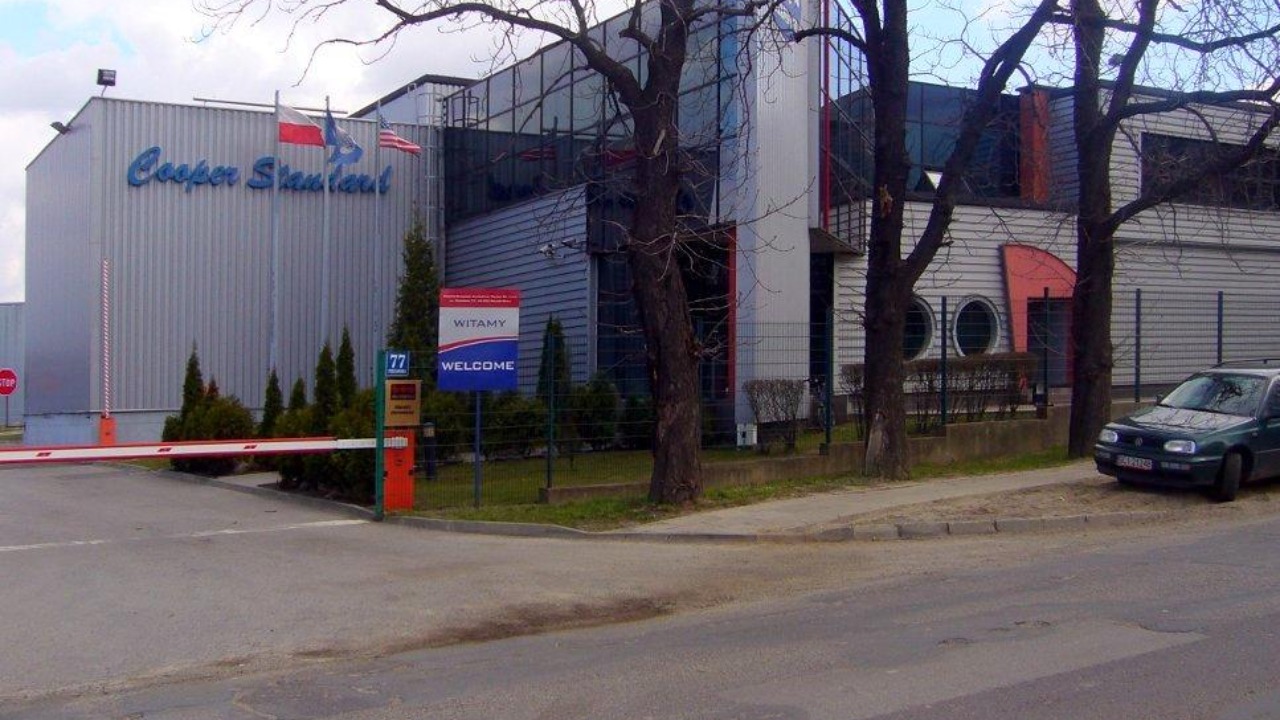

The end of a 65-year manufacturing run in a small Ohio town is arriving not with a single dramatic announcement, but with a series of formal notices, WARN filings and union briefings that all point in the same direction. Cooper Standard, a 65-year-old automotive systems supplier, is shutting its New Lexington plant and cutting hundreds of jobs, a decision that will ripple through families, schools and local businesses long after the last shift clocks out. The closure captures a broader turning point for the auto parts sector, where cost cutting, consolidation and looming bankruptcies are reshaping the industrial map of the Midwest.
The end of a 65-year industrial anchor
For decades, Cooper Standard’s New Lexington facility functioned as a quiet constant in the auto supply chain, turning out components that disappeared into finished vehicles rolling off assembly lines across North America. The company itself is described as a 65-year-old automotive systems supplier, and that longevity shaped expectations in Perry County, where generations built careers on the assumption that the plant would always be there. When a manufacturer survives oil shocks, recessions and offshoring waves, it starts to feel less like a business and more like part of the local infrastructure.
That is what makes the current shutdown so jarring. The same company that once symbolized stability is now preparing to walk away from its Ohio footprint, with the New Lexington plant scheduled to wind down operations and terminate its workforce. The decision is not happening in isolation, but it marks a definitive break with the long era in which a job at Cooper Standard was seen as a reliable path to the middle class in this corner of the state.
What the WARN notices reveal about the closure
The clearest window into the company’s plans comes from the formal notifications it has filed with state officials, which spell out the scale and timing of the cuts. In its communication with Ohio regulators, Cooper Standard indicated that the New Lexington plant will be permanently closed and that 228 employees will lose their jobs as a result. That figure is not a rough estimate, it is the precise headcount attached to the shutdown, and it underscores how deeply the decision will cut into the local labor market.
Other reporting reinforces the picture of a plant that is not being idled temporarily, but taken offline for good. Coverage of the WARN filing notes that the company’s notice to the state of Ohio came just before Christmas, a timing that left workers heading into the holidays with the knowledge that their livelihoods were on a countdown clock. The specificity of the WARN language, combined with the permanent-closure framing, leaves little doubt that this is not a temporary restructuring but a full exit from the site.
New Lexington’s shock: over 200 jobs erased
For New Lexington itself, the numbers translate into a blunt reality: more than two hundred paychecks are disappearing from a town that does not have a deep bench of large employers waiting in the wings. Local coverage describes how the auto parts plant in NEW LEXIN, Ohio is set to close, with over 200 jobs to be eliminated and a reference to a 10:54 a.m. publication time that hints at how quickly the news spread through the region. When a single facility accounts for that many positions in a small community, the closure is not just a corporate event, it is a civic crisis.
Residents are now confronting a cascade of second-order effects. Fewer wages in town mean less spending at diners, hardware stores and car dealerships, and local officials are bracing for the impact on tax revenues that fund schools and public services. The plant’s shutdown also threatens to accelerate outmigration, as younger workers weigh whether to stay and hope for new investment or follow jobs to larger cities, deepening the demographic challenges already facing rural Ohio.
Inside the plant: who is losing work and when
Behind the headline numbers are individual workers whose timelines and options are being shaped by the company’s internal schedule. Reporting from COLUMBUS, Ohio explains that Cooper Standard Automotive has announced the closure of its New Lexington plant, with layoffs of 228 employees expected to be completed by about July 2027. That timeline gives workers some lead time, but it also stretches the uncertainty over multiple years, as people wait to find out exactly when their own positions will be cut.
The company has indicated that employees will receive advance notice before their employment ends, and union representatives have been working to clarify how benefits, severance and retraining opportunities will be handled. For many on the shop floor, the question is not just when the last day will come, but what kind of work, if any, will be available in the region once it does. The drawn out schedule may help some workers transition, yet it also risks leaving the community in a prolonged limbo where investment decisions and personal plans are put on hold.
Management’s rationale: utilization and cost cutting
From the corporate side, the closure is being framed as part of a broader effort to rationalize production and cut costs in a highly competitive industry. The Michigan based parent has said in a WARN Notice that it is continually analyzing plant utilization and looking for ways to improve efficiency, language that signals a strategic review of which facilities fit into its long term footprint. In that calculus, New Lexington appears to have landed on the wrong side of the ledger, whether because of capacity, logistics, labor costs or a combination of factors.
Executives have not publicly detailed every metric that went into the decision, but the pattern is familiar across the auto parts sector. As automakers push suppliers to cut prices and adapt to new technologies, companies like Cooper Standard are under pressure to consolidate production in fewer, more modern plants. The New Lexington closure fits that pattern, suggesting that even long standing operations are vulnerable if they do not align with the latest corporate efficiency models.
Workers, unions and the fight over terms
On the ground, the shutdown is not just a spreadsheet entry, it is a negotiation over how much protection employees will have as they exit. Coverage of the WARN filings notes that workers in NEW LEXIN, Ohio are covered by a collective bargaining agreement, and that the company’s obligations to them are shaped by the terms negotiated with their union. The report on the plant set to close and over 200 jobs to be eliminated explains that employees will receive benefits and other support under their collective bargaining agreement, a reminder that organized labor still plays a critical role in cushioning the blow of industrial change.
Union leaders have also been involved in discussions about retraining and job placement programs, including potential access to state and federal support for displaced workers. In communications referenced from COLUMBUS, Ohio, the involvement of UAW representatives and local officials highlights how plant closures now trigger a complex response that spans multiple levels of government and advocacy. For the workers themselves, the effectiveness of that response will be measured not in press releases but in whether they can find new jobs that match the wages and benefits they are losing.
A warning sign in a stressed auto parts industry
The New Lexington shutdown is not an isolated event, it is part of a broader pattern of strain in the auto parts industry that analysts say could intensify in the coming year. One detailed assessment warns of a potential “wave of bankruptcies” in 2026, noting that Just before Christmas, Cooper Standard filed a formal notice with the state of Ohio that it plans to permanently close its New Lexington plant, costing roughly 200 jobs. That analysis situates the company’s move within a sector wide squeeze driven by high debt loads, shifting vehicle demand and the capital intensive transition toward electric drivetrains.
For communities like New Lexington, the prospect of more bankruptcies and restructurings raises the stakes of each individual closure. If multiple suppliers retrench at once, displaced workers may find themselves competing for a limited number of openings at the remaining plants, while local governments struggle to attract replacement employers. The Cooper Standard case, in that sense, functions as both a local shock and a national indicator of how fragile parts of the manufacturing ecosystem have become.
How a 65-year-old supplier ended up cutting hundreds
To understand the scale of the reversal, it helps to look at how Cooper Standard is being described in financial and industry commentary. One analysis of the sector points out that a 65-year-old auto parts company is shutting a plant and cutting hundreds of jobs, with layoffs expected to be completed on about July 1, 2027. That framing captures the tension between the company’s long history and its current willingness to make deep cuts, a combination that unsettles investors and workers alike.
In practical terms, the decision to “dump 100s” of positions reflects a strategic bet that the company can maintain or improve profitability with a leaner footprint, even if that means absorbing short term disruption and reputational damage. For employees in New Lexington, the corporate logic offers little comfort. What matters is that a plant that once symbolized the durability of Midwestern manufacturing is now scheduled to go dark, and that hundreds of families must rebuild their economic lives in its shadow.
What comes next for New Lexington and Ohio manufacturing
Looking ahead, the central question for New Lexington is whether the community can convert the plant’s closure into an opportunity to attract new investment, or whether it will join the list of towns hollowed out by deindustrialization. State officials in Ohio are already involved through the Department of Job and Family Services, which is referenced in connection with the WARN filings and the 228 layoffs. Their role will be crucial in coordinating retraining, unemployment support and potential incentives for new employers to consider the site.
At the same time, the broader trajectory of Ohio manufacturing will shape how quickly New Lexington can recover. The state has seen new investment in sectors like electric vehicle batteries and advanced logistics, but those projects are not always located in the same counties that are losing legacy plants. For workers leaving Cooper Standard, the path forward may involve commuting longer distances, relocating, or shifting into entirely different industries. The end of the company’s 65-year run in the town is therefore not just a story about one plant, it is a test of whether the next chapter of industrial policy and private investment can reach the communities that need it most.
Supporting sources: Cooper Standard to close Ohio plant, lay off 228 employees ….
More from MorningOverview