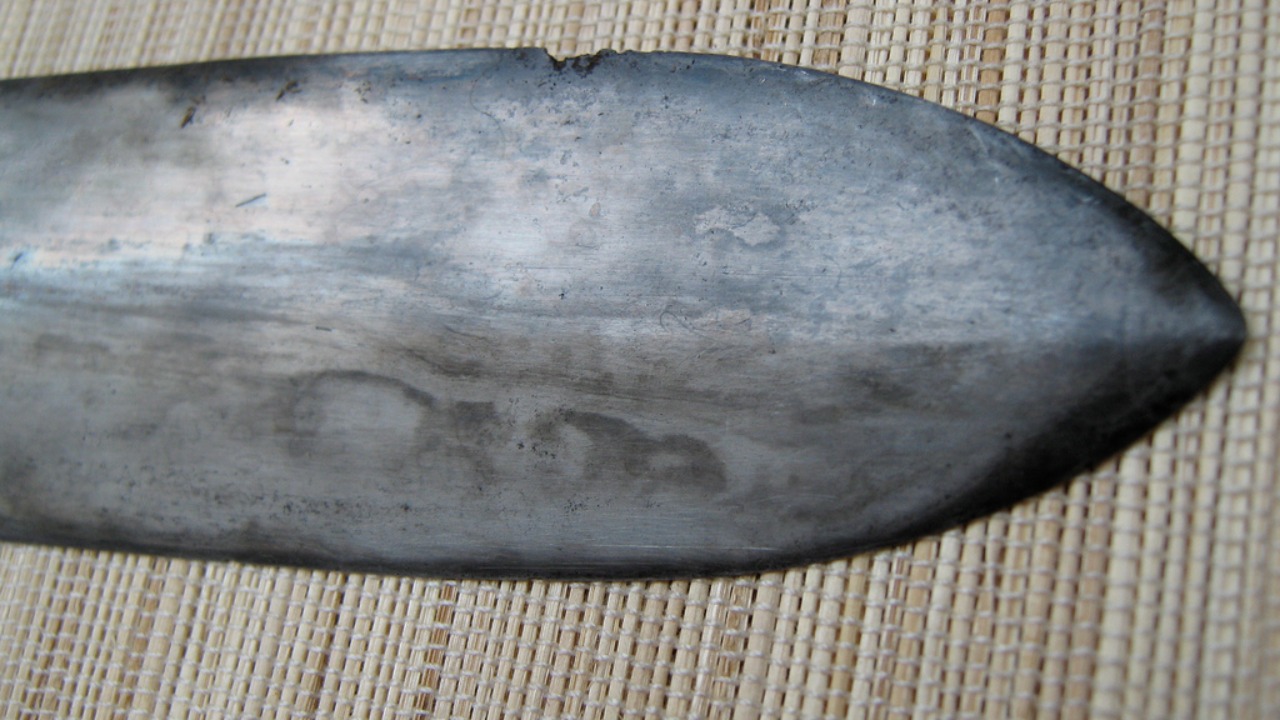

Bone arrow points from prehistoric Argentina are offering a rare window into how ancient communities organized work, shared knowledge, and managed resources. Far from being improvised tools, these artifacts point to a coordinated craft tradition that required planning, skill, and social rules about who made what and how.
By tracing how these points were shaped, standardized, and distributed, I can see a picture emerging of craftspeople who were not only technically adept but also embedded in a broader system of production. Their work, preserved in bone and sediment, challenges older assumptions that small-scale societies were automatically simple or unspecialized in how they made everyday objects.
Bone points as evidence of planning, not improvisation
The first thing that stands out about the bone arrow points from prehistoric Argentina is how deliberate they are. These are not random splinters sharpened in a hurry, but carefully shaped projectiles with consistent forms that suggest a shared template in the minds of their makers. The archaeological reporting describes how artisans selected suitable animal bones, then worked them into durable and aerodynamic points, a process that required forethought about hunting needs, raw material quality, and the performance of the finished arrows in real hunts.
That level of planning is visible in the repeated choices embedded in each artifact. The makers did not simply use whatever bone was at hand; they chose pieces that could withstand impact and then refined them through a sequence of cutting, scraping, and polishing steps. The resulting tools show a balance between strength and lightness that would have been crucial for effective projectiles. The fact that this pattern recurs across multiple finds in prehistoric Argentina is what allows archaeologists to argue that these are products of organized craft production rather than one-off experiments, a conclusion supported by detailed analysis of the bone arrowheads.
Standardization and the signature of a shared craft tradition
When I look at the pattern of these finds, standardization becomes one of the strongest arguments for organized production. The arrow points share similar dimensions, shapes, and finishing techniques, which implies that craftspeople were following a common set of rules or models. In archaeology, such regularity is rarely accidental; it usually reflects a community of practice in which novices learn from experienced makers, and where certain forms are recognized as the “right” way to do things.
This kind of shared template is especially telling in bone technology, where each raw piece can vary in size and curvature. To produce comparable points again and again, artisans had to internalize a sequence of steps and a target shape, then teach that sequence to others. The result is a visual and tactile signature of a craft tradition that extended beyond a single household or individual. In prehistoric Argentina, the recurring design of these bone arrowheads suggests that people were not just copying what worked once, but maintaining a stable repertoire of forms that anchored their hunting toolkit and, by extension, their way of life.
From household tinkering to organized workshops
To understand what this organization might have looked like on the ground, I find it useful to compare the Argentine evidence with broader research on ancient craft production. Studies of Bronze Age communities, for example, have shown that production can range from informal, household-based tinkering to more structured workshop systems with clear divisions of labor. In those cases, archaeologists have traced how tools, raw materials, and finished goods cluster in particular spaces, revealing whether people made things casually at home or in dedicated areas where skills and tasks were more specialized.
One influential analysis of prehistoric craft organization argues that household production is often flexible and unspecialized, in contrast to workshop production that tends to be more standardized and coordinated. That framework, developed through detailed study of technology and organization at Ayia Irini on the island of Kea, highlights how the spatial and material traces of craft can reveal underlying social structures. The Argentine bone arrow points, with their consistent forms and evidence of repeated, skilled techniques, fit more comfortably with the kind of organized production described in these analyses of the organization of ancient crafts than with purely ad hoc, household-only manufacture.
Skill, apprenticeship, and the transmission of know-how
The bone arrow points also speak to the presence of skilled artisans and the mechanisms by which their knowledge spread. Shaping bone into a reliable projectile is not intuitive; it demands an understanding of fracture patterns, the right angles for cutting, and the amount of thinning needed to balance penetration with durability. When I see repeated success in achieving those qualities, I infer a learning process that went beyond trial and error by isolated individuals. Instead, it suggests that younger or less experienced makers watched, practiced, and were corrected by more seasoned craftspeople.
This kind of apprenticeship leaves subtle traces in the archaeological record. Slight variations in finish or symmetry can hint at different levels of expertise working within the same tradition, while the overall consistency of the final forms shows that everyone was aiming for a shared standard. In prehistoric Argentina, the bone arrowheads appear to embody that blend of individual skill and collective expectation. The artisans were not just copying shapes; they were participating in a social process that defined what a proper arrow point should look like and how it should perform, reinforcing community norms every time they sat down to work a piece of bone.
Resource management and the choice of bone over stone
The decision to invest so much effort in bone technology raises important questions about resource management. In many parts of the world, stone was the default material for projectile points, yet these Argentine communities devoted considerable skill to bone. That choice may reflect the availability of suitable animal remains, the properties of bone in flight, or cultural preferences about what a “good” arrow should be made from. Whatever the motivation, the consistent use of bone indicates that people were thinking strategically about how to turn the byproducts of hunting and herding into high-performance tools.
Organized craft production in bone also implies systems for collecting, storing, and distributing raw materials. Hunters or herders had to bring back specific bones, not just meat, and someone had to decide which pieces were worth working. Over time, this would have created feedback loops between hunting practices and craft needs: certain animals or body parts might be targeted not only for food but also for their value as future arrow points. The resulting tools, described as durable and aerodynamic in the archaeological reporting, show how deeply intertwined subsistence, technology, and resource planning were in prehistoric Argentina, with bone serving as both a practical and symbolic link between the hunt and the workshop.
Hunting, warfare, and the social value of precision tools
Arrow points are never just about craftsmanship; they are also about what those arrows make possible. In a hunting context, more reliable and aerodynamic projectiles can mean higher success rates, safer distances from dangerous prey, and a more predictable food supply. When I connect the technical sophistication of the Argentine bone points to their likely use in the field, I see a community investing in precision tools because the stakes were high. A poorly made arrow could mean a missed opportunity or a wounded animal that escapes, while a well-made one could feed a family or a group.
There is also a social dimension to such tools. In many societies, the ability to produce or wield superior weapons carries prestige, authority, or ritual significance. The organized production of bone arrowheads in prehistoric Argentina hints that certain individuals or groups may have held valued roles as makers or expert hunters. Even if the archaeological record cannot yet identify specific people, the standardized, high-quality points suggest that the community recognized and rewarded the skills needed to produce them. In that sense, each arrowhead is not only a piece of technology but also a marker of social relationships built around knowledge, risk, and success.
Rethinking “simple” societies through complex craft
For a long time, small-scale or non-urban societies were often described as technologically simple, with the assumption that complexity in craft and organization only emerged alongside cities, states, or large-scale trade. The bone arrow points from prehistoric Argentina help to unsettle that narrative. Here is a community that, without monumental architecture or written records, nonetheless developed a sophisticated system for producing standardized, high-performance tools. The evidence of planning, skill, and coordination embedded in those points shows that complexity can reside in everyday objects, not just in grand buildings or elaborate bureaucracies.
When I place the Argentine finds alongside comparative studies of craft organization in other prehistoric settings, a broader pattern comes into focus. Whether in Bronze Age island communities or hunter-gatherer groups on the South American plains, people have long experimented with different ways of structuring work, teaching skills, and managing resources. The organized production of bone arrowheads is one expression of that experimentation, revealing how much social and technical ingenuity can be packed into a single, seemingly modest artifact. By paying close attention to those details, archaeologists and readers alike can move beyond stereotypes of “simple” societies and appreciate the nuanced, organized worlds that ancient craftspeople built around their tools.
More from MorningOverview