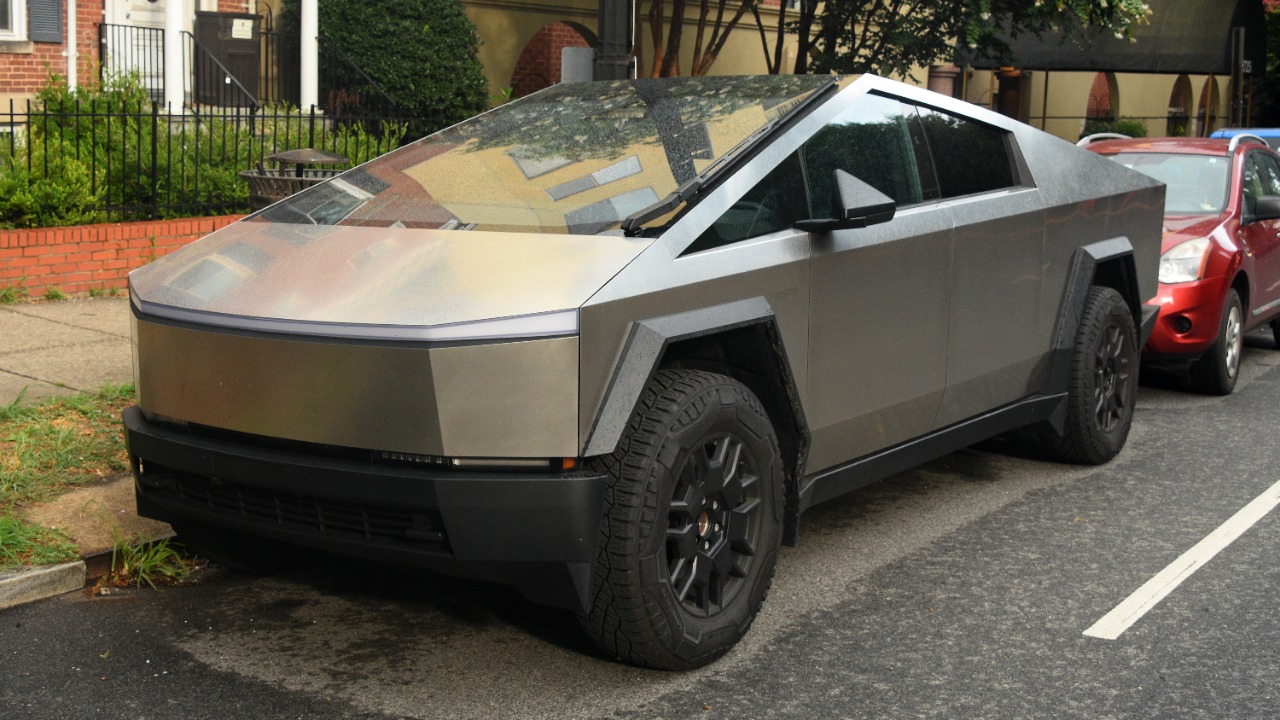

Tesla spent years building the Cybertruck up as a once-in-a-generation product, a stainless-steel statement that would redefine the pickup and cement the company’s dominance. Instead, the truck has stumbled into a brutal reality check, with demand fading, prices falling, and inventory piling up even as Elon Musk continues to call it Tesla’s “best ever” vehicle. I want to unpack how the hype curdled into a sales collapse, why the numbers look so grim, and what the Cybertruck’s unraveling really says about Tesla’s strategy and the broader electric pickup market.
The hype machine that set Cybertruck up to fail
From the moment the angular prototype rolled onto stage, Tesla framed the Cybertruck as a moonshot that would not just compete with Ford and General Motors but make their pickups look obsolete. Elon Musk leaned into that narrative, later describing the truck as Tesla’s “best ever” product and an “incredible” vehicle, language that raised expectations far beyond what any first-generation, low-volume model could realistically deliver. That framing mattered, because it primed investors and early adopters to expect a runaway hit rather than a niche experiment that would take years to refine.
Behind the scenes, the company also encouraged the idea that demand was effectively limitless, pointing to a mountain of reservations and internal projections that the truck could become a core pillar of Tesla’s business. In one widely cited breakdown, Why Tesla highlighted that the company had originally projected the Cybertruck to sell 250,000 units annually, a figure that implied mass-market appeal rather than a slow, careful ramp. When Musk later doubled down in Dec by calling the Cybertruck Tesla’s “Best Ever” and an “Incredible” product, as reported in Elon Musk Calls Cybertruck Tesla, it locked the company into a narrative of inevitable success that would collide head-on with the realities of cost, production, and consumer taste.
From million-reservation fantasy to 5,000-unit reality
The most striking part of the Cybertruck story is how far actual sales have fallen short of the early reservation frenzy. Those early sign-ups created an illusion of unstoppable demand, but they were low-commitment deposits, not binding orders, and they masked how many people were simply curious rather than ready to live with a stainless-steel wedge as a daily driver. As production finally ramped, the gap between the million-reservation myth and the real market became impossible to ignore.
By midyear, Tesla itself confirmed that Cybertruck sales had slumped to roughly 5,000 units, a figure that would be disappointing for a boutique sports car, let alone a pickup that was supposed to be a cornerstone of the brand. That number sits awkwardly next to the earlier projection that the truck could move 250,000 units annually, as highlighted in the The Tesla Cybertruck analysis. When a product that was supposed to be a volume leader instead sells at a tiny fraction of its target, the problem is not just execution; it is a fundamental misread of how many people actually want what is being built.
Production headaches and a truck that loses money
Even if demand had been stronger, the Cybertruck was always going to be a manufacturing headache. The stainless-steel exoskeleton, the unusual body panels, and the bespoke components made it far more complex than Tesla’s other vehicles, which are already challenging to build at scale. That complexity slowed the ramp and pushed costs higher, turning each truck into a financial liability rather than a profit engine at the very moment Tesla needed fresh margins to offset pressure on its older models.
According to the breakdown in Cybertruck, slow production and high costs meant Tesla was losing money on every Cybertruck it sold, a brutal outcome for a vehicle that was supposed to leverage the company’s manufacturing prowess. Instead of amortizing costs over a huge base of 250,000 units a year, Tesla found itself stuck in a low-volume trap where each truck carried a heavy overhead burden. That dynamic helps explain why the company has been so aggressive in cutting prices and experimenting with buybacks, because the only thing worse than selling a money-losing truck is not selling it at all while inventory gathers dust.
Sales collapse, flatlining demand, and “dead weight” status
As the year wore on, the Cybertruck’s sales trajectory shifted from disappointing to alarming. Analysts tracking Tesla’s deliveries noted that the company’s “other models” category, which includes Model S, Model X, Cybertruck, and Tesla Semi, had become a drag on overall performance in the United States. In that mix, the Tesla Cybertruck stood out as particularly problematic, with reports describing it as “dead weight” in a lineup that once prided itself on lean, high-turnover inventory.
One detailed look at Tesla’s delivery performance argued that the Tesla Cybertruck was contributing to a buildup of unsold vehicles in the United States, with the “other models” category (Model S, Model X, Cybertruck, and Tesla Semi) weighing on the brand. That narrative was reinforced later in the year when a separate analysis described Tesla as facing a Cybertruck Sales Collapse in Q3 and asked What was Behind the Dip, noting that the Electric vehicle giant was grappling with a product that simply was not moving. When a flagship launch is labeled “dead weight” and its quarterly performance is framed as a collapse, it signals that the problem is not a blip but a structural mismatch between product and market.
Price crashes, auctions, and the used-market verdict
Nothing reveals the true state of demand like the secondary market, and here the Cybertruck’s story is particularly harsh. Early on, some speculators assumed the truck would behave like other hot Teslas, commanding hefty premiums at auction as supply lagged behind demand. Instead, prices in that channel fell sharply, a sign that even flippers and collectors were struggling to find buyers willing to pay up for the stainless-steel novelty.
Reporting on auction data showed that Cybertruck prices were dropping by tens of thousands of dollars in a matter of weeks, with one analysis describing a “market crash” in which resale values plunged almost as soon as the first wave of trucks hit the block. As one summary put it, After just a few weeks, Cybertruck auction prices had plummeted, a reversal from the early days when some buyers assumed they could flip their slots for a profit. When a supposedly iconic new model cannot hold its value even in the short term, it suggests that the broader market sees it less as a must-have innovation and more as a risky, hard-to-resell experiment.
Q3 slump, flatlining sales, and the “dead in the water” label
By the time third-quarter numbers rolled in, the Cybertruck’s slump had hardened into a pattern. Analysts tracking registration and delivery data described a steep drop in Q3, with one detailed breakdown explicitly framing the situation as a Cybertruck Sales Collapse and probing What was Behind the Dip for the Electric vehicle maker. The message was clear: the truck was not just underperforming; it was actively deteriorating in the marketplace, even as Tesla cut prices and tried to stimulate demand.
Other observers went further, arguing that the truck’s sales were effectively stalling out. One report bluntly stated that Cybertruck Sales Are Dead in the Water, adding that Just when you thought things could not get any worse for Tesla, the Cybertruck found new ways to disappoint. A separate snapshot of delivery data described how Tesla Cybertruck is having a sales slump in 2025, with How Many Tesla Cybertrucks Were Sold in 2025 becoming a pointed question and a Disclaimer that Figures were based on around 59 vehicles per day. When multiple independent looks converge on language like “dead in the water” and “slump,” it underscores that the Cybertruck is not simply in an early ramp phase; it is stuck.
Discounts, abandoned-mall inventory, and the optics of desperation
As sales slowed and inventory swelled, Tesla turned to the bluntest tool in the automotive playbook: price cuts. The company slashed Cybertruck prices by $10,000 in an effort to clear unsold units, a move that might help move metal in the short term but risks damaging the brand’s premium positioning and angering early buyers who paid more. For a company that once prided itself on pricing power and waitlists, such aggressive discounting on a new flagship model is a stark signal that demand is not keeping up with supply.
The optics grew even worse as reports emerged of unsold Cybertrucks stacking up in unconventional storage sites. One account described how Elon Musk, facing dire straits with the truck, cut prices by $10,000 as unsold inventory piled up in an abandoned mall, a vivid image of a product that had lost its shine. That report, framed around the question What is going on with the Cybertruck, noted that Sales are much lower than expected and that thousands of Tesla Cybertruck units were sitting unsold. When a vehicle that was supposed to symbolize the future of electric pickups ends up warehoused in an abandoned mall, it becomes a case study in how quickly hype can curdle into embarrassment.
Buybacks, SpaceX demand, and attempts to paper over the gap
With retail buyers proving elusive, Tesla and Elon Musk have tried to create alternative demand channels for the Cybertruck. One tactic has been to buy back trucks from early customers, a move that can help manage quality issues and keep problematic vehicles off the road but also conveniently props up sales figures and keeps the most visible examples under corporate control. Another has been to lean on Musk’s other ventures, particularly SpaceX, to absorb a significant number of trucks that might otherwise sit unsold.
One detailed account described how Cybertruck Sales Slump in 2025 had become so severe that Tesla was buying them back and that Musk was using them for other projects, effectively trying to rescue the truck from the lucrative pickup segment where it had failed to gain traction. Another report noted that SpaceX is buying up an unfathomable number of Cybertrucks, arguing that Considering the pickup EV has been an enormous commercial flop, only selling barely a fraction of Musk’s promised 250, the question is whether this internal demand can meaningfully change the truck’s fortunes. Using SpaceX as a buyer of last resort may keep production lines busy, but it does not solve the core problem that regular truck customers are not embracing the Cybertruck.
Brand damage and what Cybertruck says about Tesla’s future
Beyond the raw numbers, the Cybertruck’s struggles are eroding one of Tesla’s most valuable assets: its reputation for building products that people line up to buy. For years, the company could count on a base of fans who would tolerate delays, quality issues, and price swings because they believed in the mission and loved the cars. The Cybertruck, by contrast, has become a symbol of overreach, a product that prioritized shock value and social media buzz over practicality, cost discipline, and fit with the core pickup audience.
That shift is visible not just in sales data but in the way the truck is discussed in mainstream tech and automotive circles. One short segment on Tesla Cybert sales joked that the wiper is not a hit, with David noting that Cybertruck sales are flatlining, a small but telling sign that the vehicle has become a punchline rather than an aspirational object. When I look across the reporting, from the Dec praise in Best Ever rhetoric to the Jul verdict that Just when you thought things could not get worse for Tesla, the Cybertruck found a way, the pattern is consistent. The truck has gone from icon-in-the-making to cautionary tale, and unless Tesla can either radically rework the product or gracefully pivot away from it, the Cybertruck will stand as a warning about what happens when a company starts believing its own hype more than the market’s feedback.
More from MorningOverview