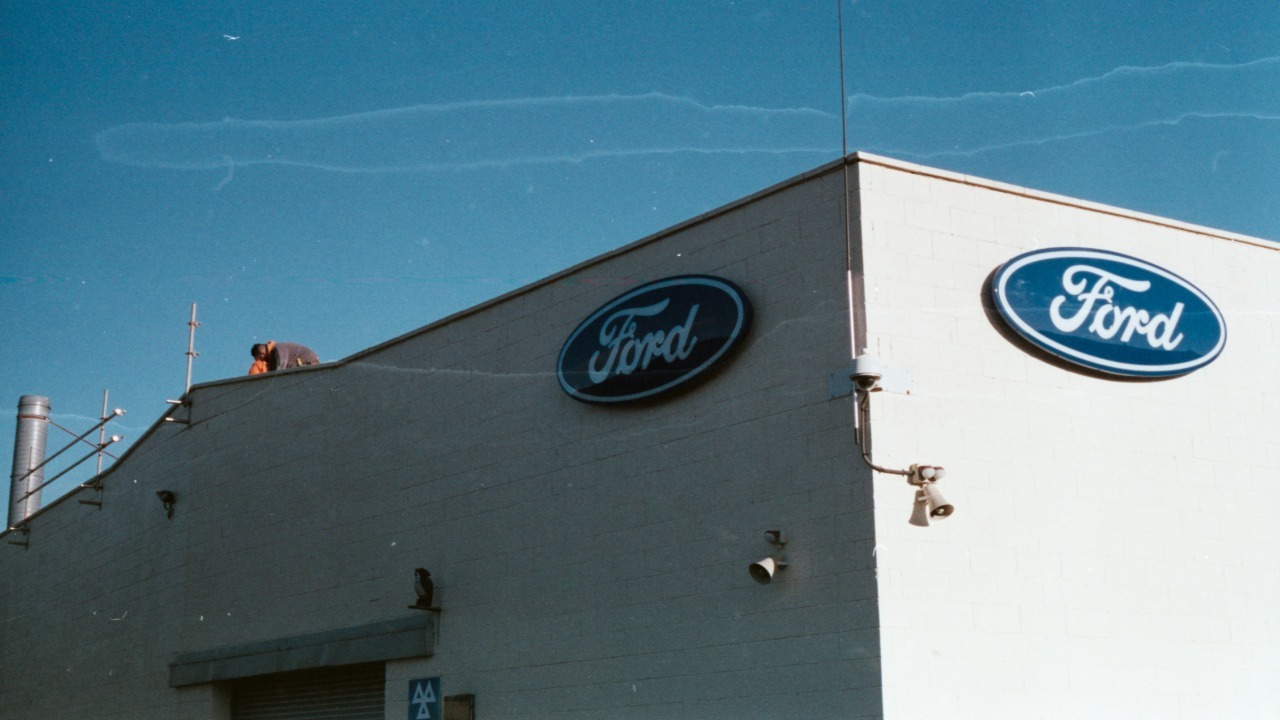

Ford is confronting a fresh safety crisis as it moves to fix a defect that can let some of its electric and hybrid vehicles roll away even when drivers think they are securely parked. The company is recalling more than a quarter of a million models in the United States to address a faulty parking system that regulators say poses a serious risk to people, property, and the broader trust in EV technology.
The campaign affects a wide swath of recent battery powered and hybrid trucks and SUVs, underscoring how software heavy drivetrains and electronic controls can introduce new failure points alongside their environmental benefits. I see this recall as a revealing stress test for how quickly a legacy automaker can respond when digital components, rather than mechanical parts, are at the heart of a safety problem.
How many vehicles are affected, and which models are at risk?
At the center of the action is a large group of Ford branded electric and hybrid vehicles, with reports putting the total at more than 270,000 units in the United States alone. One detailed breakdown describes 272,645 EVs and Hybrids Over Rollaway Risk, while another account notes that Ford is recalling over 272,000 such vehicles because they might roll away unexpectedly. A separate tally puts the figure at 272,600, while another summary rounds it to nearly 273,000 vehicles, and yet another describes more than 272,000 affected models. Even the most conservative framing, which talks about more than 270,000 electric and hybrid vehicles, makes clear that this is a nationwide issue, not a niche glitch.
Within that broad total, the recall zeroes in on specific nameplates that have been central to Ford’s electrification push. Reports highlight that the campaign covers electric trucks such as certain F 150 Ligh models, along with other battery electric and hybrid vehicles that share the same integrated parking hardware and software. One summary notes that Ford Recalls 272K Electric Vehicles Over Rollaway Risk, while another describes how the defect poses a significant safety risk across more than 270,000 EVs and hybrids. Taken together, the overlapping figures and model descriptions show that the problem is tied less to a single vehicle line and more to a shared parking module that Ford deployed across its newer electric and hybrid portfolio.
What exactly is the rollaway defect?
At the heart of the recall is a failure in the system that tells the vehicle it is safely in park. Instead of a traditional mechanical linkage between the gear selector and the transmission, these electric and hybrid models rely on an integrated park module that uses electronic signals to engage and confirm the park position. According to one detailed account, the recall affects the integrated park module, which can malfunction and fail to keep the vehicle stationary. Another report explains that Ford Recalls 272,000-Plus Vehicles because this module may not properly hold the vehicle in place, especially on inclines.
The practical effect is that a driver can shift into what appears to be park, remove their foot from the brake, and walk away, only to have the vehicle start moving on its own. One safety focused summary captures the everyday stakes with the blunt observation that Your truck rolling away in a parking lot should never be a scenario owners have to imagine. Another report stresses that the defect poses a significant safety risk because vehicles may inadvertently shift out of park, potentially leading to crashes or injuries. In some cases, drivers may not see an illuminated park indicator, further increasing the chance that they misjudge whether the vehicle is secure.
How did regulators and Ford respond?
Once the pattern of rollaway incidents emerged, Ford and federal safety regulators moved to formalize a recall that would cover all vehicles equipped with the suspect parking module. One account notes that Ford orders recall of more than 272,000 US vehicles over park failure, describing how the company is confronting a fresh safety challenge tied directly to the reliability of its electronic parking system. Another report explains that Ford is recalling over 272,000 EVs and hybrids because they might roll away unexpectedly, citing company information that was shared with regulators.
Regulators, for their part, have treated the issue as a classic safety defect that demands a clear remedy and transparent communication with owners. One summary notes that Ford recalls nearly 273,000 vehicles over a faulty parking function, and that the campaign has been assigned a specific recall code so owners and dealers can track it. Another report frames the move as part of a broader pattern in which Automaker Nears 150 Recalls for what has already been described as an exceptionally active 2025 recall year. I read that as a sign that regulators are scrutinizing software driven systems more aggressively, and that Ford is under pressure to show it can keep pace.
Why this recall hits EV trust particularly hard
Electric vehicles already face a trust gap with some drivers who worry about range, charging infrastructure, and long term durability, and a rollaway defect cuts straight to the most basic expectation of any car: that it stays put when parked. When a company that has staked its future on electrification has to admit that some of its newest EVs and hybrids can move on their own, it feeds a narrative that high tech drivetrains are more fragile or unpredictable than their gasoline predecessors. One analysis points out that Ford recalls more than 270,000 electric and hybrid vehicles due to roll-away risk, a phrase that is likely to stick in the minds of shoppers who are already on the fence about going electric.
At the same time, the nature of the defect highlights how EVs and hybrids depend on complex layers of software and electronics to manage even routine functions like parking. The integrated park module at the center of this campaign is not unique to electric vehicles, but its failure in a high profile EV lineup reinforces the perception that digital systems can fail in ways that are harder for drivers to anticipate or understand. Another report underscores that the defect poses a significant safety risk precisely because it is tied to the parking module, a component that most drivers never think about until something goes wrong. In my view, that combination of invisibility and consequence makes this kind of failure especially corrosive to consumer confidence in EV technology.
Ford’s broader recall record and what it signals
This campaign does not exist in isolation, it lands in a year when Ford has already been unusually active in pulling vehicles back for fixes. One detailed tally notes that Ford Recalls 272,645 EVs and Hybrids Over Rollaway Risk; Automaker Nears 150 Recalls for 2025, a figure that would be striking for any manufacturer, let alone one that is trying to convince investors and customers that it can execute a smooth transition to electric power. Another summary, focused on the EV subset, notes that Ford Recalls 272K Electric Vehicles Over Rollaway Risk, reinforcing how much of the company’s recall energy is now concentrated on its newest technology.
From my perspective, that pattern raises two intertwined questions: whether Ford’s internal quality controls are keeping up with the complexity of its software heavy vehicles, and whether the company is moving fast enough to fix issues once they surface. The fact that one report describes The Brief as highlighting more than 270,000 electric and hybrid vehicles in a single campaign, while another notes that the automaker is nearing 150 recalls for the year, suggests a company that is still wrestling with the growing pains of electrification. I do not see that as evidence that EVs are inherently unsafe, but it does indicate that the transition is straining traditional development and testing pipelines.
What owners should do right now
For owners of affected vehicles, the immediate priority is to prevent a rollaway incident before the official fix is installed. Safety guidance across the reports is consistent: drivers should use the parking brake every time they leave the vehicle, park on level ground whenever possible, and avoid relying solely on the gear selector to hold the vehicle in place. One account that emphasizes the everyday risk notes that Your truck rolling away in a parking lot is exactly the kind of scenario this recall is meant to prevent, and that owners should not wait for a letter in the mail before changing their habits.
Owners should also watch for official recall notices and contact their dealers to confirm whether their specific vehicle is covered and when a remedy will be available. One detailed breakdown explains that repairs are expected to be available after Ford finalizes the fix, likely involving updated software or replacement hardware for the integrated park module. Another report notes that the recall is identified by a specific code, which owners can use when speaking with dealers or checking their vehicle identification number against online recall databases. In my view, the combination of extra caution in daily use and proactive outreach to dealers is the best way for owners to protect themselves while Ford works through the logistics of such a large campaign.
The legal and financial stakes for Ford
Beyond the immediate safety concerns, the rollaway defect exposes Ford to legal and financial risks that could linger long after the last vehicle is repaired. If any crashes, injuries, or property damage are linked to the faulty parking module, the company could face lawsuits alleging that it failed to design, test, or warn adequately about the risk. One summary that frames the issue in stark terms notes that the defect poses a significant safety risk because vehicles may inadvertently shift out of park, potentially leading to crashes or injuries, language that plaintiffs’ attorneys are likely to quote in any future litigation.
Financially, the cost of inspecting and repairing more than 270,000 vehicles will be substantial, especially if the remedy involves replacing hardware rather than simply updating software. One report that focuses on the scale of the campaign notes that Ford is confronting a fresh safety challenge that could weigh on its finances at a time when it is already investing heavily in new EV platforms and battery plants. Another account, which highlights that Automaker Nears a triple digit recall count for the year, suggests that the cumulative cost of repeated campaigns could become a material drag on profitability. I see this as a reminder that in the EV era, software and electronics failures can be just as expensive to fix as traditional mechanical defects, if not more so.
What this means for the future of EV safety
Looking ahead, I expect this recall to accelerate a broader shift in how automakers design, test, and monitor the electronic systems that underpin modern vehicles. The integrated park module at the center of Ford’s campaign is just one example of a component that blends hardware and software in ways that can be difficult to validate under every real world condition. One analysis that describes how Ford is recalling over 272,000 EVs and hybrids because they might roll away unexpectedly underscores how a single shared module can create a systemic risk across multiple models and powertrains.
For regulators and consumers, the lesson is that EV safety is not just about batteries and high voltage systems, it is also about the mundane but critical functions like parking, braking, and shifting that are increasingly mediated by software. One report that captures the everyday stakes notes that Ford recalls more than 270,000 electric and hybrid vehicles due to roll-away risk, a phrase that will likely feature in future debates about how aggressively to regulate software updates and over the air fixes. In my view, the long term impact of this episode will depend less on the defect itself and more on how quickly and transparently Ford can close the loop, reassure owners, and demonstrate that its next generation of EVs has learned from a costly and very public mistake.
More from MorningOverview