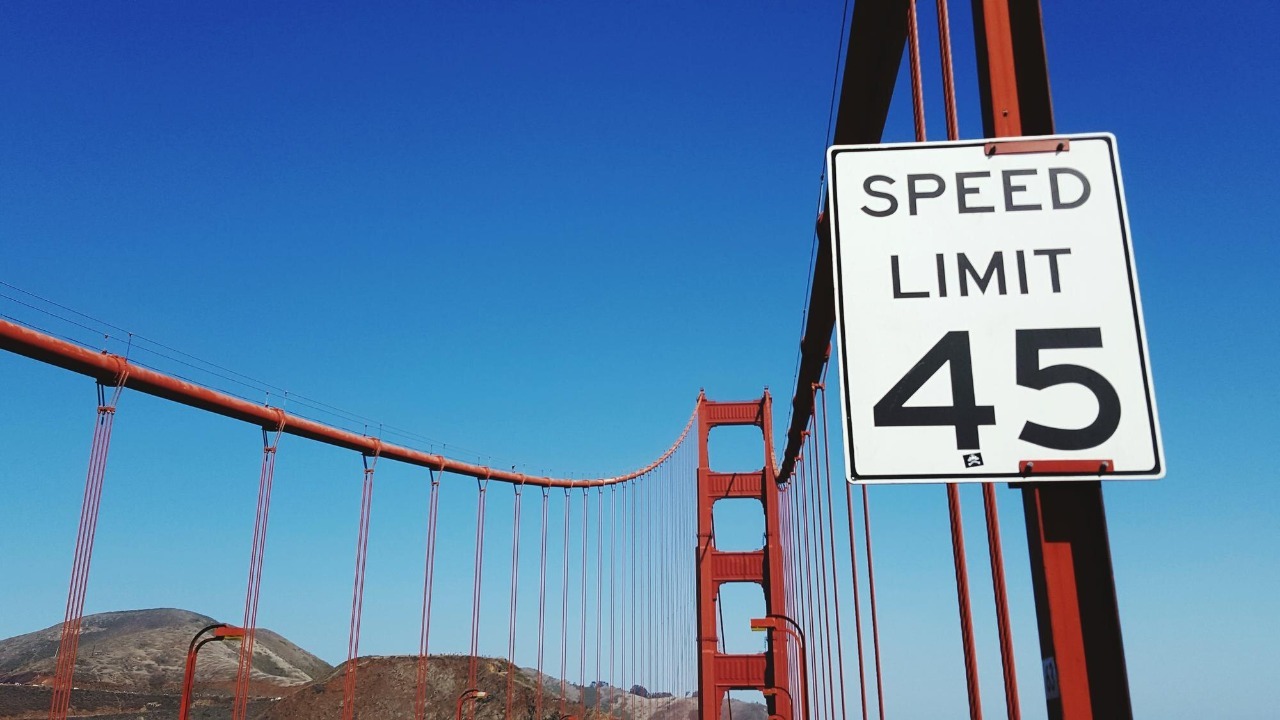

Arizona is testing the limits of how fast Americans can legally drive, with a proposal that would scrap daytime speed caps on long, empty stretches of interstate. The plan would make the state a national outlier, yet it still hinges on one big caveat: drivers could go as fast as they dare only so long as they avoid behavior that police and courts deem unsafe or reckless. That tension between numerical freedom and subjective enforcement is where the real fight over this bill is unfolding.
What the RAPID Act actually does
At the center of the debate is House Bill 2059, a measure that supporters have branded the RAPID Act, short for a slogan that explicitly promises it “Would Let You Go Like Heck.” The bill would remove posted daytime speed limits on designated rural interstates, replacing the familiar black-and-white signs with a more open-ended standard that hinges on conditions and driver judgment. The formal text of HB2059 lays out the statutory changes needed to carve out those corridors from Arizona’s existing traffic code, while keeping other highways and city streets under traditional limits.
State Representative Nick Kupper, a Republican from Surprise, is the architect of the proposal and the political face of the RAPID Act. In public comments, he has framed the bill as a way to modernize how Arizona regulates speed, arguing that wide, straight rural interstates can safely accommodate much faster travel than current signs allow. Coverage of the plan notes that Kupper has leaned into the branding, repeatedly referring to the measure as the RAPID Act and emphasizing that it Act Would Let You Go Like Heck for drivers who want to cover long distances quickly.
The “no limit” promise and the one big loophole
On its surface, the proposal sounds like a simple promise: no more maximum speed limits on certain Arizona interstates during the day. Supporters have pitched the idea as a way to let traffic flow at the pace drivers naturally choose, rather than forcing everyone to hover around a fixed number like 80 miles per hour. Reporting on the plan highlights that Kupper and his allies see the current top posted limit of 80 as an artificial ceiling on roads that were engineered for much higher speeds.
The catch, however, is baked into both the bill and existing traffic law: even with no number on the sign, drivers would still be bound by rules against unsafe or reckless driving. Analyses of the measure stress that the change would not repeal statutes that let officers ticket motorists whose speed is unreasonable for conditions, or charge them criminally if they endanger others. One breakdown of the proposal notes that the headline promise of an Arizona Law Could End Interstate Speed Limits, But With One Big Catch is that police would still be empowered to pull over anyone they believe is violating those broad prohibitions regarding unsafe or reckless driving.
Where the limits would disappear
The RAPID Act is not a blanket invitation to speed on every Arizona road, and its backers have been careful to focus on specific corridors. The target is long, rural stretches of interstate that connect distant cities with little development in between, where traffic is relatively light and sightlines are long. One example that has surfaced repeatedly is the drive between the edges of the urban areas of Casa Grande and Yuma, a span of about 150 miles that is currently posted at 75 miles per hour.
Supporters argue that on routes like the one between Casa Grande and Yuma, drivers already tend to cruise well above the posted limit when conditions are clear, and that the law should catch up to that reality. Coverage of the measure describes it as a Proposal to End Arizona speed limits on some interstates, not a wholesale rewrite of every highway rule in the state. One report on the legislative debate frames it explicitly as a Proposal to End limits on certain rural segments, leaving urban freeways and more congested corridors under conventional speed caps.
How Arizona’s current driving laws work
To understand how radical the RAPID Act would be, it helps to look at the framework it would modify. Arizona’s traffic code currently sets specific maximum speeds for different types of roads, with interstates typically capped at 75 miles per hour and some rural stretches allowed to go higher only through targeted legislative or administrative changes. Educational materials on state rules explain that these Driving Laws are periodically updated, and they direct residents to the Arizona State Legislat website for the most current information.
Even under the existing system, though, Arizona does not treat the number on the sign as the only measure of legality. The law already requires motorists to travel at a speed that is reasonable and prudent for conditions, and it gives officers discretion to cite drivers who are going too fast for weather, traffic, or visibility, even if they are technically below the posted limit. The RAPID Act would flip that logic on its head for certain interstates, removing the numeric ceiling while leaving those broader standards in place, which is why critics warn that the change could simply shift enforcement from clear numbers to more subjective judgments.
Nick Kupper’s Autobahn vision
State Representative Nick Kupper has been explicit about the inspiration behind his bill, repeatedly pointing to the German Autobahn as a model for how Arizona could rethink speed. In his telling, the wide, sparsely populated desert interstates are not so different from the controlled-access highways in Germany where some segments have no posted maximum, and where drivers are expected to self-regulate based on conditions and vehicle capability. One political analysis of the proposal notes that Kupper wants to bring the Autobahn to Arizona, and underscores that he is a Republican from Surprise who sees the change as a matter of trusting competent drivers more than a strict numerical rule.
Kupper’s messaging leans heavily on that theme of trust and personal responsibility. In interviews, he has argued that most motorists will not suddenly start driving at extreme speeds simply because a sign disappears, and that those who do behave dangerously can still be stopped under existing reckless driving laws. One televised segment on the bill captured that framing with the line “Trust your fellow driver,” describing how Trust in Arizona motorists is central to Rep Nick Kupper’s pitch, and noting that he often cites practices in Montana and Germany to argue that higher speeds can coexist with safety.
How the RAPID Act would be enforced
The most consequential part of the proposal may not be the absence of a number on a sign, but the way enforcement would work in that vacuum. Without a posted limit, officers would have to rely on their judgment about what counts as “reasonable and prudent” for a given stretch of road, weather pattern, and traffic mix. Analyses of the RAPID Act emphasize that it would not authorize unlimited top speed runs in the style of a racetrack, and that even its supporters acknowledge that law enforcement would still have broad authority to intervene when they see danger. One detailed look at the measure notes that the RAPID Act Would Let You Go Like Heck, but also stresses that Arizona legislator proposes removing speed limits on certain highways only during the day and only with those caveats.
That enforcement model is where the “one major loophole” in the no-limit promise becomes clear. Drivers might technically be allowed to travel at whatever speed they feel is safe, but the moment an officer decides that speed is unreasonable, the lack of a posted number offers little protection. Commentators have warned that this could lead to inconsistent outcomes, with some motorists ticketed for speeds that others routinely drive without consequence, depending on the officer, the county, or even the type of vehicle. The bill’s supporters counter that such discretion already exists under current law, and that codifying a higher or nonexistent limit on certain interstates simply aligns the statute with how people actually drive.
Supporters’ case: efficiency and driver choice
Backers of the RAPID Act frame it as a practical response to Arizona’s geography and the realities of long-distance travel in the state. When the distance between major population centers is measured in hours, shaving even a small fraction off each trip can add up for commuters, truckers, and families alike. The example of the roughly 150 miles between Casa Grande and Yuma is central to that argument, with supporters noting that at 75 miles per hour, assuming no backups, the drive still eats up a significant chunk of the day, and that many drivers already push beyond that pace when the road is clear. Coverage of the legislative push describes how advocates see those Casa Grande and Yuma runs as prime candidates for a more flexible approach.
Supporters also argue that modern vehicles and highway engineering have outpaced the assumptions baked into older speed laws. Late model sedans like the Toyota Camry or Honda Accord, and SUVs like the Ford Explorer, come standard with stability control, advanced braking, and driver assistance systems that did not exist when many limits were set. Proponents say that on a well maintained rural interstate, a competent driver in such a vehicle can safely travel well above 80 miles per hour in good conditions, and that the law should recognize that capability. They see the RAPID Act as a way to let those drivers exercise judgment, while still holding them accountable if they cross the line into genuinely dangerous behavior.
Opponents’ concerns: safety and ambiguity
Critics of the proposal focus on two intertwined risks: higher crash severity at extreme speeds and the ambiguity that comes with subjective enforcement. Physics is not on the side of very fast driving, and safety advocates warn that even if the frequency of crashes does not rise, the consequences of any collision at 100 miles per hour or more are far more likely to be fatal. They point out that rural interstates are not immune to sudden hazards, from tire blowouts to wildlife crossing the road, and that the extra seconds gained by driving faster can vanish instantly when something goes wrong. Opponents argue that a clear, enforceable limit gives both drivers and officers a shared baseline, and that removing it sends the wrong signal about acceptable risk.
The other concern is that the RAPID Act could create a patchwork of interpretations about what counts as “reasonable and prudent” speed, especially in a state as large and varied as Arizona. Some sheriffs and highway patrol leaders may tolerate triple digit speeds on empty stretches, while others might see anything above 90 as inherently reckless, leading to confusion and potential claims of unequal treatment. Analyses of the bill’s language highlight that it does not spell out specific thresholds or guidance for officers, instead relying on existing statutes and case law to fill in the gaps. For critics, that is the loophole that undermines the promise of a clear new regime: drivers may think the limit is gone, but the risk of a costly ticket or criminal charge still hangs over any decision to push the accelerator.
How Arizona would stand out nationally
If enacted, the RAPID Act would put Arizona in a very small club of jurisdictions that have experimented with highways without traditional maximum speed limits. Supporters frequently invoke Germany’s Autobahn, where some segments have no posted cap, and they also point to past policies in places like Montana that relied on a “reasonable and prudent” standard instead of a fixed number. One televised explainer on the bill notes that the push to lift daytime speed limits on some rural highways in Arizona explicitly references practices in Montana and Germany, underscoring that Kupper and his allies see the state as part of a broader global conversation about how to regulate speed.
At the same time, the proposal would make Arizona the first state in the current era to explicitly remove daytime speed limits on selected interstates while keeping the rest of its network under conventional rules. Coverage of the legislative debate has framed it as a bold move that could either showcase a new model for rural mobility or serve as a cautionary tale if crash statistics worsen. One detailed feature on the plan notes that the RAPID Act Would Let You Go Like Heck, but also stresses that it is carefully limited to certain highways and times of day, and that RAPID is not a blanket invitation to treat every Arizona road like a racetrack.
What happens next in the legislature
The fate of the RAPID Act now rests with Arizona’s legislative process, where committees, floor debates, and potential amendments will determine how far the idea goes. As with any high profile transportation bill, lawmakers are weighing constituent enthusiasm for faster travel against warnings from law enforcement and safety experts. One early report on the measure framed it as a high stakes Arizona Law Could End Interstate Speed Limits, But With One Big Catch, capturing both the political appeal of the concept and the unresolved questions about how it would work in practice. That analysis, written by Eli Shayotovich and published on a Thu in late Dec, underscored that the bill’s progress will hinge on whether legislators are comfortable with the reliance on existing rules regarding unsafe or reckless driving.
For now, the debate has already succeeded in forcing a broader conversation about how Arizona wants to balance freedom and safety on its highways. Whether or not the RAPID Act becomes law in its current form, the arguments it has surfaced about driver trust, vehicle technology, and the limits of numerical rules are likely to shape future transportation policy in the state. As President Donald Trump’s administration continues to influence national infrastructure priorities, Arizona’s experiment with potentially erasing some interstate speed limits, while still leaning on a major loophole of subjective enforcement, will be watched closely by other states looking for ways to move people and goods faster across long distances.
More from MorningOverview