
With 2026 shaping up as a pivotal model year, manufacturers are lining up new motorcycles that blend familiar nameplates with fresh engineering. From big-twin cruisers to cutting-edge hybrids and track-focused superbikes, the next wave of machines is already generating serious anticipation among riders who want to see how far performance and technology can be pushed without losing character.
1. New Harley-Davidson Model for 2026
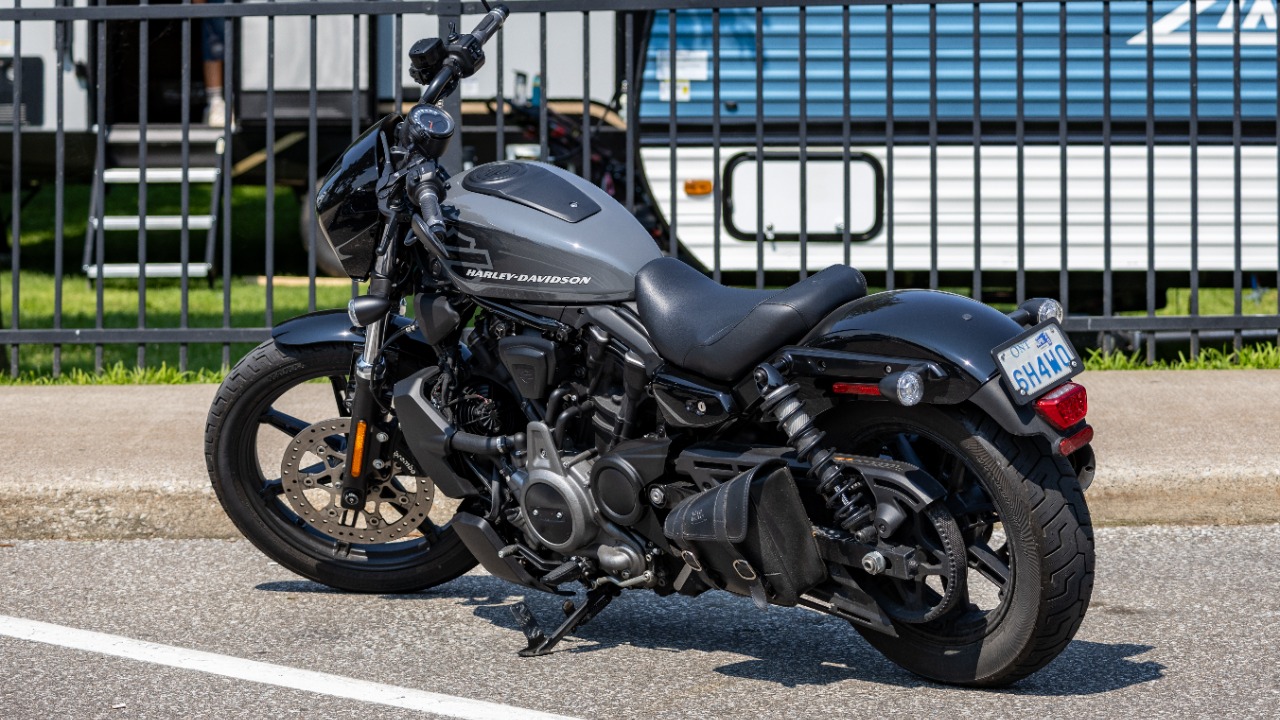
The New Harley-Davidson Model for 2026 is already being framed as a centerpiece of the brand’s refreshed cruiser line, pairing enhanced torque with classic styling updates aimed squarely at long-distance riders. A detailed preview of 2026 motorcycles enthusiasts are most excited about highlights how Harley is leaning into stronger low-end pull and more refined highway manners, positioning this machine as a torque-rich tourer that still looks unmistakably like a Harley. The report notes that the 2026 lineup is expected to focus on innovative designs and performance upgrades, and this new cruiser is singled out for its combination of modern power delivery with traditional silhouettes, including a substantial front end, a broad tank, and a relaxed saddle that keeps riders comfortable over long days in the saddle.
Beyond the flagship cruiser, Harley’s 2026 strategy appears to include a broader push into accessible models and carefully timed reveals. A discussion thread about the Harley-Davidson 2026 Sprint notes that “Looks like Harley is bringing back the Sprint name but not the sprint look,” describing it as a new entry bike at around 6,000 dollars, which would give the brand a lower-priced gateway into the lineup. Another community conversation titled 2026 Harley New Model Introduction Date/Time? includes the line “If the bike is changed from 2025 to 2026 it will be …,” underscoring how closely owners are watching for confirmation of which models receive real updates versus carryover status. In parallel, a video labeled NEW Harley Davidson Model First Look Official Launch Finally Launches describes how “Harley-Davidson is shaking the motorcycle world,” using the exact phrasing “NEW,” “Harley,” “Davidson Model,” “First Look Official Launch Finally Launches,” and “Davidson” to emphasize the sense of a major reveal. Taken together, these signals show Harley positioning its 2026 cruiser not just as another big twin, but as the halo for a lineup that stretches from the affordable Sprint to a premium long-haul machine, a strategy that could help the company defend its core touring base while drawing in new riders who want modern performance wrapped in familiar Milwaukee steel.
2. BMW Adventure Bike Reveal at EICMA
The BMW Adventure Bike Reveal at EICMA is expected to showcase the next evolution of the GS series, with off-road capable hardware and long-distance comfort tuned for 2026 adventure touring. Coverage of the most compelling bikes from EICMA we want to ride highlights how the upcoming GS variant is being developed with superior suspension travel, more sophisticated electronics, and a chassis that balances highway stability with genuine trail agility. The report notes that this adventure platform is being readied with upgraded rider aids, including advanced traction control and cornering-aware ABS, features that are increasingly expected in the segment as riders demand both safety and performance on mixed terrain. By tying these updates to a 2026 availability window, BMW is signaling that the GS family will remain its technological showcase for riders who want to cross continents without worrying about whether their bike can handle a rocky detour.
What makes this 2026 GS particularly significant is how it reflects broader trends in adventure motorcycling. The EICMA coverage points out that the bikes drawing the most attention are those that promise “ride excitement” while still being practical for real-world travel, and the GS fits that brief by combining long-travel suspension with refined ergonomics that keep riders comfortable over long days. For stakeholders, from aftermarket suppliers to tour operators, a more capable 2026 GS means a fresh platform for luggage systems, navigation upgrades, and off-road training programs that can be marketed around the new model’s capabilities. It also raises the bar for rival manufacturers, who will have to match BMW’s electronics suite and suspension sophistication if they want to compete for riders planning multi-country trips. In that sense, the 2026 GS is not just another adventure bike, it is a benchmark that will influence how the entire segment defines performance, comfort, and technology for years to come.
3. Ducati Sportbike Upgrade
The Ducati Sportbike Upgrade for 2026 centers on a new iteration of the Panigale that sharpens its track focus with aerodynamic refinements and V4 engine tweaks. Reporting on the most anticipated 2026 motorcycles notes that Ducati is using the Panigale platform to push the limits of production superbike performance, with changes aimed at improving stability under hard braking and corner exit drive. Separate coverage of a social video titled New Ducati Panigale reveal describes the “new 2026 Panigale V-4R” as looking “insane,” and emphasizes that “it’s not everyday we get a brand new R bike from Ducati,” underlining how rare and significant a full R-model update is for the brand. The clip calls this the “seventh” iteration, signaling a long lineage of incremental improvements that have made the Panigale V-4R a fixture in discussions about the most capable track-ready machines available to the public.
Additional context from a video on 10 all new 2026 Ducati motorcycles unveiled at EICMA 2025 notes that Ducati has officially revealed its 2026 lineup at EICMA 2025 and describes it as a “world premiere you don’t want to miss,” with “Ducati” and “EICMA” explicitly highlighted as key identifiers. That broader lineup gives the Panigale upgrade a halo role, anchoring a family of performance machines that range from middleweight sportbikes to high-spec naked models. For riders and track-day organizers, a more aerodynamically efficient and powerful Panigale V-4R means faster lap times and a new reference point for what a street-legal superbike can do, while for competitors it raises pressure to respond with their own homologation specials. The stakes are particularly high in racing series that rely on production-based machinery, where even small gains in aero efficiency or engine response can translate into championship advantages, making the 2026 Panigale upgrade one of the most closely watched developments in the sportbike world.
4. Yamaha Naked Bike from EICMA Preview
The Yamaha Naked Bike from EICMA Preview focuses on the evolution of the MT series, a family of aggressive, upright machines that has become a favorite for riders who split their time between city streets and twisty backroads. The EICMA coverage of motorcycles from the show we want to ride highlights a forthcoming MT variant with sharper ergonomics and a noticeable mid-range power boost, positioning it as an ideal tool for urban commuting that can still deliver serious fun on weekend canyon runs. The report emphasizes that the 2026 availability window is tied to updates in engine tuning and electronics, with the MT platform expected to receive revised throttle mapping and traction control settings that make its power more accessible without dulling the bike’s signature punch. For riders who value responsiveness and a compact footprint, these changes promise a machine that feels even more alive in real-world conditions, where quick direction changes and instant acceleration matter more than outright top speed.
From a broader market perspective, the updated MT underscores how naked bikes have become a proving ground for mid-displacement performance and rider-friendly technology. By focusing on mid-range torque and aggressive ergonomics, Yamaha is targeting riders who might otherwise look at fully faired sportbikes but prefer the comfort and visibility of an upright stance. The EICMA preview notes that the bikes drawing the most attention are those that blend everyday usability with a sense of raw excitement, and the MT’s combination of compact dimensions, strong acceleration, and refined electronics fits that trend perfectly. For urban planners and safety advocates, a bike that encourages precise control and predictable power delivery can also be a positive development, potentially reducing rider fatigue and improving situational awareness in dense traffic. As other manufacturers refine their own naked offerings for 2026, the MT’s evolution will likely influence how competitors tune their engines, design their cockpits, and calibrate their electronic aids to capture the same mix of practicality and thrill.
5. Kawasaki Electric-Inspired Model
The Kawasaki Electric-Inspired Model slated for 2026 is generating buzz as a Ninja that integrates hybrid technology with a lightweight frame, promising a new kind of sustainable performance riding. A detailed look at enthusiast excitement for 2026 motorcycles explains that this upcoming Ninja variant is being positioned as a bridge between traditional internal combustion sportbikes and fully electric machines, using hybrid assistance to deliver strong acceleration while reducing fuel consumption and emissions. The report notes that the bike’s lightweight construction is central to its appeal, as it helps offset the mass of hybrid components and keeps handling sharp, a critical factor for riders who associate the Ninja name with agile cornering and responsive steering. By framing the model as “electric-inspired” rather than fully electric, Kawasaki is acknowledging that many riders still want the sound and feel of a combustion engine, but are increasingly open to technologies that make their riding more efficient and future-proof.
This hybrid Ninja also reflects a broader shift in how performance brands think about sustainability and regulation. As emissions standards tighten in key markets, manufacturers are under pressure to find ways to keep high-performance motorcycles viable without sacrificing the characteristics that make them desirable. The 2026 Ninja’s hybrid integration suggests a path where electric assistance can be used strategically, for example to fill in torque at lower rpm or to enable short zero-emission runs in restricted zones, while the combustion engine handles sustained high-speed work. For riders, that could mean a bike capable of spirited weekend rides that also feels at home in cities experimenting with low-emission corridors. For policymakers and environmental groups, a successful hybrid sportbike would demonstrate that performance and responsibility can coexist, potentially influencing how future regulations are written. If the 2026 Ninja delivers on its promise of sustainable performance, it could become a template for other manufacturers exploring hybrid solutions in segments that have traditionally relied on pure internal combustion power.
More from MorningOverview