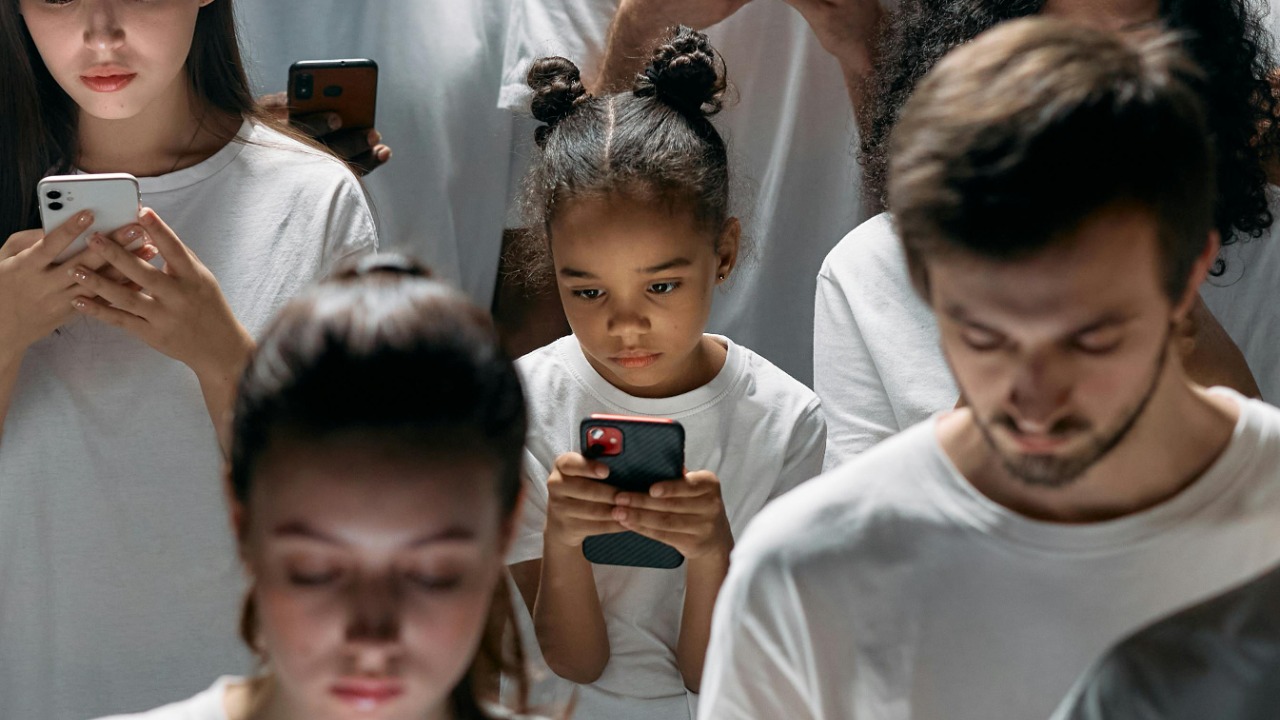

Gen Z has grown up with smartphones in their pockets and algorithms shaping their feeds, yet many of them are suddenly unsure where the technology ends and their own identities begin. They are fluent in artificial intelligence tools and quick to experiment, but beneath the convenience sits a deeper fear that AI could flatten their creativity, hollow out their careers, and even replace the relationships that make them feel human. I see a generation trying to harness AI’s power while fighting to protect the messy, emotional, and imperfect parts of life that no machine can convincingly imitate.
Early adopters with second thoughts
Members of Gen Z are often the first to try new AI tools, from homework helpers to image generators, and they tend to be more comfortable with experimentation than older colleagues or parents. Yet as they integrate these systems into school, work, and social life, many are starting to question whether constant reliance on automated help is quietly eroding their own judgment and originality. In one survey highlighted by Why Gen Z Is Embracing and Questioning AI, young people described using chatbots and other tools daily while simultaneously worrying that the same technology could deskill them over time.
That tension shows up in how they talk about school and work. Many students say AI helps them brainstorm or organize ideas faster, but they also wonder if leaning on automated suggestions will make their own writing and problem solving feel generic. The report from Gen Z Is Using AI, But Reports Gaps in School and Workplace Support notes that adult Gen Zers are significantly more likely than older adults to use AI tools, yet only 10% report feeling excited about AI at work, a striking gap between adoption and enthusiasm. I read that as a sign that this generation is not blindly optimistic about technology, but instead is wrestling in real time with what it might cost them.
Work that feels less meaningful
Career anxiety sits at the center of Gen Z’s unease with AI. Many of them are entering the workforce just as automation is reshaping job descriptions, hiring pipelines, and performance metrics, and they are acutely aware that the tasks they are given today could be automated tomorrow. In one recent snapshot of attitudes, About 41% of young respondents said AI will make work less meaningful, compared to a much smaller share who believe it will make work more meaningful, underscoring a fear that their jobs will be stripped of the human elements they value most.
That pessimism is not limited to a single industry. A broader workforce survey from Deloitte found that nearly two-thirds of workers in younger generations are worried about the impact of generative AI on their roles, with 63% of Gen Zs and 65% of millennials saying they fear the technology will eliminate jobs. When I put those numbers alongside the stories I hear from recent graduates, a pattern emerges: they are not just afraid of unemployment, they are worried about being left with roles that feel like supervising algorithms rather than practicing a craft.
Jobs, algorithms, and the fear of being replaced
For a generation raised on side hustles and portfolio careers, the idea that an algorithm could quietly decide their professional fate feels especially threatening. Many young job seekers now use social platforms like TikTok and LinkedIn to find openings, only to discover that the same systems can filter them out before a human ever reads their application. Reporting on how Gen Z fears AI will steal their jobs describes young people who rely on social media to job hunt but still believe AI will dictate their career paths, including which roles they are even allowed to see.
Inside companies, that anxiety is compounded by the sense that leadership is moving faster on automation than on communication. In one analysis of a Human-AI future, Ajay Penupothula, who Studies Master of Computer Application (MCA) at Aditya University, notes that Half of young workers think AI will significantly change their jobs and argues that it is better leadership, not just better technology, that will determine whether those changes feel empowering or dehumanizing. I hear a similar plea from many Gen Z professionals: they are not asking employers to halt AI, they are asking them to be honest about how it will reshape power, pay, and purpose.
School, screens, and the erosion of connection
The classroom is another place where Gen Z’s relationship with AI feels conflicted. On one hand, students use chatbots to summarize readings, generate practice questions, and translate complex concepts into plain language. On the other, educators are warning that heavy reliance on these tools can weaken the very relationships that make learning meaningful. One report on the rising use of AI in schools notes that One of the negative consequences AI is having on students is that it is hurting their ability to develop meaningful relationships, leaving some feeling less connected to their teachers.
That sense of distance is not just emotional, it is structural. When assignments are mediated through automated grading systems and tutoring bots, students can start to see teachers as gatekeepers rather than mentors, and they may be less likely to ask vulnerable questions or admit confusion. The earlier findings from Gen Z Is Using AI, But Reports Gaps in School and Workplace Support underline that adult Gen Zers feel they are not getting enough guidance on how to use AI responsibly, which leaves them improvising their own rules. I see that improvisation as both a sign of resilience and a risk, because it can normalize shortcuts that gradually crowd out the slow, relational parts of education that no chatbot can replace.
AI companions and the search for intimacy
Nowhere is the fear of losing humanity more literal than in the rise of AI companions. Some Gen Z users are turning to chatbots and virtual partners for comfort, advice, or even romance, especially when human relationships feel too risky or time consuming. A report on how Gen Z’ers are turning to AI for human connection describes the disturbing trend of young people who believe AI partners can replace human companionship, a belief that runs directly against the idea that real intimacy requires vulnerability and unpredictability.
At the same time, some young users say these tools help them practice communication or feel less alone during difficult periods, which makes the ethical terrain even more complicated. When I read accounts of Gen Z Terrified of Losing Their Humanity, with phrases like Scared Straight and Pure anxiety about what constant AI interaction might do to their brains, I hear a generation that is both using and critiquing these tools in the same breath. They are asking whether simulated empathy can ever be enough, and what happens to their capacity for real-world relationships if they start to prefer the frictionless comfort of a bot that never argues back.
Creativity in the age of the algorithm
For many young artists, coders, and influencers, AI is both a muse and a rival. They use image generators to prototype designs, large language models to draft scripts, and music tools to experiment with new sounds, yet they worry that the more they rely on these systems, the harder it becomes to claim their work as uniquely their own. One analysis of creativity and self-expression in the age of the algorithm notes that despite their higher usage of AI, Gen Z creators are uneasy about how algorithm-driven feeds and tools might narrow the range of voices that get heard, and it highlights research methods that examine how recommendation systems shape taste.
Some commentators frame this as a double-edged sword, arguing that AI can expand what is possible while also threatening to homogenize culture. In a piece on AI, Gen-Z, and the Future of Creativity, a Visionary voice from the Tech and Operations world describes Artificial Intelligence as a game-changer that can accelerate content production but warns that overuse risks turning creative work into a series of predictable variations. When I talk to young designers who feed prompts into image models for a living, I hear a similar worry: if everyone is drawing from the same training data and the same trending aesthetics, what happens to the weird, personal, and locally rooted ideas that used to define subcultures?
Soft skills as a survival strategy
In response to these pressures, many Gen Z workers are doubling down on the qualities they believe AI cannot copy. They talk about empathy, ethical judgment, and nuanced communication as not just nice-to-have traits but as core career assets that might keep them relevant in an automated economy. One practical guide on how to Strengthen the Skills AI Can’t Replicate While algorithms handle more routine tasks emphasizes that complex interpersonal dynamics and moral reasoning cannot be replicated by code, and it urges professionals to invest in those human capabilities.
Corporate research echoes that shift in priorities. One analysis titled The Human Skills Premium As Gen Z enters the workplace argues that as this generation continues developing technical skills, they also believe that developing soft skills will make them irreplaceable even as AI handles routine tasks. Another breakdown of future-ready competencies notes that Professionals will be challenged to reinvent the way they work and will be valued more for soft skills, which artificial intelligence cannot replicate. I see Gen Z’s focus on these traits not as a retreat from technology, but as a strategic bet that the most human parts of work will only grow more important as machines take over the rest.
Redefining what “being human” means
Underneath the statistics and workplace strategies lies a more intimate question: what does it mean to be human in a world where AI can mimic so much of what we do? Many Gen Z voices describe their fear not just in economic terms, but in existential ones, worrying that constant exposure to machine-generated content will blur their sense of self. The language used in coverage like Gen Z Terrified of Losing Their Humanity captures that mood, with young people talking about their brains feeling rewired by endless feeds and their emotions shaped by systems they do not fully understand.
At the same time, I see a generation actively trying to answer that question rather than passively accepting whatever technology delivers. They are pushing schools to teach critical AI literacy, urging employers to design roles that preserve human judgment, and experimenting with creative practices that use AI as a tool rather than a replacement. The early findings from Why Gen Z Is Embracing and Questioning AI suggest that on the whole, Gen Z is both more likely to use AI and more likely to worry about its long-term effects, a combination that could make them some of the most thoughtful stewards of this technology. Their fear that AI will erase what makes them human is real, but so is their determination to define, protect, and even expand that humanity on their own terms.
More from MorningOverview