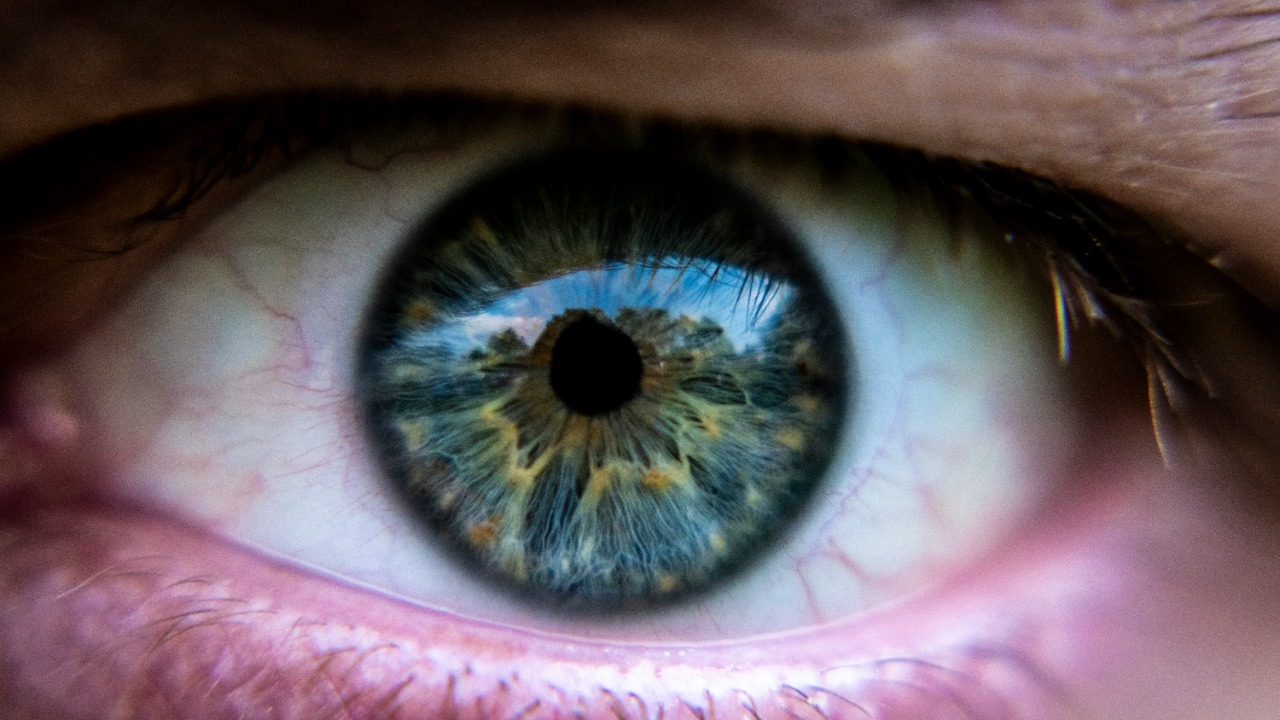

Human vision feels complete and reliable, yet a growing body of research suggests our eyes and brains are constantly editing reality, hiding some things while revealing others. At the same time, new science and technology are quietly handing people abilities that look a lot like superpowers, from sensing “invisible” patterns to literally seeing in the dark. I want to unpack how those hidden capacities work, and why they mean you might already be tuned into an unseen world without realizing it.
Scientists are finding that perception is not a fixed window but a flexible system that can be trained, extended and even rewired. Some of those shifts happen inside the brain, as attention locks onto certain objects and ignores others, while other shifts come from tools that expand what counts as “visible” in the first place. Together, they point to a simple but radical idea: the world around you is richer than what you think you see, and your own biology may be far more adaptable than you have been taught.
The strange science of not seeing what is right in front of you
I find it useful to start with a paradox: the same brain that can pick a friend’s face out of a crowd can also miss a stop sign that fills half the windshield. Researchers who study attention argue that perception is less like a camera and more like a spotlight, and that spotlight can be so narrow that entire objects vanish from awareness even when they fall directly on the retina. Experiments on what is often called “inattentional blindness” show that when people focus on a demanding task, they can fail to notice highly visible shapes, movements or even people that appear in plain view.
Work at the University of Toronto has helped map this “invisible world of human perception” by showing how the brain uses simple shapes to steer that spotlight. In one set of studies, participants searched for targets inside or near rectangles, and the widely accepted conclusion was that the brain is wired to use objects like these rectangles to focus attention, much as it does when someone scans a crowd for a familiar face, a pattern that researchers such as Mar have examined in detail. Another line of work from the same community has compared this selective focus to the way Stage magicians exploit blind spots, guiding the audience’s gaze so that critical moves happen in full view yet outside awareness.
Are we really “inattentionally blind,” or just looking for the wrong thing?
For years, the dominant story has been that attention is so limited that we simply cannot see what we do not expect. More recent work complicates that picture, suggesting that people may be more sensitive to unexpected events than classic experiments implied. When researchers revisited a famous “invisible gorilla” style setup, they found that participants noticed certain fast moving objects at higher rates than predicted, even when they were told to focus elsewhere, which hints that the visual system may flag some surprises automatically.
In one such project, scientists tested how often people detected what they called “unusual moving objects” and then ruled out simple explanations like brightness or size. The finding that detection rates could not be explained away by physical differences alone suggests that the brain’s alert system for motion and novelty is more robust than the strictest versions of inattentional blindness theory allow, a point underscored in a detailed analysis of whether we are truly “inattentionally blind” that examined how the noticeability of fast moving UMOs is not simply due to physical differences and was supported by the National Science Foundation under grant DGE 1342536, as described in a reassessment of the phenomenon. To me, that nuance matters because it reframes the question: instead of asking whether we are blind, it asks when and how our built in alarms override the narrow beam of attention.
Training the brain to notice what it used to ignore
If attention can miss obvious things, the next logical question is whether that limitation is permanent. Evidence suggests it is not. Perception researchers have shown that with practice, people can become better at detecting signals that initially seemed invisible, which implies that the brain’s filters are adjustable. This is not just about learning to recognize a new face or logo; in some cases, training appears to change how early sensory areas respond to faint or masked stimuli.
One influential line of work, summarized under the title Study Shows Perception Of Invisible Stimuli Improves With Training, reported that people who repeatedly practiced a discrimination task with barely visible images became significantly more accurate over time. The researchers, working with the Association for Res, argued that this improvement reflected changes in how the brain processed the stimuli rather than simple guessing, and they emphasized that awareness itself might be trainable. I read that as a direct challenge to the idea that there is a hard line between what we can and cannot see; instead, the line seems to move with experience, much like how a musician learns to hear subtle differences in pitch that once sounded identical.
When some people literally see more colors than others
Not all perceptual differences come from training. Some are baked into the biology of the eye. One striking example is tetrachromacy, a condition in which a person has four types of cone cells instead of the usual three, potentially allowing them to distinguish far more shades of color. While estimates of how common this is remain uncertain, anecdotal reports describe people who see extra gradations in everyday scenes that others perceive as flat or uniform.
In one widely shared account, a commenter described how his wife is a Tetrachromat and can see farther into the ultraviolet range, noticing pinks in a clear blue sky that he cannot, even though she has very poor eyesight in general. I find that detail revealing because it separates sharpness from richness: her acuity is low, yet her color experience is arguably deeper. It is a reminder that “better vision” is not a single dimension and that some people may already inhabit a slightly different visual world, one where the invisible for most of us is simply part of the backdrop.
Microscopes, microbes and the first revolution in seeing the unseen
Long before anyone talked about augmented reality, simple glass lenses quietly expanded the human Umwelt, the slice of reality we can sense. When early scientists began grinding lenses into microscopes, they discovered that familiar materials were teeming with structures and organisms that had been completely hidden. That shift did not just add new trivia to textbooks; it rewrote basic ideas about disease, hygiene and what it means for something to be alive.
Modern microbiology still rests on that breakthrough. As students learn in introductory courses, Microscopy revolutionized our understanding of the microbial world by revealing cells, bacteria and viruses that are invisible to the naked eye, and resources such as Fro highlight how that leap in resolution made it possible to link specific microbes to specific illnesses. When I think about hidden powers of perception, I put microscopes near the top of the list, not because they live in our heads, but because they permanently changed what counts as “real” in everyday thinking, from the soap dispenser in a hospital to the way we talk about gut health.
Life half a mile down and the invisible ecosystems beneath our feet
The unseen world is not only small; it is also deep. Beneath the surface of the Earth, far from sunlight, microbial communities carry out chemical reactions that shape the planet’s carbon and nutrient cycles. For a long time, those processes were largely speculative because they unfolded in places that were physically hard to reach and biologically hard to measure. Recent advances in genetics and imaging are starting to change that, revealing a hidden biosphere that operates on its own terms.
Researchers have now developed methods that link genetic signatures to real time activity in anaerobic microbes living roughly half a mile below ground, effectively turning a once abstract concept into a measurable system. One team reported a groundbreaking approach that allowed them to track how these organisms process energy and interact, revealing key activity in life below the surface that had never been directly observed. To me, that work underscores a broader point: even when our eyes cannot reach a place, we keep inventing ways to extend perception, whether through fiber optic cables, chemical sensors or algorithms that translate DNA into a kind of map.
Art, science and the craft of making the invisible visible
Not every extension of perception comes from lab equipment. Artists have long experimented with ways to translate unseen forces into forms we can feel, from visualizing sound waves to mapping air pollution as color. When art and science collaborate, the result can be a kind of perceptual bridge, turning abstract data into images, sculptures or experiences that make hidden patterns emotionally legible. I see that as another kind of “superpower,” one that operates through culture rather than hardware.
A recent exploration of How creative work intersects with research highlighted how Lian Sing and others use installations to show how Art and science are often seen as separate yet share a drive to reveal what the eye alone cannot, whether that is the flow of data through a city or the microscopic structure of a leaf. By turning measurements into stories and visuals, these projects do more than decorate scientific facts; they change what people feel is worth noticing, which in turn can shift behavior, from how someone recycles to how they think about climate risk.
Infrared, night vision and contact lenses that rewrite the spectrum
The most literal version of a hidden visual power is the ability to see parts of the electromagnetic spectrum that human eyes normally ignore. Infrared light, which sits just beyond the red end of the visible range, carries heat information that snakes, some cameras and military goggles can detect. Until recently, tapping into that band required bulky gear. Now, researchers are shrinking that capability into devices that sit directly on the eye, effectively upgrading the human sensor suite.
One team reported that Jun marked a milestone when a team of scientists developed contact lenses that allow humans and mice to see infrared light, a part of the spectrum just beyond what we normally perceive. In parallel, another group unveiled a design described under the headline These Contact Lenses Give People Superhuman Sight, which framed the technology as a form of Biotechnology that could let wearers pick up cues, such as infrared security marks, that are currently invisible. I see a clear trajectory here: what began as specialized equipment for soldiers and engineers is drifting toward consumer devices, raising questions about who gets access to enhanced perception and how it might change everything from driving at night to privacy in public spaces.
Nanotech lenses and the promise of seeing in the dark
Infrared is only one frontier. Another is the dream of seeing in near total darkness without external light sources. Traditional night vision amplifies existing photons, which still requires some ambient light. Emerging nanotechnology aims to go further by converting wavelengths that the eye cannot use into ones it can, effectively turning the eye into a more versatile detector. If that conversion happens on the surface of the eye itself, the experience could feel seamless, more like a new sense than a gadget.
Earlier this year, a viral report described how Humans can now see in the dark, even with their eyes closed, using nanotechnology contact lenses that turn invisible infrared light into visible images, based on research published in the journal Cell. If those results hold up and scale, they would blur the line between medical device and sensory upgrade, much as cochlear implants did for hearing. I find it striking that the language around these lenses already leans on superhero metaphors, yet the underlying mechanism is straightforward physics: convert one kind of light into another and let the brain do what it always does, which is to build a picture from whatever signals arrive.
Umwelt: the bubble of reality you live inside
All of these examples, from tetrachromats to nanotech lenses, fit into a larger concept borrowed from biology: Umwelt. The term refers to the unique sensory world of a species, the bubble of signals it can detect and interpret. A bat’s Umwelt is built from echoes, a bee’s from ultraviolet patterns on flowers, a shark’s from electric fields in water. Humans, by default, inhabit a bubble tuned to visible light, certain sound frequencies, a narrow band of temperatures and a handful of chemical cues.
Writers who explore this idea argue that technology and science have given us superpowers by extending the Human Umwelt into domains that once belonged only to other creatures or to abstract theory. One essay on Extending the Human Umwelt Technology and science describes how tools let us peek into secret Umwel that would otherwise be as inaccessible as a video game level we cannot load, using examples like butterflies that see patterns on wings we perceive as plain. I find the metaphor of “shattered soap bubbles” powerful because it captures what happens when new instruments or training let us step outside our default bubble: reality does not change, but our slice of it suddenly feels larger, and once expanded, it is hard to shrink back.
Why your hidden powers matter more than the gadgets
It is tempting to treat all of this as a story about devices, but the deeper thread is about plasticity. The same brain that can ignore a stop sign can, with practice, learn to pick up faint cues that once slipped by. The same visual system that evolved for daylight can, with a thin layer of engineered material, operate in spectral bands it never “expected” to see. Even without high tech lenses, training and context can unlock abilities that feel surprising, whether that is a radiologist spotting a tiny shadow on a scan or a birdwatcher detecting motion in a dense canopy that others miss.
When I look across the research on attention, training, color vision, microscopy, deep subsurface life, artistic visualization, infrared lenses, nanotech and Umwelt, a consistent lesson emerges: perception is not a fixed limit but a moving frontier. Some of that frontier is already inside you, in the way your brain can retune to notice what it once filtered out. Some of it sits in tools that are rapidly shrinking from lab benches to contact lenses. Either way, the invisible world is not as distant as it seems, and the line between ordinary human vision and something that looks like a hidden power is thinner than most of us were taught to believe.
More from MorningOverview