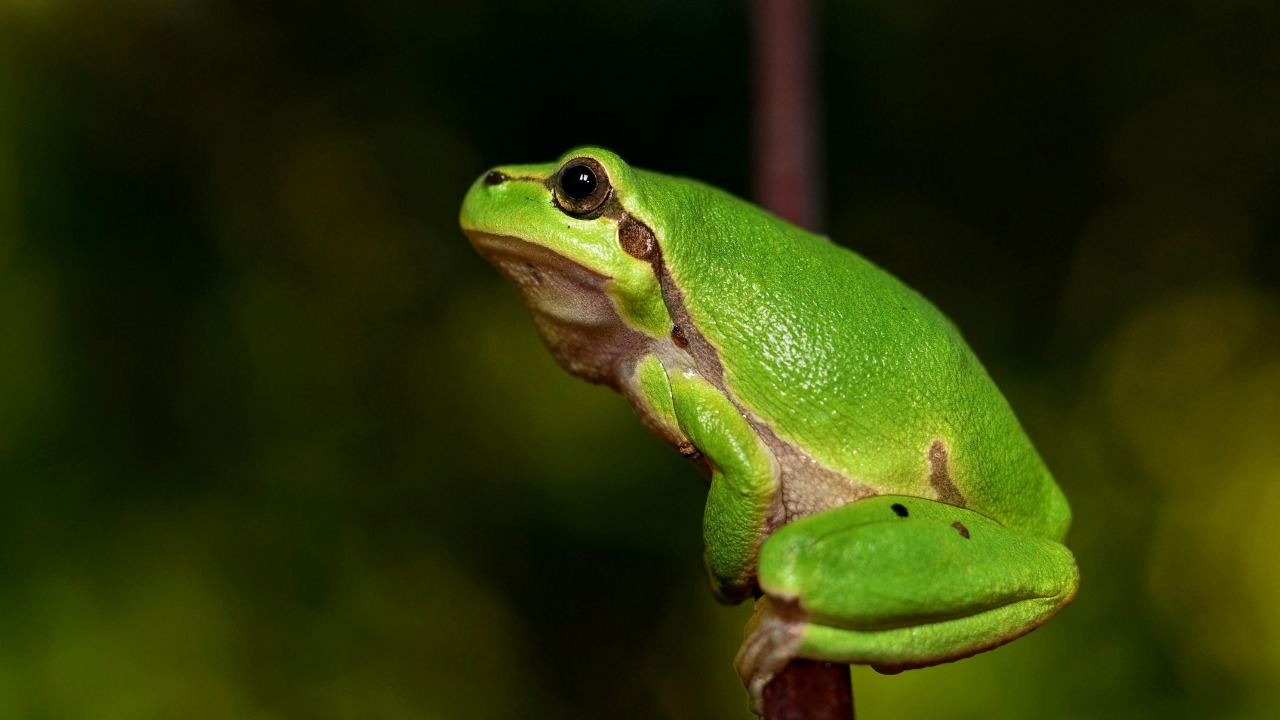

A bacterium living quietly in the intestines of a tiny tree frog has done something cancer researchers spend careers chasing: it wiped out established tumors in mice with a single treatment. The result, achieved in a colorectal cancer model, is now pushing scientists to see whether the same microbe can be turned into a safe, controllable therapy for people.
The work sits at the intersection of microbiology, immunology, and oncology, and it hints at a future where living drugs from unexpected animals complement or even outperform some of today’s harshest treatments. I see it as a proof of concept that the gut ecosystems of amphibians and reptiles may hold a new class of precision cancer killers, if researchers can navigate the long path from mouse cages to human trials.
From obscure frog microbe to headline-grabbing cancer killer
The story starts with a systematic search of animal guts for microbes that behave very differently inside tumors than in healthy tissue. Researchers screened the intestines of Japanese frogs and reptiles, then isolated bacteria that could survive in the bloodstream, home in on malignant growths, and grow preferentially in the oxygen-poor core of solid tumors. In that process they identified a strain, Escherichia americana, from the gut of a tree frog and showed that natural gut bacteria from amphibians and reptiles can achieve complete tumor elimination in experimental models, a result highlighted as a key research achievement in a detailed Demonstration that natural bacteria isolated from these animals open new avenues for cancer treatment.
In mice with colorectal cancer, that obscure frog microbe became the centerpiece of a striking experiment. Animals received a single intravenous dose of E. americana, isolated from the intestines of the frog, and the bacteria rapidly colonized the tumors while sparing healthy organs. The work built on a broader push to show that gut bacteria from amphibians and reptiles can achieve complete tumor elimination, but the frog-derived strain stood out because it combined potent anticancer activity with a safety profile that looked unusually manageable for a live bacterial therapy.
What “a single dose” actually did inside the mice
The headline claim that one dose of frog gut bacteria erased cancer in mice is not marketing language, it reflects a stark outcome in the lab. In a colorectal cancer model, a single intravenous administration of E. americana produced what researchers described as remarkable therapeutic efficacy, shrinking and then clearing tumors that had already taken hold. The treated animals did not just see slowed growth; the tumors regressed completely, an effect that was strong enough to be compared favorably with standard chemotherapy agents in the same experiments, as summarized in reporting on the Remarkable therapeutic efficacy of this frog-derived bacterium.
In the laboratory, mice with colorectal cancer received that single intravenous dose of E. americana and then became a test of whether a living microbe could do what repeated infusions of drugs often struggle to accomplish. The bacteria infiltrated the tumors, triggered a cascade that starved cancer cells of nutrients, and set off an immune response that helped finish the job, a dual effect described in detail in accounts of how, in the lab, In the laboratory, mice with colorectal cancer responded to the treatment. For the animals, the difference between receiving the bacterium and not receiving it was the difference between progressive disease and complete clearance.
How a frog bacterium destroys tumors without wrecking healthy tissue
To understand why this approach worked so cleanly in mice, it helps to look at what E. americana does once it enters the bloodstream. The bacterium is naturally drawn to the low-oxygen, nutrient-rich environment inside solid tumors, where leaky blood vessels and suppressed immune surveillance create a niche that many microbes find hospitable. Once there, E. americana proliferates and exerts a dual-action anticancer effect: it directly damages tumor cells and simultaneously reshapes the local immune environment so that T cells and other defenders can recognize and attack the malignancy, a mechanism that underpins the proof-of-concept for a novel cancer therapy using this natural bacterium.
What makes this especially compelling is that the microbe appears to spare normal tissue, a longstanding challenge for any cancer treatment. Comprehensive safety evaluation revealed that E. americana demonstrates rapid blood clearance, with a half-life of about 1.2 hours, and that it does not persist in healthy organs during extended observation. That combination of tumor targeting and quick disappearance from circulation is why researchers describe the safety evaluation as both comprehensive and reassuring, and it is central to the argument that a live bacterium can be engineered into a controllable drug rather than an uncontrolled infection.
From “Single Dose Of Frog Gut Bacteria Wiped Out Cancer” to “Human Trials Are Next”
The leap from a controlled mouse experiment to talk of human trials is always fraught, but in this case the data are strong enough that researchers are already sketching a translational roadmap. Reports describe how a Single Dose Of Frog Gut Bacteria Wiped Out Cancer in Lab Mice, with the phrase “Human Trials Are Next” attached not as a casual aside but as a reflection of active planning for early phase studies that would test safety, dosing, and tumor targeting in people with advanced colorectal cancer. That framing comes through clearly in coverage that spells out how a Single Dose Of Frog Gut Bacteria Wiped Out Cancer in Lab Mice, Human Trials Are Next, while also stressing that the path to a ready-made human therapy is anything but straightforward.
One of the most striking numbers in the preclinical work is that a tree frog gut bacterium eliminated colorectal tumors in 100% of treated mice, a level of consistency that is rare in oncology experiments. That figure, 100%, is already shaping expectations for what early human trials should aim to measure, even if no one expects identical performance in people. For regulators and clinicians, the key questions will be whether the bacterium can be manufactured to pharmaceutical standards, whether its tumor-homing behavior holds up in human anatomy, and how to build in safety switches in case the microbe behaves unpredictably in a patient’s body.
Inside the “Bacterium from the Gut of This Tiny Frog” experiment
Behind the headlines is a meticulous series of experiments that started with a simple idea: creatures that live in microbe-rich, sometimes toxic environments might harbor protective secrets in their own microbiomes. A Bacterium from the Gut of This Tiny Frog Can Clear Aggressive Colon Tumors in Mice, and that phrase is not just colorful language but a literal description of how scientists isolated E. americana from the gut of a small amphibian and then watched it dismantle advanced colon tumors in animal models. The work, described in detail in coverage of how a Bacterium from the Gut of This Tiny Frog Can Clear Aggressive Colon Tumors in Mice, underscores how much untapped therapeutic potential may be hiding in the microbiomes of overlooked species.
In practical terms, the researchers cultured the bacterium, confirmed its identity, and then introduced it into mice bearing aggressive colon tumors to see whether it would simply colonize or actively attack the cancer. The result was a near-total clearance of tumors, with the microbe exploiting the unique metabolic vulnerabilities of malignant tissue while leaving the rest of the body largely unscathed. For me, the most important takeaway is not just that the frog bacterium worked, but that it did so as a naturally occurring organism, without the heavy genetic engineering that many synthetic biology approaches rely on, which suggests that other wild creatures might harbor similar allies against cancer.
Why scientists are calling this “Another major leap forward”
Within the cancer research community, the frog bacterium findings are being talked about as part of a broader shift toward living therapies that can adapt and respond inside the body. One researcher described it as Another major leap forward in the fight against cancer, emphasizing that frog gut bacterium eliminates cancer tumors in mice with a single dose and that, among the treated animals whose tumors were eradicated, none developed new tumors during follow-up. That sentiment is captured in a social media thread that opens with “1/ Another major leap forward in the fight against cancer” and goes on to explain how a Another frog gut bacterium eliminates cancer tumors in mice with a single dose.
That kind of language matters because it signals that peers see the work as more than a curiosity. The frog bacterium joins a growing list of microbial therapies being tested against cancer, but its combination of single-dose efficacy, tumor specificity, and apparent safety sets it apart. When I compare it with other experimental modalities, such as engineered viruses or cell therapies, the frog microbe looks like a relatively simple, scalable platform that could be paired with existing immunotherapies or chemotherapies, a possibility that researchers have already started to explore in combination studies.
Safety, “Frog Gut Bacterium Eradicates Tumors,” and the long road to patients
Any time a live bacterium is injected into the bloodstream, safety becomes the central question, and the frog work is no exception. Researchers subjected E. americana to a comprehensive battery of tests, tracking how quickly it cleared from the blood, whether it seeded healthy organs, and whether it caused systemic inflammation or sepsis-like symptoms. Reports on how Frog Gut Bacterium Eradicates Tumors in Mice emphasize that the animals tolerated the treatment well, with no deaths attributable to the therapy and no evidence of uncontrolled infection, a point underscored in summaries explaining that Frog Gut Bacterium Eradicates Tumors in Mice while researchers prepare for eventual human trials.
Even with those reassuring data, the road to patients is long. Regulators will demand more extensive toxicology studies, including tests in larger animals, and will likely require built-in safeguards such as antibiotic sensitivity so that the bacterium can be eliminated quickly if needed. Manufacturing will have to move from lab flasks to tightly controlled bioreactors, and clinicians will need protocols for monitoring patients for rare but serious complications. In that sense, the frog bacterium is both a breakthrough and a stress test for how health systems handle the idea of infusing people with living microbes as frontline cancer drugs.
How “the guts of Japanese frogs” fit into the future of colorectal cancer care
Colorectal cancer remains one of the most common and deadly malignancies worldwide, and current treatments often involve a punishing mix of surgery, radiation, and chemotherapy. The frog bacterium work suggests a different paradigm, in which the guts of Japanese frogs and other animals become a source of precision tools that can be layered onto existing regimens. Reporting on how the guts of Japanese frogs could cure colorectal cancer explains that screening the intestines of these animals led to the isolation and culture of E. americana and that the latest study was published in the international journal Gut Microbes, highlighting how the Gut Microbes work points toward combinations with immunotherapy and chemotherapy.
In practical terms, I expect any eventual human use of the frog bacterium to sit alongside, not replace, current standards of care. The microbe could be deployed to debulk tumors before surgery, to mop up residual disease after resection, or to resensitize tumors that have stopped responding to checkpoint inhibitors or drugs like liposomal doxorubicin. The fact that the research team is already discussing how to integrate the bacterium with existing immunotherapy and chemotherapy regimens suggests they see it as a flexible platform rather than a one-off trick, and that mindset will be crucial if the therapy is to move from spectacular mouse data to meaningful gains in human survival.
What frog bacteria and focused ultrasound say about the next wave of cancer therapies
The frog bacterium is not emerging in isolation; it is part of a broader wave of approaches that try to destroy tumors precisely while sparing healthy tissue. In brain cancer research, for example, scientists have used focused ultrasound to inhibit tumor growth and selectively eliminate malignant brain tumors in vivo, achieving complete destruction of tumor tissue in a setting called US2X while leaving the healthy tissue surrounding the tumor unharmed. That result, described in detail in a study noting that Importantly, the tumor tissue was completely destroyed and the healthy tissue surrounding the tumor unharmed, mirrors the same design principle that underlies the frog bacterium work.
When I look at these developments together, I see a convergence on therapies that are less about carpet-bombing the body and more about exploiting the unique vulnerabilities of tumors. Focused ultrasound uses physics to concentrate energy where it is needed, while the frog bacterium uses biology to home in on and dismantle malignant tissue from the inside. Both approaches challenge the assumption that effective cancer treatment must come with severe collateral damage, and both will test whether regulators, clinicians, and patients are ready to embrace tools that look very different from the chemotherapies that have dominated oncology for decades.
More from MorningOverview