
3I/ATLAS has become the latest flashpoint in the debate over how boldly scientists should interpret strange signals from space, and how quickly they should rule out exotic explanations. As the object’s odd behavior keeps theorists busy, Avi Loeb is using the controversy to challenge what he sees as a reflexive effort to dismiss any possibility that the visitor might be technological in origin.
The result is a rare public clash over the boundaries of acceptable speculation in astrophysics, with Dec and Nov updates on 3I/ATLAS turning a niche orbital curiosity into a test case for how open the field should be to ideas that brush up against the word “alien.”
3I/ATLAS, Dec, and the birth of a new interstellar controversy
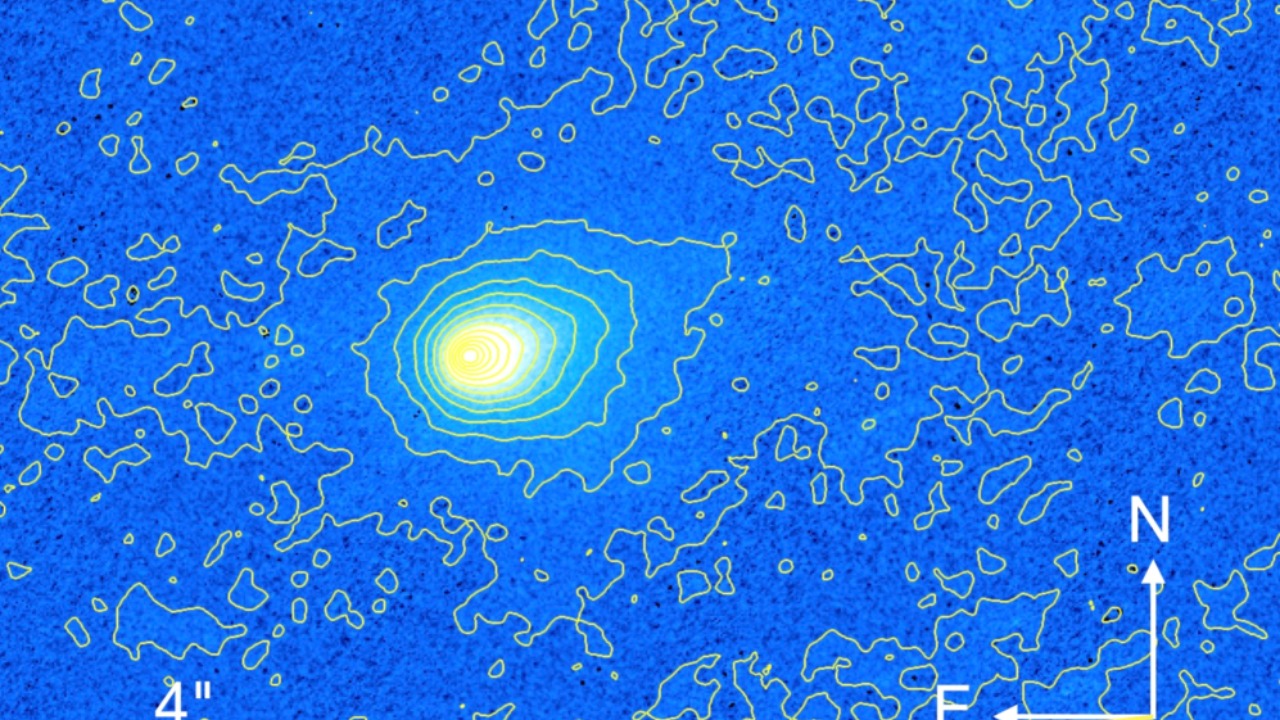
From the moment astronomers tagged 3I/ATLAS as an interstellar object, it slotted into a very short list of known visitors from beyond the Solar System and immediately invited comparison to earlier enigmas. The basic facts are straightforward: 3I/ATLAS is on a trajectory that marks it as an interstellar interloper, yet its detailed motion and appearance have left scientists highly puzzled and intrigued, enough that Dec updates on its behavior have become a recurring reference point in the debate. In that context, the object’s designation has become shorthand for a broader argument about how to interpret anomalies when the data are sparse and the stakes for our understanding of planetary systems are high.
Into that vacuum of certainty stepped Avi Loeb, who has argued that the community should not prematurely close the door on the idea that 3I/ATLAS might be technological, a claim that has drawn sharp responses from colleagues who see it as an overreach. Reporting on the object’s unusual profile notes that 3I/ATLAS has already deepened the mystery around interstellar debris, with some researchers focusing on conventional explanations while others, like Loeb, press for a wider search space that includes artificial possibilities, a tension captured in coverage of how 3I/ATLAS is keeping scientists highly puzzled and intrigued.
Avi Loeb’s case for a technological visitor
Avi Loeb has built his recent public profile on the argument that astrophysics should treat the possibility of technological artifacts as a legitimate working hypothesis when confronted with unexplained behavior, and 3I/ATLAS has become his latest example. In his telling, the object’s reported anomalies are not proof of anything artificial, but they are enough to justify asking whether a natural explanation is the only option, particularly when the data hint at behavior that does not fit neatly into standard models of cometary or asteroidal motion. That framing allows him to present the technological scenario as one hypothesis among several, while still emphasizing its potential significance if even a fraction of the evidence points that way.
Loeb has used interviews and public appearances to argue that institutional caution can shade into intellectual timidity, especially when agencies like NASA are perceived as reluctant to entertain more speculative interpretations. In a discussion that touched on how the agency might handle 3I/ATLAS, he was pressed on whether NASA would be willing to look at the object from a perspective that includes technological possibilities or whether it would simply write it off as a mundane rock, a tension highlighted in a conversation where he reacted to NASA’s stance on 3I/ATLAS and the agency’s reveal of new information. For Loeb, the core issue is not just what 3I/ATLAS is, but whether the scientific establishment is prepared to follow the data even when they point toward uncomfortable questions.
Acceleration, Nov data, and the claim that 3I/ATLAS is speeding up
One of the most provocative claims around 3I/ATLAS is that the object appears to be gaining speed rather than slowing down as it moves through the Solar System, a behavior that would be unusual for a passive chunk of rock or ice. In a Nov appearance, Loeb leaned into that point, arguing that the reported acceleration pattern could hint at some form of propulsion or at least at non-gravitational forces that are not yet fully understood. He framed the observation as a key anomaly that, in his view, justifies keeping the technological hypothesis on the table instead of discarding it as science fiction.
The way Loeb tells it, the Nov data on 3I/ATLAS suggest that the object is not behaving like a typical comet that sheds gas and dust in a way that naturally alters its trajectory, but instead shows a net gain in speed that is hard to reconcile with standard models. In a conversation on the Weon podcast, he described how 3I/ATLAS is, in his view, gaining speed rather than slowing, using that pattern to argue that the community should not rush to conventional explanations before fully exploring the anomaly, a stance he laid out while discussing why he believes 3I/ATLAS is gaining speed, not slowing. That framing has become central to his broader case that the object deserves more than a cursory classification as just another interstellar rock.
Critics push back: “Avi Lobe” and the fraud narrative
Loeb’s willingness to invoke technological possibilities has not only sparked scientific debate, it has also triggered a backlash that is unusually personal for an astrophysics dispute. Some critics have gone beyond challenging his interpretation of 3I/ATLAS and have instead questioned his motives, accusing him of chasing attention and blurring the line between rigorous inquiry and sensationalism. The rhetoric has escalated to the point where detractors have started branding him a fraud, arguing that his public persona is built less on careful analysis and more on provocative claims that play well on social media and video platforms.
One prominent example of that backlash is a Nov video titled “Avi Loeb is a Fraud Part 2: 3I/ATLAS Shrugged,” in which the host tells viewers that many of them saw a previous video “exposing astrophysicist Avi Lobe as a grifting fraud” and then doubles down on that characterization in the context of 3I/ATLAS. The video’s framing, which repeatedly refers to “Avi Lobe,” underscores how personal the criticism has become, with the creator insisting that many of his viewers already share the view that Loeb’s approach to 3I/ATLAS is less about science and more about cultivating a brand. That kind of language reflects a broader frustration among some astronomers who worry that the public conversation is being skewed toward the most dramatic interpretation rather than the most likely one.
AstroWright and the systematic dismantling of “anomalies”
Alongside the personal attacks, there is a more methodical critique emerging from researchers who are trying to address Loeb’s claims point by point. One of the most detailed responses comes from the AstroWright blog, where an astronomer walks through the list of supposed anomalies that Loeb has associated with 3I/ATLAS and argues that each can be explained within standard astrophysical frameworks. The core contention is that what Loeb presents as a cluster of mysteries pointing toward a technological origin is, in fact, a set of ordinary effects that look strange only if they are taken out of context or described without the full error bars.
The AstroWright analysis notes that Avi Loeb continues to claim that 3I/ATLAS has many anomalous behaviors that lead to the conclusion that it “might” be a technological object, but then proceeds to show how those behaviors can be reconciled with known physics and observational limitations. The author suggests that the real pattern is not evidence of alien engineering, but rather a series of overstated irregularities that have been amplified by Loeb’s media presence, arguing that the anomalies are better understood as artifacts of measurement and interpretation than as signs of an artificial craft, a case laid out in detail in the critique of Loeb’s 3I/ATLAS “anomalies”. That systematic pushback has given skeptics a technical foundation for rejecting the technological hypothesis without resorting to personal attacks.
Reddit, Nov, and the grassroots fact-checking of 3I/ATLAS
Beyond formal blogs and academic commentary, the 3I/ATLAS debate has spilled into online communities where space enthusiasts and working scientists often mix. On Reddit, users have taken it upon themselves to dissect Loeb’s claims, sometimes with a bluntness that rivals the harshest video takedowns. The tone in these threads reflects a mix of exasperation and concern, with posters arguing that high-profile speculation about alien technology risks misleading people who do not have the background to parse the nuances of orbital dynamics and observational uncertainty.
One widely discussed thread, posted in Nov, is explicitly framed as a point-by-point rebuttal of Loeb’s talking points, with users lining up to express their frustration at what they see as an abuse of influence. In that discussion, a commenter using the handle GujjuGang7 writes, “I hate people like this, abusing influence to fear monger the uneducated,” while another user, cbusmatty, echoes the sentiment as part of a broader critique of how the story has been framed, a mood captured in the community’s breakdown of every single one of Loeb’s 3I/ATLAS “anomalies”. The thread illustrates how the 3I/ATLAS saga has become a kind of grassroots fact-checking exercise, with online communities stepping in to challenge narratives they see as sensational.
Dec, NASA, and the promise of new images
While the arguments rage, many researchers are looking to upcoming data releases as the best way to cut through the speculation. In early Dec, Loeb said he had been told by two sources that NASA plans to release images of 3I/ATLAS within a few days, a claim that instantly raised expectations that higher resolution views might clarify whether the object’s shape, surface features, or surrounding environment match any of the more exotic scenarios. The prospect of fresh imagery has become a focal point for both sides of the debate, with skeptics expecting the data to reinforce a natural explanation and Loeb’s supporters hoping for something that keeps the technological possibility alive.
Loeb’s comments about the Dec timeline underscore how central NASA remains to the story, even as independent observers and private telescopes contribute their own measurements. In a conversation about new clues on 3I/ATLAS, he thanked his hosts and then explained that he had been told by two sources that NASA would release those images in a matter of days, framing the expected data as a crucial test of his interpretation and a chance for the agency to show whether it is willing to engage with the full range of hypotheses, a moment he highlighted while discussing new clues on 3I/ATLAS and NASA’s plans. For now, the promise of those images hangs over the debate, with both critics and supporters preparing to seize on whatever the pixels reveal.
How 3I/ATLAS fits into the broader interstellar playbook
Stepping back from the personalities, 3I/ATLAS is forcing astronomers to refine their playbook for dealing with interstellar objects that arrive with limited warning and leave just as quickly. Each new visitor offers only a narrow window for observation, and the data are often noisy, incomplete, and hard to interpret in real time. That combination makes it tempting to fill in the gaps with dramatic narratives, especially when the object’s behavior deviates even slightly from expectations, but it also highlights the need for clear protocols on how to communicate uncertainty to the public.
In that sense, the 3I/ATLAS debate is less about a single object and more about how the field will handle the next wave of interstellar discoveries, which surveys like ATLAS are expected to find in increasing numbers. The clash between Loeb and his critics illustrates two competing instincts: one that urges scientists to keep the hypothesis space as wide as possible, including technological scenarios, and another that insists on exhausting every natural explanation before even mentioning the word “alien.” As Dec and Nov discussions around 3I/ATLAS have shown, the balance between those instincts will shape not only how researchers interpret the data, but also how the public comes to understand what it means to share a galaxy with countless other stars and, potentially, other civilizations.
The stakes for scientific credibility and public imagination
The 3I/ATLAS saga is unfolding at a moment when public trust in institutions is fragile and the line between expert analysis and viral content is increasingly blurred. On one side, Loeb’s willingness to talk openly about technological possibilities taps into a deep well of curiosity and wonder, inviting people to imagine that an object like 3I/ATLAS could be more than just another rock. On the other, critics worry that framing every anomaly as a potential alien artifact risks eroding confidence in the scientific process if those claims repeatedly fail to pan out, especially when they are packaged in ways that resemble entertainment as much as education.
For the scientific community, the challenge is to harness the public’s fascination without sacrificing rigor, a balance that 3I/ATLAS has made harder to maintain. The Dec hints about new NASA images, the Nov arguments over acceleration, the detailed AstroWright rebuttals, and the heated Reddit threads all point to a field grappling with how to communicate both excitement and skepticism in real time. As 3I/ATLAS continues its journey out of the Solar System, the object itself may fade from view, but the questions it has raised about how to talk about possible technological visitors, how to weigh anomalies, and how to keep the conversation grounded in evidence are likely to linger long after the interstellar traveler has slipped back into the dark.
More from MorningOverview