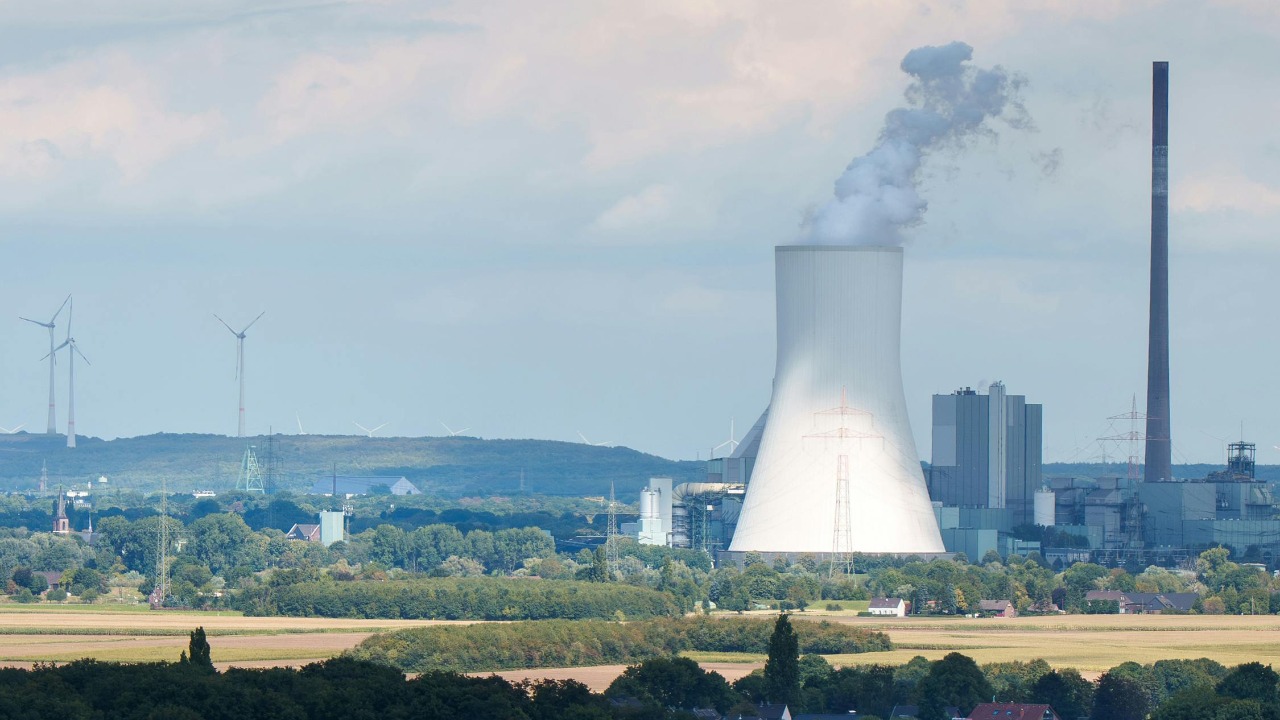

Big Tech’s energy strategy is shifting from a feel-good story about wind and solar to a hard-nosed race to secure round-the-clock power for artificial intelligence. The companies that built their brands on cloud computing and e-commerce are now quietly positioning nuclear energy as the backbone of the next computing era, pouring billions into reactors that can run nonstop where renewables cannot.
Behind the glossy sustainability reports, this is a story about physics, grid constraints, and corporate survival: the largest technology platforms are discovering that their AI ambitions will stall without dense, reliable electricity that does not blow with the wind or fade with the sun. Nuclear, with all its political baggage, is suddenly being treated less as a legacy technology and more as critical infrastructure for the age of machine learning.
The AI energy shock that broke the renewables script
The first reason nuclear is back on the table is brutally simple: AI is devouring electricity at a pace that existing grids and renewable buildouts are struggling to match. Training and running large language models, recommendation engines, and real-time translation systems requires vast data centers packed with GPUs, each drawing steady power in a way that looks more like an industrial plant than a traditional office campus. As those clusters scale, executives are discovering that intermittent sources alone cannot keep latency-sensitive AI workloads online without expensive storage and backup systems.
That is why technology giants like Google, Microsoft, and Amazon are increasingly investing in nuclear power specifically to support their AI operations, treating it as a way to secure high-density, always-on electricity that can sit close to their biggest server farms. Reporting on Technology giants like Google, Microsoft, Amazon underscores that these companies see nuclear as a tool to improve efficiency and minimize infrastructure costs as AI continues to expand, not as a symbolic gesture. The pivot is less about abandoning renewables and more about acknowledging that the physics of AI-scale computing demand a firm, predictable power source that can run for months without interruption.
Why nuclear solves problems wind and solar cannot
From a grid-planning perspective, nuclear’s appeal is that it behaves like a giant, ultra-steady battery that never needs to be recharged. While wind and solar are cheap at the margin, they fluctuate with weather and daylight, which forces operators to overbuild capacity, add storage, or rely on gas-fired plants to smooth out the gaps. For hyperscale data centers that cannot tolerate brownouts or sudden drops in voltage, that variability translates into risk, higher operating costs, and complex engineering workarounds.
Nuclear plants, by contrast, deliver a stable baseload that can run at high capacity factors for years, which is exactly the profile AI data centers crave. Analyses of why Big Tech is turning to nuclear emphasize that the stability of nuclear power is particularly valuable for facilities facing power shortages or interruptions, because it allows operators to plan long-term capacity without guessing at future weather patterns. That logic is central to the argument in pieces explaining the Stability of nuclear power for AI, which frame reactors as a way to de-risk both uptime and expansion plans in regions where grids are already strained.
Data centers as industrial power users, not office parks
To understand why renewables alone are no longer enough, it helps to look at how data centers themselves have changed. What began as warehouse-style buildings full of commodity servers has evolved into energy-intensive campuses that resemble heavy industry in their power draw, with AI accelerators, advanced cooling systems, and high-speed networking all layered on top. The result is that a single hyperscale site can now demand as much electricity as a small city, and that demand is growing faster than utilities can build new transmission lines or storage.
Earlier this year, industry data showed that over 11,000 data centres were registered globally, with server installations rising by around 4% annually between 2010 and 2018 and energy consumption climbing in parallel. For companies like Amazon, Meta, and other hyperscalers, that growth has turned energy procurement into a strategic function, not a back-office task. As they run out of easy sites with abundant cheap renewables, nuclear starts to look less like an exotic option and more like a practical way to secure carbon-free power in specific locations where wind and solar buildouts are constrained.
Big Tech’s nuclear shopping list: from SMRs to utility deals
Once executives accepted that AI-scale computing needed firmer power, the question shifted from “if” to “how” to buy nuclear. Some companies are exploring direct investments in advanced reactor designs, including small modular reactors, that could eventually sit adjacent to data centers or be integrated into new campus master plans. Others are negotiating long-term power purchase agreements with utilities that already operate nuclear plants, effectively locking in a slice of existing capacity for their own use.
Reports on why Microsoft, Amazon, Google and Meta are betting on nuclear describe a landscape where these firms are driven by the energy demands of AI and cloud services in the U.S. and around the world, and are now striking deals that tie their digital infrastructure directly to nuclear output. That shift is evident in coverage of how they are betting on nuclear power as a way to secure long-term, carbon-free electricity. In parallel, technology companies are also experimenting with equity stakes and partnerships in reactor developers, hoping to shape designs that better match the modular, scalable model they use in cloud computing.
Why the money is moving: cost, control, and carbon
From a finance perspective, nuclear’s attraction is not that it is cheap in absolute terms, but that it offers predictable costs over decades and a path to decarbonize without sacrificing performance. For AI-heavy platforms, the alternative is a patchwork of renewables, storage, and fossil backup that can be more expensive and harder to manage at scale, especially as carbon regulations tighten. Locking in nuclear capacity allows them to hedge against volatile fuel prices, carbon taxes, and the reputational risk of being seen as climate laggards while selling AI as a transformative technology.
Analysts tracking corporate energy strategies note that technology giants like Google, Microsoft, and Amazon are adopting nuclear energy precisely because it supports AI operations while improving efficiency and minimizing infrastructure costs as AI continues to expand. That logic is laid out in assessments of reasons tech companies are adopting nuclear, which frame the technology as a way to align growth with climate commitments. In practice, that means executives are willing to accept high upfront capital costs in exchange for long-term control over one of their biggest line items: electricity.
SMRs and the promise of modular nuclear for cloud campuses
The most intriguing part of Big Tech’s nuclear strategy is its interest in small modular reactors, which promise to shrink the footprint and financial risk of nuclear projects. Instead of building one-off, multi-gigawatt plants that take a decade to complete, SMR developers aim to produce standardized units in factories, then ship them to sites where they can be installed in clusters. For data center operators used to scaling capacity in modular blocks of servers, that model is intuitively appealing.
Investors discussing the sector point out that one of the key advantages of SMRs is a Lower Initial Capital Investment compared to large, multi-billion dollar reactors, which makes it easier for corporate buyers to participate without taking on utility-scale risk. At the same time, experts in advanced nuclear argue that the development and deployment of these technologies aligns with sustainability goals by providing reliable, low-carbon power while incorporating modern safety features that reduce the possibility of a meltdown. That view is reflected in technical commentary on how advanced nuclear technologies, such as SMRs, could serve energy-hungry sectors like AI without repeating the cost overruns and safety controversies of past reactor generations.
Public perception, safety fears, and the politics of “going nuclear”
For all the engineering logic behind nuclear, Big Tech’s embrace of reactors is colliding with decades of public anxiety about radiation, waste, and catastrophic accidents. Communities that welcomed data centers as job creators are less enthusiastic about the idea of reactors, even small ones, being built nearby, and environmental groups are split between those who see nuclear as a necessary climate tool and those who view it as an unacceptable risk. That tension is particularly sharp in regions where memories of past nuclear incidents still shape local politics.
Coverage of why Big Tech’s nuclear plans could blow up highlights that Silicon Valley is part of a larger global hunt for new power sources to drive enormous data centers, but also notes that critics question whether the industry is moving too fast without fully addressing safety, waste management, and regulatory oversight. The debate is captured in reporting on why big tech is going nuclear, which points to concerns that corporate timelines for AI growth may not align with the slower, more cautious pace regulators prefer for nuclear projects. As these companies push for faster approvals and new reactor designs, they are likely to find themselves at the center of a broader political fight over who gets to decide how and where nuclear is deployed.
Climate math: nuclear as a complement, not a replacement, for renewables
One of the more nuanced aspects of Big Tech’s nuclear turn is that it does not actually signal a retreat from wind and solar. These companies remain some of the largest corporate buyers of renewable energy, and they continue to sign contracts for new solar farms and wind projects around the world. What is changing is the recognition that decarbonizing AI-scale computing will require a portfolio approach, with nuclear providing firm capacity that fills in the gaps left by variable renewables.
Analyses of corporate climate strategies stress that technology companies are turning to nuclear energy as part of a broader push to keep their operations carbon-free even as AI workloads surge. Reports on how Tech companies are turning to nuclear to power their AI race describe nuclear as a complement to, not a substitute for, renewables, especially in regions where land constraints, permitting delays, or grid bottlenecks limit further wind and solar expansion. In practice, that means future data center campuses may be served by a mix of on-site reactors, off-site renewables, and grid power, with sophisticated software orchestrating when and how each source is used to keep emissions and costs in check.
The corporate power grab: from customers to energy producers
As Big Tech moves deeper into nuclear, it is also blurring the line between energy buyer and energy producer. Companies that once simply signed power purchase agreements are now exploring ownership stakes in generation assets, lobbying on reactor policy, and hiring nuclear engineers alongside cloud architects. That shift reflects a broader realization that in an AI-driven economy, control over energy is as strategic as control over chips or data.
Some of that ambition is visible in the way cloud providers are integrating energy considerations into their broader business ecosystems. A company like Amazon, which already operates logistics networks, retail platforms, and cloud services, is now treating energy procurement as another layer of vertical integration that can differentiate its offerings. As more of the world’s computing moves into hyperscale data centers, the firms that can guarantee clean, reliable power at scale will have a competitive edge, and nuclear is becoming a central part of that pitch to enterprise customers and governments alike.
What happens next if nuclear bets pay off, or fail
The stakes of this nuclear pivot extend far beyond the balance sheets of a few tech giants. If their bets on advanced reactors and long-term nuclear contracts pay off, they could accelerate the commercialization of new designs, drive down costs through volume, and normalize nuclear as a standard part of the clean energy mix. That, in turn, could reshape national energy strategies, with governments partnering more closely with cloud providers to co-locate reactors and data centers in ways that support both economic development and climate goals.
If, however, these projects run into delays, cost overruns, or public backlash, Big Tech could find itself squeezed between AI demand curves and energy realities it cannot easily bend. Critics already warn that the industry’s enthusiasm risks outpacing the slow, methodical work of building and regulating reactors safely, a concern echoed in commentary that tracks how Silicon Valley is racing ahead in search of new power sources. Whether nuclear becomes the quiet workhorse of the AI era or a cautionary tale about overreach will depend on how well these companies balance their appetite for rapid growth with the slower, more demanding realities of nuclear engineering and public trust.
More from MorningOverview