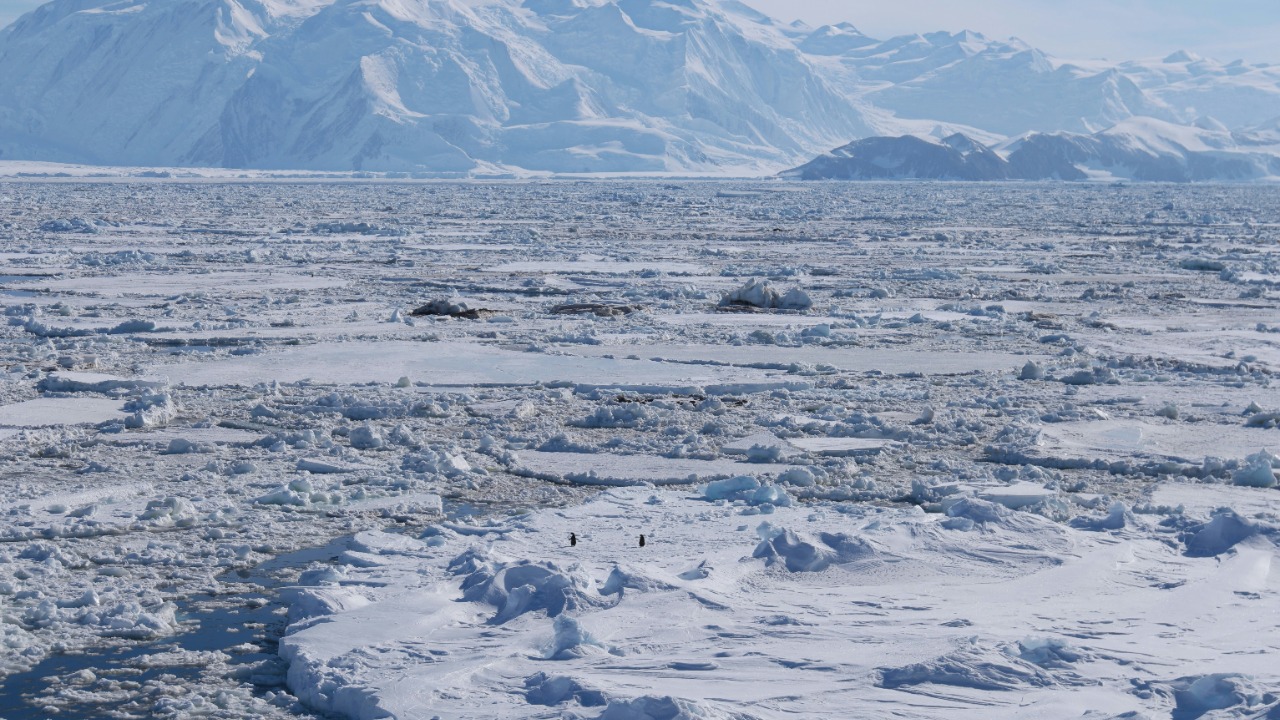

The story of how the last Ice Age ended is being rewritten from the bottom up, as new records etched into the sea floor reveal a far more dynamic and interconnected climate system than the traditional textbook version. Instead of a slow, orderly thaw, the evidence points to abrupt pulses of ocean change, rapid ice retreat and surges of carbon from the deep that helped flip the planet out of its frozen state.
By tracing ancient currents, buried sediments and the scars left by collapsing ice, researchers are reconstructing a chain reaction that began in the deep Southern Ocean and rippled across the globe. I want to unpack how these discoveries fit together, and why they matter for a world now warming at human speed.
What the deep ocean is suddenly telling us
For decades, the standard picture of the last deglaciation leaned heavily on what happened in the atmosphere and at the surface of the oceans. Now, cores pulled from the abyss are revealing that the deep sea was not a passive backdrop but an active driver, storing and then releasing heat and carbon in ways that reshaped the climate. New analyses of sediments show that much of the deep Southern Ocean was once filled with carbon‑rich water that had flowed in from the Pacific, a configuration that locked away greenhouse gases until circulation patterns shifted and that reservoir began to ventilate.
Those reconstructions, based on chemical fingerprints preserved in mud and microfossils, suggest that the overturning of the Southern Ocean changed dramatically over the past 32,000 years, altering how efficiently the ocean could bury or exhale carbon dioxide. In this view, the end of the Ice Age was not simply a matter of sunlight slowly increasing at high latitudes, but also of deep currents reorganizing and releasing stored carbon that had accumulated in the Pacific before filling the Southern Ocean. That emerging picture, grounded in deep‑sea clues, is forcing climate scientists to treat the abyss as a central character in the story of deglaciation rather than a distant stage.
Ancient Antarctic Bottom Water and a planetary tipping point
At the heart of this new narrative is a dense, frigid water mass that forms around Antarctica and sinks to the ocean floor. During the last glacial period, that circulation cell appears to have expanded and contracted in ways that helped set the timing and pace of global warming. Recent work tracing chemical tracers and sediment structures argues that an Ancient Antarctic Bottom Water expansion was closely linked to the release of deep carbon and the weakening of the Ice Age climate.
That expansion did not happen in isolation. It was part of a broader reorganization of ocean circulation that connected the Southern Ocean to the rest of the global conveyor belt, altering how heat and nutrients were distributed and tightening the links between ocean circulation and climate change. By following these Tracing Ancient Ocean Movements, researchers are showing that what happened around Antarctica helped trigger a planetary tipping point, with the deep waters acting as both a memory of past conditions and a lever that could rapidly shift the climate into a new state.
How the Southern Ocean helped switch off the Ice Age
Zooming in on the Southern Ocean reveals just how central this remote ring of water was to the planet’s escape from glaciation. As circulation patterns changed, deep water that had been isolated and enriched in carbon began to rise toward the surface, where it could exchange gases with the atmosphere and weaken the grip of the Ice Age. Around 12,000 years ago, the last Ice Age faded, global temperatures climbed and the Southern Ocean’s role as a gatekeeper for deep carbon became unmistakable in the geological record.
In this framework, the Southern Ocean is not just a passive recipient of changes originating elsewhere, but a powerful modulator of climate that can either trap carbon in the abyss or leak it back to the air. Studies that focus on How the Southern Ocean circulation shifted at the end of the Ice Age show that deep water which might once have flowed north into the Atlantic instead welled up around Antarctica, changing the balance of heat and greenhouse gases. That shift helps explain why warming accelerated when it did, and why the climate system can respond in sharp jumps rather than smooth curves.
Carbon dioxide’s starring role, seen from the sea floor
For all the focus on ocean currents, the new sea‑floor records still point back to carbon dioxide as the main amplifier of global temperature change. Ice cores and marine sediments together show that atmospheric CO₂ rose in step with warming, but with a subtle twist: temperature in some regions began to climb slightly before the gas surged, suggesting that initial orbital nudges and ocean changes set the stage. As one influential analysis put it, “You put these two points together, the correlation of global temperature and CO₂, and the fact that temperature lags behind the CO₂, and you have strong evidence that greenhouse gases helped pull Earth out of its glaciated state.
What the deep‑ocean reconstructions add is a clearer mechanism for how that CO₂ got into the air at the right time and in the right amounts. By showing that carbon‑rich waters from the Pacific filled the deep Southern Ocean before being ventilated, the new work links the rise in greenhouse gases to specific circulation changes rather than treating it as a mysterious background process. In other words, the sea floor is revealing not just that CO₂ mattered, but how the ocean’s internal plumbing helped deliver that carbon to the atmosphere and supercharge the end of the Ice Age.
Ice sheets that retreat in pulses, not slow motion
While the deep ocean was reorganizing, the ice sheets sitting on Antarctica and other high‑latitude landmasses were responding in fits and starts. High‑resolution mapping of the continental shelf around Antarctica shows that the ice margin did not simply creep backward at a steady pace. Instead, it left behind a series of ridges and other landforms that record episodes of very rapid retreat, followed by pauses when the grounding line stabilized. Scientists studying these features argue that they capture how quickly the ice margin of Antarctica can pull back in a warming world, offering a rare glimpse of behavior that is otherwise invisible in the modern satellite era.
Those landforms, carved into the sea floor and preserved for thousands of years, show that the ice margin can retreat by kilometers in relatively short bursts when conditions at the grounding line change. The pattern is echoed in other work that documents Pulses of rapid retreat when warm water undercuts the ice where it starts to float. Together, these records suggest that once certain thresholds are crossed, ice sheets can respond far faster than the smooth curves in many older models, a lesson that matters as today’s warming ocean nibbles at the same vulnerable zones.
Iceberg scars and the story of West Antarctic collapse
Nowhere is that pulsed behavior clearer than in West Antarctica, where the sea floor is crisscrossed by grooves and gouges left by drifting icebergs. These scars record the positions of former grounding lines and the paths of icebergs that broke free as the ice sheet retreated. By mapping and dating these features, researchers have reconstructed a sequence in which the floating ice shelf in front of major glaciers fractured and thinned until, as one study put it, Eventually the floating ice shelf in front of the glaciers “broke up,” triggering a new phase of rapid retreat onto land that sloped downward inland.
Those “scars left by icebergs” are more than geological curiosities. They show how the loss of buttressing ice shelves can destabilize entire sectors of an ice sheet, allowing grounded ice to accelerate and thin. In West Antarctica, the pattern appears to have repeated, with periods of relative stability punctuated by bursts of retreat when key shelves disintegrated. By reading these marks on the sea floor, I see a clear warning for the present: the processes that once drove West Antarctic ice to collapse are being re‑engaged as warming water erodes today’s shelves from below.
Sea level’s dramatic response to a warming world
All of this activity in the deep ocean and around the ice margins translated into a profound reshaping of the world’s coastlines. As the great ice sheets melted, global sea levels rose by roughly 38 meters, or about 125 feet, transforming continental shelves into shallow seas and pushing shorelines inland. Reconstructions of ancient shorelines and coral terraces indicate that After the last Ice Age, sea levels rose rapidly over a period of about 10,000 years, a pace that was fast enough to redraw maps but still slow compared with what unchecked modern warming could trigger.
Those figures are consistent with broader syntheses of how ice sheets and sea level have interacted over the Ice Sheets and Sea Level in Earth’s Past. During the Quaternary, the last 2.6 m years have seen repeated swings between glacial and interglacial states, with continental ice sheets growing and shrinking in tandem with sea level. The end of the most recent Ice Age stands out as one of the most dramatic of these transitions, and the new sea‑floor records are helping to explain why the system moved as quickly as it did.
Expansion of Antarctic Bottom Water and the final push
As the climate approached its modern configuration, the behavior of Antarctic Bottom Water appears to have played a decisive role in locking in the new state. Reconstructions suggest that an Expansion of Antarctic Bottom Water Contributed to the End of the Last Ice Age by reshaping how cold, salty water formed around Antarctica and spread into the global abyss. As that expansion unfolded, it helped ventilate deep carbon stores and redistribute heat, reinforcing the warming that orbital changes and earlier circulation shifts had already set in motion.
The timing is striking. Around 12,000 years ago, as the last Ice Age faded, this bottom‑water expansion coincided with the final major steps in sea‑level rise and the stabilization of a warmer climate. To me, that alignment underscores how sensitive the climate system is to relatively subtle shifts in the way dense water forms and sinks around Antarctica, and how those shifts can tip the balance between a glaciated planet and the interglacial world humans inherited.
What ancient circulation changes mean for today’s risks
The emerging picture of a highly sensitive, tightly coupled ocean–ice–atmosphere system has obvious implications for the present. Modern observations show that the circulation around Antarctica is already changing as fresh meltwater and warming surface layers alter the density structure of the Southern Ocean. Some modeling work has raised the possibility that parts of the deep overturning circulation could weaken sharply or even collapse if greenhouse gas emissions continue unabated, a prospect that has prompted Leading ocean and climate researchers to warn that the system may be more fragile than previously assumed, even if a full collapse remains uncertain and less likely to occur in the near term.
What the sea‑floor records from the last deglaciation add to that debate is a concrete demonstration that circulation can change quickly enough to matter on human timescales. The same kinds of dense waters that once helped end the Ice Age are now being diluted by meltwater and warmed from above, raising the risk of feedbacks that could accelerate ice loss and alter regional climates. I read the new reconstructions as both a scientific breakthrough and a cautionary tale: the deep ocean has flipped the climate system before, and if pushed hard enough, it could do so again in ways that are difficult to reverse.
Rewriting the end of the Ice Age, and our expectations
Put together, the latest sea‑floor evidence replaces the old, linear story of deglaciation with a more intricate and unsettling script. The end of the Ice Age now looks like a sequence of linked jolts: deep Pacific waters filling the Southern Ocean, Antarctic Bottom Water expanding and contracting, CO₂ rising as deep reservoirs were tapped, ice shelves breaking up and ice sheets retreating in pulses, and sea level racing upward by about 125 feet. Each of these elements is recorded in a different archive, from abyssal mud to iceberg scars, yet they converge on the same conclusion that Earth’s climate can reorganize itself far more abruptly than a casual glance at long‑term averages might suggest.
As I weigh these findings, I am struck by how much of the story was literally hidden beneath the waves, waiting for technology and curiosity to catch up. The deep ocean and the Antarctic margin, once treated as remote and slow to change, now emerge as the very engines of rapid climate shifts. In a world where human activity is adding greenhouse gases at a pace unmatched in the geological record, the lesson from those sea‑floor records is stark: when the right thresholds are crossed, the system does not respond politely or gradually. It lurches, and the coastlines, currents and ice that define our planet move with it.
More from MorningOverview