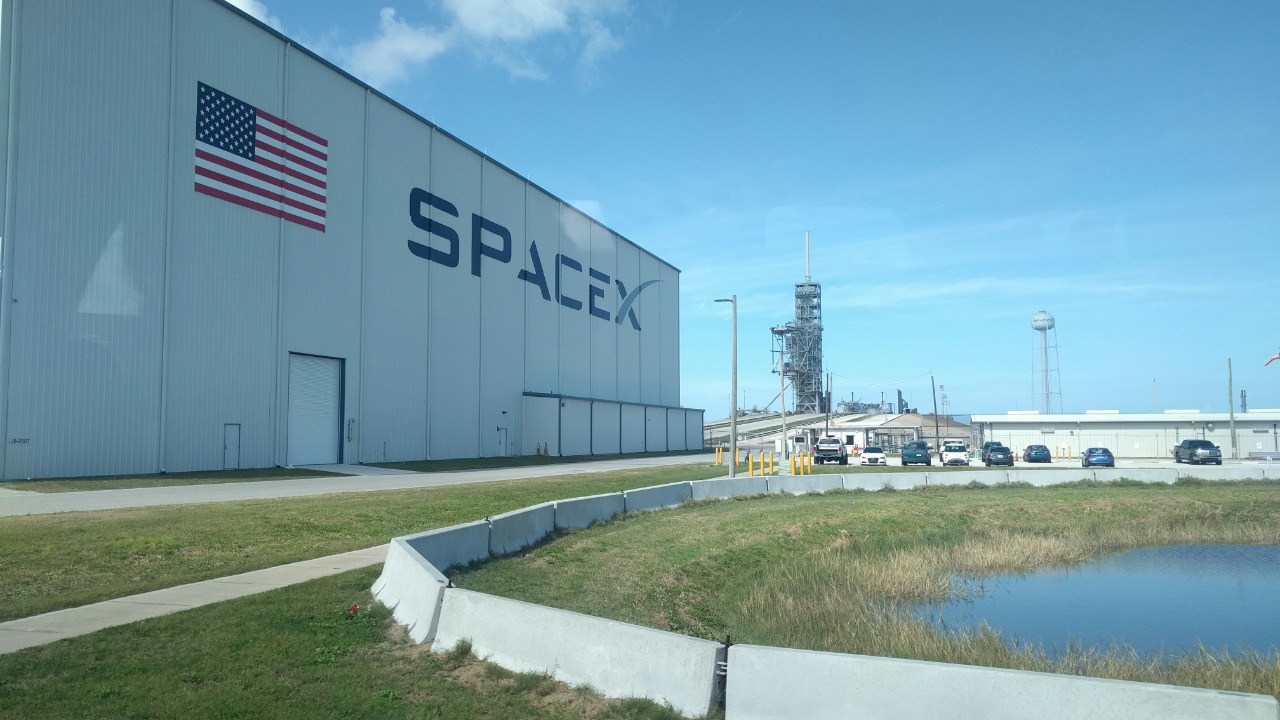

SpaceX opened December on the Space Coast with a pre-dawn Falcon 9 climb to orbit, lighting up the sky long before sunrise and adding another batch of Starlink satellites to its growing broadband network. The mission, flown from NASA’s historic Launch Complex 39A at Kennedy Space Center for a 2:44 a.m. EST liftoff, underscored how routine orbital launches have become in Florida even as each one reshapes the global communications landscape.
In the quiet hours when most of the state was still asleep, the company’s workhorse rocket turned the upper atmosphere into a canvas of color and contrails, a reminder that the commercial space boom is no longer confined to prime-time spectacle. I see this flight as both a technical milestone and a cultural marker, showing how deeply integrated near-weekly launches are with life along the Atlantic coast of Florida.
Predawn spectacle over Florida’s Space Coast
The first thing that stood out about this Starlink mission was its timing. A 2:44 a.m. EST launch from NASA’s Kennedy Space Center for the latest Starlink batch meant the Falcon 9 rose into a dark sky that quickly shifted through shades of blue and orange as the rocket climbed. From vantage points across Florida, the pre-dawn ignition turned the horizon into a temporary sunrise, with the exhaust plume catching high-altitude sunlight while the ground below remained in night.
Residents along the coast described the launch as both jarring and mesmerizing, a sudden burst of light and sound cutting through the stillness. The Falcon 9’s ascent from Launch Complex 39A created a long, curling trail that lingered as the vehicle pushed toward orbit, a visual cue that another cluster of Starlink satellites was on its way to join the constellation. For those who have watched the cadence of Starlink flights grow, this early-morning display felt like a statement that December would be no quieter than the months that came before.
Falcon 9 and the Starlink 6-86 mission profile
At the heart of the operation was SpaceX’s familiar Falcon 9, a two-stage rocket that has become synonymous with rapid, repeatable access to orbit. For this flight, the company designated the payload as Starlink 6-86, a label that reflects the dense launch schedule needed to keep building out its broadband network. The mission relied on the Falcon 9’s proven architecture to lift a full stack of satellites into low Earth orbit, continuing a pattern of near-assembly-line deployment that has defined the Starlink era.
The rocket itself stands 86 m tall, a figure that hints at the scale of the hardware roaring off the pad in the middle of the night. From the moment the engines lit, the vehicle’s trajectory and staging sequence followed a now-familiar script, with the first stage pushing through the thickest part of the atmosphere before handing off to the upper stage for the final push to orbit. By the time the second stage completed its burn, another set of spacecraft had been added to the Starlink constellation, reinforcing SpaceX’s strategy of using frequent, relatively small batches to steadily fill out its coverage.
How the launch unfolded from fueling to liftoff
Behind the spectacle of a pre-dawn liftoff sits a tightly choreographed countdown that begins long before the rocket clears the tower. In the final hour before launch, teams initiate Falcon 9 fueling procedures, loading chilled propellants into both stages while monitoring temperatures, pressures, and valve positions in real time. The process is designed to bring the vehicle to a precise thermal and structural state just minutes before ignition, minimizing the time the rocket spends fully fueled on the pad.
As the clock ticks down, first stage liquid oxygen loading begins, followed by the second stage, with each step verified through telemetry and automated checks. Any anomaly in this sequence can trigger a hold or scrub, but on this morning the flow of kerosene and oxidizer into the tanks proceeded as planned, setting up a clean run to T-0. When the countdown reached its final seconds, the Falcon 9’s engines throttled up in unison, clamps released, and the vehicle climbed away from the pad in a controlled arc that would carry Starlink 6-86 toward its target orbit.
Colorful contrails and the “space jellyfish” effect
For many on the ground, the most memorable part of the launch was not the roar of liftoff but the ethereal shapes that formed in the sky minutes later. As the Falcon 9 climbed into thinner air, its exhaust plume expanded and caught sunlight from beyond the horizon, creating a glowing, translucent fan that stretched across the upper atmosphere. Photographers captured the effect from beaches and neighborhoods, turning social feeds into galleries of what has become known as the “space jellyfish” phenomenon.
The colorful contrail patterns were especially vivid because the launch took place in the narrow window when the rocket was already in sunlight while the ground remained in darkness. That geometry allowed the plume to refract and scatter light in ways that produced blues, pinks, and whites against a still-black sky. For those who woke early or stayed up late to watch, the Falcon’s ascent on Monday offered a reminder that even a routine Starlink mission can deliver a rare kind of sky show, one that blends orbital mechanics with atmospheric optics in a way no ground-based fireworks display can match.
Florida’s evolving relationship with near-weekly launches
Along the Atlantic coast, the rhythm of life now includes the rumble of rockets as a regular background note. Communities from Titusville to Cape Canaveral have grown accustomed to checking launch schedules alongside tide charts and weather forecasts, planning early-morning commutes or late-night outings around when the next Falcon 9 will light up the sky. The latest Starlink mission from Florida fit neatly into that pattern, another entry in a calendar that has turned the region into a showcase for high-frequency spaceflight.
Local coverage of the Launch highlighted how residents and visitors alike have learned to navigate road closures, viewing spots, and the occasional sonic boom as part of daily life. Guides that once treated a rocket launch as a rare event now read more like commuter advisories, with instructions on where to park, when to arrive, and how to “Scroll down” through live updates to follow the countdown in real time. The result is a community that experiences orbital launches not as isolated spectacles but as recurring civic events woven into the fabric of Florida’s coastal identity.
Launch coverage and the new ritual of watching rockets
For those who could not make it to the shoreline, the Starlink mission unfolded through a familiar blend of livestreams, text updates, and social media clips. Detailed launch recaps walked readers through each phase of the countdown, from fueling milestones to stage separation, turning what was once the domain of mission control into a shared public experience. The language of these updates has become part of the culture, with terms like “Falcon 9 fueling procedures” and “stage liquid oxygen loading” now recognizable to casual followers who tune in from their phones or laptops.
Regional outlets across Florida mirrored this approach, offering a second live-story stream that invited readers to “Scroll” through key moments as the rocket prepared to fly. Together, these feeds created a kind of distributed viewing party, where people in different cities could follow the same telemetry-driven narrative in near real time. I see that as a quiet but significant shift: orbital launches are no longer events you either attend in person or miss entirely, but shared rituals that unfold across screens and shorelines at once.
From November’s close to December’s busy manifest
The pre-dawn Starlink flight did more than add satellites to orbit; it also marked a transition point in a packed launch calendar. SpaceX closed out Nov with a steady cadence of missions, then pivoted almost immediately into a December schedule that shows little sign of slowing. The Starlink 6-86 launch from Launch Complex 39A effectively bridged that gap, serving as both a capstone to one month and a starting gun for the next phase of activity on the Space Coast.
Looking ahead, the company is already lining up additional flights that will keep pads at Kennedy Space Center and Cape Canaveral busy. Then on Dec. 9, SpaceX plans to fly a national security mission that includes a booster return to land, a profile that could bring a sonic boom to communities along the coast as the first stage heads back to its landing zone. That mission sits alongside more Starlink deployments on the manifest, part of a broader push to place thousands of satellites in orbit by July 2029, a target that underscores just how aggressive the company’s expansion plans have become.
Starlink’s growing footprint and what this launch adds
Each Starlink mission may look similar from the ground, but collectively they are reshaping the architecture of global internet access. By sending up another cluster of satellites on the Starlink 6-86 flight, SpaceX moved closer to its goal of providing low-latency broadband coverage across remote regions, shipping lanes, and underserved communities. The network already supports users on mountaintops, in RVs, and aboard vessels at sea, and every new batch of spacecraft helps thicken that coverage and add redundancy.
The company’s stated ambition to have thousands of satellites in orbit by July 2029 gives context to why launches like this one are stacked so tightly on the calendar. A pre-dawn liftoff from Florida is not just a local event; it is a small but essential step in building a planetary-scale communications grid that competes with fiber and traditional geostationary satellites. I see the Starlink 6-86 mission as another proof point that the model is working: frequent, relatively low-cost launches feeding a constellation that grows more capable with each passing month.
What this means for the future of the Space Coast
For Florida’s Space Coast, the December opener reinforces a broader trend: orbital launches are becoming a defining economic and cultural engine for the region. Hotels fill up around major missions, restaurants adjust hours to catch pre- and post-launch crowds, and local schools increasingly treat rocket science as a practical, nearby career path rather than an abstract dream. The steady drumbeat of Falcon 9 flights, including this latest Starlink mission, has turned the area into a living laboratory for how a community adapts to high-tempo space operations.
As more companies follow SpaceX to the Cape, the infrastructure built to support Starlink and other missions will likely attract additional payloads and partners. The combination of historic pads like Launch Complex 39A and modern commercial facilities creates a unique ecosystem where legacy and innovation coexist on the same stretch of coastline. In that context, a pre-dawn Starlink launch is more than a single data point; it is part of a larger narrative in which Florida’s Atlantic shore continues to evolve from a seasonal tourist destination into a year-round gateway to orbit.
More from MorningOverview