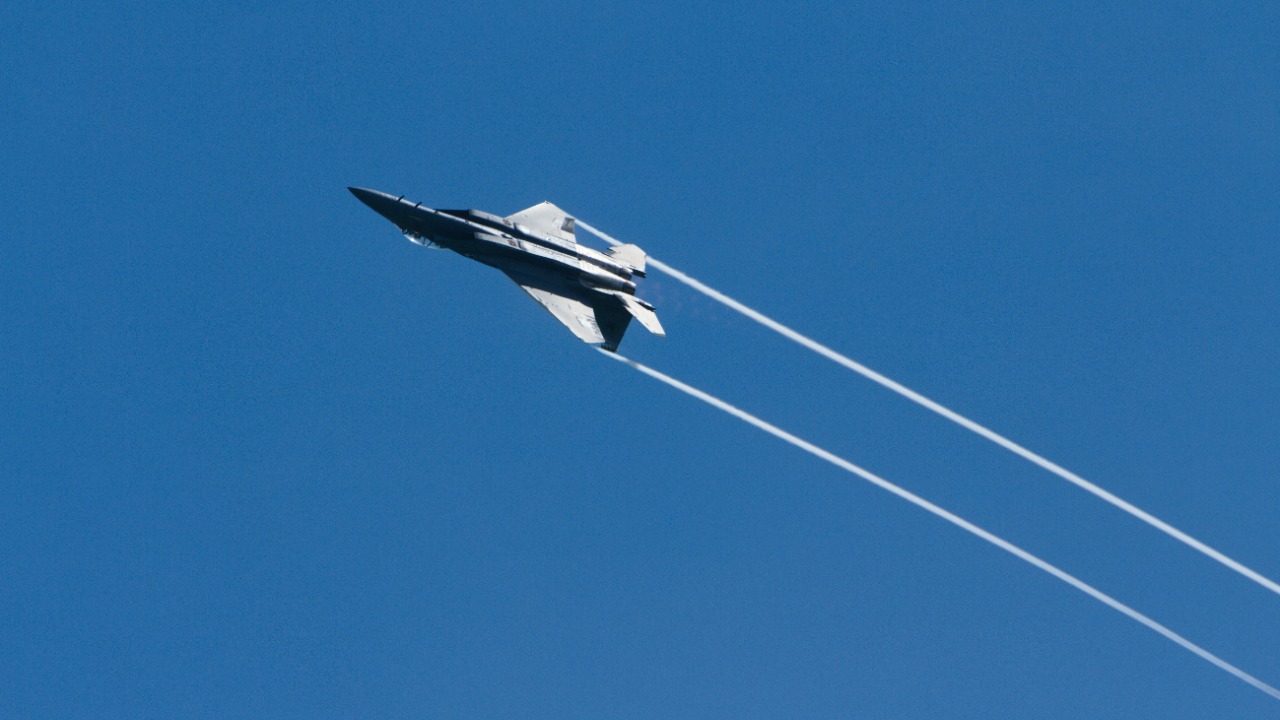

Hydrogen powered hypersonic flight is moving from speculative concept to detailed engineering plan, with aerospace startups and research partners sketching out aircraft that could cross continents in under an hour. The boldest of these visions is a jet designed to cruise at around Mach 12, using liquid hydrogen not only as a clean fuel but also as a thermal shield against the brutal heat of extreme speed. I want to unpack how such a machine is supposed to work, what the current prototypes actually promise, and why the road from wind tunnel to ticketed passenger is likely to be long and politically fraught.
From viral concept to serious hypersonic program
The idea of a hydrogen powered jet flying at roughly twelve times the speed of sound has spread quickly through social media, where eye catching renderings and short clips have framed it as the “world’s first” of its kind. Behind the viral posts, however, sits a more grounded story of engineers trying to merge hypersonic aerodynamics with cryogenic fuel systems that have mostly lived on rockets. The core claim is that a purpose built airframe, paired with a hydrogen fed engine, could sustain Mach 12 cruise in the upper atmosphere long enough to turn intercontinental trips into one hour hops.
That promise has been amplified by concept explainers and short documentaries that walk through the proposed aircraft’s sleek, wedge shaped profile and its reliance on liquid hydrogen tanks buried deep in the fuselage. One widely shared breakdown of the design, presented in a detailed video analysis, frames the project as a logical next step after decades of military hypersonic research, rather than a sci fi leap, and sets out how a dedicated hydrogen hypersonic jet could evolve from experimental demonstrator to operational vehicle in stages, starting with smaller test craft and scaling up to passenger capable platforms supported by progressive flight testing.
Why Mach 12 is such a brutal engineering target
Mach 12 is not just a bigger number on a speedometer, it is a different physical regime. At that velocity, air molecules striking the leading edges of a vehicle generate temperatures that can exceed those on the surface of some rockets, and the structure must survive intense thermal gradients between the nose, the mid fuselage, and the relatively cooler tail. I see this as the central challenge for any hydrogen hypersonic jet, because the aircraft must endure those loads for far longer than a ballistic missile or a short burn test vehicle.
Researchers working on hypersonic propulsion have highlighted that sustained cruise at these speeds demands a combination of advanced materials, active cooling, and careful trajectory planning to keep the aircraft in a narrow band of altitude and speed where heating and drag are manageable. Recent work on high speed air breathing engines has shown that new inlet designs and combustor geometries can stabilize flow at extreme Mach numbers, raising the prospect of one hour global flights if those systems can be integrated into a robust airframe, as outlined in a detailed overview of a hypersonic breakthrough that ties engine advances directly to ultra fast long haul travel.
Hydrogen’s double role: fuel and coolant
Hydrogen is attractive in this context because it carries a lot of energy per kilogram and burns without emitting carbon dioxide, but its most important property for a Mach 12 jet may be its cryogenic temperature. Stored as a super cold liquid, hydrogen can be circulated through heat exchangers embedded in the leading edges, engine nacelles, and other hot spots, soaking up thermal energy before it is injected into the combustor. In effect, the fuel becomes part of the cooling system, allowing the structure to survive conditions that would melt conventional airliners.
Concept studies of hydrogen hypersonic aircraft emphasize this dual use, describing how the fuel lines would snake through the airframe to pick up heat, then feed a high speed engine that relies on rapid mixing of hydrogen with compressed intake air. One detailed technical profile of a proposed hydrogen powered hypersonic jet explains that the design team expects the fuel to cool both the engine and the skin, enabling repeated flights without disposable thermal protection, and positions the aircraft as the world’s first hydrogen hypersonic jet built around this integrated thermal management strategy.
Inside the proposed hypersonic jet design
The emerging reference design for a Mach 12 hydrogen jet is a long, slender vehicle with a sharply pointed nose, a highly swept delta or wedge wing, and a series of inlets along the underside that feed air to the engine. The fuselage is dominated by insulated tanks for liquid hydrogen, which must be kept at extremely low temperatures to remain in liquid form, and the passenger or payload section is squeezed into the remaining volume. From what I have seen, the designers are trading cabin space and conventional comfort for aerodynamic efficiency and thermal survivability.
Reporting on the concept highlights that the aircraft would operate at very high altitudes, where the air is thin enough to reduce drag but still dense enough for an air breathing engine to function. A detailed breakdown of what is known so far about the project notes that the jet is expected to use a combination of rocket like acceleration and sustained air breathing cruise, with the hydrogen tanks sized to support a single long range dash rather than multiple shorter legs, and frames the vehicle as a specialized point to point transport rather than a flexible airliner, summarizing the current state of the design in a concise overview of the first hydrogen hypersonic jet.
Scramjets, staging, and the path to Mach 12
Reaching Mach 12 with an aircraft that takes off from a runway is not as simple as throttling up a single engine. Most credible concepts rely on a staged propulsion approach, where a conventional or rocket assisted system accelerates the vehicle to a lower hypersonic speed, then a scramjet (supersonic combustion ramjet) takes over for the main cruise segment. Scramjets are designed to burn fuel in a supersonic airflow, which avoids the huge losses associated with slowing the air to subsonic speeds inside the engine at very high Mach numbers.
Technical explainers on the hydrogen hypersonic concept describe how the engine would likely transition through different operating modes as the aircraft accelerates, starting with a turbojet or rocket like phase and then shifting to scramjet combustion once the airflow and pressure conditions are right. One in depth analysis of the program’s propulsion roadmap notes that the team is drawing on decades of experimental scramjet work, including tests that have already demonstrated hydrogen fueled engines at lower hypersonic speeds, and argues that the main challenge now is integrating those engines into a reusable aircraft that can survive repeated flights, a point underscored in a detailed look at what we know about the hydrogen jet.
Who is actually building it, and why hydrogen now
Behind the renderings and animations are real companies and agencies that see hydrogen hypersonic flight as both a commercial opportunity and a strategic asset. Several aerospace startups have positioned themselves as leaders in this niche, pitching hydrogen powered hypersonic craft as a way to leapfrog conventional supersonic projects and align with long term climate goals. Their business cases hinge on the idea that governments and high end travelers will pay a premium for ultra fast, low carbon transport that can also serve as a testbed for future military systems.
One prominent example is a United States based effort that has partnered with NASA and other institutions to develop a hydrogen fueled hypersonic demonstrator, with the goal of proving key technologies such as reusable scramjet engines, advanced composites, and integrated thermal management. A detailed feature on this collaboration explains that the program is structured around incremental test vehicles, each designed to validate a specific piece of the puzzle, and presents the partnership between the startup and NASA as a way to blend entrepreneurial speed with institutional experience in high speed flight, highlighting the joint work on a US hydrogen hypersonic jet that could pave the way for future Mach 12 capable craft.
From one hour global hops to real world routes
If a hydrogen hypersonic jet can reliably cruise at Mach 12, the geography of air travel changes. Routes that now take eight to twelve hours could, in principle, be flown in less than one, turning long haul trips into something closer to a regional commute. That vision has been used to illustrate how such aircraft might connect major financial centers, shorten supply chains for high value goods, and even reshape where people choose to live relative to where they work.
Analyses of the concept often sketch out example routes, such as transatlantic and transpacific corridors, to show how a single hop at extreme speed could replace multiple connecting flights. One detailed exploration of the hydrogen horizon for aviation describes how a Mach 12 capable jet could link cities across continents in a fraction of current times, while also noting that the infrastructure for producing, storing, and delivering liquid hydrogen at major airports would need to scale dramatically, framing the aircraft as part of a broader hydrogen horizon that includes ground transport and energy systems as well as aviation.
Public fascination and the hype cycle
Part of what has propelled the Mach 12 hydrogen jet into public consciousness is the way it has been packaged for online audiences. Short clips, dramatic music, and bold captions have presented the aircraft as an imminent revolution, sometimes blurring the line between early stage concept and near term product. I see this as a double edged sword, because while the attention can help attract funding and talent, it can also set unrealistic expectations about timelines and technical risk.
One widely shared social media post, for example, presents the vehicle as the world’s first hydrogen powered hypersonic jet that could fly at Mach 12, emphasizing that this is twelve times the speed of sound and suggesting that global travel could be compressed into an hour, without dwelling on the years of testing and certification that would be required. That framing has reached large audiences through platforms that reward eye catching claims, as seen in a popular social media post that distills the idea into a single striking image and caption.
Military roots and dual use questions
Hypersonic technology has deep military roots, and any aircraft capable of Mach 12 will inevitably raise questions about dual use. The same engines and materials that enable ultra fast passenger travel can also support high speed reconnaissance or strike platforms, and governments are unlikely to ignore that overlap. In practice, much of the foundational research on hypersonic aerodynamics, guidance, and thermal protection has been funded by defense agencies, and civilian projects are now building on that base.
Technical reporting on the hydrogen hypersonic jet concept often notes that the aircraft’s performance envelope overlaps with that of experimental military vehicles, even if the stated goal is commercial or scientific. One detailed overview of the program’s origins points out that the team is drawing on prior work in hypersonic missiles and gliders, and that the same design features that make the jet efficient at high speed could also make it attractive for defense applications, a connection that is made explicit in a discussion of a military linked hydrogen hypersonic jet that blurs the line between civilian and strategic use.
Timelines, testbeds, and what comes next
For all the excitement around Mach 12 hydrogen jets, the realistic near term milestones are more modest. Before anyone boards a passenger capable vehicle, engineers will need to fly a series of smaller testbeds that validate specific technologies such as hydrogen storage, active cooling, and scramjet operation over long durations. Those flights will likely take place in restricted corridors, with extensive ground support and instrumentation, and will focus on gathering data rather than carrying paying customers.
Video explainers that track the program’s progress emphasize that the first generation of hydrogen hypersonic craft will probably be uncrewed or carry only test pilots, and that the path to commercial service runs through a decade or more of incremental demonstrations. One detailed breakdown of the development roadmap walks through the planned sequence of subscale vehicles, high altitude drop tests, and integrated system trials, and underscores that each step must clear strict safety and regulatory hurdles before moving on, a reality that is laid out clearly in a technical program overview focused on the engineering and certification challenges ahead.
Why hydrogen hypersonics matter even if Mach 12 slips
Even if the specific goal of a Mach 12 passenger jet proves too ambitious in the near term, the work being done on hydrogen fueled hypersonic systems is likely to pay dividends across aerospace. Advances in lightweight cryogenic tanks, high temperature composites, and efficient scramjet engines can feed into other projects, from reusable launch vehicles to high altitude research aircraft. I see the Mach 12 concept as a forcing function that pushes multiple technologies forward under a single, demanding target.
Some analysts have argued that the most immediate impact of these programs will be on shorter range, lower speed vehicles that still benefit from hydrogen’s energy density and cooling capacity, even if they never reach the extreme conditions envisioned for a global dash. Detailed coverage of the broader hypersonic research landscape notes that breakthroughs in materials and propulsion are already influencing designs for one hour regional flights and rapid cargo delivery, and that the lessons learned from the headline grabbing Mach 12 concept will filter into more conservative applications, as illustrated in a comprehensive look at how a hydrogen hypersonic program could reshape both military and civilian aerospace even before a full scale passenger jet takes to the skies.
More from MorningOverview