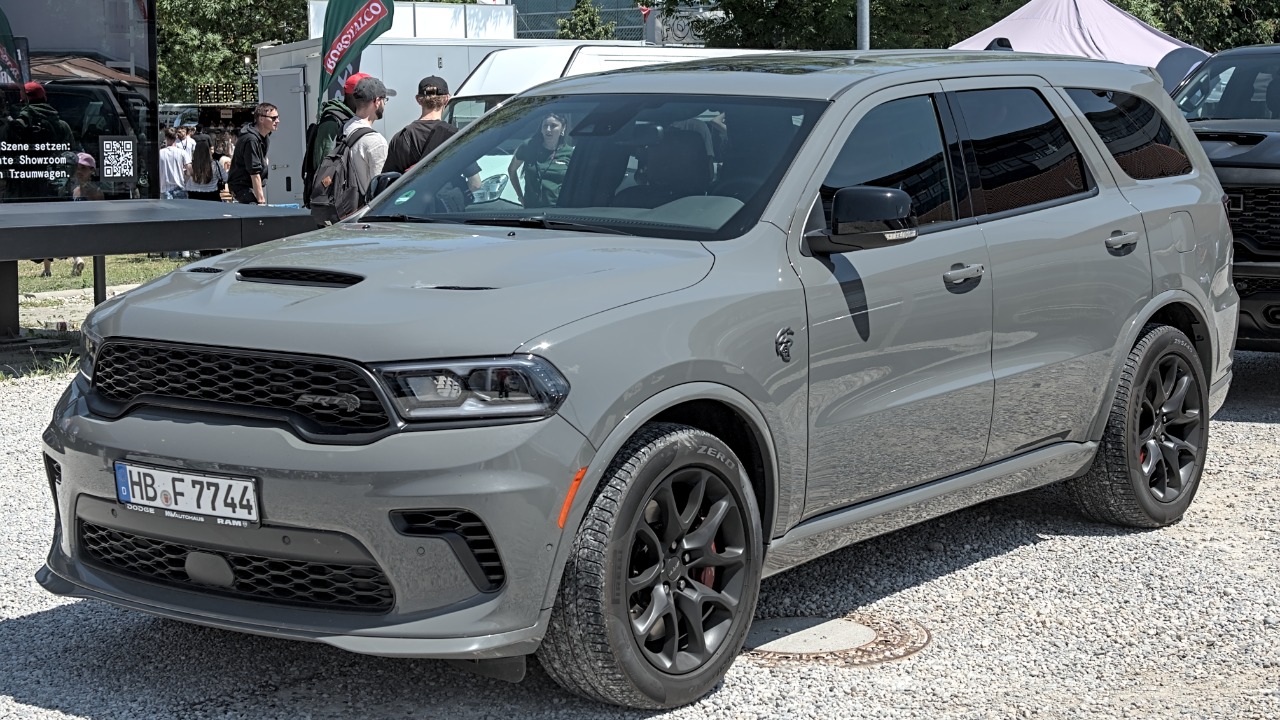

The Dodge Durango was supposed to be done with six cylinders, yet the V6 is back in the lineup because shoppers made it clear they still wanted a more efficient, less expensive way into this big three-row SUV. Instead of quietly steering everyone into thirsty V8s, Dodge has reversed course and restored the V6 as a direct response to that demand, turning a powertrain decision into a case study in how vocal buyers can reshape a product plan.
I see the Durango V6 comeback as a rare moment when online forums, dealer feedback, and real-world budgets pulled an automaker back from an all‑V8 strategy. The return of the six‑cylinder does not just fill a price gap, it reopens the door for families and fleet buyers who liked the Durango’s size and character but could not justify the fuel bills or sticker prices that came with eight cylinders only.
How the Durango V6 disappeared, then reappeared
When Dodge initially dropped the V6 from the Durango, the move signaled a push to lean harder into the SUV’s muscle‑car image and its lineup of V8 engines. That decision effectively forced anyone who wanted a new Durango into a larger, more powerful, and more expensive engine, even if their daily driving did not require that level of performance. Coverage of the updated model makes clear that the company has now reversed that call and reinstated the six‑cylinder option, with the return of the V6 confirmed in detailed product notes on the Durango’s latest configuration and powertrain mix in recent model updates.
The broader Durango overview shows how significant that change is in the context of the full lineup, which still includes multiple V8 trims and performance variants. By restoring the six‑cylinder, Dodge has rebuilt a more traditional staircase of price and power, from the entry V6 up through the higher‑output eight‑cylinder models, rather than forcing a single, high‑consumption starting point. That structure is evident in current buyer guides that walk through the Durango’s engines, trims, and pricing, where the V6 once again appears as the foundational configuration for shoppers comparing this SUV against rivals in the three‑row segment, as laid out in the latest Durango lineup breakdown.
Buyer pressure that pushed Dodge to bring the V6 back
The V6 did not return in a vacuum, it came back because owners and would‑be buyers were unusually vocal about missing it. On enthusiast forums, the end of the six‑cylinder was treated as a serious misstep, with threads documenting how the lack of a V6 would push some shoppers to competing SUVs or to the used market instead of a new Durango. In one long‑running discussion, posters traded notes on the disappearance of the V6, debated whether Dodge was over‑indexing on V8 performance, and described holding off on purchases while they waited to see if the company would change course, a sentiment captured in a detailed thread titled “no more V6 Durango” on a popular oil and maintenance forum that tracks engine availability.
Potential buyers echoed that frustration in more mainstream spaces, where questions about the V6’s future and its suitability for daily use kept surfacing. In one discussion aimed at shoppers cross‑shopping trims, a prospective owner laid out concerns about fuel economy, towing needs, and long‑term reliability if they chose the six‑cylinder, and the replies underscored how many people saw the V6 as the right balance for family duty rather than a compromise. That exchange, hosted in a Durango‑focused community, shows how the V6 remained central to purchase decisions even while it was off the order sheet, with users dissecting the pros and cons of the V6 configuration in detail.
Why the V6 matters for price, fuel economy, and daily use
Reintroducing the V6 is not just about nostalgia, it directly affects how attainable the Durango is for families and fleets. The six‑cylinder typically anchors the lower end of the price range, which means a buyer can get into a three‑row Durango without paying the premium that comes with a V8, especially once insurance and fuel costs are factored in. Current buyer guides that compare trims and engines highlight how the V6 models sit at the more accessible end of the spectrum, with fuel economy and total cost of ownership that better match the needs of commuters and parents who spend more time in school traffic than at a drag strip, a point underscored in the latest Durango pricing and specs.
From a usability standpoint, the V6 also aligns more closely with how most Durangos are actually driven. While the V8s deliver higher towing ratings and stronger acceleration, the six‑cylinder provides adequate power for highway merging, family road trips, and light towing without the constant penalty at the pump. Video walk‑throughs of the current Durango range often emphasize that the V6 is the sensible choice for buyers who prioritize comfort, cargo space, and reasonable operating costs over maximum performance, with reviewers pointing out that the base engine still feels capable in everyday driving scenarios as they tour the latest Durango interior and features.
How reviewers frame the V6 versus the V8s
Professional reviewers have been clear that the V6 is not the most exciting engine in the Durango lineup, but they also tend to describe it as the most rational pick for the majority of buyers. In detailed road tests, the six‑cylinder is often characterized as smooth and adequate rather than thrilling, yet those same evaluations note that it keeps the Durango’s weight and fuel consumption in check while still delivering the space and refinement that draw people to this SUV in the first place. One recent video review walks through the pros and cons of the V6, contrasting its more measured acceleration with the punch of the V8s, and concludes that for drivers who are not towing at the limit or chasing quarter‑mile times, the six‑cylinder is the smarter everyday choice, a conclusion laid out in a comprehensive Durango review.
At the same time, other reviewers lean into the Durango’s performance image and frame the V6 as a compromise relative to the muscular eight‑cylinder options. In those takes, the V8s are celebrated for their sound, acceleration, and towing strength, while the V6 is positioned as the entry ticket that trades some of that drama for efficiency and cost savings. A widely viewed video comparison spends significant time on this contrast, showing back‑to‑back acceleration runs and discussing how the character of the SUV changes with each engine, yet still acknowledges that the V6 keeps the Durango competitive against rival three‑row crossovers that do not offer V8s at all, as highlighted in a detailed engine comparison.
What everyday owners say about living with the V6
Beyond spec sheets and professional tests, the most telling feedback on the Durango V6 comes from owners who use it as a family hauler or road‑trip vehicle. In online communities, drivers describe the six‑cylinder as a solid match for suburban commuting, long highway stretches, and occasional towing of small trailers or boats, often noting that the engine feels more than adequate once the SUV is up to speed. A short video clip that has circulated among Durango fans shows a V6 model accelerating onto a highway and holding its own in traffic, with the owner narrating how the powertrain feels in real‑world use and emphasizing that it meets their expectations for a large three‑row SUV, a perspective captured in a widely shared owner clip.
Potential buyers weighing the V6 against the V8s often focus on long‑term reliability and maintenance, and here too the six‑cylinder has its defenders. In community discussions, owners point to their mileage, service history, and fuel logs to argue that the V6 strikes a better balance for people who plan to keep the vehicle for many years. One detailed Q&A thread features a prospective buyer asking about the V6’s durability, towing capability, and everyday drivability, and the responses from current owners describe the engine as dependable and well suited to family duty, reinforcing the idea that the six‑cylinder is not just a budget option but a practical long‑term choice, as seen in the back‑and‑forth over the V6’s real‑world behavior.
The V6 as a strategic hedge in a changing SUV market
From a strategic standpoint, bringing the V6 back gives Dodge more flexibility in a market that is shifting toward efficiency and electrification, even as some buyers still crave traditional powertrains. The six‑cylinder allows the Durango to compete more directly with crossovers that only offer four‑ and six‑cylinder engines, while the V8s continue to serve enthusiasts who want maximum performance. In a detailed walk‑around of the current Durango, a reviewer notes how the engine lineup now spans a wide range of use cases, from family duty to towing and performance driving, and argues that this breadth is part of what keeps the model relevant as rivals move toward smaller engines and hybrid systems, a point made explicitly in a recent feature overview.
At the same time, the V6 gives Dodge a way to manage regulatory and fleet‑average fuel economy pressures without abandoning the brand’s performance identity. By selling a meaningful number of six‑cylinder Durangos, the company can offset some of the emissions impact of its V8 models while still marketing the SUV as a muscular alternative to more anonymous crossovers. A detailed news report on the Durango’s latest updates frames the return of the V6 as part of a broader recalibration of the lineup, one that acknowledges both buyer demand and the realities of fuel economy standards, and notes that the six‑cylinder’s reinstatement helps balance the range between efficiency and power in the current Durango strategy.
What the V6 comeback signals about listening to customers
In the end, the Durango V6 comeback is less about one engine and more about how quickly a manufacturer can pivot when its core audience pushes back. By first eliminating and then restoring the six‑cylinder, Dodge effectively tested how far it could lean into a pure V8 identity before losing too many buyers to competitors or to the used market. The reaction in enthusiast spaces, where the loss of the V6 was dissected in detail and tied directly to purchase decisions, shows that customers were not shy about voicing their displeasure, as seen in the sustained debate over dropping the V6 in the first place.
For shoppers, the result is a more flexible Durango lineup that once again offers a realistic entry point for families who want space and capability without committing to a V8. For Dodge, it is a reminder that even in an era of performance branding and social‑media hype, the quiet majority of buyers still care about fuel bills, monthly payments, and long‑term usability. In my view, the V6’s return underlines a simple truth: when customers speak clearly enough, even a brand built on big power and loud exhausts will adjust, a dynamic that is captured in the way reviewers now present the six‑cylinder as a central, not secondary, part of the current Durango story.
More from MorningOverview