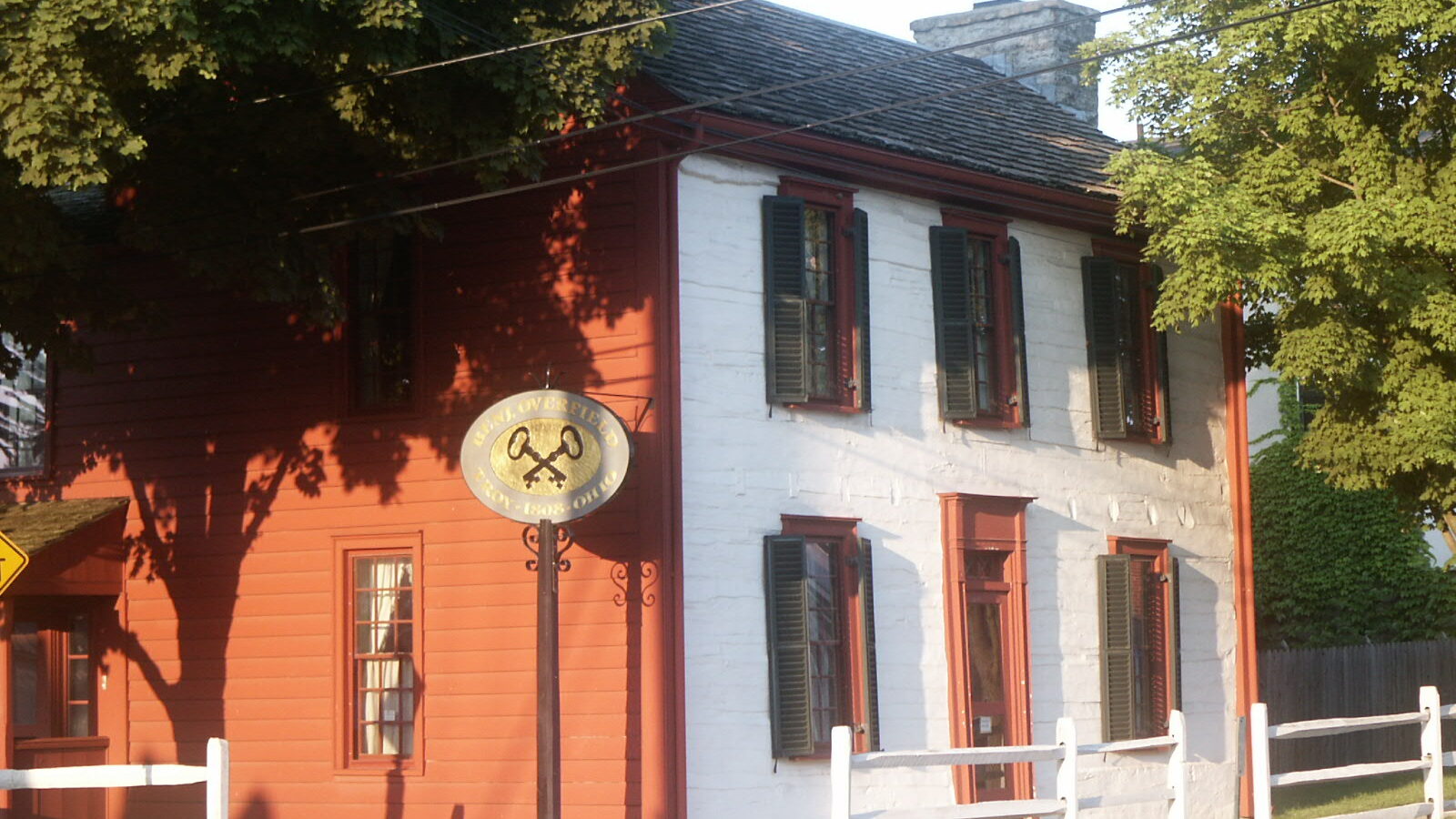

The destruction of a 200-year-old tavern in Ohio has turned a local disaster into a rare archaeological windfall, exposing a buried cache of early American artifacts that function like a time capsule from the nation’s frontier years. What began as a fire scene has become a meticulous dig, revealing coins, tableware, personal items, and building remnants that had been sealed beneath the floorboards for generations. As archaeologists sift through the ash and soil, they are reconstructing how people actually lived, worked, and drank in a young United States.
The story unfolding beneath the charred footprint of the Overfield Tavern is not just about loss and recovery, but about how a single burned building can reset what historians thought they knew about an entire town. The excavation is forcing a fresh look at Troy, Ohio’s early years, and it is giving residents a tangible link to the era when the community was a small outpost on the edge of the frontier.
The tavern that anchored a frontier town
Long before it became an archaeological site, the Overfield Tavern was a working hub of civic and social life, serving travelers and townspeople in what was then a small settlement along the Great Miami River. The building stood in Troy, about 20 miles north of Dayton, and functioned as a combined inn, meeting place, and residence, a typical arrangement for early American taverns that needed to be all things at once in a growing town. Its age and central role made it a landmark, and local historians had already documented its significance as a rare surviving example of an early 19th century public house.
That history is preserved in part through the institution that later operated as the Overfield Tavern Museum, which interpreted the site as a window into the region’s early years and detailed how the tavern helped shape the town’s development as a frontier community. The museum’s own account of the building’s origins and use describes it as a key gathering place in Troy’s formative period, a role that helps explain why the loss of the structure hit residents so hard when the fire destroyed the physical shell of the tavern. The broader setting of the property and its relationship to downtown Troy can still be traced through location records such as the digital listing for the historic site, which situates the tavern within the modern city grid and underscores how a once-remote outpost has become part of a larger urban landscape, as reflected in the mapped entry for the Overfield location.
A 200-Year-Old building burns to the ground
The turning point came when the historic structure, described as a 200-Year-Old tavern, burned to the ground, leaving behind only its foundation and a deep sense of loss in the community. Reporting on the disaster noted that the blaze reduced the building to rubble, yet even in the immediate aftermath, there were hints that the destruction might reveal something unexpected beneath the charred remains. The same coverage emphasized that the fire did not simply erase history, it exposed layers of it, as the collapse of the upper structure opened access to deposits that had been sealed off for two centuries.
Accounts of the incident published on Oct 30, 2025, and referenced again on October 31, described how the event, framed under the phrase “Year, Old Tavern Burns To Ground, Leaves Behind Rare Artifacts From Early America,” quickly shifted from a story of loss to one of discovery. Those reports, attributed to Alexander Pease, stressed that the fire’s timing and intensity created a unique opportunity for archaeologists to investigate the footprint of the tavern in a way that would have been impossible while the building still stood. The blaze, while devastating, effectively cleared the site for a controlled excavation that could probe the earliest phases of the tavern’s construction and use.
Excavations turn rubble into a time capsule
Once the site was stabilized, archaeologists moved in and began a systematic excavation that transformed the burned-out shell into a carefully gridded dig. The work at the Overfield Tavern Museum, described in detail in coverage dated Nov 13, 2025, has uncovered a dense concentration of artifacts that had been trapped under floors and within fill layers since the tavern’s earliest years. Excavations at the Overfield Tavern Museum have revealed jewelry, dishware, a bottle, and other everyday objects that together sketch a vivid portrait of life in and around the tavern when it was in operation.
Archaeologists working the site have treated the burned footprint as a kind of sealed deposit, similar in spirit to a formal time capsule, because the fire and subsequent collapse locked in a specific moment in the building’s history. The concentration of material, combined with the clear stratigraphy left behind by the fallen structure, allows researchers to tie particular artifacts to distinct phases of the tavern’s use. That precision is what makes the find so valuable: instead of isolated curios, the objects can be read as part of a coherent narrative about how the building functioned and how its occupants adapted it over time.
Thousands of artifacts, from coins to cookware
As crews sifted through the soil, the scale of the discovery quickly became clear. One of the archaeologists involved, identified as Manning, estimated that the number of artifacts recovered is around 4,500, while cautioning that the final tally will not be known until the cataloging process is complete. That figure captures the density of material packed into the tavern’s footprint, from fragments of ceramics and glass to metal fittings, tools, and personal items that once belonged to guests and staff. The same reporting noted that the pattern of finds is already prompting experts to reconsider assumptions about when parts of the building were constructed, suggesting that some sections may have been added later than previously believed.
Among the most striking discoveries are rare 19th century coins that survived both the original deposition and the modern fire. Coverage dated Oct 19, 2025, described how, out of the ashes of the blaze, archaeologists in Ohio began uncovering these coins as part of a broader assemblage of early American material. The reporting noted that “Out of the” destruction came a clearer picture of how money circulated through the tavern, with the coins helping to anchor the site’s chronology and economic role. The same account explained that the work ramped up after the fire that occurred on December, when the building that housed the museum was lost and the excavation effort began in earnest at the Ohio tavern museum.
Rebuilding plans and the question of what to display
Even as archaeologists catalog the finds, local leaders and museum staff are grappling with how to balance reconstruction with preservation. Reporting dated Oct 14, 2025, noted that it is not clear if the artifacts will be displayed somewhere in the future, because the focus remains on rebuilding right now. That coverage emphasized that the community is still processing the loss of the building that burned down last December, and that decisions about exhibition space, conservation, and interpretation will come only after the structural future of the site is settled. For now, the priority is stabilizing the remains and planning a new chapter for the property that respects both its past and its potential as a public space.
At the same time, the sheer emotional weight of the discovery is shaping how residents talk about the project. The same Oct report described the excavation as a “really beautiful tribute” to the tavern’s history, language that captures how the dig has become a form of collective mourning and remembrance. The artifacts, including coins over 200 years old among the items discovered under the site, are not just research data, they are touchstones for a community that watched a beloved landmark vanish in flames. That dual role, as scientific evidence and civic symbol, will likely influence which objects eventually make it into any future display associated with the Troy excavation.
What the fire is teaching archaeologists about early American life
For archaeologists, the Overfield site is more than a local curiosity, it is a case study in how destructive events can preserve evidence that would otherwise be lost. Coverage dated Oct 30, 2025, described how a “Devastating” blaze at the tavern led to a major discovery of early “American” artifacts, with “Archaeologists” in “Ohio” using the opportunity to probe layers that had been inaccessible when the building was intact. That reporting stressed that the tavern’s location in Troy, roughly 20 miles north of Dayton, makes it a key reference point for understanding how frontier communities in the region developed, traded, and interacted with travelers moving through the area. The fire, in this reading, did not simply destroy a museum, it opened a rare window into the lived experience of early residents.
The lessons extend beyond Ohio. Specialists in historical archaeology have long argued that taverns are uniquely rich sites because they concentrate so many aspects of daily life in one place, from commerce and politics to food, drink, and lodging. A separate discussion of tavern excavations, published on Jun 29, 2019, quoted archaeologist Ewen telling the Charlotte Observer that finding a deposit like this is “something every archaeologist hopes to find,” describing it as a snapshot of a particular moment stored in a crawl space. That perspective, framed in a broader reflection on a “tavern time capsule,” helps explain why the Overfield dig is attracting attention from scholars who see in it a chance to test theories about class, gender, and mobility in the early republic, as highlighted in the analysis of a tavern time capsule.
A frontier tavern reinterpreted for a new century
As the cataloging continues, historians are revisiting long-held assumptions about the tavern’s construction, layout, and role in the community. The Overfield Tavern Museum’s own historical narrative, which presents the building as a classic example of a frontier tavern that evolved alongside Troy, is now being tested against the physical evidence emerging from the ground. The museum’s description of the site as a “frontier tavern” that served as both home and public house is being refined as archaeologists match artifact clusters to specific rooms and functions, revealing how spaces were used and reused over time. That process is already prompting curators to think about how future interpretation might shift from static period rooms to a more dynamic story of change, as suggested in the museum’s overview of a frontier tavern.
The fire has also forced a broader conversation about how communities steward historic buildings that double as museums. The Overfield site, like many small institutions, operated within tight budgets and relied on local support, yet it held artifacts and architectural details that turned out to be of national interest once the excavation began. The emerging consensus among preservationists is that sites like this need to be understood not only as static heritage attractions but as active research laboratories, where new findings can reshape public understanding of the past. In that sense, the burned tavern has become a test case for how to integrate archaeology, interpretation, and community memory in a single, evolving project.
From local tragedy to national story
What began as a fire in a small Ohio town has now drawn attention far beyond Troy, in part because it illustrates how fragile and how resilient the physical record of the past can be. National coverage has framed the Overfield discovery as an example of how a single event can unlock a trove of information about early American life, with the phrase “Devastating historic tavern fire leads to major discovery of early American artifacts” capturing the tension between loss and gain. That framing, detailed in reporting dated Oct 30, 2025, underscores how the Overfield story fits into a larger pattern of sites where catastrophe has inadvertently preserved history, as seen in the account of how an Ohio tavern fire unearthed early American history.
For Troy residents, the excavation is a reminder that their town’s story is intertwined with the broader national narrative of expansion, conflict, and change. The artifacts pulled from the ash and soil are not just relics of a bygone era, they are evidence that the choices made in and around the tavern helped shape the community that exists today. As archaeologists continue to work the site and planners debate how to rebuild, the burned tavern stands as a paradoxical monument: a structure lost to flames that has, in its absence, revealed more about the past than it ever did while standing.
More from MorningOverview