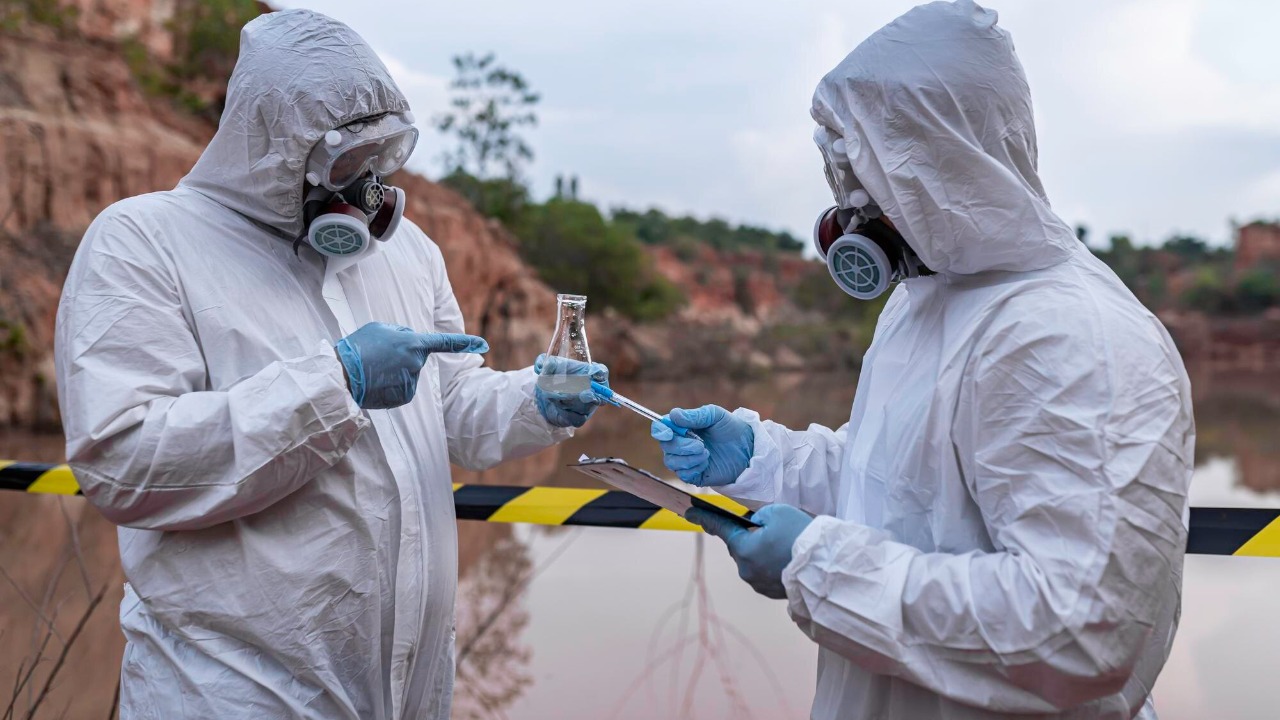

Scientists are closing in on one of the most elusive culprits behind “forever chemical” pollution, tracing a major share of the contamination to specific industrial processes, consumer products and even modern pesticides. As researchers map these pathways with greater precision, the picture that emerges is not of a few isolated spills but of a vast, engineered flow of persistent compounds into water, soil and food.
That new clarity is reshaping how I think about chemical safety, because it shows that the most stubborn pollutants are not accidents at the margins of the economy, they are built into the way we make nonstick pans, waterproof jackets, pharmaceuticals and crop protection tools. Once released, many of these substances do not break down on any human timescale, which means every new source identified is also a warning about what will remain in the environment for generations.
The scale of the forever chemical problem
To understand why tracking a single source matters, I first have to grapple with the sheer scale of the contamination. Perfluoroalkyl and polyfluoroalkyl substances, or PFAS, refer to a group of thousands of synthetic chemicals that have been woven into everything from stain resistant carpets to firefighting foams. A detailed issue brief dated Sep 6, 2024, By Molly Brind’Amour, describes how PFAS are now embedded in consumer products made with PFAS, which means the pollution problem is literally built into everyday life.
Regulators are still catching up to the breadth of that footprint. An overview from Nov 5, 2025, explains that PFAS Can Be Found in Many Places, including water, soil, air, food and materials such as pizza boxes and candy wrappers. A companion summary from the same date notes that PFAS Can Be Found in Many Places in Drinking water, both in public systems and private wells. When I put those strands together, it is clear that the contamination is not confined to industrial zones, it is threaded through the basic infrastructure of modern living.
From PFAS to TFA, the rise of ultra-short forever chemicals
Within this broad family, researchers are increasingly focused on a subset of smaller, highly mobile compounds that slip through many conventional treatment systems. One of the most striking examples is Trifluoroacetic acid, often shortened to Trifluoroacetic or TFA, which scientists describe as a persistent and mobile substance that has been increasing in concentration within diverse environments. An Abstract on the global threat from the irreversible accumulation of Trifluoroacetic acid (TFA) underscores that it is not just another PFAS, it is a particularly stubborn one that resists natural breakdown and travels easily with water.
Earlier work has sharpened that picture by placing TFA within the broader PFAS universe. A study dated Jun 24, 2025, notes that Subjects included Trifluoroacetic acid (TFA), described as the smallest perfluoroalkyl acid with only two carbon atoms, which has emerged as a contaminant linked to the breakdown of certain pharmaceuticals. Because TFA is so small and highly soluble, it behaves differently from the long chain PFAS that have dominated public debate, slipping through many filters and spreading widely in rivers, groundwater and even rain.
New evidence of an alarming rise in persistent chemicals
As scientists refine their tools, they are not just finding new compounds, they are documenting a sharp rise in the levels of those that linger. Recent research has highlighted an alarming rise in persistent forever chemicals, with monitoring data pointing to upward trends rather than the declines many regulators had hoped to see. One analysis of environmental samples describes a significant increase in the detection of these substances, particularly in water bodies that receive industrial discharges and urban runoff, underscoring an alarming rise in persistent forever chemicals that are not being effectively contained.
That pattern is not limited to a single region or compound. A review of Human exposure pathways notes that Human exposures to legacy PFASs from seafood and drinking water are stable or increasing in many regions, even where some older chemicals have been phased out. The same analysis reports that for PFOA, EFSA suggested the contribution of drinking water to total exposure can range from 4 percent in toddlers to 56 percent in elderly populations, a reminder that Human exposure is not just a theoretical risk but a measurable reality that varies by age, diet and local water quality.
Tracking contamination back to its sources
To move from diagnosis to accountability, researchers are now tracing pollution back to the facilities and practices that release it. One of the clearest examples comes from North Carolina, where scientists followed PFAS signatures through the Haw River watershed and linked them to specific industrial activities. The Story behind the discovery in North Carolina‘s Haw River shows how an environmental chemistry laboratory used detailed chemical fingerprints to uncover a source of widespread PFAS contamination, offering a template for other communities grappling with high levels of PFAS.
At a national scale, the known footprint of contamination is expanding just as quickly. One assessment of toxic sites in the United States reports that there are 2,200 verified locations with PFAS pollution, and that this figure likely underestimates the true number of affected areas. The authors emphasize that Groundwater reveals contamination that is not always visible at the surface, and that When the researchers looked closely at the 2,200 verified sites, the picture was grim, with factories tied to PFAS leaks and the risk of another generation of contamination if cleanup lags. That analysis, published on Sep 16, 2025, argues that Groundwater monitoring is essential to avoid repeating the same mistakes in new communities.
Sludge, fields and the hidden pathways through agriculture
One of the more unsettling findings in recent years is that PFAS pollution at a single location may have multiple sources, some of them far from obvious. Research published on Jul 1, 2025, highlights that PFAS pollution at a single location may have multiple sources and that Sludge spreading on land contaminates soil and water with very high levels for decades. The Highlights of that work explain how biosolids from wastewater treatment plants, which are often applied to farm fields as fertilizer, can carry a cocktail of PFAS that then leach into groundwater and crops, a pattern the authors documented using a combination of field sampling and a poll of contamination indicators in surrounding areas. This study of PFAS sources shows how a single farm can become a convergence point for multiple pollution streams.
Beyond sludge, pesticides themselves are emerging as a major vector for ultra-short PFAS such as TFA. A Full length article on environmental contamination concludes that Pesticides can be a substantial source of trifluoroacetate, or TFA, to water resources, especially when used repeatedly on the same fields. The authors argue that Thus it is urgent and necessary to better regulate these compounds and to understand how they transform in soil and water, since their breakdown products can be even more mobile than the original ingredients. For me, the striking lesson from this work is that the green fields feeding cities can also be quiet conduits for Pesticides that leave behind persistent chemical footprints.
Rivers as early warning systems
Rivers are turning out to be some of the most sensitive gauges of how far forever chemicals have spread. In the United Kingdom, the first nationwide survey of TFA in rivers found that Some locations had concentrations among the highest ever recorded globally, a startling result for a country that has already phased out some older PFAS. The study notes that Trifluoroacetic acid, or Trifluoroacetic, is a small, very mobile acid that shows up not only in rivers but also in drinking water and even wine, which means the contamination is moving through both natural and human made systems. By treating rivers as integrated sampling lines, the researchers behind this Jun 19, 2025, survey were able to map hotspots that might otherwise have gone unnoticed.
These findings dovetail with broader work on the global distribution of TFA, which shows that the compound is not confined to industrial corridors. The Jun 24, 2025, analysis of Subjects that included Trifluoroacetic acid (TFA) describes how emissions from refrigerants, pharmaceuticals and other fluorinated products can travel long distances before depositing in remote lakes and rivers. When I look at those maps alongside the UK river data, it becomes clear that waterways are not just victims of pollution, they are also early warning systems that reveal where TFA and related compounds are building up fastest.
What the science means for policy and everyday life
As the science tightens the link between specific sources and widespread contamination, the policy implications become harder to ignore. The overview from Nov 5, 2025, that explains PFAS Can Be Found in Many Places, including food packaging and household products, suggests that regulators will have to look beyond factory smokestacks and discharge pipes. If pizza boxes, candy wrappers and nonstick cookware are all potential contributors, then safer alternatives and stricter product standards will be just as important as cleanup orders for industrial sites, a point reinforced by the detailed exposure pathways laid out in the PFAS risk assessments.
For individuals, the research does not offer easy escape routes, but it does point to practical steps. Knowing that Human exposures to legacy PFASs from seafood and drinking water are stable or increasing in many regions, I see a strong case for utilities to invest in advanced filtration and for consumers to pay attention to local water reports and seafood advisories. The discovery that Pesticides can be a substantial source of TFA to water resources, combined with evidence that Sludge spreading on land contaminates soil and water with very high levels for decades, also argues for supporting farmers who adopt lower impact practices and for pressing local officials to scrutinize biosolid use. The science is clear that forever chemicals are not going away on their own, which means the only real choice is whether to keep adding to the burden or to start turning off the taps that feed it.
More from MorningOverview