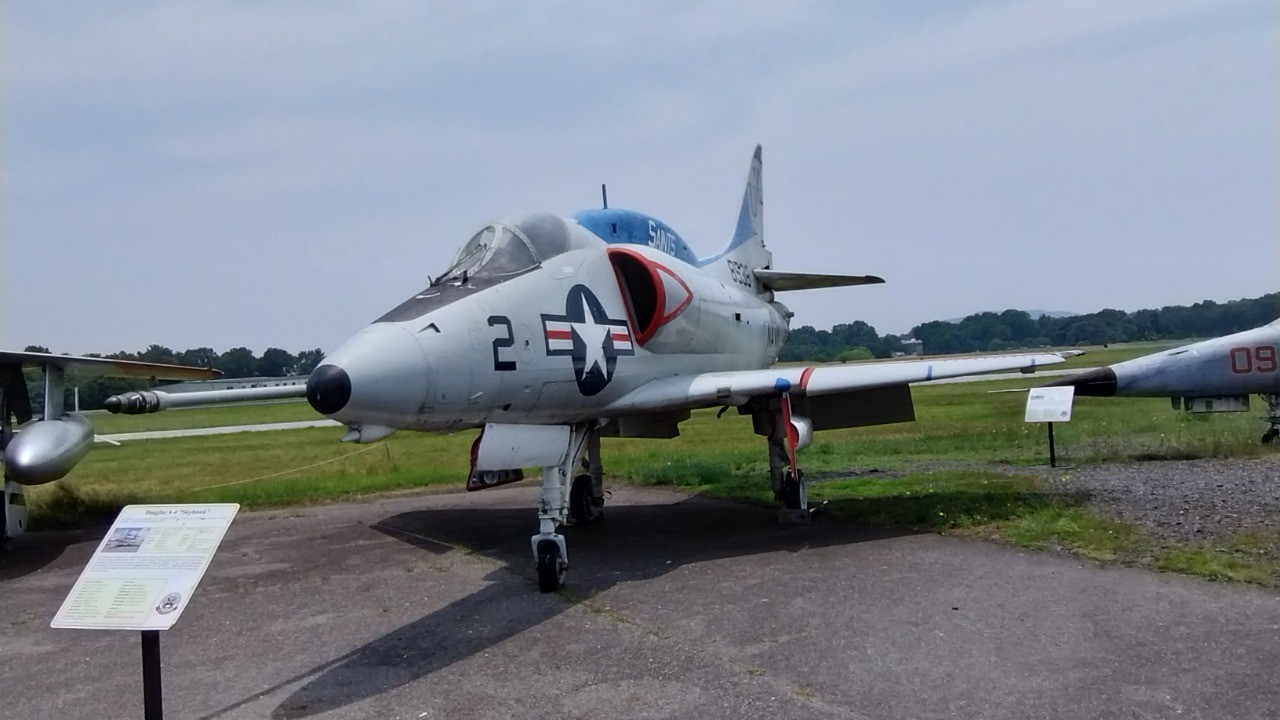

The A-4 Skyhawk is a renowned aircraft celebrated for its agility, compactness, and versatility in combat. Designed to operate from aircraft carriers, this fighter jet has a storied history with the U.S. Navy and Marine Corps. One of the most intriguing aspects of the Skyhawk is its speed, which has made it a formidable presence in aerial operations.
Design and Development of the A-4 Skyhawk
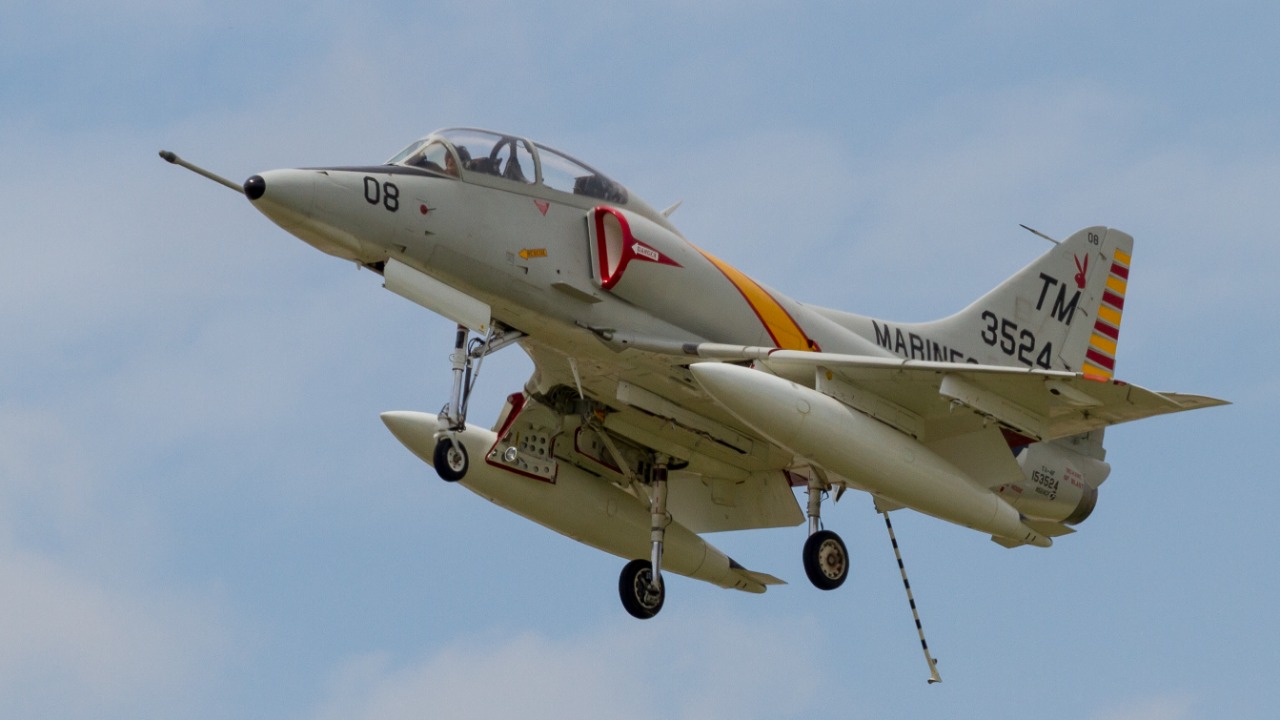
The A-4 Skyhawk was developed in response to the U.S. Navy’s need for a carrier-capable attack aircraft that was both lightweight and capable of delivering nuclear weapons. Designed by Douglas Aircraft’s Ed Heinemann, the Skyhawk was intended to be a cost-effective and agile aircraft that could operate efficiently from the decks of aircraft carriers. Its compact size and straightforward design made it a favorite among the U.S. Navy and Marine Corps.
One of the engineering breakthroughs that defined the A-4 Skyhawk was its delta wing configuration, which contributed to its impressive agility and performance. Weighing only about half of what other fighter jets of its time weighed, the Skyhawk’s lightweight structure was a significant advantage. This made it easier to maneuver in combat situations and allowed it to carry a substantial payload despite its small frame.
The Skyhawk’s design was inherently versatile, allowing for various modifications and roles. This adaptability enabled it to serve not only as an attack aircraft but also in roles such as training and air combat maneuvering. The incorporation of advanced avionics and weaponry over the years further enhanced its operational effectiveness, ensuring that it remained relevant in the rapidly evolving landscape of military aviation.
Performance and Speed Capabilities
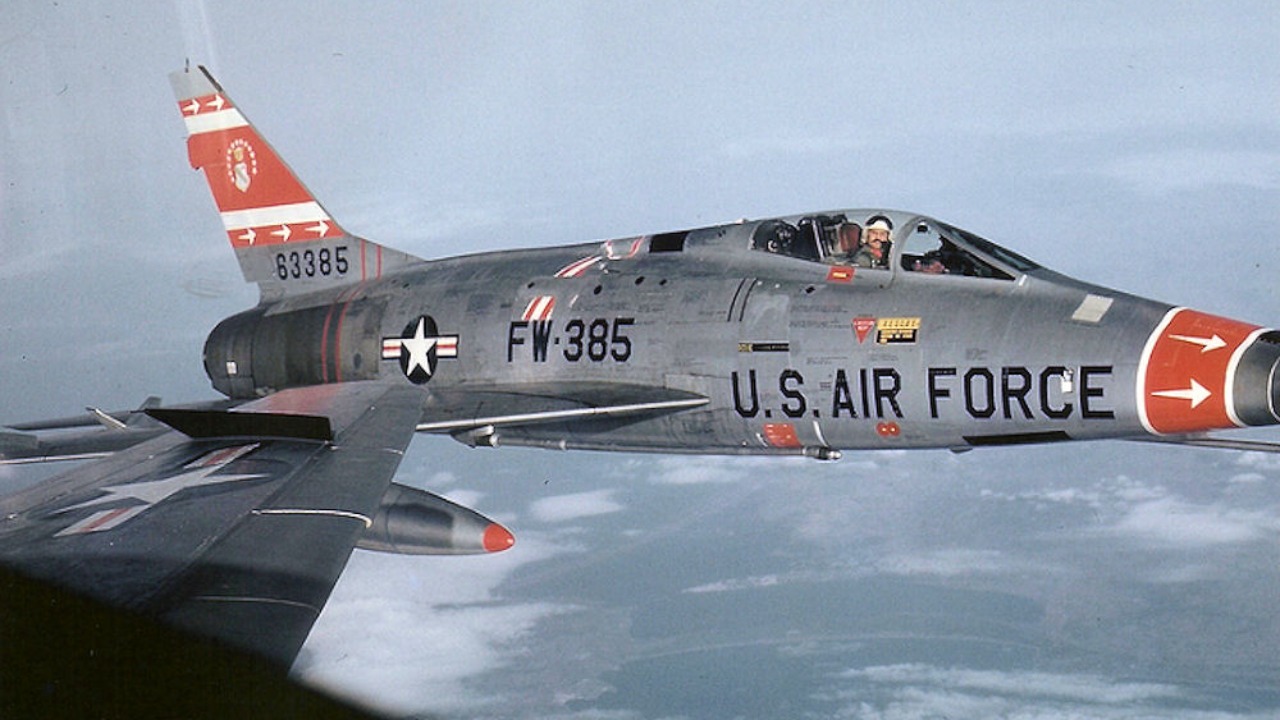
The A-4 Skyhawk boasts a maximum speed of approximately 673 miles per hour (Mach 0.86). This top speed, while not supersonic, was competitive with other fighter jets of its era, such as the F-100 Super Sabre. The Skyhawk’s speed was a testament to its efficient design and the powerful Pratt & Whitney J52 engine that powered it. Its aerodynamic form and lightweight construction played crucial roles in achieving such impressive performance metrics.
Several factors influenced the Skyhawk’s speed capabilities. The delta wing design minimized drag and enhanced lift, while the Pratt & Whitney J52 engine provided robust thrust. Additionally, the aircraft’s compact size reduced air resistance, allowing for greater acceleration and agility in various flight scenarios.
In real-world operations, the Skyhawk’s speed proved invaluable. Pilots often praised its nimbleness and quick response in combat situations, particularly during the Vietnam War. The aircraft’s ability to quickly enter and exit combat zones made it a favorite among pilots who relied on speed for successful strike missions. Anecdotes from military operations highlight how the Skyhawk’s speed allowed it to evade enemy fire and effectively engage targets.
Role in Military History
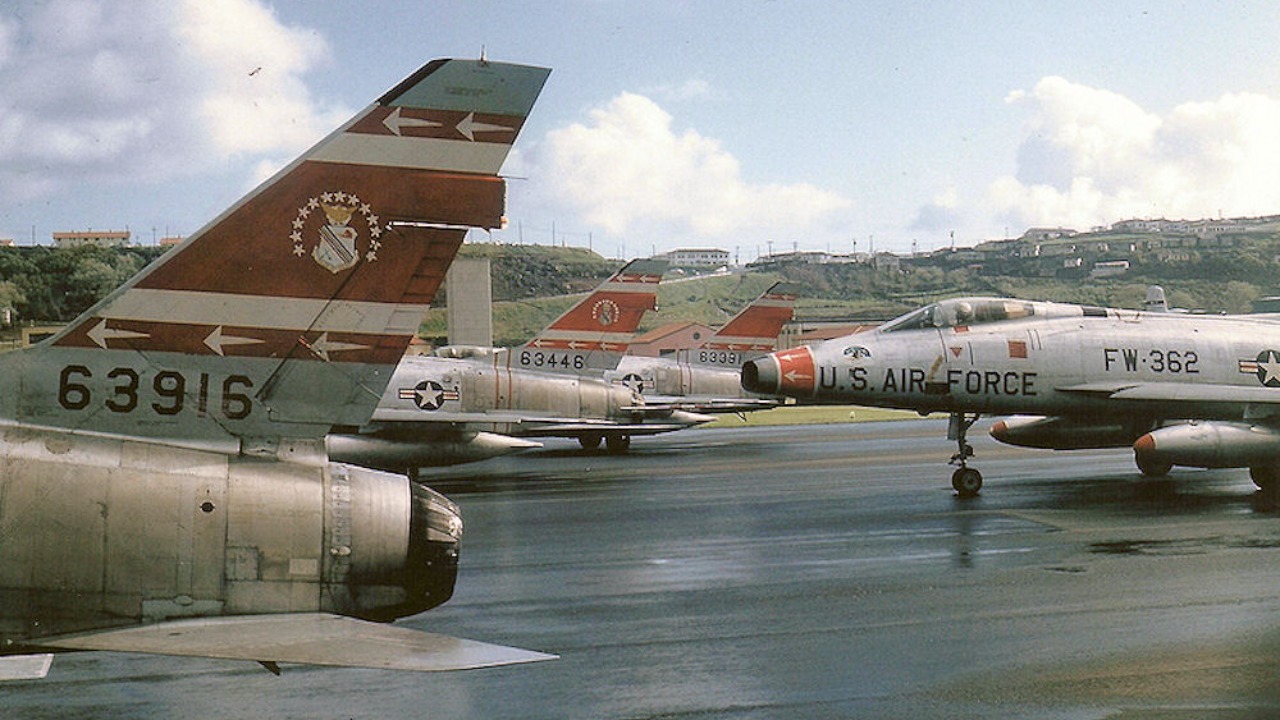
The Skyhawk played a pivotal role in military history, particularly during the Vietnam War, where it was extensively used for ground attack missions. Its ability to carry a diverse array of munitions, including bombs, rockets, and missiles, made it a versatile asset in various conflicts. The Skyhawk’s deployment in such operations demonstrated its impact on aerial combat strategies, where speed and agility often determined the outcome of engagements.
Beyond combat, the A-4 has been instrumental in training programs, notably at the Navy’s Topgun school. Used to simulate enemy aircraft, the Skyhawk provided a realistic training environment for pilots to hone their skills in air combat maneuvering. Its agility and performance made it an excellent substitute for more advanced adversary aircraft, helping prepare pilots for real-world engagements. Learn more about its role in Topgun training here.
The legacy of the Skyhawk extends beyond its military service. Its influence on subsequent aircraft designs is evident, with many modern jets incorporating design elements pioneered by the A-4. The aircraft continues to be celebrated for its contributions to military aviation, and its enduring presence in reserves and civilian applications attests to its lasting impact.
Comparative Analysis: A-4 Skyhawk vs. Other Fighter Jets
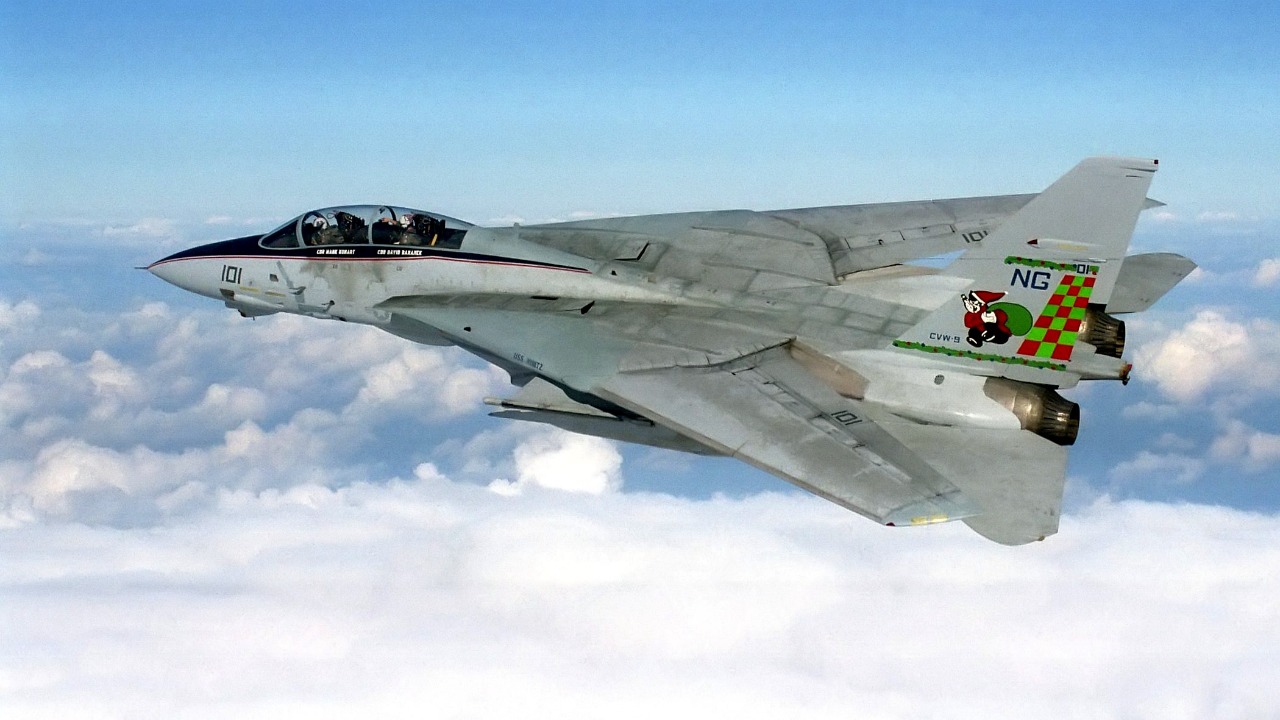
When comparing the A-4 Skyhawk to contemporaneous aircraft like the F-14 Tomcat and the F-5 Freedom Fighter, several key differences and similarities emerge. The Skyhawk’s speed and agility, while not supersonic, were notable for its time, rivaling that of the F-5. However, the F-14’s advanced radar and missile systems offered capabilities that the A-4 could not match. Discover more about the A-4 Skyhawk’s appeal among the Navy and Marines here.
The Skyhawk’s strengths lay in its simplicity and reliability, making it easier to maintain and operate compared to its more technologically complex counterparts. Its limitations, such as the lack of supersonic speed, were offset by its ability to perform a wide range of missions effectively. This balance of strengths and weaknesses made the Skyhawk a valuable asset in various military operations.
Reflecting on the evolution of fighter jet technology, the A-4 Skyhawk’s influence is evident in the design of newer generations of aircraft. Its emphasis on agility, simplicity, and adaptability has inspired the development of modern jets that prioritize these attributes while incorporating advanced technologies. The Skyhawk’s legacy is a testament to the enduring value of well-balanced design in military aviation.
The A-4 Skyhawk Today
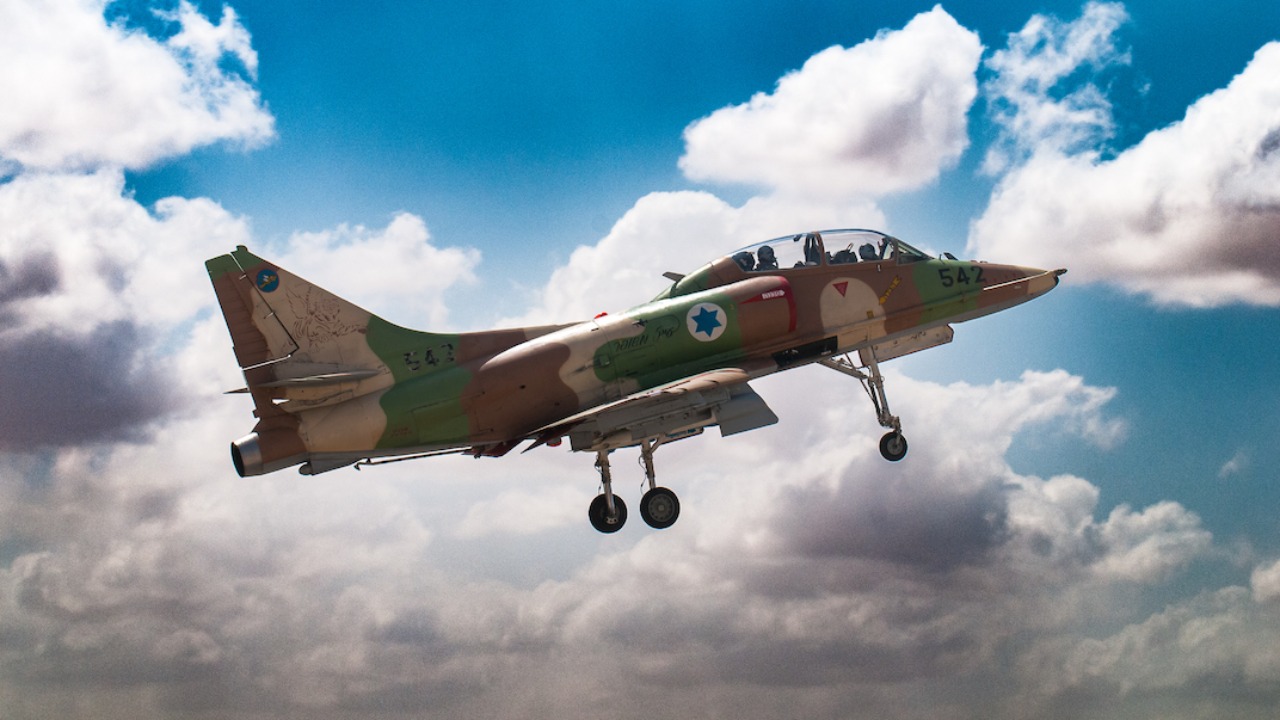
Today, the A-4 Skyhawk continues to serve in various capacities, both in military reserves and civilian applications. Some air forces still use the Skyhawk for training purposes, while others have been retired to museums or sold to private collectors. Its continued presence in aviation circles highlights its enduring appeal and functionality. Explore its current uses and versatility here.
Efforts to preserve and restore Skyhawk aircraft are ongoing, with many enthusiasts dedicated to maintaining these iconic jets in working condition. Restoration projects ensure that the Skyhawk remains a visible part of aviation history, allowing future generations to appreciate its contributions to military aviation.
Culturally, the Skyhawk has also left its mark, appearing in various media and earning a place in the hearts of aviation enthusiasts. Its appearances in films and documentaries have cemented its status as an iconic aircraft, celebrated for its unique design and storied history. The A-4 Skyhawk remains a symbol of innovation and excellence in aircraft design, revered by those who recognize its significant impact on aviation history.