
From the phone in your pocket to the power grid humming in the background, a wave of breakthroughs is quietly rewiring daily life. I see seven technologies in particular that already shape how you work, travel, stay healthy and stay online, often without you noticing how radical they really are.
AI agents as invisible personal staff
AI agents are rapidly evolving from chatbots into autonomous helpers that schedule meetings, draft documents and even negotiate simple tasks on your behalf. Reporting on Agents notes that so-called AI Agents & Generative AI Are Here to Stay, describing autonomous systems that handle routine workflows so humans can focus on higher-level strategy. In practice, that means your inbox is triaged before you wake up and your calendar reshuffles itself when a train is delayed.
I view these agents as the first mainstream step toward software that behaves like a junior colleague rather than a tool. As they plug into HR systems, banking apps and logistics platforms, the stakes rise: they could boost productivity for overstretched workers, but they also raise questions about oversight, bias and who is accountable when an automated decision goes wrong.
AI “co-pilots” baked into everything
Artificial Intelligence Becomes Your Daily Co, Pilot when it is embedded directly into the apps and devices you already use. Coverage of Tech That Will describes AI woven into productivity suites, cars and home gadgets, quietly suggesting replies, routes and settings. Instead of opening a separate assistant, you simply start typing or driving and the system anticipates what you need next.
Because these co-pilots sit in the loop rather than fully in control, they change behavior in subtle ways. I find that they nudge people toward faster decisions, shorter messages and more automated choices, which can be liberating or risky depending on context. As more workplaces normalize AI suggestions in performance reviews, legal drafting or medical triage, the line between human judgment and machine recommendation becomes a central ethical fault line.
Folding phones and shape-shifting screens
Dec predictions about Folding devices highlight how flexible displays are moving from novelty to default. Folding iPhones and other bendable phones, laptops and tablets promise full-size screens that collapse into pocketable slabs, changing how you read news, watch video and work on the go. The same research points to mind-reading tech and EV supercars in the same breath, underscoring how display hardware is part of a broader rethink of human–machine interfaces.
In daily life, I see folding screens as a quiet revolution in ergonomics. They let commuters carry a single device instead of juggling phone and tablet, and they encourage designers to rethink multitasking, with split-screen modes that feel more like a desk than a handset. The trade-offs, from durability to repairability, will shape e-waste and upgrade cycles for years.
Sodium-ion batteries powering the next wave
Sodium-ion batteries are emerging as a serious alternative to lithium cells for stationary storage and some vehicles. A detailed look at Sodium explains that these batteries rely on abundant materials like salt, making them cheaper and less geopolitically fraught than lithium. They are particularly promising for grid-scale storage, where size and weight matter less than cost and safety.
For households, the impact is indirect but profound. Cheaper storage smooths out solar and wind power, which can stabilize electricity prices and reduce outages. I expect sodium-ion packs to sit quietly in basements, apartment blocks and substations, making it easier to charge EVs overnight and run air conditioners during heat waves without overloading the grid, a crucial adaptation as Climate pressures intensify.
Space-based mobile broadband
Advancing space travel and exploration is not just about rockets, it is also about beaming data back to Earth. One standout example is AST SpaceMobile BlueBird, highlighted as delivering Ultra-fast internet, beamed from space by Marina Koren in a survey of Advancing inventions. Instead of relying on ground towers, large satellites act like cell towers in orbit, connecting ordinary smartphones in remote regions.
For people living outside dense cities, this is a potential lifeline. I see direct-to-device satellite service reshaping everything from disaster response to tourism, letting hikers, farmers and truck drivers stay online where coverage was once impossible. It also raises regulatory and environmental questions, from orbital debris to spectrum rights, that governments and companies must resolve before constellations like AST scale fully.
AI-augmented digital health
New AI Applications and Concerns of the Medical Community sit at the heart of a broader push to Amplify Your Healthcare Business with Digital Health Technologies. Analysis of Digital Health Technologies describes AI tools that scan imaging, summarize patient histories and predict readmission risks, while clinicians worry about opaque algorithms and liability. These systems increasingly run in the background of hospital workflows, shaping which patients get flagged for follow-up.
From my perspective, the quiet part is how quickly patients will come to expect this augmentation. When triage chatbots shorten waiting-room times or remote monitoring spots early warning signs, it can feel like magic. Yet the same data pipelines can entrench inequities if training sets overlook certain populations, making transparency and human oversight non-negotiable.
Wearables that vanish into your clothes
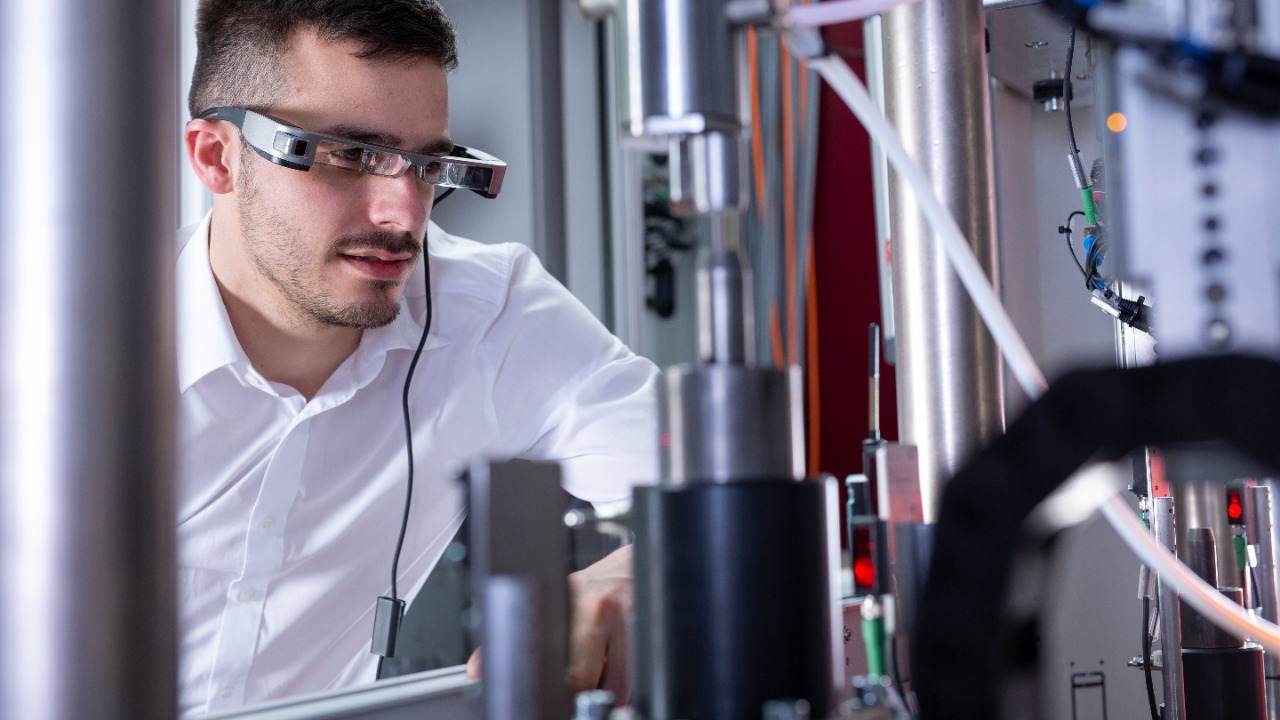
The trajectory of wearable technology is clear, it is moving from conspicuous gadgets to invisible, integrated systems that work in the background of our lives. A review of wearable technology points to smart fabrics, earbuds and health patches that continuously track movement, heart rate and sleep without demanding attention. Instead of strapping on a chunky fitness band, you simply get dressed.
I see this shift as a turning point in how data is collected and consent is managed. When sensors are woven into shoes or shirts, it becomes easier to forget they are there, even as they feed information to insurers, employers or app developers. The same seamlessness that makes daily life more convenient also makes robust privacy rules and clear opt-outs essential infrastructure, not optional extras.
More from Morning Overview