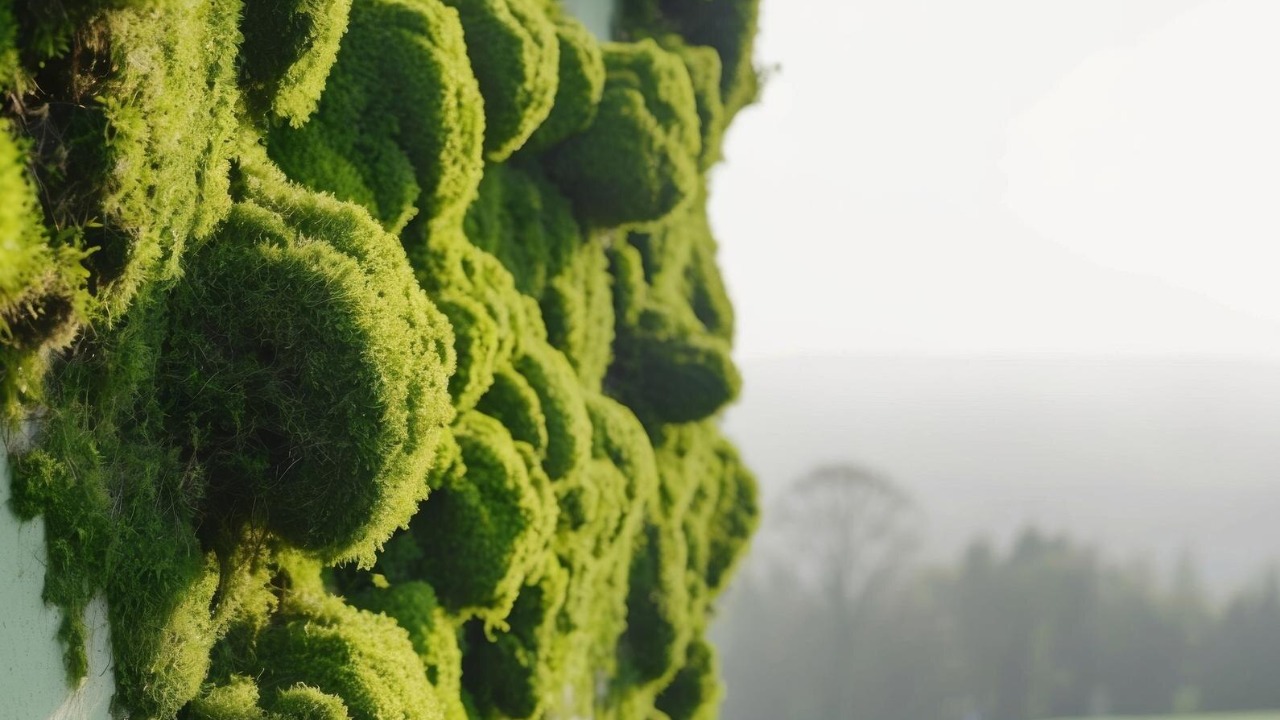

Microalgae are moving from petri dishes to building facades, promising to cool overheated cities while attacking carbon pollution at a pace trees cannot match. A new generation of “living walls” uses dense algae cultures to shade glass, absorb heat and strip CO2 from the air, cutting indoor temperatures and slashing energy demand for cooling. Because these organisms can capture carbon up to 50 times faster than trees, they are turning architecture itself into a climate tool rather than a climate problem.
Instead of passive insulation, these systems behave like vertical ponds, constantly photosynthesizing as the sun beats down on concrete and glass. The result is a rare combination in climate tech: immediate comfort for building occupants and a measurable dent in emissions, delivered by a technology that looks more like art than infrastructure.
Why algae walls cool buildings so effectively
The basic physics behind algae walls is simple, but powerful. A transparent panel or curtain is filled with a microalgae solution that absorbs sunlight, converts much of that energy into photosynthesis and biomass, and blocks the harshest rays from reaching interior spaces. In the process, the liquid layer acts as a dynamic thermal buffer, reducing solar gain on the building envelope and lowering indoor temperatures, which directly cuts the load on air conditioning systems. In Singapore, panels filled with a water-based microalgae solution have been installed along traffic corridors, where the fluid medium helps manage heat while also tackling pollution, turning Singapore’s congestion into an opportunity for cooler, cleaner streets.
Researchers working on a dedicated building system have shown how far this concept can go. A recent microalgae facade described as a Living algae system uses dense cultures to shade windows and absorb heat, cutting indoor temperatures enough to deliver significant energy savings. Because the algae are suspended in water, the panels can also move heat away through fluid circulation, a principle that mirrors the way advanced photobioreactors control temperature and light to keep cultures thriving. The result is a facade that behaves like a living piece of HVAC equipment, but one that runs on sunlight instead of electricity.
Fifty times faster than trees: the carbon math behind microalgae
The cooling benefits of algae walls are only half the story. Microalgae are extraordinarily efficient at pulling carbon dioxide out of the air, which is why a Groundbreaking Study Confirms up to 50 times Faster Than Trees, Offering a Powerful Climate Solution. That same logic underpins the building-scale system highlighted earlier this year, where Microalgae-based architecture is credited with capturing CO2 far more rapidly than regular land-based plants. In practice, that means a relatively thin facade can match or exceed the carbon uptake of a much larger patch of forest, especially in dense urban cores where trees struggle.
Other projects help quantify what this looks like in real hardware. The Urban Algae Folly, a sculptural installation that doubles as a bioreactor, hosts a total of 400 l of living cultures and absorbs 500 g of CO2 per day while producing 375 g of oxygen. In Denmark, engineers have gone even flatter, developing algae wallpaper where a single square meter of sheet material captures up to 200 grams of CO2 per week, equivalent to the output of 10 houseplants, creating a wall that “breathes like a forest.” These figures illustrate why advocates of Carbon Capture with Algae Bioreactors argue that Algae Bioreactors can pack enormous biomass productivity into limited space.
From curtains to biopanels: prototypes that double as infrastructure
Architects have been quietly testing how to integrate these organisms into everyday buildings. In Dublin, designers working with EcoLogicStudio created a set of algae curtains that hang over the first and second floors of a building in Ireland, a prototype that uses vertical tubes of green fluid to filter air and shade glass. Reporting on that early prototype describes how the installation in Dublin demonstrates both the visual impact and the technical feasibility of turning facades into living filters. A related analysis of Eco-friendly algae curtains notes that when Draped over buildings, these living walls scrub carbon and pollutants from crowded city air, according to developers of the algae curtains.
Other teams have pushed the concept into rigid panels. In London, scientists have tested “biosolar panels” that suck CO2 from the air to grow edible algae, using a system known as the BioSolar Leaf. Similar biopanel windows developed by Greenfluidics are tinted green by dense cultures and, as sunlight increases, the algae grow faster, capturing about two pounds of carbon dioxide for each pound of algae produced. These panels not only shade interiors and generate power, they also create harvestable biomass that can be turned into products, echoing the way Designed office-scale bioreactors like the Eos Bioreac from HyperGiant Industries promise to remove as much CO2 as an acre of trees while cleaning portions of the air each year.
Living walls, airports and highways: where algae meets everyday life
Traditional plant-based living walls have already shown that vertical greenery can cut energy use. At the University of Plymouth’s Sustainability Hub, a retrofit study on One part of the building found that a plant-covered facade reduced heating demand and environmental impacts compared with bare walls. A next-generation version of the living wall is now being imagined as a “living curtain” made of bioplastic, created by EcoLogicStudio, that could hang in terminals and help airports meet their carbon goals, according to a concept for Apr airport carbon offset programs. These visions show how algae facades might move from experimental art into the fabric of transport hubs and public buildings.
Along major roads, the idea is already being tested at scale. Installations in Along highways show how algae-filled panels can intercept exhaust, with the water-based microalgae solution reportedly up to 50 times more effective at absorbing CO2 than typical trees, while also contributing to long-term sustainability. Youth innovators behind Jan Algae Power argue that Algae Power offers the possibility of countering emissions by actively removing CO2 from the atmosphere and turning it into useful products, even when renewable electricity is only available 9 % of the time. Taken together, these projects suggest that algae walls could become as common as sound barriers, quietly cooling and cleaning the air where people live and commute.
From lab gear to “algae wallpaper”: what it takes to scale
Behind the glossy facades is a serious piece of biotechnology. To keep cultures healthy, systems borrow from research-grade photobioreactors, where parameters like pH, temperature and light are tightly controlled. Companies such as AlgaeMetrics describe how Mar Today’s photobioreactors allow precise tuning of growth conditions, making them a sustainable option for algae research and, by extension, for architectural systems that must run for years. A popular explainer on Aug Bioreactor Buildings underscores how far this technology has come, noting that we have not yet exhausted what “the old green slime” can do for the planet.
Designers are also experimenting with more compact formats that fit into homes and offices. The Alwe algae wall decor is marketed as a biological air purifier made from microalgae that not only filters air pollutants but also has an attractive appearance, turning Alwe into a piece of living art. Educational projects like Could NARRO Photo Synth Etica show children how In goes the algae and You get a curtain that eats carbon, making the concept tangible. Academic reviews of Algae-Powered Buildings note that the curtains capture CO 2 from the atmosphere, store it via algae and transform it into reusable biomass, describing the world’s first biotechnological playground integrated with air-purifying microalgae. As more of these systems move from lab benches to facades, the challenge will be less about biology and more about convincing planners and property owners that a wall of green fluid can be as reliable as brick, while delivering comfort, cleaner air and a measurable climate dividend.
More from Morning Overview