
Hyped trucks promise unbreakable reliability, rugged capability and cutting-edge features, yet some fall short once owners start living with them. Just as early smartphone coverage asked whether devices like the iPhone 6 could truly match their pre-launch buzz, several pickups prove that marketing heat does not always translate into real-world performance, value or durability.
1) Toyota Tacoma, the overrated workhorse
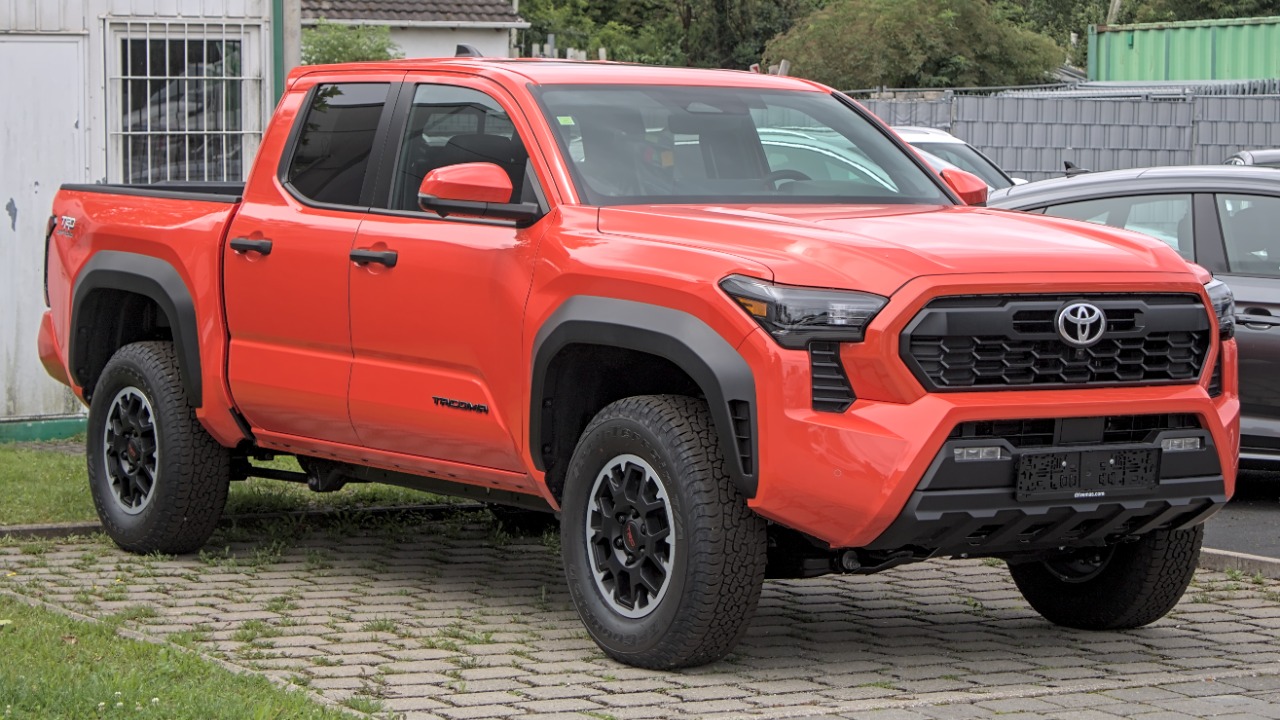
The Toyota Tacoma is often treated as an indestructible benchmark, but real-world ownership shows that this workhorse can fail to match its hype. Reporting on used Japanese trucks that disappoint highlights how the Tacoma’s reputation for bulletproof reliability collides with recurring complaints about frame rust and transmission behavior, especially on older and high-mileage examples. Frames on certain generations have been scrutinized for corrosion in harsh climates, and automatic gearboxes that hunt for the right ratio when towing or climbing can undercut the truck’s image as a stress-free tool. That gap between legend and lived experience mirrors the way early coverage asked whether devices like the iPhone 6 could really justify the intense pre-launch expectations, a reminder that no product is immune to overpromising.
From a buyer’s perspective, the stakes are significant because the Tacoma’s strong resale values are built on that mythology of indestructibility. When owners discover rust repairs, suspension refreshes or transmission servicing arriving earlier than expected, the total cost of ownership can spike beyond what the sticker price suggested. I see this especially affecting tradespeople and outdoor enthusiasts who chose the Tacoma assuming it would be a low-drama, decade-long partner. Instead, they may face a choice between expensive remediation or selling out of a truck that no longer feels like the unbreakable asset its marketing implied, proving that even a segment icon can fail to live up to its own legend.
2) Nissan Frontier, the forgotten hauler
The Nissan Frontier is marketed as a rugged, no-frills hauler, yet it often feels stuck a generation behind its rivals. Analyses of feature driven trucks that prioritize comfort show how modern pickups now lean heavily on advanced driver assistance, refined cabins and smart infotainment to justify their price tags. Against that backdrop, the Frontier’s dated interior design, limited tech suite on older model years and coarse ride quality make its value pitch less compelling than the marketing suggests. Buyers who expect a tough but reasonably modern truck can be surprised by basic infotainment interfaces, fewer safety aids and a driving experience that feels more work van than lifestyle vehicle.
The disappointment is sharpened by fuel economy that rarely delivers the budget-friendly story many shoppers are sold. A thirsty V6 or aging four-cylinder, combined with older transmission technology, can leave owners paying more at the pump than they anticipated for a supposedly efficient midsize pickup. For small businesses and contractors who rely on every gallon and every hour in the cab, that mismatch between promise and reality matters. I find that the Frontier’s shortcomings illustrate a broader trend: in a market where comfort and tech are now core to the hype, a truck that clings to bare-bones toughness without updating its fundamentals risks becoming the forgotten option, overshadowed by rivals that better balance durability with day-to-day livability.
3) Toyota Tundra, the giant pretender
The Toyota Tundra arrives with a big-truck swagger, pitched as a full-size powerhouse that can stand toe to toe with domestic heavyweights. Yet coverage of products that struggle to match pre-launch hype offers a useful lens for understanding why some owners feel let down. The Tundra’s reputation leans heavily on Toyota’s reliability lore, but in practice, high repair costs for complex components and thirsty powertrains can erode that advantage. When towing near the upper end of its ratings, drivers sometimes report underwhelming composure, with fuel consumption and drivetrain strain that feel out of step with the confident marketing message about effortless capability.
For buyers cross-shopping American full-size trucks, the implications are clear. Many step into a Tundra expecting a low-maintenance alternative that will quietly outlast domestic rivals while matching them in towing and hauling. Instead, they may encounter higher-than-expected service bills for brakes, suspension and electronics, along with towing performance that feels adequate rather than dominant. I see this as a classic case of a truck coasting on brand equity: the Tundra is solid in many respects, but when its real-world strengths do not fully align with the bold image, the gap becomes especially glaring for owners who paid a premium believing they were getting the ultimate long-haul workhorse.
4) Mitsubishi Raider, the short-lived import
The Mitsubishi Raider was introduced as a bold Japanese-flavored entry into the midsize truck arena, yet its story quickly turned into a cautionary tale about hype without staying power. Reporting on how a future Mitsubishi Raider might share foundations with the Frontier from Nissan underscores that the original Raider was already deeply entangled with other manufacturers, borrowing heavily rather than carving out a distinct identity. That lack of a clear personality, combined with a brief production run, left buyers with a truck that felt more like a rebadged experiment than a committed long-term player. Poor resale values followed, as used buyers hesitated over parts availability and brand support.
For owners, the short-lived nature of the Raider has real financial and practical consequences. Depreciation hit hard once it became clear that Mitsubishi would not sustain a robust truck lineup in North America, and the aftermarket never fully embraced the model with the same enthusiasm seen for more established midsize pickups. I view the Raider as a textbook example of how a truck can be hyped as a fresh alternative yet fail to deliver the ecosystem of support, dealer familiarity and long-term confidence that truck buyers demand. When a model disappears quickly, it leaves behind a small group of owners holding vehicles that are harder to service, harder to modify and harder to sell, which is the opposite of what the initial marketing promised.
5) Isuzu i-Series, the overlooked contender
The Isuzu i-Series arrived with the promise of a versatile Japanese truck option, but it never fully delivered on that positioning. Broader coverage that is comparing Isuzu commercial trucks from the N-Series to the F-Series shows that the brand’s real strength lies in purpose-built commercial platforms, not lightly reworked consumer pickups. The i-Series, based on shared underpinnings rather than a ground-up Isuzu design, struggled with modest engine options that felt underpowered when towing or hauling near capacity. Sparse dealer support in many regions compounded the problem, leaving owners with fewer service options and less confidence in long-term parts availability than they would enjoy with mainstream rivals.
Those weaknesses are magnified by the brand’s retreat from the United States, a shift that discussions about why Isuzu left the Market as General Motors headed toward bankruptcy link to strategic and financial pressures. When a manufacturer scales back its presence, owners of niche models like the i-Series face a shrinking network of technicians familiar with their trucks and a thinner pipeline for specialized components. In my view, that context turns the i-Series into a cautionary pick: on paper it offered Japanese engineering and pickup practicality, but in reality it delivered compromised performance and a support structure that steadily eroded. For buyers who believed the marketing about a capable, long-term partner, the result is a truck that feels more like an orphaned experiment than a dependable work companion.
More from MorningOverview