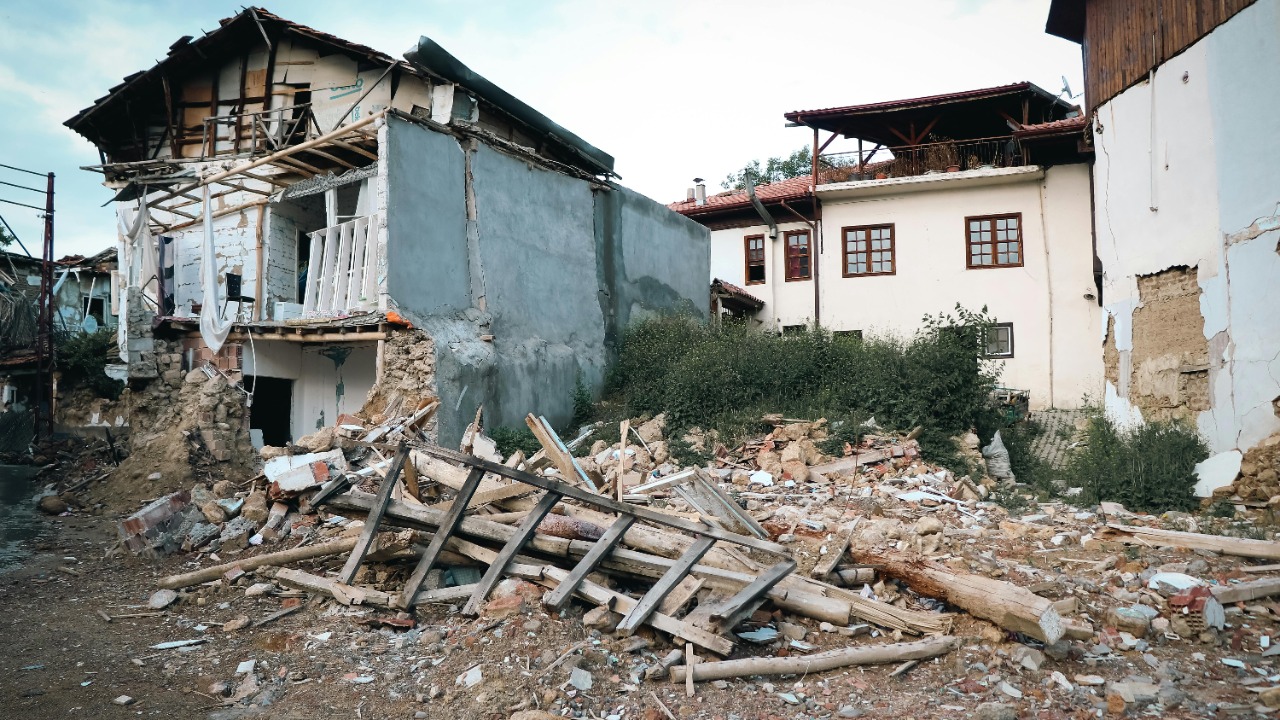

A minor earthquake in the middle of the night is often more about adrenaline than structural damage, and that was the case when a 3.1 m jolt shook the San Francisco South Bay, startling residents out of sleep and sending a quick wave of anxiety through neighborhoods from the valley floor to the foothills. The shaking was brief and light, but for people in and around San Jose, it was a sharp reminder that even modest quakes can feel unnervingly close when they strike under densely populated streets. I see this event as another test of how prepared South Bay communities really are for the larger shocks that geologists say are inevitable.
What happened beneath the South Bay
The latest tremor hit the San Jose area earlier this week, registering as a 3.1 m event that rippled through the San Francisco South Bay in the pre-dawn hours. Seismologists classified it as a small quake, but its shallow depth and proximity to urban neighborhoods meant the motion was noticeable, especially for light sleepers and anyone in upper floors of apartment buildings. Reports describe the shaking as a quick bump or short rattle, the kind of motion that sends people instinctively checking ceiling fixtures and door frames even before they reach for their phones.
Regional summaries note that the San Jose area and the broader San Francisco South Bay were at the center of the shaking, with the epicenter located close enough to residential zones that even a modest magnitude felt abrupt. The event was cataloged as part of the region’s routine seismic activity, a reminder that CALIFORNIA’s tectonic plates are constantly adjusting beneath the surface. While the quake was minor by global standards, the fact that it woke people up underscores how sensitive urban communities are to even small movements when they occur directly underfoot.
Epicenter near Alum Rock and the East Foothills
Initial readings pointed to the northeastern side of the city, where the ground has long been shaped by fault lines threading through the hills. The quake was described as a 3.1-magnitude event centered near Alum Rock in Santa Clara County, an area that sits between the urban core and the steeper terrain of the East Foothills. That geography matters, because the transition from valley floor to hillside neighborhoods can subtly change how shaking is felt from block to block, with some residents reporting a sharp jolt while others noticed only a faint roll.
Local dispatches specify that the epicenter was in the northeastern section of SAN JOSE, close to Alum Rock and the surrounding communities that hug the lower slopes of the foothills. One account of the 3.1-magnitude shock notes that it was reported in Santa Clara County’s hillside fringe, an area that has seen its share of small quakes over the years. Another breakdown of the event highlights that the motion was detected in the East Foothills, reinforcing the picture of a shallow, localized rupture that radiated outward into the valley but did not last long enough to cause structural problems.
How residents experienced the jolt
For people on the ground, the science came second to the sensation of being rattled awake. Residents in the South Bay described a sudden shake that felt like a heavy object slamming into a wall or a quick vertical bump under the bed, followed by a few seconds of uncertainty as they waited to see if it would intensify. In many homes, the quake was just strong enough to clink dishes, sway hanging lights, or nudge pets into alert mode, but not enough to send items tumbling from shelves. That combination of brevity and clarity is exactly why small quakes can feel so unnerving, even when they are technically classified as minor.
Regional coverage notes that Residents in the San Francisco South Bay were “rattled” by the 3.1 m shaking, particularly in neighborhoods closest to the epicenter where the motion was crisp and abrupt. Another account of the Preliminary 3.1 m event in San Jose notes that it was strong enough to be widely felt but remained within the range that seismologists consider light, especially compared with the larger shocks that have historically hit the region. For many people, the quake became an instant topic in neighborhood chats and social media threads, a shared moment of late-night surprise that quickly turned into a check-in on friends and family across the Bay Area.
Damage reports, or lack thereof
Despite the dramatic wake-up call, the quake’s actual impact on infrastructure appears to have been minimal. Emergency channels and early assessments did not flag any significant structural damage, and there were no immediate reports of injuries tied directly to the shaking. In a region where building codes have been shaped by decades of seismic experience, a 3.1 m event is far more likely to test nerves than foundations, and that pattern seems to have held here.
One summary of the minor earthquake near the South Bay notes that there were no confirmed reports of serious damage after the shaking near San Jose, a point underscored in coverage that described the event as a relatively routine jolt. A report on the minor earthquake near the city, attributed to Digital Producer Cecilio Padilla of CBS Sacramento, emphasized that officials had not received word of major problems in the aftermath. That absence of damage does not make the quake irrelevant, however. Instead, it highlights how smaller events can serve as live drills, revealing how quickly people check alerts, how well they know safe spots in their homes, and whether local systems for communication and response are functioning as intended.
Why a small quake still matters for preparedness
Even when a quake is modest, I see it as a chance to stress-test personal and community readiness. The South Bay sits in a region where seismic risk is a constant, and a 3.1 m jolt is a reminder to revisit the basics: securing heavy furniture, knowing how to shut off gas lines, and keeping emergency kits stocked with water, medications, and backup power for phones. For families, a minor event like this can be a low-stakes prompt to walk through “drop, cover, and hold on” drills with children, making the motions familiar before a larger quake ever hits.
Experts who track seismic safety repeatedly emphasize simple steps that can make a major difference when the ground moves. Guidance compiled for a recent 3.1 event near Johannesburg in CALIFORNIA, for example, urges people in cars to Pull over and Set the parking brake, and advises anyone in bed to Turn face-down and cover their head and neck with a pillow to protect against falling objects. Those same principles apply in the South Bay, where residents are also encouraged to use smartphone apps that relay USGS alerts, keep battery-powered radios handy, and plan meeting points in case family members are separated when a larger quake strikes. The recent San Jose shaking may have been minor, but it is precisely these smaller events that offer the clearest opportunity to turn abstract advice into concrete habits before the next big one arrives.
More from Morning Overview