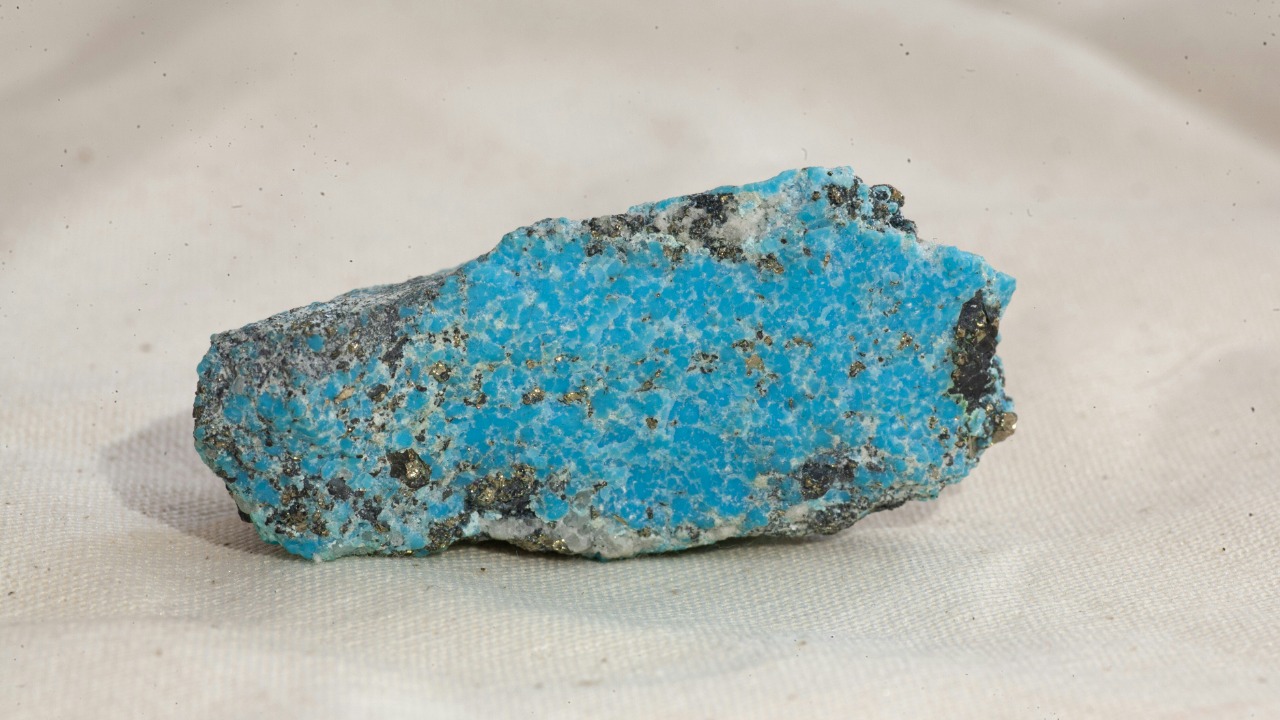

A 13,000‑year‑old tool from a cave in central Germany has turned out to be far more than a simple piece of Paleolithic gear. Under a microscope, its surface revealed a vivid blue that should not have been there at all, a manufactured color that pushes back the timeline for when people in Europe first learned how to make and use blue pigment. What looked like an ordinary artifact has become a rare window into Ice Age imagination, technology, and the way early artists saw their world.
As I trace the story of this object from excavation trench to laboratory bench, what stands out is not only the age of the color but the sophistication behind it. The pigment appears to have been deliberately engineered, carefully applied, and then preserved for millennia in a cave that kept its secret until modern instruments could decode it. The result is a discovery that forces archaeologists, art historians, and chemists to rethink how inventive late Ice Age communities in Europe really were.
The cave, the tool, and the surprise hiding in plain sight
The story begins in a Paleolithic cave site in what is now central Germany, where archaeologists have been excavating layers dating to the end of the last Ice Age. Among the stone tools, animal bones, and hearth remains, they recovered a small, worked object that initially drew attention for its shape and wear marks rather than its color. The piece was cataloged as a utilitarian tool from a hunter‑gatherer camp that flourished roughly 13,000 years ago, a period when reindeer, horses, and other cold‑adapted animals still roamed the region in large numbers.
Only when specialists examined the artifact under magnification did the unexpected blue emerge, clinging to microscopic grooves and protected pockets on the surface. The pigment was not a natural mineral inclusion in the stone but a thin, deliberate coating that had survived in sheltered spots where later abrasion could not reach. According to detailed analyses of the Paleolithic layers and the tool itself, the object belongs to a cultural horizon that marks the final centuries of the Pleistocene in central Europe, a time when mobile groups were experimenting with new forms of symbolic expression as the climate warmed and landscapes changed, as described in the broader context of Paleolithic Germany.
How a hunt for animal fat uncovered Europe’s oldest blue
The blue came to light almost by accident, during a project that was not originally focused on color at all. Researchers were investigating residues on tools to understand how Ice Age people processed animal carcasses, looking for traces of fat, blood, and other organic materials that might cling to stone or bone surfaces. When they sampled this particular artifact, they expected to find the chemical fingerprints of butchery or hide working. Instead, spectroscopic readings flagged an anomalous signal that did not match the usual organic residues they had cataloged in similar contexts.
Intrigued, the team shifted from residue analysis to pigment chemistry, running a battery of tests that confirmed the presence of a manufactured blue layer rather than a contaminant from modern handling. The surprise was so striking that the researchers revisited other artifacts from the same layers to check for overlooked traces, but the intense blue on this tool remained unique in the assemblage. Their work ultimately identified it as the earliest known blue pigment in Europe, a conclusion that aligns with independent reporting on the search for animal fat that unexpectedly revealed this color.
A color that should not exist in the Ice Age toolkit
Blue is notoriously difficult to produce in nature, which is why its sudden appearance on a 13,000‑year‑old tool is so disruptive to existing narratives. Unlike reds and yellows that can be ground from iron‑rich ochres, or blacks that come from charcoal and manganese, stable blue pigments usually require more complex chemistry or rare minerals. In many parts of the world, blue emerges late in the archaeological record, often associated with advanced trade networks or specialized craft traditions. Finding it in a late Paleolithic context in central Europe suggests that people there had mastered a level of material experimentation that scholars did not expect for this period.
Laboratory work indicates that the pigment on the German tool is not simply a natural blue stone rubbed onto the surface, but a processed material whose particles and binding medium differ from the surrounding sediments. The color’s intensity and adherence point to deliberate preparation, possibly involving heating, grinding, and mixing with an organic binder to make a workable paint. This is why some researchers have described it as a color that “should not exist” in the Ice Age toolkit, a phrase echoed in coverage of the unexpected blue that turned up on the artifact.
Pinning down the age: 13,000 years of buried color
Establishing the age of the pigment required more than simply dating the tool’s style or the cave’s general occupation. Archaeologists relied on stratigraphy, radiocarbon dates from associated organic remains, and comparisons with other sites in the region to anchor the artifact in time. The tool comes from a well‑defined layer that also yielded hearth charcoal, animal bones, and other cultural materials, all pointing to a late Ice Age occupation roughly 13,000 years ago. This timeframe places the pigment at the very end of the Pleistocene, just before the climatic shifts that ushered in the Holocene.
That chronology matters because it pushes the documented use of blue pigment in Europe back by several millennia compared with previous finds. Earlier evidence for blue in the region tended to cluster in later prehistoric or early historic contexts, often tied to more settled societies with established craft specialists. By contrast, the German cave tool shows that mobile hunter‑gatherers were already experimenting with blue at a much earlier stage. Reports on the earliest use of blue pigment in Europe emphasize that this find currently stands as the oldest securely dated example on the continent.
What kind of blue is it, and how was it made?
Identifying the exact type of blue on the tool has become a central scientific challenge, because different pigments imply very different technological pathways. Some blues, such as azurite or lapis lazuli, are mineral in origin and require access to specific geological sources, while others are synthetic, produced by heating and combining ingredients to create new compounds. The microscopic and spectroscopic signatures on the German artifact suggest a finely ground pigment with a consistent particle size, which points to deliberate processing rather than casual use of a naturally blue stone.
Analysts have compared the pigment’s spectral profile with known reference materials to narrow down its composition, looking for matches that might indicate whether it is mineral‑based or synthetic. While the available reporting does not yet resolve every detail of its chemistry, it is clear that the color did not arrive on the tool by accident, such as through contact with a naturally stained rock surface. Instead, the pigment appears to have been prepared elsewhere and then applied to the tool in a controlled way, a conclusion that aligns with broader discussions of the earliest evidence of blue pigment and the technological steps required to produce it.
Art, symbol, or something in between?
The function of the blue on this tool is still open to interpretation, and that ambiguity is part of what makes the find so compelling. One possibility is that the object served as a decorated implement, combining practical use with visual flair in a way that blurred the line between tool and artwork. The pigment clusters in areas that would have been visible when the tool was held or worn, suggesting that the color may have been meant to be seen rather than hidden. In that scenario, the blue could have signaled group identity, status, or participation in particular rituals.
Another interpretation is that the tool was used as an applicator, perhaps to transfer pigment onto skin, clothing, or other surfaces, with the surviving blue representing residue from that activity. If so, the artifact would be evidence not only of pigment production but of a broader visual culture in which blue played a role alongside more familiar reds and blacks. Reporting on the oldest blue pigment found in Europe notes that the distribution of color on the tool is consistent with repeated handling, which supports the idea that it was part of a lived, everyday practice rather than a one‑off experiment.
How this find reshapes the story of Ice Age art
For decades, the canonical image of European Ice Age art has centered on cave walls covered in red and black animal figures, with occasional engravings on bone and ivory. The German blue complicates that picture by adding a new hue to the palette and hinting at artistic traditions that may have left fewer obvious traces. If blue was used on perishable materials such as skin, textiles, or wooden objects, most of that record would have vanished, leaving only rare survivals like the pigment on this tool to hint at a richer visual world. The discovery therefore acts as a reminder that the archaeological record is heavily biased toward what happens to preserve well over tens of thousands of years.
By demonstrating that late Paleolithic communities in central Europe could produce and apply blue, the find also invites comparisons with other regions where blue appears later in time. It suggests that the cognitive and technical capacities needed to experiment with complex pigments were already present among hunter‑gatherers at the end of the Ice Age, even if the material evidence is sparse. Coverage of the 13,000‑year‑old cave artifact underscores how this single object forces a reevaluation of when and where sophisticated color technologies emerged in Europe.
Reconstructing the people behind the pigment
Although the individuals who made and used the blue have long since vanished, the context of the cave and its artifacts offers clues about their lives. The site’s faunal remains point to a diet that included large game such as reindeer and horse, along with smaller animals and possibly fish, indicating a flexible subsistence strategy in a challenging environment. Hearths and living floors suggest repeated visits to the cave, perhaps as part of a seasonal round that took groups across a wide territory in search of resources. Within that mobile lifestyle, the decision to invest time and effort in producing a rare color speaks to the importance of symbolic practices alongside basic survival.
Tool types and manufacturing techniques link the cave’s occupants to broader cultural traditions in late Ice Age Europe, showing that they were part of networks that shared ideas, raw materials, and perhaps even pigments. The blue on the tool may therefore reflect not only local innovation but also knowledge exchanged across groups, whether through direct contact or the movement of individuals between communities. Reports that frame the discovery as one of the earliest uses of blue pigment emphasize that it emerges from a social world already rich in art, ornamentation, and long‑distance connections.
Why this single artifact matters far beyond one cave
In archaeological terms, a lone object can sometimes be dismissed as an outlier, but the German blue has quickly become a reference point for reexamining collections across Europe. Museums and research teams are now more likely to scrutinize old finds with new methods, especially tools and ornaments that might carry microscopic traces of color invisible to the naked eye. The discovery has effectively raised the bar for what counts as a thorough analysis of Paleolithic artifacts, encouraging more systematic searches for pigments that could have been overlooked in earlier decades of excavation and curation.
The find also feeds into broader debates about how to interpret technological “firsts” in the archaeological record. Rather than seeing the earliest known blue as a sudden breakthrough, many researchers argue that it probably represents the tail end of a longer, largely invisible history of experimentation. In that sense, the 13,000‑year‑old tool is less a starting point than a surviving fragment of a much wider tradition. Coverage that describes the object as the cave artifact with blue pigment highlights how a single, well‑documented example can reshape expectations and guide future research agendas.
What comes next for the science of ancient blue
The next phase of work on the German pigment will likely focus on refining its chemical identification and searching for parallels at other sites. Advanced techniques such as synchrotron‑based spectroscopy, high‑resolution microscopy, and experimental replication can help clarify how the color was produced and how it behaved under different environmental conditions. If researchers can match the pigment’s signature to specific mineral sources or synthetic recipes, they may be able to reconstruct trade routes or technological lineages that stretch across regions and time periods. That, in turn, could link the German blue to broader patterns in the development of color technologies worldwide.
At the same time, archaeologists are expanding their surveys of Ice Age sites in central Europe and beyond, looking for contexts where similar pigments might have survived. The German cave has already become a benchmark for what to look for and how to document it, influencing field strategies and laboratory protocols. Analyses that frame the tool as the oldest blue pigment in Europe underscore that the discovery is not an endpoint but a starting signal for a new wave of research into how ancient people saw, made, and used color.
A rare glimpse of Ice Age imagination
For me, the power of this discovery lies in the way it collapses the distance between present and past. A person living 13,000 years ago in a cold German landscape took the time to create a difficult color, apply it to a tool, and carry that object through daily life. The blue that still clings to the artifact is a direct trace of that decision, a material echo of choices about beauty, identity, or ritual that we can only partially reconstruct. It is a reminder that even in harsh environments, people invested in aesthetics and symbolism, not just in survival.
As more work unfolds, the German pigment will likely be joined by other early blues, each adding nuance to our understanding of ancient creativity. For now, this single tool stands as a rare convergence of chemistry, archaeology, and art history, a case where microscopic particles of color open a macroscopic window onto human ingenuity. In the broader landscape of Paleolithic research, it is one of those finds that quietly rewrites the script, showing that the people who left their traces in caves and sediments were experimenting with materials and meanings in ways that still surprise us, a point underscored by ongoing syntheses of early European pigment use and the growing recognition of just how inventive Ice Age communities could be.
More from MorningOverview