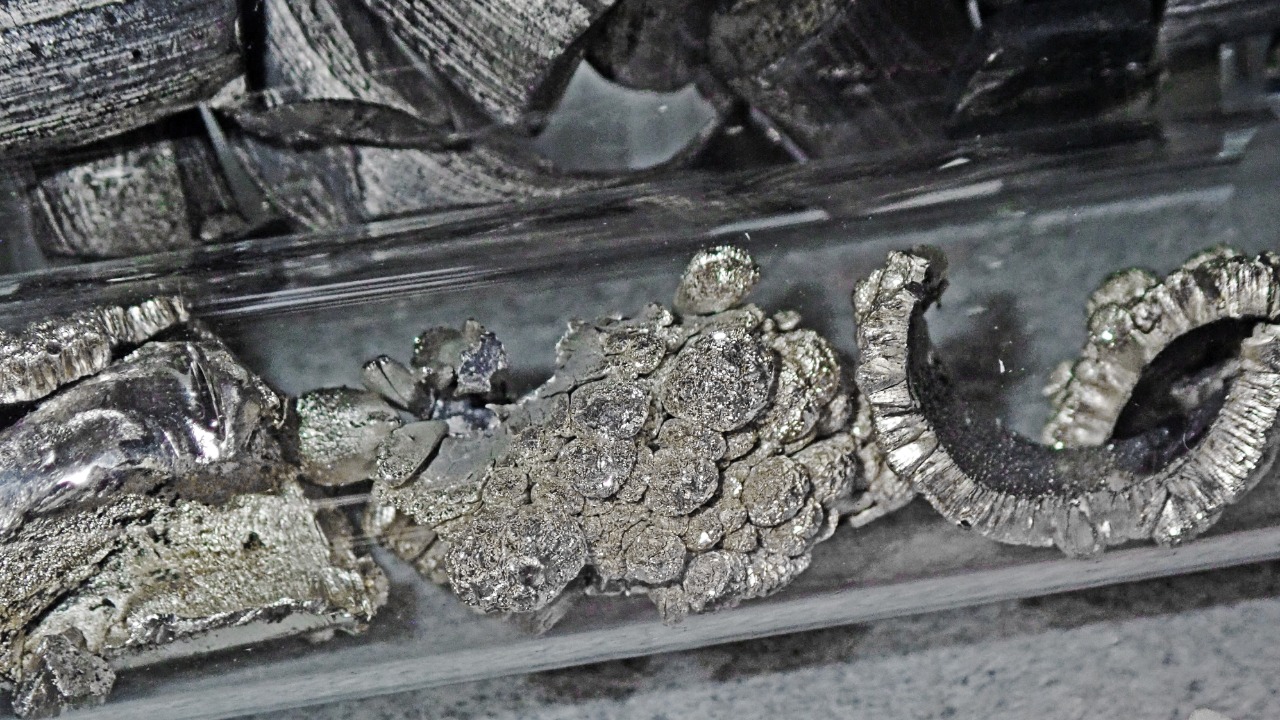

A vast cache of battery metal has been identified beneath a long‑quiet supervolcano on the Nevada–Oregon border, and researchers estimate its value at roughly $1.5 trillion. The find, concentrated in volcanic clays inside the McDermitt Caldera, could reshape how the United States sources the Lithium that underpins electric vehicles, grid storage and consumer electronics. I see it as a discovery that fuses deep geologic time with the very current race to secure critical minerals.
Inside the McDermitt supervolcano’s Lithium trove
The McDermitt Caldera is not a looming cone on the horizon but a broad, eroded basin carved by a massive eruption that occurred millions of years ago, then collapsed and went extinct. Scientists describe how past eruptions formed the Caldera and left behind thick layers of volcanic ash and lake sediments that later became unusually Lithium rich, suggesting an unusually concentrated resource hidden in the basin. The new estimate that this buried system could hold a $1.5 trillion endowment of the metal reflects both the sheer volume of claystone and the relatively high grades reported in early studies of the deposit.
Geologically, the caldera straddles the Nevada–Oregon line, with satellite imagery highlighting how This Landsat 8 image captures the Caldera as a broad yellow‑tinted oval in the high desert of the State of Nevada and Oregon, the remnant of that ancient eruption. Researchers now argue that this structure may host the world’s largest single accumulation of Lithium, a claim echoed by Scientists who point to the scale of the McDermitt Caldera and its potential to reduce U.S. reliance on foreign sources. I read those assessments as a sign that this is not just another mine proposal but a structural shift in where the global industry expects future supply to come from.
From Thacker Pass to a continental Lithium belt
The McDermitt discovery does not emerge from nowhere, it builds on years of work at Thacker Pass, a claystone deposit on the southern edge of the same volcanic system. Company data describe how the Thacker Pass and project in northern Nevada targets Lithium hosted in fine‑grained sediments, with plans for open‑pit mining and on‑site processing to produce battery‑grade chemicals. Academic research on Lithium clay deposits of the McDermitt caldera has already identified Thacker Pass as the single, most explored part of the system, with resources on the order of 1.5 Mt Li, which helps explain why federal agencies and investors have treated it as a test case for this entire style of deposit.
That focus has now drawn in Washington directly. In a televised segment, officials explained that the U.S. government has taken a stake in a Lithium mining company in Nevada, noting to Elizabeth that the Thacker Pass and site sits in the high desert and is reachable today only by long stretches of two‑lane road. I see that move as a signal that policymakers view McDermitt not as an isolated curiosity but as the anchor of a broader domestic Lithium belt, one that could extend from Thacker Pass northward across the caldera into Oregon and potentially support multiple operations over time.
A new pillar in the global Lithium landscape
To understand why a single volcanic basin in the American West matters so much, it helps to zoom out to the global picture. Official data on Lithium facts note that Bolivia, Chile, and Argentina, often called the Lithium triangle, collectively hold nearly 50 m tonnes of Lithium resources, a figure that has long defined where battery makers and automakers look for supply. For years, that concentration of brine and hard‑rock deposits in South America and Australia has shaped everything from refinery locations to shipping routes, and it has left the United States heavily dependent on imports for a material that now sits at the heart of its industrial policy.
The McDermitt Caldera find, valued at $1.5 trillion, does not erase the Lithium triangle, but it does introduce a new pole of supply in North America that could rebalance that map. Analysts who describe the caldera as the world’s largest Lithium deposit argue that such a resource could support battery production for decades and play a central role in reducing U.S. reliance on foreign sources. In my view, that prospect explains why the discovery is already being discussed in the same breath as other large critical minerals finds, including a large critical minerals deposit discovered in Utah that prompted commentary that Lately, the United States appears to be hitting the critical minerals jackpot and that the United States Geol surveys are reshaping expectations about what lies under domestic soil.
How a supervolcano became an EV supply engine
The story of McDermitt begins long before Teslas and grid batteries, with a supervolcano that erupted, collapsed and went extinct Approximately 16.3 m years ago, leaving behind a vast depression that later filled with lakes and sediments. Over time, volcanic glass and ash in those sediments altered to clays that trapped Lithium, creating the unusual claystone deposits that geologists now prize. Modern remote sensing has been crucial in mapping that history, with This Landsat analysis of the Caldera helping the U.S. Geological Survey pinpoint zones of alteration and structure that are most likely to host economic concentrations of the metal.
Today, that deep‑time geology is colliding with a very current industrial build‑out. Economic development officials tracking New Workforce Resources Target Influx of EV Investments Share have tied the McDermitt region to a broader wave of electric vehicle and battery manufacturing projects, arguing that proximity to raw materials will shape where new plants and training programs land. I see a feedback loop emerging, where the presence of a supervolcano‑derived Lithium resource attracts EV investments, which in turn justify more detailed exploration and infrastructure in and around the caldera.
Strategic stakes, local tensions and what comes next
For Washington and industry, the strategic appeal is obvious. Analysts who have examined the McDermitt Caldera estimate that the Lithium there could support battery production for decades, and they describe it as a resource of strategic significance for the United States. One assessment of the $1.5 trillion trove argues that Scientists reckon the caldera’s clays could, if developed, underpin a large share of global supply and give the country a powerful lever in negotiations over clean‑energy supply chains. From my perspective, that is why the deposit is already being folded into national conversations about industrial policy, trade and even defense planning.
The path from buried clay to working mine, however, is rarely smooth. The Thacker Pass project has already faced legal and social scrutiny, and any expansion across the broader McDermitt Caldera will have to navigate environmental reviews, water concerns and the rights of nearby communities. Company materials for Thacker Pass emphasize plans for phased development and reclamation, but they also underscore how much new infrastructure will be needed in this remote corner of Nevada and Oregon. As the United States weighs how to turn its apparent Lithium jackpot into real‑world supply, I expect the debate to hinge not only on geology and economics but also on how quickly regulators, miners and local residents can agree on what responsible extraction looks like in the shadow of an ancient supervolcano.
More from Morning Overview