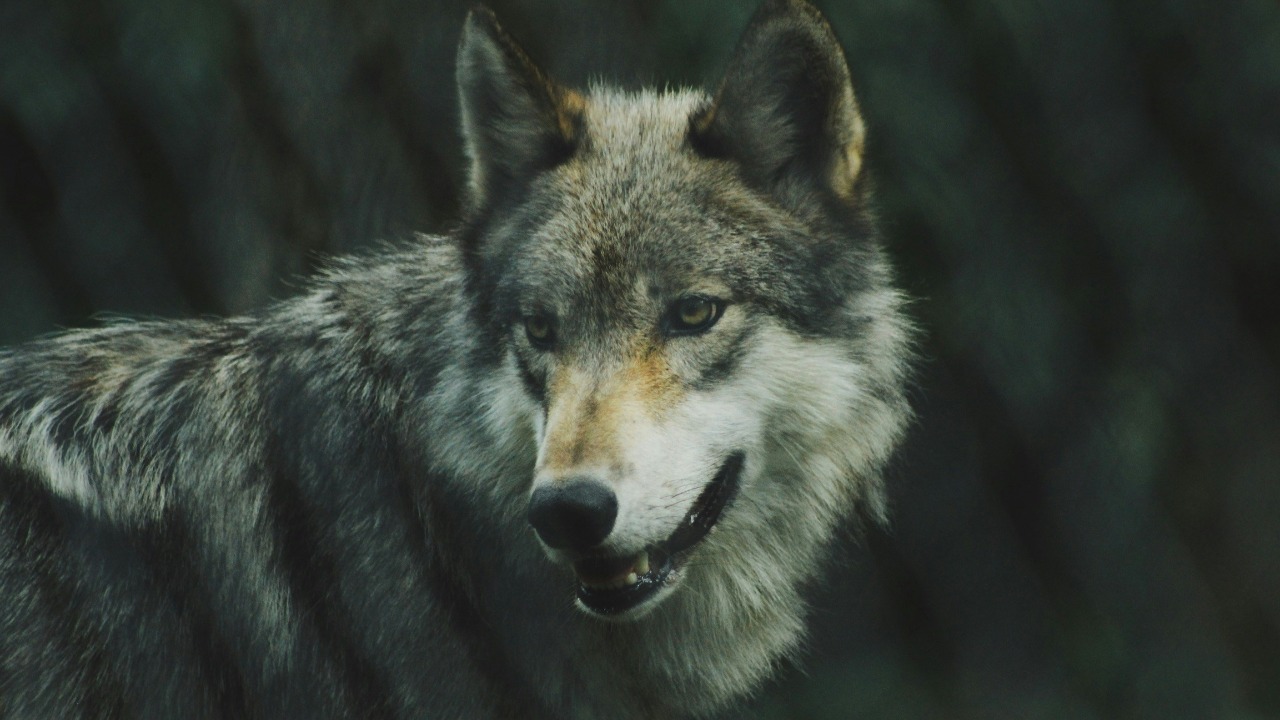

Along a remote stretch of the Alaskan coast, gray wolves have quietly rewritten the rules of what a top land predator eats. Packs that once relied on deer are now regularly killing sea otters in the surf, a striking behavioral shift that is reshaping both forest and shoreline. Researchers can trace the broad ecological trigger, but the fine details of how wolves mastered this new hunt still raise more questions than answers.
I see this story as less a mystery about motivation and more a case study in how quickly predators can adapt when their world changes. The wolves’ move into the intertidal zone appears to be a logical response to collapsing prey on land, yet the precision of their coastal hunting and the ripple effects on mercury exposure, kelp forests, and even otter behavior show how complex that “logic” becomes in the real world.
From forest hunters to coastal predators
The shift began on Pleasant Island in southeast Alaska, where gray wolves arrived to find abundant Sitka black-tailed deer. Over time, intensive predation drove those deer to collapse, leaving the wolves with a stark choice between starvation and innovation. Field work on the island shows that, after deer numbers crashed, the wolves stayed put and their pack density actually increased, a pattern that only makes sense once sea otters and other shoreline prey are added to the menu, as detailed in analyses of Sitka deer.
Researchers then documented how thoroughly the wolves had embraced this new niche. On Pleasant Island and nearby mainland areas, they used GPS collars on nine wolves from the mainland and four from Pleasant Island to map movements between forest and shore, and combined those tracks with scat analysis to quantify diet. The data showed that sea otters, once a negligible resource for terrestrial carnivores, had become a major food source for these coastal wolves, a conclusion supported by the GPS and diet work described by Researchers.
How wolves learned to hunt in the surf
Knowing that wolves turned to sea otters after deer declined is only the first layer of the story. The harder puzzle is how a cursorial hunter built for chasing hoofed animals learned to catch agile marine mammals in breaking waves. Early video clips of wolves along the shore were too grainy to reveal tactics, so biologists installed new trail cameras and paired them with fine scale movement analysis to capture clearer sequences of hunts at low tide, a methodological upgrade described in coastal work that highlights how While the initial footage fell short.
Those cameras, along with direct observations, show wolves timing their approach to moments when sea otters haul out or become briefly vulnerable in shallow water. In rare clips from Alaska, a wolf trots along exposed rocks at low tide, then lunges as an otter surfaces, a sequence that confirms these predators are not simply scavenging carcasses but actively hunting in the intertidal zone. One compilation invites viewers to Watch a wolf closing the distance on an otter at low tide, illustrating how land carnivores can exploit the narrow window when marine mammals are least mobile.
Why sea otters became the fallback prey
Sea otters did not appear in a vacuum as replacement prey. Along this part of the coast, conservation efforts had already brought Alaskan sea otters back from the brink of extinction, so by the time wolves arrived on Pleasant Island, otter numbers were high. As the wolves eliminated Sitka deer, they increasingly targeted these recovering marine mammals, a sequence that has raised alarms because Alaskan sea otters were brought back from the brink and now face a new top predator, a tension described in reporting on how Alaskan otters are suddenly under pressure again.
Diet studies show just how far this substitution has gone. On Pleasant Island, wolves that once relied heavily on deer now obtain a large share of their calories from marine prey, with sea otters a central piece of that coastal subsidy. One account of the island notes that Pleasant Island, located in southeast Alaska, has suffered a steep decline in deer due to wolf predation, and that wolves now patrol beaches and rocky outcrops where otters rest, a pattern captured in video from Pleasant Island in Alaska that shows how thoroughly the pack has shifted its foraging to the shoreline.
Health costs of a marine diet for wolves
For the wolves, this new menu is not without risk. Marine food webs tend to accumulate contaminants, and sea otters sit high in that chain, feeding on shellfish and other invertebrates that can carry heavy metals. When wolves consume large numbers of otters and other marine prey, they effectively plug into that same pathway, a concern underscored by a study that found coastal wolves with elevated mercury levels and framed marine subsidies as a conduit for both nutrients and mercury to terrestrial predators, with particularly high Hg concentrations in wolf tissues where Marine prey dominate.
The danger is not theoretical. In Alaska, biologists examining wildlife contamination reported an Alaska wolf with a record amount of mercury in its tissues, a finding that prompted a broader investigation into how far this pollutant has spread through coastal food webs. Roffler and colleagues traced mercury in fur and scat from multiple species and asked where all this mercury was coming from, a question that points back toward marine pathways and is detailed in work on Roffler and the contaminated wolf.
What scientists know, and what they still do not
By now, the broad outline of the story is clear. Wolves arrived on Pleasant Island, overhunted Sitka deer, and then pivoted to sea otters and other shoreline prey to survive. Studies of coastal packs show that some wolves now rely heavily on marine food sources, with teeth and bone chemistry revealing long term dependence on ocean derived nutrients, a pattern summarized in work on how Teeth tell the tale of predators capturing marine prey. In that sense, scientists do know why the shift began: deer vanished, and wolves adapted.
What remains murkier is the fine scale “how” behind this adaptation. Researchers are still piecing together how pups learn to hunt in surf, how packs coordinate around tides, and whether similar behavior is spreading along hundreds of miles of coastline. One synthesis notes that Gray Wolves Are Hunting Sea Otters and that Scientists Don Know How they are doing so efficiently, even as they increasingly rely on marine food sources, a tension captured in work shared By Anna Gray at the University of Rhode Island January.
Ripple effects across the coastal ecosystem
The wolves’ new hunting strategy is also reshaping the nearshore ecosystem that sea otters helped build. Otters are famous for their ability to juggle rocks, a behavior that Scientists still debate, with Some arguing it is a form of play that lets them practice hunting skills, a glimpse into how specialized these mammals are as they crack open shellfish and maintain kelp forests, as described in a profile of how Otters use tools and play. When wolves remove more otters from the system, the balance between kelp, sea urchins, and fish could shift again, potentially undoing some of the gains from otter recovery.
At the same time, the Pleasant Island case is part of a broader pattern of coastal wolves exploiting marine resources. Work from the University of Rhode Island describes how wolves at the coast are adopting marine diets and altering ecosystem dynamics, with implications for both prey communities and wolf health, a theme explored in research on wolves at the coast. Another account of Alaskan Sea Otters Become Meal of Choice For Hungry Wolves notes that, With the deer population depleted on a remote Alas island, wolves turned to otters and their population is now booming, a reminder that predator success can come at a cost to other recovering species, as detailed in coverage of how With the deer gone, otters filled the gap.
More from Morning Overview