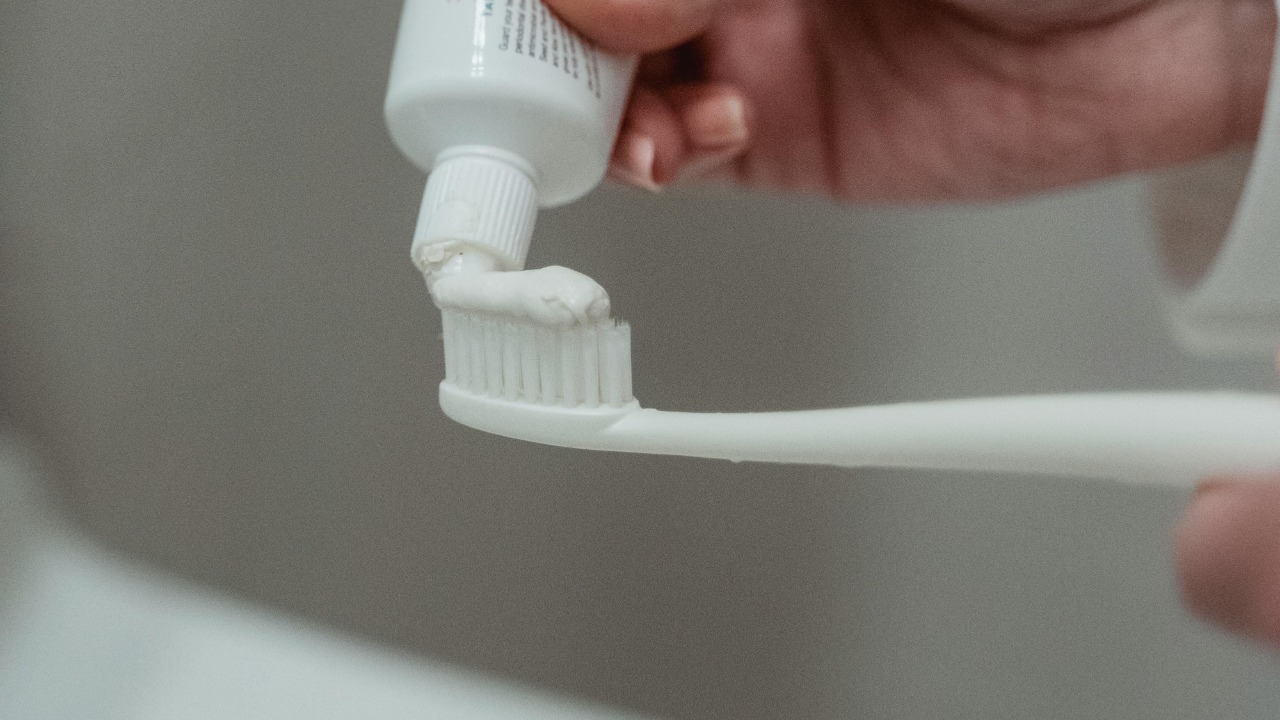

Few everyday experiences are as reliably disappointing as taking a big, hopeful gulp of orange juice right after brushing your teeth and getting a mouthful of bitterness instead of sunshine. The clash is so universal that it feels like a prank built into the morning routine, but the effect is the result of very specific chemistry and biology at work on your tongue. When toothpaste and orange juice collide, they temporarily rewire how you sense sweetness and bitterness, turning a familiar breakfast staple into something that tastes closer to medicine than fruit.
At the center of this story is a group of ingredients in toothpaste that are designed to clean and foam, not to play nicely with your taste buds. Those compounds disrupt the delicate balance of receptors that normally let you enjoy sugar, sourness and subtle flavors in orange juice, while at the same time amplifying harsh, bitter notes that are usually kept in check. Once you understand what is happening on the surface of your tongue, the “why” behind that awful flavor becomes much easier to swallow, even if the drink itself does not.
The strange chemistry of a ruined breakfast
The bad taste that follows a minty brushing is not a simple flavor clash, it is a chemical chain reaction that unfolds across your tongue and the soft tissues of your mouth. Toothpaste is formulated to scrub away plaque, polish enamel and leave a lingering clean sensation, which means it is packed with detergents, flavorings and active agents that keep working for several minutes after you spit. When that residue meets the complex mix of sugars, acids and aromatic compounds in orange juice, the result is a radically altered flavor profile that your brain interprets as “wrong.”
Orange juice itself is a carefully balanced drink, with natural sugars softening the sharpness of citric acid and a web of aromatic molecules providing the familiar “fresh orange” character. Once toothpaste has coated your tongue, that balance is disrupted, so the sweetness is muted and the sour and bitter components are left to dominate. As several dental explanations note, the effect is not limited to the tongue, because taste receptors also sit in parts of your head, cheeks, soft palate, epiglottis, nasal cavity and the back of your throat, all of which can be affected by lingering toothpaste film, a point highlighted in guidance that begins with a firm “However” before explaining the full pathway.
Meet Sodium Laurel Sulfate, the foamy troublemaker
If there is a single villain in this story, it is a detergent called Sodium Laurel Sulfate, often shortened to SLS. This compound is added to many toothpastes to create that satisfying foam that makes brushing feel thorough, and it is so common that ingredient lists routinely feature it near the top. As one oral health explainer puts it, “Meet Sodium Laurel Sulfate,” then goes on to describe how this surfactant helps lift debris from teeth and gums while you brush, which is great for hygiene but far less friendly to your taste buds once you reach for a glass of juice.
Sodium Laurel Sulfate does not simply rinse away when you finish brushing, it clings to the surfaces in your mouth and continues to interact with the cells that sense flavor. That lingering presence is what sets up the later shock when orange juice arrives, because SLS temporarily changes how your taste receptors behave. Detailed breakdowns of the phenomenon point out that when orange juice and toothpaste mix, the SLS in the paste interferes with your ability to perceive sweetness and enhances bitter sensations, which is why a normally pleasant drink suddenly delivers what one guide bluntly calls a “mouthful of blech” after you brush with a product that contains Meet Sodium Laurel Sulfate.
How SLS hijacks your taste buds
To understand why SLS has such a dramatic impact, it helps to look at how taste works at the cellular level. Your tongue is covered in taste buds that contain receptors tuned to five main categories: sweet, sour, salty, bitter and umami. Under normal conditions, orange juice lights up several of these at once, with sugars activating sweet receptors and acids stimulating sour ones, while bitter receptors are only mildly engaged. When SLS is present, that balance is thrown off, because the detergent interacts with the lipid membranes and proteins that allow those receptors to function.
Several dental and scientific explainers describe a two-part effect. First, SLS suppresses the receptors responsible for detecting sweetness, so the natural sugars in orange juice no longer register as strongly as they should. Second, it strips away or disrupts compounds in your saliva that normally dampen bitterness, leaving bitter receptors more exposed and more easily triggered. One accessible breakdown of the science notes that “What SLS does to your taste” is to block sweet perception and heighten bitter signals, and when you “Put those two effects together” the orange juice that follows brushing “ends up tasting like regret,” a vivid summary that captures how thoroughly What SLS can hijack your taste buds.
Sweetness off, bitterness on: what your brain is really tasting
From your brain’s perspective, flavor is a pattern of signals coming from different types of receptors, not a fixed property of the drink in your glass. When SLS has dulled your sweet receptors and unmasked bitterness, the pattern created by orange juice no longer matches the “orange juice” template your brain expects. Instead of a mix dominated by sweetness with a bright acidic edge, your nervous system receives a message that says “sour and bitter with almost no sugar,” which it interprets as spoiled, harsh or simply unpleasant.
People often describe the result as tasting like bitter lemon juice or even a cleaning product, and that subjective impression lines up with what is happening at the receptor level. A popular explanation aimed at younger readers spells out that what makes your clean, minty toothpaste so effective is also what stops your tongue from working the way it is supposed to when you drink juice right afterward, because the detergent component interferes with the normal operation of taste cells. That same piece, published under the “Curious Kids” banner, notes that the foaming agents in toothpaste change how you perceive taste by altering the way signals travel from your tongue to your brain, a process summarized in a discussion of “What makes your clean, minty” brushing session so satisfying while quietly sabotaging your next sip of juice on Curious Kids.
Beyond the tongue: taste receptors all over your mouth
It is tempting to think of taste as something that happens only on the flat surface of the tongue, but the biology is more widespread. Taste receptors are also found on the soft palate, the back of the throat, the epiglottis and even in parts of the nasal cavity, which is why flavor is so closely tied to smell. When you brush your teeth, the foamy mixture of toothpaste and saliva washes over all of these areas, leaving a thin film of SLS and flavoring agents that can continue to influence taste long after you have finished.
That broader distribution helps explain why rinsing quickly does not always fix the problem. Even if your tongue feels relatively clear, the detergent can still be coating the cheeks, palate and throat, where it continues to interfere with receptors and the supporting cells around them. One dental overview points out that other parts of the body, such as some part of your head, cheeks, soft palate, epiglottis, nasal cavity and the back of your throat, all contribute to the overall taste experience, which is why the Sodium Laurel Sulfate (SLS) in toothpaste can keep affecting flavor and give you that awful taste even after you think you have rinsed thoroughly, a chain of events described in detail in a guide that starts with the word However before walking through the anatomy.
Why orange juice is the perfect victim
Not every food tastes dramatically worse after brushing, which raises an obvious question: why does orange juice seem to suffer more than most? The answer lies in its delicate balance of sugar and acid, and in the presence of naturally bitter compounds that are usually masked by sweetness. When SLS suppresses sweet receptors, the sugar in orange juice can no longer do its job of rounding off the sharp edges of citric acid and hiding trace bitterness, so what is left is a drink that tastes aggressively sour and unexpectedly bitter.
Other foods with strong salt or fat components can power through this disruption, because salty and umami receptors are less affected by SLS, and rich textures can carry flavor differently. A widely shared “explain like I am five” breakdown notes that the funny taste you experience after brushing is especially noticeable in sweet things, while bitterness, which is not sweet, seems less affected, which is why orange juice, with its heavy reliance on sweetness, becomes such a casualty. That same explanation reminds readers that the tastes your mouth can perceive are divided into five general categories, and that the detergent in toothpaste selectively interferes with some of them, a point that has been discussed at length in a Comments Section devoted to the orange juice problem.
What scientists and dentists say is happening
Researchers and dental professionals have converged on a similar explanation for the toothpaste and orange juice clash, even if they describe it in slightly different language. At the core is the idea that foaming agents like SLS act as surfactants, which means they disrupt lipid structures in cell membranes and can temporarily change how receptor proteins behave. In the context of taste, that disruption translates into dulled sweet perception and heightened sensitivity to bitter compounds, which is exactly the pattern people report when they drink juice after brushing.
Some accounts emphasize that the effect is not just chemical but also mechanical, because brushing and foaming can temporarily soften tooth enamel and alter the way acidic drinks feel against the teeth. One detailed dental blog explains that the combination of SLS and brushing can leave enamel slightly more vulnerable, so acidic drinks, including orange juice, may feel harsher and more uncomfortable on freshly cleaned teeth, even as the taste itself is being distorted. That same discussion, titled “Orange Juice and Toothpaste, Why They Don, Mix,” notes that toothpaste can temporarily soften tooth enamel and that acidic drinks can then cause more noticeable sensations, a chain of effects described in a piece labeled Orange Juice and Toothpaste that connects the chemistry on your tongue with what is happening to your teeth.
Inside dental training: teaching the “orange juice test”
The clash between toothpaste and orange juice is so reliable that it has become a teaching tool in some dental education settings. In training programs for hygienists, instructors sometimes use the experience to illustrate how taste receptors work and how chemical reactions in the mouth can change perception. By having students brush with a standard SLS toothpaste and then taste orange juice, they can feel firsthand how a surfactant alters flavor, which makes the underlying science more memorable than a diagram alone.
One educational resource aimed at future hygienists explicitly frames the phenomenon as evidence that “Toothpaste Causes Chemical Reactions in Our Mouths.” After walking through how receptors in taste buds perceive different categories of taste, it explains that the detergents and flavorings in toothpaste can temporarily change the way those receptors respond, which is why orange juice tastes so awful after brushing your teeth. That training material, published under a headline that includes the phrase “Toothpaste Causes Chemical Reactions, Our Mouths, After,” uses the orange juice example to drive home the point that products designed for oral health can have short term side effects on flavor, a lesson laid out in detail on a page titled Toothpaste Causes Chemical Reactions.
It is not the mint: separating myth from reality
Many people assume the problem is simply that mint and orange are clashing flavors, like mixing toothpaste with chocolate or coffee. While mint can certainly create odd combinations, the evidence around orange juice points squarely at SLS and similar detergents as the main culprits. You can test this yourself by trying an SLS free toothpaste with a mild flavor and then drinking orange juice afterward, which often results in a much less dramatic change in taste, even if the pairing is still not ideal.
Endodontic specialists who see patients complaining about strange tastes after dental procedures have also weighed in, noting that the mint flavor itself is not what makes orange juice taste so awful. One explanation aimed at patients points out that you may think it might be the common mint flavor of toothpaste clashing with other flavors, but in the case of orange juice and many other foods, the real issue is the detergent that alters taste perception while still making people feel like their mouth is clean. That guidance, which opens with the word “You” to address readers directly, underscores that the foaming agent, not the mint, is the primary driver of the problem, a distinction spelled out in a piece titled You that walks through the chemistry.
Why other foods taste “funny” after brushing
Orange juice may be the most notorious casualty of post brushing taste distortion, but it is not alone. Many people notice that breakfast staples like fruit, cereal or even coffee can taste off when eaten immediately after brushing, although the effect is usually less extreme. The same SLS driven suppression of sweetness and enhancement of bitterness is at work, but the impact varies depending on how heavily a food relies on sugar for its flavor and how much bitterness is lurking in the background.
Dental practices that field questions about this issue often explain that this is why some foods taste unpleasant after brushing your teeth in the morning, with the effect especially noticeable in orange juice. One such overview, filed under a heading that begins “Have” and includes a subheading “Your Mint Toothp,” notes that the minty, foaming nature of many toothpastes can make a range of foods taste strange, not just juice. It emphasizes that the detergent component is the main driver, and that the effect fades as saliva dilutes and washes away the residue, a pattern described in a guide that starts with “Sep, Have, Your Mint Toothp” and explains why the problem is especially noticeable in orange juice.
Flavor versus taste: what is really changing?
Part of the confusion around this topic comes from the way people use the words “taste” and “flavor” interchangeably. In scientific terms, taste refers to the basic categories detected by receptors on the tongue and other oral tissues, while flavor is a broader experience that combines taste, smell, texture and even temperature. When toothpaste interferes with sweet and bitter receptors, it is directly altering taste, but the overall flavor of orange juice is also being reshaped because smell and mouthfeel are processed alongside those distorted signals.
Some dental educators take care to spell out this distinction, noting that understanding the difference between flavor and taste can help people make sense of why certain foods seem more affected than others. One blog, introduced under the heading “Our Blog, Understanding the Difference Between Flavor and Taste, When,” explains that the strange taste you experience after brushing is largely due to SLS blocking your sweet taste buds from performing, which then cascades into a different overall flavor experience. By highlighting how the detergent targets specific receptors, that resource helps clarify why orange juice, which leans heavily on sweetness for its identity, suffers so much when those receptors are taken offline, a point laid out in detail in the section labeled Understanding the Difference Between Flavor and Taste.
How long the effect lasts and what you can do about it
The good news for orange juice lovers is that the effect of SLS on taste is temporary. As saliva continues to flow and you swallow, the detergent film on your tongue and other oral tissues gradually thins out and is washed away. For most people, normal taste perception begins to return within about half an hour, although the exact timing can vary depending on how vigorously they brushed, how much toothpaste they used and how much they rinse afterward.
If you want to avoid the worst of the clash, there are a few practical strategies. You can wait a bit longer between brushing and drinking juice, rinse thoroughly with plain water after brushing to remove more residue, or switch to an SLS free toothpaste, which many dental practices now recommend for people who are sensitive to detergents. One practice that has written extensively on the topic notes that the strange, bitter taste of orange juice after brushing is largely due to SLS, and that SLS free toothpaste is available for those who want to keep their morning juice enjoyable, a suggestion spelled out in a guide titled “Why Does Orange Juice Taste So Bad After Brushing, The Ingredient, Blame” that encourages readers to consider SLS free toothpaste as a simple fix.
Everyday experiments and what they reveal
For anyone curious enough to test the science at home, the orange juice problem offers an easy experiment. You can brush with a standard SLS toothpaste, drink orange juice and note the taste, then repeat the process on another day with an SLS free paste and compare the difference. Some educational pieces even suggest trying a control day where you drink orange juice before brushing, to remind yourself what it normally tastes like, and then tracking how long it takes for your sense of sweetness to return after brushing.
One accessible write up, shared through a regional news outlet, invites readers to conduct their own mini study by varying the time between brushing and drinking and observing how the flavor changes. It notes that you could conduct your own experiment at home and that the results will give you a clearer sense of how quickly your taste receptors recover, while also tying the exercise into broader questions like “Why does orange juice taste bad after you brush your teeth” and “There is a scientific reason your OJ tastes funny after you brush.” That invitation to explore, framed in a piece that begins with “Jan, Why, There,” encourages readers to treat their own mouth as a lab, an approach laid out in a feature hosted by the Brookings Register that builds on the same scientific explanation.
Why this tiny annoyance matters for oral health
On one level, the clash between toothpaste and orange juice is a minor inconvenience, something to laugh about and work around by adjusting your breakfast timing. On another, it is a vivid reminder that products designed for health can have side effects that are worth understanding. Knowing that SLS is responsible for the bad taste can help people make more informed choices about the toothpaste they use, especially if they are sensitive to detergents or already dealing with taste disturbances from medications or medical conditions.
Some oral health campaigns have used the orange juice example to draw attention to ingredient labels and to encourage conversations between patients and dental professionals about which products are best suited to individual needs. One consumer focused explainer on food and drink notes that toothpaste and OJ do not mix because the foaming agents in toothpaste change how you perceive taste, and that this small but memorable annoyance can be a useful entry point for talking about broader issues in oral care. That piece, which includes a line beginning with “Jan, Your” to emphasize the reader’s role in supporting quality information, underlines that understanding the chemistry behind the bad taste can empower people to adjust their routines, a perspective laid out in a feature that explains how toothpaste and OJ are changing how you perceive taste.
Foam, friction and the bigger picture of brushing
Stepping back, the orange juice problem is part of a broader story about how toothpaste is engineered to work. The foaming action that many people associate with effective cleaning is not strictly necessary for plaque removal, but it does help spread active ingredients around the mouth and gives a sensory cue that the product is working. Surfactants like SLS reduce surface tension, allowing the paste to reach into tiny crevices and lift away debris, while abrasives provide gentle friction to scrub stains and fluoride strengthens enamel.
Some dental blogs use the orange juice example to explain that as the food rolls off your tongue, it carries flavor molecules to taste buds that are still coated in SLS, which is why the flavor seems so distorted. They point out that the culprit is the Sodium Laurel Sulfate (SLS) in most toothpaste, and that people who are particularly bothered by the effect can look for alternatives that use different surfactants or lower concentrations. One such explanation, framed under the heading “There” to introduce the reason for the unpleasant flavor, makes clear that the same ingredient responsible for the satisfying foam is also responsible for the ruined juice, a trade off described in a guide that spells out why There is a reason for that unpleasant flavor when you mix brushing and breakfast too closely.
Why the internet cannot stop talking about it
The oddity of orange juice tasting terrible after brushing has made it a recurring topic in online forums, classroom discussions and even professional dental blogs. People are fascinated by how something as simple as changing the order of two everyday actions can produce such a dramatic difference in experience. That curiosity has helped spread accurate explanations of the role of SLS and taste receptors, as well as practical tips for avoiding the worst of the clash, turning a small annoyance into a surprisingly effective science lesson.
Some practices and brands have leaned into the humor of the situation, describing the post brushing sip of juice as tasting like “regret” or “a mouthful of blech,” while still grounding their explanations in solid chemistry and physiology. Others use the story to highlight the importance of reading ingredient labels and understanding how products interact with the body beyond their primary purpose. One regional dental health site, for example, devotes a section titled “Nov, Why Does Orange Juice Taste So Bad After Brushing, The Culprit Ingredient” to explaining that it all comes down to one ingredient, Sodium Laurel Sulfate, and that recognizing its role can help people make better choices, a message laid out clearly in a piece that asks Why Does Orange Juice Taste So Bad After Brushing and answers by pointing straight at the chemistry in your toothpaste.
More from Morning Overview