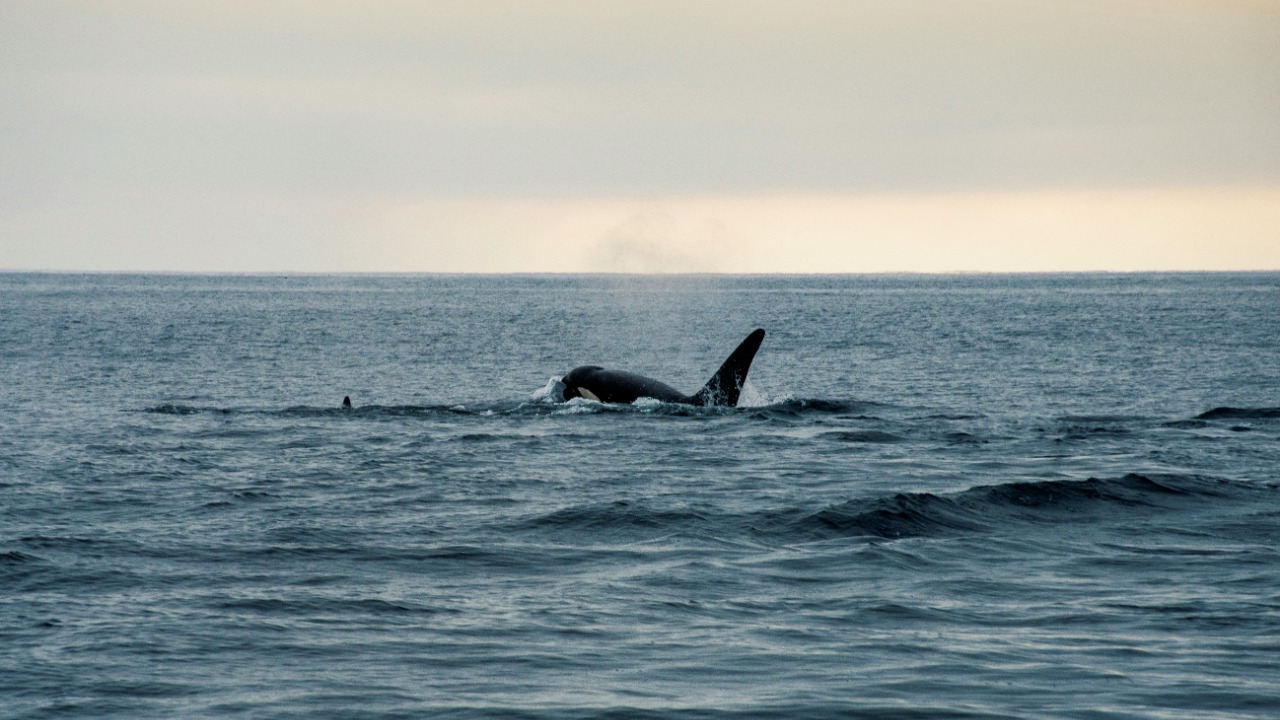

Across the world’s oceans, killer whales share the same striking black‑and‑white look yet live radically different lives. Some populations hug familiar coastlines generation after generation, while others cross entire basins, and the two rarely mix even when they pass through the same waters. I want to unpack why these orcas split into homebodies and wanderers, and why their social worlds stay so sharply divided despite overlapping ranges.
Scientists now see these patterns as more than quirks of behavior, instead they point to deep differences in diet, culture and even genetics that are pushing groups of orcas along separate evolutionary paths. The story of why some stay local and others roam is really a story about how a single species can fracture into distinct ways of life that almost never intersect.
One species, many ecotypes
Biologists still classify killer whales as a single species, Orcinus orca, but the animals themselves are split into multiple ecotypes that differ in appearance, behavior and preferred prey. Because orcas occupy such varied habitats, from polar seas to temperate coasts, natural selection has carved out specialized forms that exploit different niches and, in turn, shape the rest of the marine ecosystem around them. As one overview of Orcas and explains, the Earth is constantly changing and populations adapt to local conditions, a process that can lead to the formation of a new ecotype.
These ecotypes are not just cosmetic variants, they are often reproductively isolated, meaning they do not interbreed even when they share the same waters. The same source notes that it is often difficult to draw a clean line between ecotype and species, because in biology there is no single universal definition of what a species is. In practice, what matters is that these orca communities have distinct diets, dialects and social rules, and those differences are strong enough to keep them apart, a pattern that hints at reproductive isolation and the early stages of speciation according to Aug.
Residents: the coastal homebodies
Among the best known home‑loving orcas are the Resident populations of the North Pacific, which spend much of their lives along specific stretches of coastline. Resident orcas are fish specialists, and the Northern and Southern communities in the North Pacific focus almost exclusively on salmon, particularly Chinook, returning to the same feeding grounds year after year. Detailed work on Resident groups shows that these whales have stable family pods and predictable seasonal movements that track salmon runs rather than open‑ocean migrations.
Their bodies and hunting tools reflect that specialization. The teeth of Residents are slightly smaller and less robust, with a hooked shape that allows them to lock slippery fish such as salmon in the mouth, a detail highlighted in educational material on Residents. I see that as a physical signature of a coastal lifestyle built around precision hunting in relatively confined channels and banks, where knowing every bend of the shoreline and every seasonal pulse of salmon confers a clear advantage and encourages generations to stay loyal to the same home waters.
Transients and other roamers
In contrast, some orcas live like wide‑ranging predators that shadow mobile prey across large swaths of ocean. Transient killer whales, also known as Bigg’s killer whales, are a prime example, feeding mainly on marine mammals such as seals and porpoises that themselves move unpredictably. A profile of these animals notes that transient killer whales (Orcinus orca), also known as Bigg’s killer whales, are unlike the Southern fish‑eating populations, and that these Transient groups and Southern killer whales avoid one another, a pattern summarized in the Transient Killer Whale Facts.
Roaming is not limited to the North Pacific. In the eastern Atlantic, Iberian orcas track the Atlantic bluefin tuna, following the fish along the Iberian Peninsula and into the Strait of Gibraltar. Researchers describe how the movements and migrations carried out by the orcas are diffuse, meaning not all groups travel the same routes, and their patterns depend heavily on their prey, the Atlantic bluefin tuna, according to a profile of Que son las Orcas. In both cases, the whales’ ranging behavior is tightly coupled to the movements of their preferred food, pulling them far from any single “home” coastline.
Different diets, different cultures
Diet is the clearest dividing line between the stay‑local and roam‑far orcas, and it shapes almost everything else about their lives. Residents that focus on fish can afford to be predictable, returning to the same salmon‑rich estuaries and banks, while mammal‑eating Transients must stay flexible and opportunistic, scanning for scattered seals and porpoises. A recent synthesis on orca behavior framed this as “Different Diets, Different Cultures in Orcas,” noting that although killer whales are classified as a single species, they are divided into groups with distinct food preferences and social traditions, a point laid out in the analysis of Different Diets.
Those food choices are not just a matter of biology, they are also a matter of culture, passed down through learning and imitation within each pod. Educational material on orca natural history emphasizes that there are several distinct ecotypes and that these groups do not intermix or interbreed, in part because their hunting techniques, calls and social norms are so different, a pattern summarized in the section on how Many ecotypes do not intermix. When I look at that evidence, it is hard to separate what is “instinct” from what is “tradition,” and that blurred line is exactly what keeps these whales locked into either a local or a roaming lifestyle.
Culture as an engine of speciation
What makes orcas especially intriguing is that their cultural differences appear to be driving genetic divergence in real time. One influential theoretical model, inspired by killer whales (Orcinus orca), argues that when social learning is strong and traditions are stable, culture can help split a single population into multiple ecotypes that use different habitats and prey, a process described in detail in work on Orcinus. In that view, the whales’ learned preferences for certain foods or hunting grounds become barriers to mixing, even without physical separation.
Other researchers have gone further and suggested that some of these ecotypes now qualify as separate species. A recent review weaves together genetic analyses and field observations to argue that orca groups with radically different cultures are actually separate species, and that recognizing them as such would change how we manage and protect the animals from now on, a conclusion presented in the discussion of Mar. I see that as a striking example of culture acting not just as a layer on top of biology, but as a force that reshapes the evolutionary tree itself.
How isolation arises in the first place
To understand why these whales rarely mingle, it helps to look at how new species typically form. In the favored scenario, called allopatric speciation, two populations of an ancestral species become physically separated, adapt to their local environments and, when they meet again, they cannot interbreed successfully, a process outlined in a discussion of how In the favored scenario speciation unfolds. For orcas, ice sheets, shifting prey distributions and changing coastlines could all have created such separations in the past, seeding the differences we see today.
At the same time, the biological species concept offers a practical test: if members of two populations mate and produce viable offspring, they are considered the same species. A teaching case on orca speciation spells out that definition and uses killer whales as an example, noting that if two groups do not mate or do not produce viable young, they are on separate evolutionary tracks, as summarized in the educational case from Sep. When I apply that lens to Residents and Transients that share the same fjords yet avoid one another, it becomes clear that behavioral barriers can be just as powerful as physical ones.
Residents and Transients: neighbors that avoid each other
Nowhere is that behavioral barrier more visible than in the relationship between fish‑eating Residents and mammal‑eating Transients in the North Pacific. Observers have long noted that these ecotypes can occupy the same channels and inlets yet behave as if the other does not exist, with no recorded interbreeding despite decades of close study. A field guide to killer whales in coastal waters notes that Resident orcas are fish eaters, while Transient (Biggs) Orcas hunt marine mammals, and that these groups do not compete for the same food, a key reason they can share habitat without interacting, as described in the overview of Northern and Southern.
Social rules reinforce that separation. An expert Q&A on Southern Resident killer whales notes that Southern Resident orcas do not mate outside of their pod and that, similarly, transient orcas do not interact with the residents and seem to actively avoid them, with the two types described as having different cultures and languages, a pattern summarized under the heading Similarly. When I put those observations together, I see two societies that have decided, in effect, that the other is not part of their social universe, even when they share the same sea.
Genetic evidence that ecotypes are diverging
Genetic work is now catching up with what field biologists have long suspected from behavior. Earlier this year, researchers took a deep dive into the differences between Resident orcas and Transient (also called Bigg’s) orcas, examining their DNA alongside their diets and vocalizations. The study concluded that these groups are different enough in their genes and lifestyles that they may warrant recognition as different species, and it highlighted how Southern Residents rely heavily on their favorite food, Chinook salmon, while Transients focus on marine mammals, as summarized in the report that Apr research suggests they are different species.
These findings fit into a broader picture of orca diversity that includes multiple forms around the world. A technical poster on Orcinus orca KILLER WHALES Ecotypes & Forms describes a diversified portfolio of ecotypes, noting that this large, black and white dolphin can reach perhaps to 9.5 m in length and that different forms have distinct ranges and prey, as laid out in the KILLER WHALES Ecotypes & Forms summary. When I read those genetic and morphological details together, it is hard to avoid the conclusion that the split between local specialists and wide‑ranging hunters is not just behavioral, it is etched into the whales’ genomes.
Top predators that partition the ocean
All of this plays out against the backdrop of orcas’ status as apex predators. Orcas are the top predator of the sea and the largest member of the dolphin family, also known as killer whales, and they are icons of the Pacific Northwest, where different ecotypes share the same waters but do not compete for the same food, according to a profile that notes how Orcas also avoid direct competition. By specializing in different prey and habitats, local and roaming groups reduce conflict and carve up the ocean’s resources in a way that lets multiple ecotypes coexist side by side.
That partitioning is not accidental, it is reinforced by learning and social structure. A field‑based explainer on killer whale ecotypes in the Salish Sea, presented in an episode of Field Notes hosted by Haley Fleming and colleagues, walks through how Residents, Transients and offshore orcas use different hunting strategies and call types to maintain their separate identities. When I listen to those accounts, I hear not just different dialects but different ways of being a top predator, each tuned to a particular slice of the marine food web.
Why the split matters for conservation
These sharp divisions between local and roaming orcas are not just academic, they have direct consequences for how we try to protect them. Southern Resident orcas, for example, are tightly bound to Chinook salmon runs in the Pacific Northwest, which means that any decline in those fish hits them especially hard, while neighboring Transient (Biggs) Orcas that hunt seals and porpoises may be less affected by salmon shortages, as highlighted in the comparison of Residents and Transients. Managing both under a single “killer whale” label risks missing those crucial differences in vulnerability.
Recognizing that some groups are home‑bound specialists while others are wide‑ranging generalists also changes how I think about future threats. Climate‑driven shifts in prey like Atlantic bluefin tuna could force Iberian orcas to alter their diffuse migrations, while changes in salmon management could either stabilize or further stress the Northern and Southern Residents of the North Pacific. The emerging consensus from work on There being several distinct ecotypes that do not intermix is that each of these societies needs tailored protections that respect its unique blend of diet, culture and movement, rather than a one‑size‑fits‑all plan for a single charismatic species.
Supporting sources: Orcas and their ecotypes – Baleines en direct, Orcas and their ecotypes – Baleines en direct.
More from MorningOverview