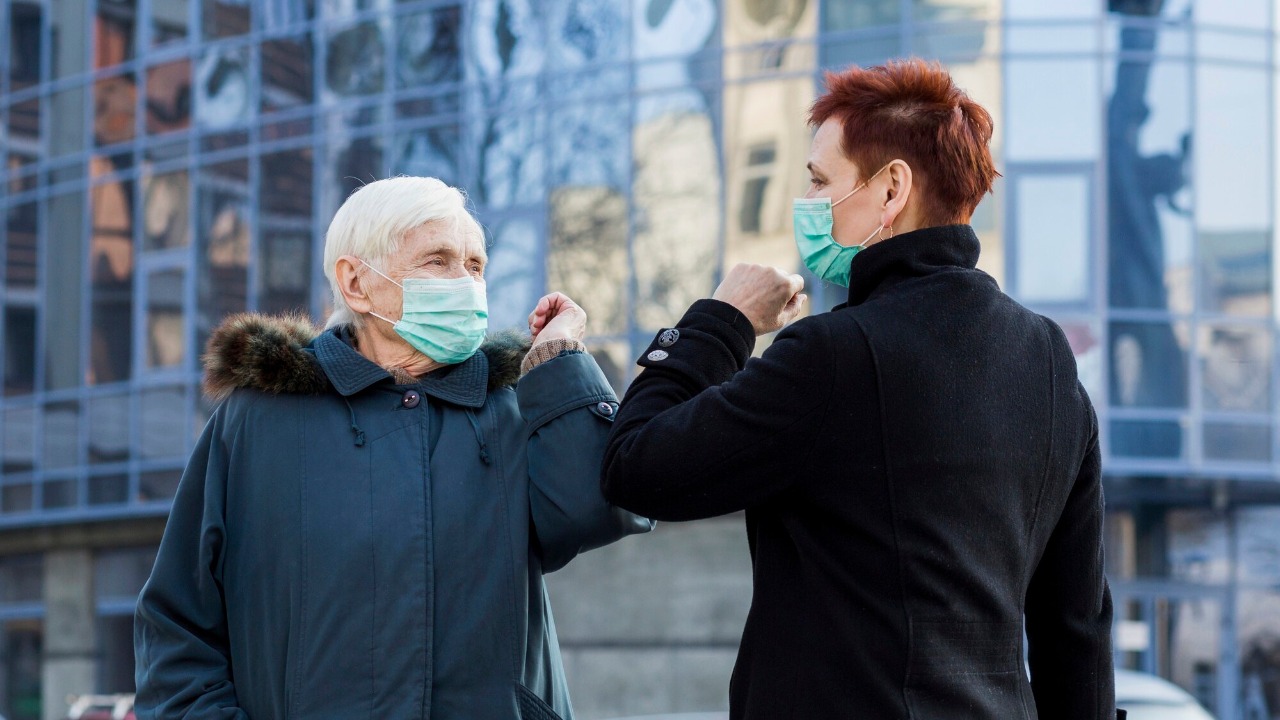

Pandemics rarely creep into cities. They arrive as a trickle of cases and then, almost before officials finish their first press conference, they are filling hospital wards and reshaping daily life. The speed is not a mystery of nature so much as a feature of how modern urban life concentrates people, movement and vulnerability in the same tight spaces. I want to unpack why that machinery makes outbreaks in cities accelerate faster than most residents, and often their leaders, expect.
From the way viruses move through crowded apartments and subway cars to the lag in political decision making, the pattern repeats: by the time the danger feels obvious, the math of exponential growth has already taken over. Understanding those mechanics is not just an academic exercise, it is the difference between a city that bends the curve early and one that spends months trying to catch up.
Urbanization has rewired the world for faster contagion
The starting point is simple: more people now live in cities than in rural areas, and that shift has rewired how infections move. Dense metropolitan regions concentrate millions of residents in shared housing, transit, workplaces and leisure spaces, which multiplies the number of close contacts a contagious person has each day. As I see it, that density does not automatically doom a city to disaster, but it does mean any new pathogen arrives in an environment primed for rapid spread if other safeguards are weak.
Researchers have traced how rapid urban growth, especially where planning and services lag behind, creates exactly the conditions that let new diseases emerge and then race through populations. As demand for land and housing exceeds supply, unplanned settlements expand into areas where wild animals are disturbed or destroyed, increasing human contact with animal reservoirs of infection. Work on how urbanization affects the epidemiology of emerging infectious diseases shows that this global shift toward city living changes not just where people reside, but how they mix, travel and access health care, all of which shape the trajectory of an outbreak once it starts.
Density, mobility and the “R” that flips an outbreak into an emergency
The reason city outbreaks feel like they go from manageable to out of control overnight lies in the basic reproduction number, R, which measures how many people, on average, each infected person passes the virus to. When R is less than 1, chains of transmission fizzle out. When R rises above 1, each generation of infections is larger than the last, and the curve steepens quickly. In large metropolitan regions, the combination of crowded neighborhoods and intense daily movement makes it much easier for that threshold to be crossed and sustained.
Studies of early COVID-19 growth found that regional and local factors inside each Metropolitan Statistical Area helped determine how fast cases multiplied, with higher contact rates in dense, well connected districts pushing R above 1. Work on the interplay between population density and mobility shows that when people in dense urban areas continue their usual mobility patterns, infections can spread far more quickly than in sparsely populated regions, even if the virus itself has not changed. That is the mathematical engine behind the sudden feeling of acceleration.
Why big cities became COVID-19 hotspots so quickly
COVID-19 made this dynamic painfully visible. Large cities around the world recorded surges long before surrounding rural areas, not because the virus preferred skyscrapers, but because urban life gave it more opportunities to jump from host to host. Residents of major metros tend to live, work and socialize in closer quarters, and they rely heavily on shared transport, which means a single infected commuter can seed dozens of new cases in a matter of days.
Analyses of the first pandemic wave found that big cities became coronavirus hotspots while many smaller towns and rural regions suffered fewer infections, even after accounting for age and income. At the same time, epidemiologists warned that although some early deaths were probably misclassified, the fast spread of COVID-19 in Europe and the United States implied that infections were already widespread before they were detected. By the time city leaders saw the first clusters in hospitals, the virus had already threaded through workplaces, transit lines and households, which is why restrictions that looked “early” politically often arrived late in epidemiological terms.
The indoor city: how buildings turbocharge transmission
Urban life is not just dense, it is intensely indoors. Offices, schools, bars, gyms and apartment towers all bring people together in enclosed spaces where air recirculates and physical distance is hard to maintain. For respiratory viruses, that environment is far more forgiving than open air streets or parks, which is one reason outbreaks in cities can accelerate even when outdoor life looks relatively normal.
Evidence from COVID-19 shows that indoor transmission risk is almost 19 times higher than outdoors, especially in crowded indoor environments with poor ventilation where it is harder to socially distance. That finding dovetails with research on basic infrastructure and urban design, which shows that when cities neglect ventilation, sanitation and safe water, they create the same kind of amplifying conditions that drove cholera through 19th century London. Modern glass towers and subway tunnels may look more advanced, but without attention to airflow and crowding, they serve the same epidemiological function.
The density paradox: why some crowded cities fare better than others
It is tempting to blame sheer headcount for every urban surge, but the reality is more complicated. Some of the world’s densest cities recorded lower COVID-19 death rates than less crowded regions, which has led researchers to talk about a “density paradox.” In my view, the paradox dissolves once you separate physical proximity from the social and economic structures that shape who meets whom, where and under what protections.
Work on the effect of population density on the spread of disease finds that density alone does not determine outcomes, and that factors like housing quality, health care access and the timing of interventions can blunt or magnify risk. Studies of urban density and socio-economic variables affecting COVID-19 transmission patterns show two conflicting mechanisms at work: high density increases contact rates, but it can also support better services and faster public health responses if cities invest in them. That is why some crowded districts, with strong testing and mask use, saw slower growth than sprawling suburbs where people assumed they were safe.
Global connectivity and the edges of cities as launchpads
Modern pandemics do not just spread within cities, they spread between them at remarkable speed. Air travel and highway networks turn what used to be local outbreaks into global crises in a matter of weeks, and large metropolitan hubs sit at the center of that web. When a virus arrives on an international flight or a long distance bus, it often lands first in the outer belts of a city, where new housing, logistics hubs and informal settlements are expanding fastest.
Public health experts have warned that air travel makes it possible for a virus to reach any major city in the world within hours, and that crowded transport and health care facilities then help it spread locally. Research on outbreaks starting in and spreading from the edges of cities shows how disease movements are shaped by urban development, mobility, infrastructure and governance, with peri-urban zones acting as both receivers and exporters of infection. In practice, that means a cluster in a warehouse district or a commuter suburb can seed cases across an entire metropolitan region long before anyone notices a problem in the city center.
Exponential growth and the human tendency to underestimate it
Even when the science is clear, human intuition struggles with exponential growth. People, including policymakers, tend to think in straight lines: if there were 10 cases last week and 20 this week, they expect 30 next week. In reality, once R stays comfortably above 1 in a city, the curve bends upward, and the jump from 20 to 40 to 80 to 160 cases can happen in a handful of transmission cycles. That is why pandemics in cities feel as if they suddenly “take over” after a deceptively calm start. One widely shared simulation of a fictional disease, “Simulitis,” illustrated how small changes in behavior can dramatically alter the number of dots that get infected, even though the early stages of each run looked similar. That same logic applies in real cities: if leaders wait until hospitals are visibly strained before acting, they are already several doublings behind. As one independent review panel later noted, The World Health Organization’s (WHO) response to COVID-19 was too slow, hampered by limited authority and an antiquated alert system, which meant the world’s cities lost precious time before tightening their defenses.
Superspreaders, social networks and community structure
Not every infected person contributes equally to an outbreak. In cities, a small number of “superspreaders” and high risk settings can account for a disproportionate share of transmission, which helps explain why some events or venues suddenly ignite large clusters. From my perspective, this is where the social architecture of a city, who gathers where and how often, matters as much as its physical layout.
Clinicians point out that some viruses, such as measles, are highly contagious, while other viruses, such as the virus that causes COVID-19, spread more unevenly, with certain individuals and environments driving much of the spread. Urban scholars have shown that community-based interactions and tightly linked communities also count in infection and death, as do underlying structures of interaction. That means a tightly knit neighborhood, a religious congregation or a factory shift can act as a transmission accelerator, turning a handful of introductions into a citywide surge if testing and isolation are slow.
Why experts say the next pandemic is “when,” not “if”
Looking ahead, the uncomfortable consensus among epidemiologists is that COVID-19 was not a once in a century fluke but a preview. The same forces that made it spread so quickly through cities are still in place, and in some cases intensifying. Growing populations, climate change and continued encroachment into wildlife habitats all increase the odds that new pathogens will jump into humans, and when they do, they will find a world even more urban and interconnected than before.
As one public health expert put it, People in my field were talking about this early in the pandemic, but it took us at least a year to get the CDC (Centers for Disea) to recognize that airborne transmission was the primary driver of COVID infections. That lag between scientific understanding and institutional response is exactly what allows a virus to entrench itself in cities before countermeasures catch up. Earlier reporting had already warned that growing populations and urbanization mean you live, eat, work and travel in close proximity to others, increasing the potential for things to spread. The lesson is blunt: unless cities redesign how they manage air, space and mobility, the next pathogen will exploit the same weaknesses.
Rethinking city design and governance before the next wave
If pandemics overrun cities faster than expected, it is partly because urban design and governance have not caught up with the risks. Ventilation standards, housing policy, transport planning and emergency powers are still largely built around traffic, pollution and crime, not airborne infection. I see a growing recognition among planners and mayors that health must be treated as a core design parameter, not an afterthought once a crisis hits.
Urban researchers argue that transport and health care facilities need to be reconfigured to reduce crowding and improve infection control, while work on basic infrastructure shows that investments in clean water, sanitation and housing can dramatically cut disease spread. In a lecture on how COVID-19 will change cities, Prof. Luis described the disease as quite extraordinary because it is transmitted through physical proximity, calling it a special challenge for dense urban environments. That challenge is not going away. The only real question is whether city leaders act on what they now know, or wait again until the next curve is already climbing.
More from Morning Overview