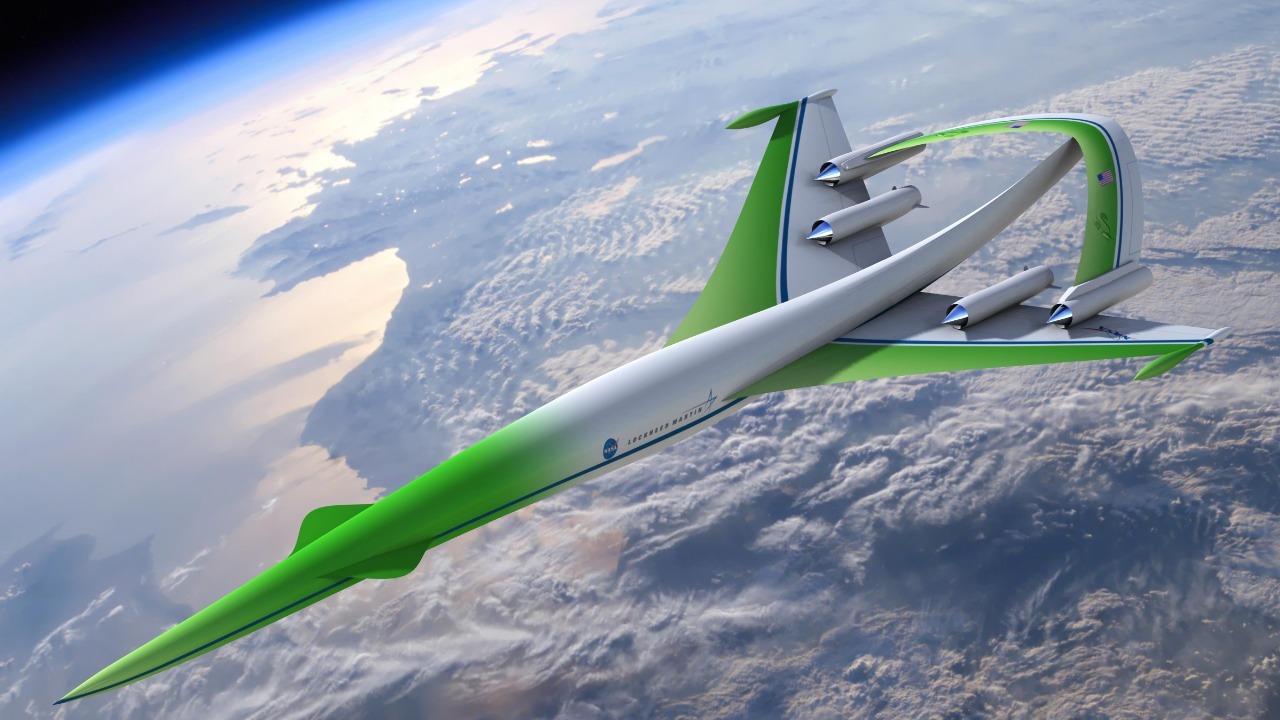

Supersonic passenger jets once promised a world where crossing oceans felt as quick as a long lunch break, yet today the fastest commercial flights still cruise below the speed of sound. The technology to go faster exists, but the mix of physics, economics, regulation and climate pressure keeps that dream at arm’s length. I see the story of commercial supersonic travel as less a tale of missing innovation and more a case study in how hard it is to bend the rules of aerodynamics and business at the same time.
New projects keep surfacing, from sleek concept renderings to detailed business plans, and some even sketch out itineraries where a traveler leaves Imagine, heads from Madrid to the airport and boards a supersonic jet as casually as a current long‑haul flight. Yet each new attempt runs into the same cluster of obstacles that grounded Concorde: fuel burn, sonic booms, limited routes, high ticket prices and unforgiving safety standards. The result is a paradox that defines aviation today, where airliners have actually gotten slower since the 60s even as global travel has exploded.
The brief, noisy history of civilian supersonic flight
To understand why faster-than-sound travel is so elusive, I start with the basic fact that supersonic aircraft are not science fiction. Military jets have flown faster than Mach 1 for decades, and early pioneers like the German Wolfgang Ziese helped prove the concept in dramatic test flights whose Duration was recorded down to 4 minutes and 39 seconds, with “Breaking the Sound Barrier” clocked at exactly 4:39 in archival footage. These machines showed that punching through the sound barrier is technically achievable, but they were built for short missions, not for shuttling hundreds of paying passengers across continents every day.
When engineers tried to turn that capability into a business, they created a specific category known as Supersonic transport, or SST, a civilian supersonic airliner designed to carry travelers at speeds far beyond conventional jets. According to technical overviews of supersonic aircraft, only a handful of these designs ever reached commercial service, and even then they were used as supersonic passenger airliners on a very limited scale. The gap between a fighter jet sprint and a reliable, profitable airline schedule turned out to be far wider than early boosters expected.
Why Concorde’s economics still haunt new projects
Every modern proposal for a faster airliner lives in the shadow of Concorde’s balance sheet. The aircraft proved that passengers would pay a premium for speed, but it also showed that supersonic airliners have poor lift-to-drag ratios and therefore burn far more fuel per seat than subsonic widebodies. Analyses of Supersonic transport point out that this poor lift and high drag make them particularly disadvantageous on many flight paths, because they must cruise high and fast to justify their design while still paying a penalty in fuel and structural weight.
When I compare that to the economics of a modern long-haul jet, the gap is stark. One detailed breakdown in an aviation discussion notes that a 777 costs roughly 250 m dollars and will get roughly 2000 flight hours per year, which helps airlines spread that capital cost across a dense schedule of relatively efficient flights. In that same conversation, contributors argue that one economic reason why supersonic airliners struggle is that they cannot match this utilization and fuel efficiency, especially once the problem is the sonic boom is factored in for route planning. The contrast between a workhorse like the 777 at 250 m and a hypothetical SST underscores why investors remain cautious.
The physics tax: drag, fuel burn and unforgiving aerodynamics
Even if money were no object, the physics of flying faster than sound impose a kind of permanent tax on any design. As speed increases, shock waves form around the airframe, and the aircraft must be shaped to manage these shocks while still generating enough lift. Technical summaries of why supersonic airliners fail describe the fundamental challenge as a tradeoff between good performance at supersonic speeds and acceptable behavior at takeoff and landing, where the plane still has to fly slowly, climb out of crowded airports and meet noise limits. Just getting the wing and fuselage to behave in both regimes adds weight and complexity that subsonic jets can avoid.
On top of that, the Environment around a supersonic jet is dominated by Drag that rises sharply with cruising speed, which means fuel efficiency decreases just when the aircraft is supposed to be covering ground quickly. The design studies for the Boom Overture, for instance, highlight how drag increases and therefore fuel efficiency decreases with cruising speed, and they still estimate a potential market only if enough routes can support the higher operating costs over a 10‑year period. That tension between aerodynamic penalties and commercial expectations is baked into the Environment and Drag assumptions behind every new supersonic concept.
Sonic booms and the regulatory wall over land
Even if engineers solve the fuel and drag problem, the airframe still has to live with the shock waves it creates in the atmosphere. A Sonic Boom is the audible signature of those shock waves, a sudden pressure change that can rattle windows and startle people on the ground when an object travels through the air faster than sound. Detailed explanations of Sonic Boom effects note that sonic booms due to large supersonic aircraft were a major reason regulators clamped down on routine supersonic flight overland, since repeated overflights would have created a constant barrage of noise for communities under the flight paths.
That regulatory wall still shapes every business case. Over the United States, a 52‑year ban on supersonic flight over land has defined what is possible, and even as policymakers move to lift parts of that restriction, they do so while stressing that technical, economic and environmental hurdles remain. Coverage of efforts to adjust the rules points out that a few other companies are working under the radar to reduce air travel time, yet Despite those efforts, the first supersonic airliner of the 21st century is still described as an aspiration rather than a scheduled service. Until regulators are convinced that new designs can tame their booms or route them away from people, the overland ban documented in Despite the 52‑year ban will keep most supersonic routes confined to oceans.
Safety margins at high altitude and high speed
Flying faster than sound does not just magnify noise and fuel bills, it also compresses the margin for error. At high altitude, the air is thin, temperatures are extreme and the aircraft is often operating close to its structural and aerodynamic limits. In a widely shared video analysis, one expert remarks that to be in a plane like this there are so many things that could go wrong at a high altitude that you really need to design every system with extra redundancy and robustness. That perspective, captured in a Feb discussion of supersonic safety, reflects why certification authorities demand exhaustive testing before they will let passengers board a new SST.
Historical reviews of why there are no commercial supersonic flights at present emphasize that supersonic aircraft, and in particular those designed for passengers, must meet the same safety, durability and economics standards as subsonic jets while operating in a more demanding regime. That means thicker structures to handle thermal cycles, more complex control systems to manage stability near Mach 1 and stricter inspection schedules to catch fatigue. Each of those safety-driven design choices adds weight and cost, which then loops back into the fuel and ticket price problem.
The brutal math of tickets, fuel and airline fleets
From an airline’s perspective, the question is not whether a supersonic jet can fly, but whether it can earn its keep. Analysts who look at fleet planning often compare hypothetical SSTs to workhorses like the 777, which, as noted earlier, costs roughly 250 m dollars and delivers roughly 2000 flight hours per year. In that context, a supersonic jet that carries fewer passengers, burns more fuel and faces route restrictions has to charge far higher fares just to break even, which limits the customer base to a narrow slice of premium travelers. That is why some engineers in public forums argue that even if the technology matures, the business case will remain fragile compared with a high‑density subsonic fleet.
One detailed thread framed around the question Can commercial flights get significantly faster within the next decade or two and still remain economically viable captures this tension clearly. The contributors, writing under prompts like Dec questions about speed and viability, repeatedly return to fuel costs and seat‑mile economics as the limiting factors. Their consensus aligns with more formal studies that warn fuel costs will be a large barrier to supersonic air travel, especially as airlines face pressure to cut emissions and keep ticket prices accessible for a global middle class that has grown used to cheap long‑haul flights.
Environmental pressure and the climate cost of going faster
Climate policy has become another powerful brake on supersonic ambitions. Drag and fuel burn are not just line items on an airline’s budget, they are also direct drivers of carbon emissions, and faster aircraft tend to emit more per passenger‑kilometer than slower, optimized designs. Environmental sections in technical reviews of projects like Boom Overture stress that drag increases and therefore fuel efficiency decreases with cruising speed, which means any supersonic fleet would have to work much harder to offset its emissions or adopt alternative fuels at scale. That is a difficult sell at a time when regulators and investors are scrutinizing every ton of CO₂ from aviation.
Policy‑oriented analyses of future air travel also highlight that fuel costs will be a large barrier to supersonic air travel, not only because of price volatility but because of the political and social pressure to decarbonize. One detailed essay on the prospects for faster air travel argues that, According to the International Council on Clean Transportation, the combination of higher fuel burn and climate targets makes it hard to justify a niche fleet of supersonic jets when subsonic aircraft can already cross oceans efficiently. That logic, laid out in a Nov analysis of fuel and climate, suggests that any future SST will have to prove not just its speed but its environmental credibility to win approval.
Passenger expectations: comfort, price and “good enough” speed
Even if engineers and regulators align, passengers still have to want what a supersonic ticket offers. Over the past few decades, Airliners have actually gotten slower since the 60s, but air travel got cheaper with the rise of widebody jets and low‑cost carriers, reshaping what travelers value. In a widely cited Comments Section, one user named UEMcGill notes that Air travel became more about affordability and reliability than shaving an hour or two off a transatlantic hop, and that shift in priorities explains why airlines invested in larger, more efficient jets instead of chasing higher cruise speeds. That sentiment is captured in a Oct thread on why Airliners slowed down, where the tradeoff between speed and ticket price dominates the discussion.
From my perspective, that “good enough” speed is one of the quiet reasons supersonic projects struggle to gain traction. If a business traveler can already fly overnight in a lie‑flat seat and arrive rested, the marginal benefit of arriving two or three hours earlier may not justify a dramatically higher fare, especially when remote work tools reduce the need for same‑day in‑person meetings. Community discussions about whether supersonic airliners are probably gone for good often circle back to this point, with contributors arguing that Lets look at a 777 cost is shorthand for a broader reality: airlines and passengers have optimized around a certain balance of time, comfort and money, and any new technology has to beat that balance, not just the clock.
The new wave of concepts, from Madrid daydreams to cautious prototypes
Despite all these headwinds, new supersonic concepts keep surfacing, often wrapped in glossy visions of frictionless global mobility. One scenario imagines a pleasant afternoon when you leave your home in Imagine, head to the airport from Madrid and board a plane that will take you to New York in a fraction of today’s flight time. In that vision, companies like Boom Supersonic plan to begin operating routes that cut transoceanic journeys dramatically if everything goes according to plan, betting that a mix of new materials, refined aerodynamics and sustainable fuels can square the circle of speed, cost and emissions. That optimism is laid out in detail in a forward‑looking analysis of the future of supersonic and hypersonic flights.
At the same time, more grounded engineering communities remain skeptical. In a German‑language Comments Section about whether we will ever see commercial supersonic aircraft attempts again, one contributor named MeowmeowMeeeew points out that There are tons of commercial airlines out there, and most of them have prioritized fleet commonality, fuel efficiency and flexible routing over raw speed. That observation, preserved in a Jun discussion of future attempts, reflects a broader industry mindset: unless a supersonic design can plug into existing networks without blowing up costs, it will remain a niche experiment rather than a mainstream tool.
Why “nearly impossible” does not mean “never”
When I put all of these threads together, the phrase “nearly impossible” feels less like a verdict on technology and more like a description of timing and tradeoffs. Technical histories of supersonic aircraft show that the core capability has been in human hands since the era of the German Wolfgang Ziese and the first dramatic 4:39 breakthroughs, while modern analyses of Supersonic transport spell out the structural reasons those capabilities have not translated into mass‑market travel. The obstacles are cumulative: each knot of extra speed adds drag, fuel burn, noise, regulatory friction and safety complexity, and each of those adds cost that has to be recouped from passengers who may not value speed as highly as they once did.
Yet the persistence of new designs, from the Boom Overture’s Environment and Drag calculations to policy debates about lifting the 52‑year ban over the United States, suggests that the story is not finished. Engineers continue to explore ways to soften the Sonic Boom footprint, climate researchers are pushing sustainable fuels that could blunt the emissions penalty and some travelers still dream of leaving Imagine, stepping out of Madrid and crossing an ocean in the time it takes to watch a movie. For now, though, the weight of evidence from technical reviews, economic breakdowns and community debates, from Why there are no commercial supersonic flights at present to Just why earlier airliners failed, points to a clear conclusion: until someone can rewrite both the physics and the business math, commercial supersonic flights will remain tantalizing, technically feasible and, in practical terms, almost out of reach.
More from MorningOverview