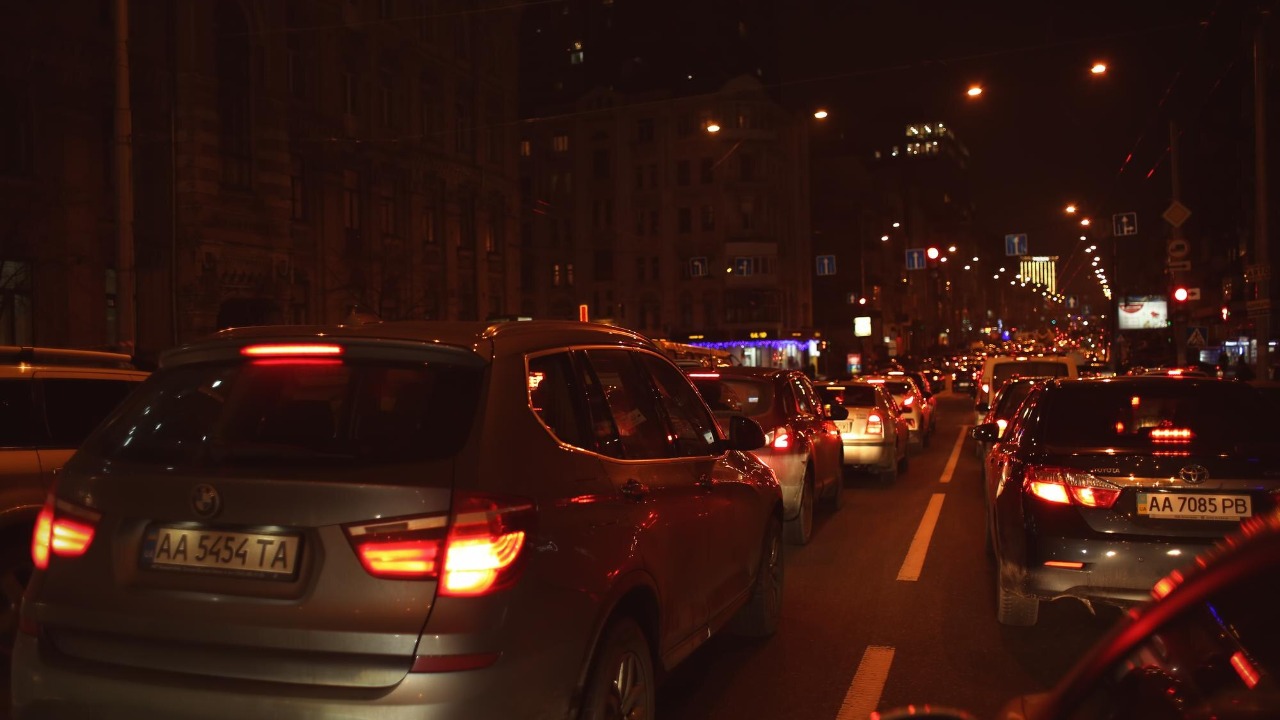

Across cities and suburbs, drivers are increasingly encountering a strange and dangerous sight: vehicles gliding through the dark with bright front lights but no visible glow at the back. These so‑called “phantom” cars are not usually driven by thrill‑seekers, they are the product of a design gap, patchy regulation and simple misunderstanding about how modern lighting systems work. I want to unpack why so many cars are effectively invisible from behind at night, and what needs to change to stop a preventable risk from becoming a grim routine.
The rise of the “phantom vehicle” problem
From a distance, a phantom vehicle looks like a motorcycle or a single headlamp until it suddenly fills your windshield, leaving almost no time to react. The core issue is that many cars can be driven with bright front illumination while their rear lamps remain dark, so the driver behind sees nothing until brake lights flash at the last second. Safety advocates describe these unlit cars as a growing hazard because they erase one of the most basic cues other road users rely on, the red glow that signals a vehicle’s size, position and speed in low light.
Investigations into these incidents have found that the problem is not limited to one brand or region, it is baked into how a large share of modern cars are wired. Reports on so‑called phantom vehicles describe drivers cruising at highway speeds with no rear illumination at all, often unaware that they are nearly invisible from behind. When crashes do happen, investigators frequently find that the driver who hit the unlit car simply never saw it in time, especially in rain, fog or on unlit rural roads where taillights are often the only reference point.
How daytime running lights created a visibility blind spot
The roots of the issue lie in a safety feature that was supposed to make cars more visible, not less. Daytime running lights, or DRLs, were introduced to help oncoming drivers spot a vehicle in daylight, and in some countries they have been required on new cars for decades. The problem is that DRLs typically illuminate only the front of the car, so a driver can set off with bright white light ahead while the rear remains completely dark, a design gap that has turned a well‑intentioned feature into a nighttime liability.
In many markets, regulators mandated DRLs at the front but did not insist that the rear lamps be tied in, which meant manufacturers had little incentive to wire the back of the car into the same circuit. One analysis notes that Open questions remain about how much DRLs reduce crashes in many conditions, yet the regulations still stopped short of requiring rear daytime running lights. Another advisory points out that, However, the rules only mandated DRLs at the front, so most manufacturers did not bother to ensure the rear lights came on automatically with them, leaving a structural blind spot in how cars signal their presence.
Why drivers think their lights are on when they are not
Technology has also made it easier for drivers to be fooled into thinking their full lighting is active. In many newer cars, the instrument cluster and infotainment screens are brightly lit as soon as the engine starts, regardless of whether the headlight switch is in the proper position. From the driver’s seat, a glowing dashboard and bright forward DRLs can feel indistinguishable from fully activated headlights, so people assume everything, including the rear lamps, is on when it is not.
Owners themselves describe this confusion in online discussions, where one common complaint is that Yup, DRLs and lit gauges make people think their headlights are on but they do not bother to check. Others note that Their headlights appear to be on from the front, but no one is mentally checking what the car looks like from behind. The result is a perfect storm of human assumption and interface design that makes it far too easy to drive off with the rear of the vehicle unlit.
Regulatory gaps and slow fixes from governments
Regulators have been slow to close the loopholes that allow cars to be driven with dark tails. In some countries, DRLs have been mandatory on new cars for more than three decades, yet the rules did not require that rear lamps be tied into those systems or that dashboards clearly warn drivers when only partial lighting is active. That left millions of vehicles on the road with a split personality, bright at the front and invisible at the back, even as traffic volumes and speeds increased.
Some governments are now trying to catch up. In one jurisdiction, Daytime running lights became mandatory on new cars sold from December 1, 1989, which means virtually every vehicle on the road has some form of DRL, but only recently have authorities moved to require that rear lights also come on automatically or that dashboards stay dark until full headlights are engaged. Another set of New safety rules from Transport Canada is aimed directly at phantom vehicles running at night without lights, requiring that vehicles with daytime running lights either illuminate rear lamps automatically, switch on full headlamps in low light or make it impossible to drive with only DRLs active. These steps are significant, but they apply mainly to new vehicles, leaving a long tail of older cars that will remain on the road for years.
Why manufacturers have not simply wired rear lights to DRLs
On the surface, the fix seems obvious: if DRLs are on, why not just turn on the rear lights too. Automakers, however, have historically resisted that approach, citing cost, regulatory ambiguity and concerns about bulb life. Wiring rear lamps to run all the time requires additional circuitry and, in older designs, could shorten the lifespan of incandescent bulbs, which manufacturers argued would frustrate owners and increase warranty claims. In the absence of a clear rule forcing their hand, many companies chose the cheaper, simpler option of lighting only the front.
Technical explanations from engineers note that Headlights that turn on automatically at dusk have been available for years, but they add cost and can be configured so they do not control the rear lamps. In practice, that means a car can be set up so the front DRLs are bright while the main headlights and taillights remain off at night, especially if the owner has turned the switch away from the automatic position. Without a regulatory requirement to link these systems, manufacturers have had little reason to redesign wiring harnesses or software logic to ensure the rear of the car is always illuminated when the front is.
Human factors: habits, ignorance and overconfidence
Even with imperfect hardware, better habits could prevent many phantom vehicle scenarios. Drivers who grew up with older cars often developed a ritual of twisting a physical headlight knob as soon as they set off, a habit that ensured both front and rear lights came on together. In the era of automatic lighting and DRLs, that muscle memory has faded, replaced by a vague expectation that the car will take care of everything. When that expectation collides with a system that only partially automates lighting, the result is predictable: people drive into the night assuming they are fully lit when they are not.
Commenters in local forums describe seeing cars in snowstorms and heavy rain with no visible rear lights, and they often attribute it to simple unfamiliarity with how the vehicle operates. One driver in Regina summed it up by saying that Vehicles made and sold after DRLs became common have trained people to rely on automatic systems, so they no longer think to turn on the lights manually. That overconfidence is compounded by the fact that many cars do not provide a clear, intuitive warning when only DRLs are active, leaving drivers to discover the problem only when someone honks, flashes their high beams or, in the worst case, collides with them from behind.
How some markets are forcing smarter lighting by design
There is a growing recognition that the safest solution is to design the problem out of the car rather than relying on every driver to remember a switch. Some regulators now require that vehicles either automatically activate full lighting, including rear lamps, in low ambient light or make it impossible to drive with only DRLs active at night. Others are pushing for dashboards that remain dark until the proper lighting mode is engaged, so drivers cannot mistake a glowing instrument panel for proof that their taillights are on.
In one advisory to motorists, a columnist explained that Dear KR, Since 2011 all new cars in that market have had to have daytime running lights, which means their headlights come on automatically, but the regulations did not initially insist that the rear lights be illuminated all the time. That gap is now being addressed by rules that require either automatic full lighting or systems that link DRLs to the rear lamps, effectively eliminating the option of driving with a dark tail. These changes show how relatively small tweaks to design and regulation can sharply reduce the number of phantom vehicles without asking drivers to become lighting experts.
What drivers can do right now to avoid becoming invisible
Until every car on the road is redesigned or retrofitted, the most immediate fix is behavioural. I recommend that drivers treat the headlight switch as a safety control, not a cosmetic one, and make a habit of using the full headlight setting whenever visibility is anything less than perfect, including at dusk, in rain or in fog. A quick walk around the car after dark, or even a glance in a shop window reflection, can confirm whether the rear lamps are actually lit, a simple check that can prevent a serious crash.
Owners should also familiarize themselves with their car’s lighting modes and warning symbols, especially if they drive a model with automatic settings. Some vehicles already display clear prompts such as “switch on the lights” when sensors detect darkness but only DRLs are active, a feature that drivers in online discussions say has nudged them into safer habits. Others, however, rely on subtle icons that are easy to miss, which is why I see value in the push for clearer standards and smarter defaults. As regulators and manufacturers slowly close the gaps that created phantom vehicles in the first place, an extra second of attention from each driver can keep the back of the car as visible as the front.
More from MorningOverview